
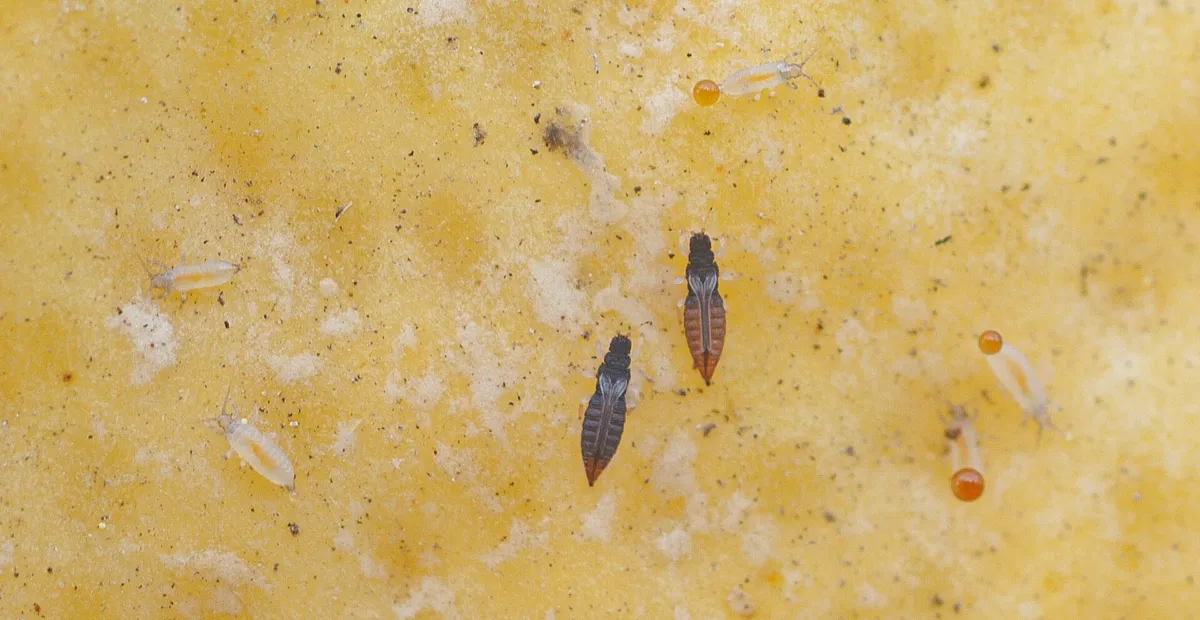
Greenhouse thrips
Heliothrips haemorrhoidalisGreenhouse thrips overview
Greenhouse thrips, Heliothrips haemorrhoidalis, is a small dark thrips that feeds mainly on mature leaves, especially in greenhouses and warm U.S. landscapes. Infested foliage develops silvery or brown discoloration between veins, black fecal specks, distortion, yellowing and sometimes leaf drop. On avocado and citrus, feeding may also scar or russet developing fruit. Early detection and integrated control are most effective.
Typical conditions
Overview
Greenhouse thrips adults are usually about 1/16 inch long, dark brown to black, with pale narrow wings and yellowish legs. Eggs are white, banana-shaped and inserted singly into plant tissue. Immatures are pale with red eyes and may carry a dark fecal droplet. Feeding begins mainly on the lower surface of mature leaves and may extend to the upper surface as populations increase. The insect is common in greenhouses throughout the United States and can persist outdoors in warm regions, including parts of Florida and southern California.
Symptoms and identification
Early injury appears as pale, silvery, bronze or brown discoloration, often concentrated between the lateral veins. Leaves may become distorted, stippled or roughened, while the lower surface can show feeding scars, larvae and adults.
Small reddish droplets of excrement darken to conspicuous black specks. Heavy infestations may cause generalized yellowing, premature leaf drop and reduced ornamental quality. On avocado and citrus, feeding where leaves or twigs contact developing fruit can produce scarring, ring spotting or irregular russeting.
Use a hand lens to look on mature leaves for dark adults, pale larvae with red eyes, black fecal droplets and singly inserted eggs. Thrips injury alone is not diagnostic to species.
Causes and spread
Spread occurs primarily when adults or immature stages move on infested plants, cuttings, tools, clothing or plant-handling equipment. The pest is readily introduced with purchased greenhouse plants and may persist in dense canopies where mature leaves remain undisturbed.
Overlapping leaves and fruit create protected feeding sites. Warm sheltered conditions accelerate development, while outdoor infestations are more likely to become important in subtropical and warm coastal production areas. Wind may move adults short distances, but infested plant material is usually the most important long-distance pathway.
Life cycle and persistence
Females insert approximately 25–50 eggs singly into leaves or fruit tissue. The egg swells near hatching and may be detectable with a hand lens. Two larval stages feed on the plant; the first is whitish and the second becomes yellowish.
Larvae then pass through a nonfeeding prepupal stage and pupal stage. Unlike many thrips, at least some greenhouse thrips prepupae and pupae remain on infested leaves rather than dropping to the soil. Under favorable conditions, development from egg to adult may take roughly 35–40 days, although temperature and host plant affect the rate. Reproduction may continue year-round in protected culture and warm climates.
Treatment and control
Confirm the pest before treating, because thrips species differ in biology, crop risk and management response. Concentrate inspection and treatment on mature leaves, lower leaf surfaces and protected contact points between leaves, twigs and fruit.
For a small infestation, prune and destroy badly damaged foliage, wash accessible plants, and repeat inspection at short intervals. In greenhouses or nurseries, combine sanitation with compatible biological control. Treatments must reach exposed larvae and adults; eggs inserted into tissue and nonfeeding stages may survive an otherwise effective contact application.
For commercial crops or persistent infestations, consult the crop’s current U.S. extension or integrated pest-management guidelines and a licensed applicator. Base decisions on documented injury, market tolerance and monitoring rather than calendar spraying. Recheck treated plants because overlapping generations are common.
Low-impact and biological control
Begin with sanitation and physical suppression. Isolate new plants for at least 2–3 weeks, inspect mature leaves and leaf undersides with a hand lens, and remove heavily infested leaves or shoots where practical. Bag and discard plant material rather than composting visibly infested debris. Reduce plant crowding and remove volunteer host plants and fallen leaves around greenhouse benches.
Wash sturdy plants with a firm water spray directed at leaf undersides, repeating as needed without causing erosion or disease-favoring wetness. In protected culture, insecticidal soap or horticultural oil may suppress exposed larvae and adults when the product label permits use on the crop; test a small area first for phytotoxicity and obtain thorough coverage.
Conserve natural enemies by avoiding unnecessary broad-spectrum insecticides. Predatory mites and predatory thrips, including species used in greenhouse biological-control programs, may contribute to suppression, but performance depends on temperature, humidity, crop structure and correct identification. Introduce beneficials early and follow the supplier’s release and monitoring guidance.
Prevention
- Inspect incoming plants, especially croton, ficus, palms, orchids, azaleas, camellias and avocado, before placing them near established stock.
- Quarantine new material and examine mature leaves, undersides, leaf axils and plant parts touching fruit.
- Keep greenhouse benches, floors and screens clean; remove fallen foliage and discard severely infested leaves.
- Maintain adequate spacing and prune dense growth so leaves can be inspected and spray or biological-control agents can reach undersides.
- Use records, hand-lens scouting and, where useful, blue or yellow sticky cards to detect adult movement; do not rely on traps alone for population estimates.
- Protect resident predators and parasitoids by choosing the least disruptive intervention compatible with the crop and infestation level.
Interesting facts
- Greenhouse thrips feeds mainly on mature leaves, unlike many economically important thrips that prefer flowers or very young foliage.
- The species was described from Europe but is considered native to South America and is now distributed widely around the world.
- Black fecal droplets are unusually conspicuous and can help distinguish an established infestation from simple mechanical or environmental leaf blemishing.
- In California avocado production, fruit injury is especially associated with leaves, twigs or neighboring fruit touching developing fruit.
Use insecticides only when monitoring shows treatment is justified and only products legally authorized and currently labeled in the United States for the specific crop, site and pest. Follow the current label exactly, including protective equipment, application rate, reentry interval, preharvest interval and pollinator precautions. Because eggs are inserted into plant tissue and some nonfeeding stages may be protected on leaves, a single contact treatment may provide incomplete control. Rotate labeled modes of action to reduce resistance risk and avoid unnecessary broad-spectrum sprays that disrupt natural enemies.
Affected plants
The plants below are linked to this problem by structured host-plant data. The list updates automatically as new plant profiles are added.
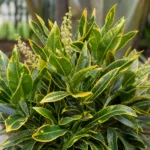 Banana croton (Codiaeum variegatum ‘Banana’)Codiaeum variegatum 'Banana'
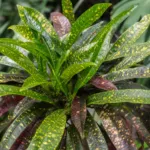 Eleanor Roosevelt (Codiaeum variegatum ‘Eleanor Roosevelt’)Codiaeum variegatum 'Eleanor Roosevelt'
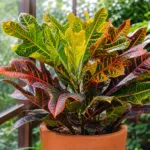 Excellent (Codiaeum variegatum ‘Excellent’)Codiaeum variegatum 'Excellent'
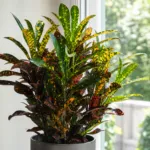 Franklin Roosevelt Croton (Codiaeum variegatum ‘Franklin Roosevelt’)Codiaeum variegatum 'Franklin Roosevelt'
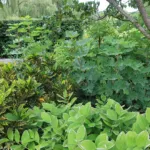 Gold Dust Croton (Codiaeum variegatum ‘Gold Dust’)Codiaeum variegatum 'Gold Dust'
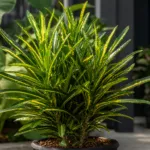 Gold Finger (Codiaeum variegatum ‘Gold Finger’)Codiaeum variegatum 'Gold Finger'
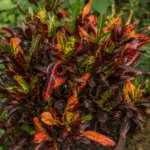 Croton Mammy (Codiaeum variegatum ‘Mammy’)Codiaeum variegatum 'Mammy'
 Mrs Iceton (Codiaeum variegatum ‘Mrs Iceton’)Codiaeum variegatum 'Mrs Iceton'
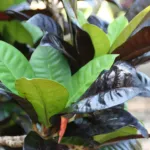 Norma Garden Croton (Codiaeum variegatum ‘Norma’)Codiaeum variegatum 'Norma'
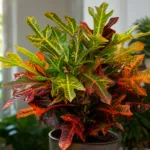 Oak Leaf (Codiaeum variegatum ‘Oak Leaf’)Codiaeum variegatum 'Oak Leaf'
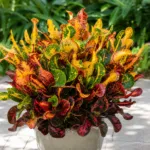 Revolutions (Codiaeum variegatum ‘Revolutions’)Codiaeum variegatum 'Revolutions'
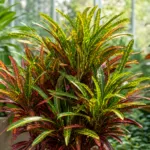 Stoplight (Codiaeum variegatum ‘Stoplight’)Codiaeum variegatum 'Stoplight'