
Boron deficiency
Boron deficiency overview
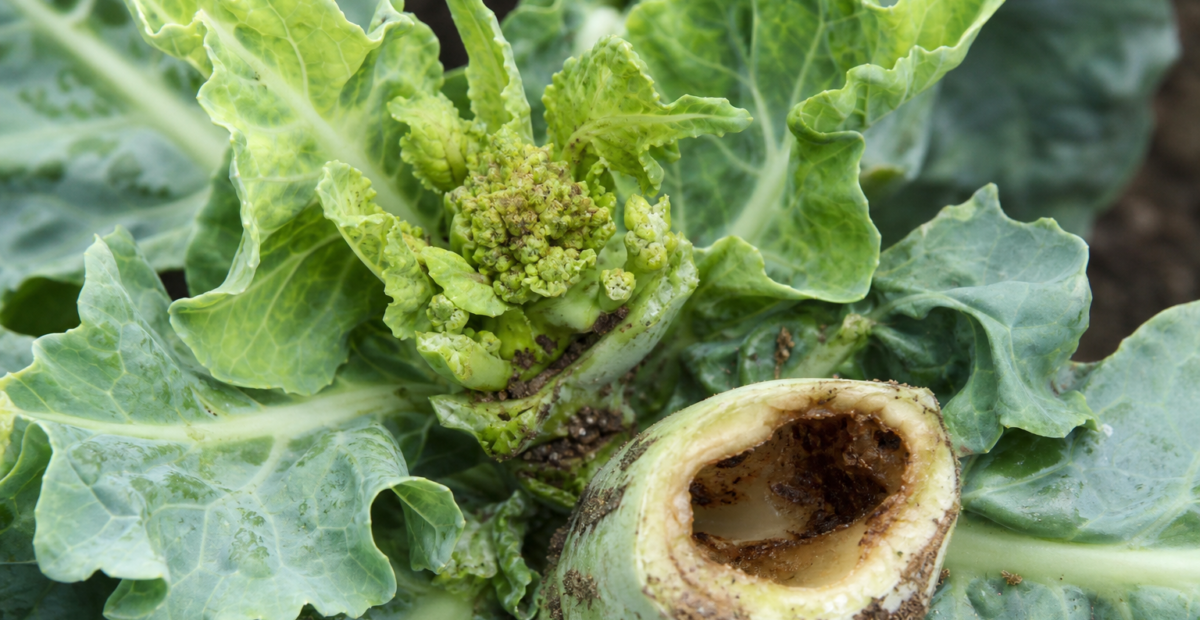
Boron deficiency is a nutrient disorder caused by inadequate boron reaching actively growing tissues. It can stunt roots and shoots, kill terminal buds, deform young leaves, reduce flowering and fruit set, and cause internal breakdown in crops such as cauliflower, broccoli, beet, grape and strawberry. Because symptoms overlap with drought, root injury, disease and other nutrient problems—and excess boron is toxic—confirm the diagnosis with soil, water and plant-tissue testing before applying boron.
Typical conditions
Overview
Symptoms usually develop first in actively growing tissues because boron is not readily redistributed within many plants. Depending on the host, deficiency may appear as dying terminal buds, short internodes, brittle or cracked petioles, distorted young leaves, poor flowering, poor fruit set, internal corking or hollow tissue, and stunted roots.
Susceptibility differs substantially among crops. Brassicas, beets, celery, alfalfa, apples, grapes and some berries may respond more strongly than crops such as beans, peas, cucumber, potato or sweet corn. A visual diagnosis alone is unreliable because drought, root damage, salinity, herbicide injury, disease and other nutrient disorders can look similar.
Symptoms and identification
- Growing points: terminal buds may stop growing, discolor, die back or remain dormant; lateral shoots can produce a short, bushy appearance.
- Leaves and shoots: youngest leaves may be small, thick, curled, yellow-mottled, malformed or develop brown tips and margins. Internodes may be shortened, and shoots or petioles may become brittle or zigzag.
- Roots: root growth may be stunted, reducing the plant’s ability to explore dry or nutrient-poor soil.
- Flowers and fruit: blossoms may drop, pollen-tube growth and fruit set may be poor, and grapes may form small “shot berries.” Fruit can be misshapen.
- Internal crop symptoms: cauliflower and broccoli may develop brown, water-soaked or hollow stems and discolored florets; beet roots may show black internal spots or dry-rot-like breakdown.
Symptoms often appear on new growth, but the exact pattern depends on species, severity and boron mobility in the plant.
Causes and spread
Boron deficiency results when the plant cannot obtain enough plant-available boron from the root zone. Common risk factors include coarse sandy soil, low organic matter, heavy leaching from rainfall or irrigation, drought that restricts root activity, damaged or shallow roots, and sometimes strongly alkaline or over-limed soil. Low-boron irrigation or surface water can contribute in some regions.
This is not an infectious disease and does not spread between plants. However, the same soil, water or root-zone condition can affect a group of plants in one bed or field. Excessive boron fertilizer or boron-rich irrigation water can create the opposite problem—toxicity—because the safe range between deficiency and excess is narrow.
Life cycle and persistence
Boron deficiency has no pathogen or insect life cycle. It develops when boron supply, root uptake or movement to growing tissues is insufficient. Symptoms may intensify during rapid growth, flowering or fruit development, and they can be amplified by drought or root injury. Correcting the root-zone supply may protect new growth, but already necrotic or malformed tissue generally will not recover.
Treatment and control
First verify the diagnosis with a soil test and, when useful, a representative plant-tissue test. Also check irrigation water, root health, pH, moisture history and competing diagnoses. If testing and crop recommendations indicate deficiency, apply a labeled boron-containing fertilizer at the locally recommended rate and distribute it uniformly. Boron is needed in tiny amounts; concentrated bands, uneven spreading or overlapping foliar sprays can cause toxicity.
For annual vegetables, a properly calibrated preplant broadcast application may be appropriate in some production systems. In established vines, trees or high-value crops, a crop-specific foliar or soil correction may be selected by an extension specialist or crop adviser. Follow-up testing and observation of new growth are safer than repeated applications. Do not expect damaged tissue to turn healthy again.
Low-impact and biological control
There is no biological control for a nutrient deficiency. Organic management focuses on improving nutrient availability and root function: add mature compost based on soil-test needs, maintain even irrigation, protect roots with mulch, reduce compaction, and correct drainage or severe root damage. Organic fertilizers may contain boron, but their boron concentration and release are variable; use them only when the product analysis and soil test support the application. Avoid unmeasured borax or household products.
Prevention
- Have soil tested before applying boron, especially on sandy soil, vegetable beds, orchards, vineyards and high-value crops. Include irrigation water testing where water quality may be involved.
- Use plant-tissue testing when symptoms affect a crop, but interpret results with the laboratory’s crop-specific ranges and field history; neither soil nor tissue results is perfectly predictive for every crop.
- Maintain steady moisture without waterlogging, use mulch where appropriate, and improve root-zone organic matter with mature compost and good soil structure.
- Prevent compaction, root injury and severe pest damage. Match liming to a soil test rather than routinely raising pH.
- Choose locally adapted cultivars and crop rotations suited to the site. Do not apply boron “just in case,” particularly before sensitive crops such as beans.
Interesting facts
- Boron is essential for cell-wall structure and reproductive development, yet plants require it in minute quantities.
- The margin between adequate boron and toxic boron is unusually narrow and varies by species.
- Cauliflower, broccoli, beet and grape can show distinctive internal or reproductive symptoms even when foliage symptoms are subtle.
- Low boron is more likely in leached, sandy soils, while boron toxicity is more likely after uneven fertilizer application or where irrigation water contains elevated boron.
- A visible symptom called “hollow heart” or internal browning in some brassicas and beets can be associated with boron deficiency, but laboratory confirmation is still important.
Boron fertilizers are nutrient products, not pesticides. Use only products legally authorized and properly registered or labeled for the crop and intended use in your country, and follow the current label, product analysis, required protective equipment and application directions. Because boron toxicity can occur close to deficiency levels, do not exceed the label rate or combine products without professional advice.
Affected plants
The plants below are linked to this problem by structured host-plant data. The list updates automatically as new plant profiles are added.
 Apple tree (Malus domestica) care guideMalus domestica
 Beet (Beta vulgaris) care guideBeta vulgaris
 Ethiopian Rape (Brassica carinata) care guideBrassica carinata
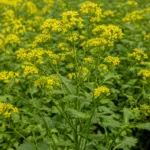 Brown Mustard (Brassica juncea) care guideBrassica juncea
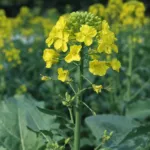 Rapeseed (Brassica napus) care guideBrassica napus
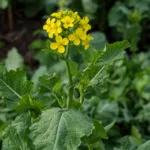 Urnip rape (Brassica rapa) care guideBrassica rapa
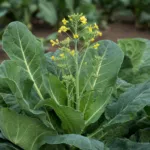 Collard greens (Brassica oleracea) care guideBrassica oleracea
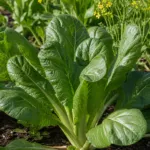 Integrifolia Group (Brassica juncea Integrifolia Group)Brassica juncea Integrifolia Group
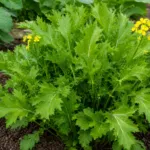 Multiceps Group (Brassica juncea Multiceps Group)Brassica juncea Multiceps Group
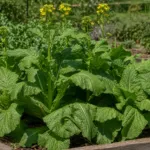 Broad-leaved mustard (Brassica juncea Rugosa Group)Brassica juncea Rugosa Group
 Black Mustard (Brassica nigra) care guideBrassica nigra