
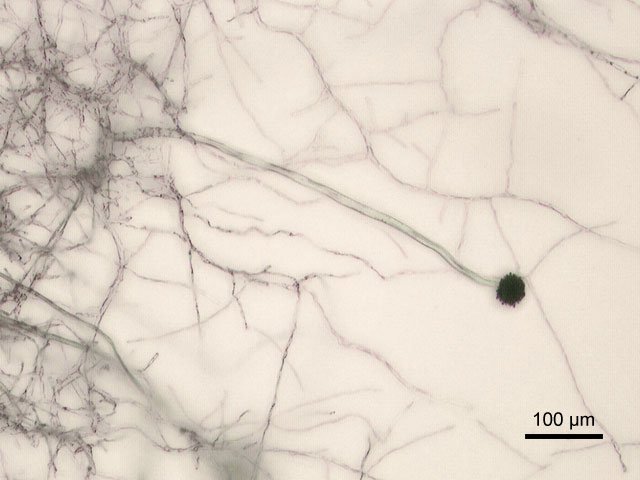
Black mold
Aspergillus nigerBlack mold overview
Black mold caused by Aspergillus niger is primarily a wound- and stress-associated disease of stored bulbs, fruits, grains, and some field crops. It produces characteristic masses of dark brown to black spores on decaying tissue, but similar symptoms may be caused by other black Aspergillus species. Accurate diagnosis may require laboratory culture or molecular identification, especially in grapes, figs, corn, and peanuts.
Typical conditions
Overview
Black mold develops when airborne spores colonize wounded, senescing, or otherwise stressed plant tissue. It is particularly important on onion and garlic bulbs after harvest, where black powdery growth commonly appears beneath dry scales or around the neck and basal plate. The fungus may also be involved in decay of grapes and figs, cankers of grapevines, infection of corn kernels, and crown rot of peanut.
The presence of black sporulation does not by itself prove that A. niger is the causal species. Other members of the black Aspergillus group, including A. carbonarius and related taxa, may be involved. Laboratory identification is recommended for commercial, recurrent, or food-safety-related cases.
Symptoms and identification
- On onion and garlic: black powdery spore masses between outer scales, commonly beginning at the neck, shoulders, wounds, or basal plate; affected scales may become water-soaked, brown, and soft.
- On grapes: berry rot, leakage, dark fungal growth on damaged fruit, or black-spored bunch rot; infected berries may collapse and attract fruit flies.
- On grapevines: sunken or slightly swollen cankers at branch points, pruning wounds, growth cracks, or shoot injuries; internal wood is brown to dead and may contain abundant black spores.
- On figs: internal or surface decay and black-spored fig smut, often associated with damaged or ripening fruit.
- On corn: kernel infection or ear rot, frequently favored by drought stress, heat, insect injury, or other ear damage.
- On peanuts: crown or seedling rot may occur, although symptomless endophytic colonization has also been documented.
Causes and spread
Spread occurs mainly through airborne conidia, contaminated soil and crop debris, infected planting material, harvest equipment, storage containers, and handling surfaces. Infection is favored when spores enter wounds caused by topping, pruning, cracking, insects, hail, mechanical harvest, digging, or abrasion. In stored bulbs and fruit, warm conditions, high relative humidity, free moisture, poor ventilation, and delayed cooling accelerate colonization. Drought, heat, nutrient imbalance, and other stresses can increase susceptibility in field crops.
Life cycle and persistence
The fungus survives as mycelium and abundant dark conidia on infected crop residues, soil, storage debris, mummified fruit, and contaminated equipment. Conidia disperse readily in air and are deposited on plant surfaces. They usually remain inactive until suitable moisture and a wound or weakened tissue provide an entry point. After germination, hyphae colonize the tissue, causing decay or canker development and producing new black conidial heads. In onions, latent infections may become active during warm, humid storage. In grapevines, infections initiated during the growing season may enlarge slowly and become conspicuous later in summer or fall.
Treatment and control
There is no reliable way to cure tissue that is already extensively colonized. In storage, promptly sort out soft, leaking, or heavily sporulating bulbs and fruit; do not return culled material to the compost used for edible crops. Improve ventilation, reduce excess humidity, and keep produce at the crop-appropriate cool storage temperature. For grapevines, prune out cankered wood during dry conditions and remove it from the vineyard. For corn and peanuts, reduce plant stress, limit kernel or crown injury, and manage residues and harvest operations to reduce contamination.
When the diagnosis is uncertain, submit representative symptomatic tissue to a county Extension plant clinic, university diagnostic laboratory, or qualified plant pathologist. This is especially important because black Aspergillus species, other storage molds, and unrelated rots can look alike.
Low-impact and biological control
Prioritize sanitation, wound reduction, rapid removal of infected material, proper curing, cool dry storage, and good air movement. Some postharvest biological products and low-risk treatments have shown activity against A. niger on particular crops, especially fruit, but performance is crop-, strain-, timing-, and label-specific. Use only products registered or otherwise legally authorized for the crop and intended use in the United States, and follow the current label. Do not apply household vinegar, bleach, alcohol, baking soda, or other unregistered mixtures directly to edible crops or living plants.
Prevention
- Use clean, healthy seed, transplants, sets, and planting material from reputable sources.
- Minimize wounds during harvest, digging, pruning, topping, packing, and transport. Handle onions, grapes, figs, corn, and peanuts gently.
- Cure onions and garlic thoroughly before storage, then maintain cool, dry, well-ventilated conditions with good air circulation. Remove damaged bulbs before storage.
- Harvest grapes and figs promptly at suitable maturity and cool or process fruit quickly. Avoid leaving cracked, overripe, or bird- and insect-damaged fruit in the crop.
- Prune grapevines during dry weather when practical, make clean cuts, remove infected canes well below visible cankers, and disinfect tools between suspect plants.
- Control insects and birds that wound fruit and ears, manage irrigation to reduce drought stress without creating prolonged wetness, and maintain balanced fertility.
- Remove and destroy infected crop residues, cull piles, mummified fruit, and heavily infected bulbs. Clean and dry bins, crates, tools, and storage areas between crops.
Interesting facts
- The name “black mold” describes the conspicuous dark conidial growth, not a single symptom that is unique to A. niger.
- Black Aspergillus species can act as postharvest pathogens, field pathogens, or symptomless endophytes depending on the host, tissue, strain, and environment.
- In grapevines, infections commonly begin at pruning wounds, branch junctions, growth cracks, or other injuries.
- Black Aspergillus contamination of corn, peanuts, grapes, and other commodities can have food- and feed-safety implications because some strains may produce mycotoxins. Do not eat or feed visibly moldy produce or grain.
- Species within the black Aspergillus group are difficult to distinguish reliably by appearance alone; molecular or specialist laboratory methods may be needed.
Chemical control is crop- and use-specific and may not be labeled for home gardens or for every disease situation. Use only products legally authorized in the United States for the specific crop and problem, and follow the current product label exactly, including crop, rate, preharvest interval, worker-protection requirements, and resistance-management directions. Fungicides generally protect healthy tissue better than they eradicate established internal decay or cankers.
Affected plants
The plants below are linked to this problem by structured host-plant data. The list updates automatically as new plant profiles are added.
 Onion (Allium cepa) care guideAllium cepa
 Allium christophii care guideAllium christophii
 Bunching onion (Allium fistulosum) care guideAllium fistulosum
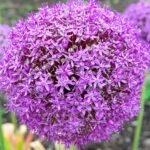 Giant Allium (Allium giganteum) care guideAllium giganteum
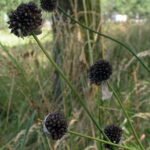 Ornamental onion (Allium) care guideAllium
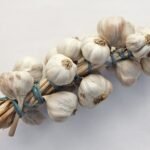 Garlic (Allium sativum) care guideAllium sativum
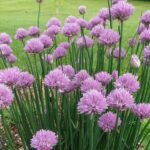 Chives (Allium schoenoprasum) care guideAllium schoenoprasum
 Ransoms (Allium ursinum) care guideAllium ursinum
 Wild leek or broadleaf wild leek (Allium ampeloprasum) care guideAllium ampeloprasum
 Shallot (Allium cepa Aggregatum Group)Allium cepa Aggregatum Group
 Cepa Group (Allium cepa Group)Allium cepa Cepa Group
 Rakkyo (Allium chinense) care guideAllium chinense