
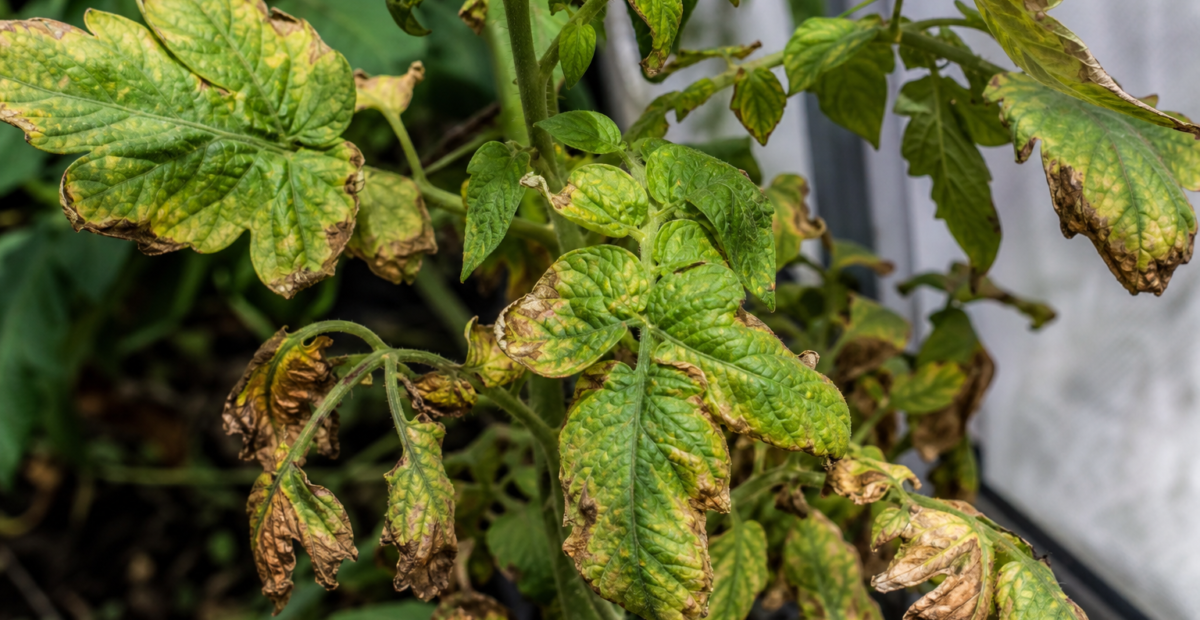
Chlorine deficiency (chloride deficiency)
Chlorine deficiency (chloride deficiency) overview
Chlorine deficiency is an uncommon nutritional disorder caused by inadequate chloride, the plant-available form of chlorine. Affected plants may show reduced growth, wilting, chlorosis, bronzing, necrotic leaf tissue and restricted roots. Because these symptoms overlap with drought, root injury, salinity imbalance and other nutrient deficiencies, confirmation with soil or tissue testing is important before applying chloride-containing fertilizer.
Typical conditions
Overview
Plants absorb chlorine mainly as the chloride ion (Cl⁻). Chloride is needed in very small amounts for photosynthesis, enzyme regulation, cellular water balance, membrane function and pH regulation. Deficiency is uncommon because chloride is widespread in soil, irrigation water, atmospheric deposition and many fertilizers.
When it does occur, symptoms are nonspecific and may resemble drought, root damage, nitrogen or potassium deficiency, salinity injury, poor drainage or disease. Treat the condition as a diagnosis to verify, not as a symptom to correct automatically.
Symptoms and identification
- Reduced overall growth and smaller leaves.
- Wilting or poor tissue turgor, sometimes followed by chlorosis.
- Bronzing, yellowing and sharply bounded necrotic areas on leaves.
- Reduced root growth; excessive lateral root branching may occur in some plants.
- In documented crop examples, chlorosis and necrosis have been reported in tomato and barley.
Symptoms may occur on more than one age of leaf, and their pattern is not sufficiently consistent for positive identification without testing.
Causes and spread
The disorder results from inadequate chloride reaching the root zone or from limited root uptake. Potential settings include heavily leached, coarse-textured or very low-rainfall soils, chloride-poor water and nutrient solutions, and root systems restricted by drought, compaction, injury or poor aeration. Rapid crop growth can also expose a marginal supply.
This is not an infectious disease and does not spread from plant to plant. Chloride is mobile in soil and moves with water, so leaching and irrigation management strongly influence availability.
Life cycle and persistence
Chlorine deficiency has no biological lifecycle. It develops when chloride supply, transport or uptake remains below the plant's requirement. Symptoms generally intensify as the imbalance continues and may improve after the root environment and chloride supply are corrected, although severely necrotic tissue will not recover. Chloride toxicity is a separate problem and can occur when salts accumulate, particularly in poorly drained soils.
Treatment and control
Confirm suspected deficiency with soil, irrigation-water or plant-tissue testing and compare results with crop-specific interpretation from a local Extension specialist or laboratory. Correct root-zone problems first: restore moisture, improve drainage and aeration, and reduce compaction or root damage.
If testing supports chloride deficiency, apply a measured, crop-appropriate chloride source such as potassium chloride, calcium chloride or ammonium chloride only when compatible with the crop's potassium, calcium, nitrogen and salinity requirements. Incorporate or water in according to the product and professional recommendation. Do not expect dead tissue to turn green; assess new growth after correction.
Low-impact and biological control
There is no biological control because chlorine deficiency is not caused by a pathogen or pest. Organic and low-input management should focus on building a functional root zone with mature compost where appropriate, maintaining mulch and consistent irrigation, avoiding compaction, and using an approved organic fertilizer that naturally supplies chloride only if its analysis and the crop's needs justify it. Avoid untested salt applications, including household salt, because chloride injury and salinity can develop quickly.
Prevention
- Use a soil or irrigation-water test when symptoms are unexplained; request chloride or soluble-salt information where available.
- Maintain even irrigation and avoid excessive leaching, while still providing adequate drainage.
- Prevent compaction, root injury and prolonged drought so roots can absorb nutrients effectively.
- Use a complete, crop-appropriate fertility program rather than repeated applications of a single nutrient.
- Do not add chloride simply because leaves are yellow; verify the diagnosis and distinguish deficiency from chloride salinity.
- For container and hydroponic production, monitor the nutrient solution and use a formulation appropriate for the crop.
Interesting facts
- Chlorine is an essential micronutrient, but plants need it in very small quantities.
- Chloride is the plant-available form; elemental chlorine gas is not a fertilizer nutrient.
- Deficiency is rarely observed in field conditions because chloride is common in soils, water, air deposition and fertilizers.
- Chloride toxicity or salinity is generally more common than true deficiency and may produce leaf-tip burn and root injury.
- Chloride helps regulate cell turgor, water movement, enzyme activity and photosynthesis.
No pesticide program is appropriate. If a chloride-containing fertilizer or soil amendment is used, select only a product legally authorized for the crop and intended use in the United States, follow the current product label, and account for total salt and chloride loading in the soil and irrigation water.
Affected plants
The plants below are linked to this problem by structured host-plant data. The list updates automatically as new plant profiles are added.
 Hardy Kiwi (Actinidia arguta) care guideActinidia arguta
 Kiwifruit (Actinidia chinensis deliciosa) care guideActinidia chinensis deliciosa
 Beet (Beta vulgaris) care guideBeta vulgaris
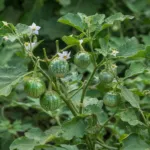 Solanum aethiopicum care guideSolanum aethiopicum
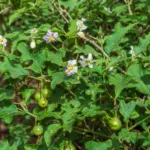 Solanum macrocarpon care guideSolanum macrocarpon
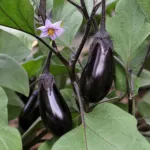 Eggplant (Solanum melongena) care guideSolanum melongena
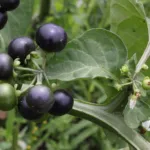 Garden Huckleberry (Solanum scabrum) care guideSolanum scabrum
 Taxodium ‘Distichum’Taxodium 'Distichum'
 Firethorn (Pyracantha coccinea) care guidePyracantha coccinea
 Red maple (Acer rubrum) care guideAcer rubrum