
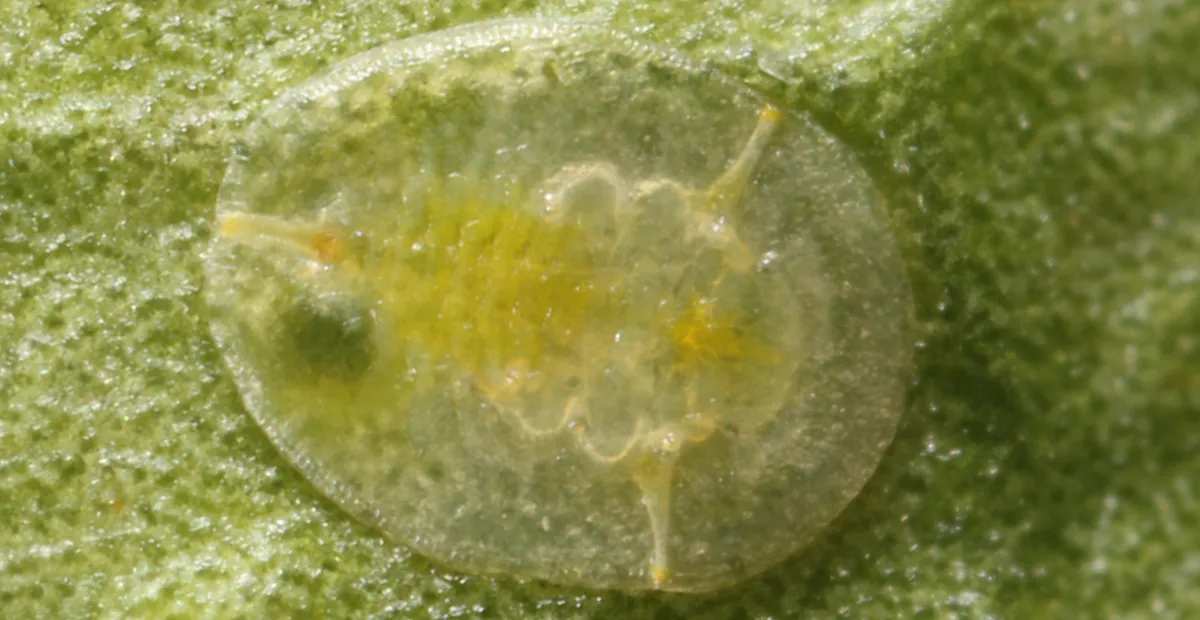
Citrus whitefly
Dialeurodes citriCitrus whitefly overview
Citrus whitefly, Dialeurodes citri, is a sap-feeding pest that primarily attacks citrus but may also colonize several ornamental and fruit trees. Nymphs live on leaf undersides and excrete honeydew, encouraging black sooty mold on foliage and fruit. Populations often rise during warm spring and summer weather, but conservation of natural enemies usually provides effective control.
Typical conditions
Overview
Citrus whitefly is a small hemipteran pest in the family Aleyrodidae. Adults are powdery white and about 3 mm long; the immature stages are flattened, pale and mostly immobile on the undersides of leaves. Citrus is the most important host, although documented infestations also occur on several ornamental and fruit-tree genera.
In the United States, the pest is most relevant in warm citrus-growing regions and on container-grown citrus moved between protected and outdoor environments. Identification should be confirmed because several whitefly species look similar as adults.
Symptoms and identification
- Clusters of pale, oval nymphs or pupal cases on leaf undersides.
- Adult whiteflies flutter from foliage when disturbed.
- Sticky honeydew on leaves, fruit or surfaces below the canopy.
- Black sooty mold developing on honeydew-coated foliage and fruit.
- Heavy infestations may cause leaf yellowing, reduced vigor, wilting or premature leaf drop.
- Fruit may become dirty with mold and may color or ripen unevenly when infestation is severe.
The pupal case of citrus whitefly has a characteristic Y-shaped marking on its back, useful for separating it from some other whiteflies.
Causes and spread
Adults and nymphs insert piercing-sucking mouthparts into phloem tissue and remove sap. Nymphal honeydew supports sooty mold, while ants attracted to honeydew may protect whiteflies from predators and parasitoids.
Spread occurs mainly through adult flight, movement of infested plants and transport of leaves or plant material bearing immature stages. Dense canopies, excessive nitrogen-driven soft growth, dust and broad-spectrum insecticides can favor outbreaks indirectly by reducing biological control.
Life cycle and persistence
Females lay small, pale eggs mainly on the undersides of young citrus leaves. The species passes through three nymphal instars followed by a thickened fourth-stage pupal case; adults emerge from the case and begin feeding and reproducing.
Under favorable warm conditions, a generation may be completed in roughly 7–8 weeks. In outdoor citrus, spring and summer activity is most conspicuous, with populations commonly increasing during summer. In cooler or unfavorable conditions development can take several months, and late immature stages may overwinter on foliage. Generation number varies with climate and host plant.
Treatment and control
Begin with monitoring rather than calendar spraying. Examine several leaves from different canopy positions with a hand lens and record immature stages, adults, honeydew and sooty mold. If plants remain vigorous and natural enemies are present, control may not be needed.
For small trees and landscape plants, wash leaf undersides with a firm stream of water and repeat as needed. Correct ant activity, improve canopy conditions and remove heavily infested leaves when practical. If treatment is justified because populations are increasing or honeydew and mold are unacceptable, target immature stages with a product legally authorized for the specific crop and site, using the least-disruptive option and following the current label exactly.
Low-impact and biological control
Conserve naturally occurring predators and parasitoids by avoiding pyrethroids, organophosphates and other broad-spectrum applications unless essential. Reported natural enemies of citrus whitefly include parasitoids such as Encarsia lahorensis, predatory beetles including Clitostethus arcuatus, and the entomopathogenic fungus Aschersonia aleyrodis under suitable humid conditions.
Water sprays, ant management, selective pruning and horticultural oils or insecticidal soaps may help on accessible plants when permitted by the product label. Apply contact materials thoroughly to leaf undersides, avoid heat or drought stress, and test a small area first because citrus and ornamental foliage can be sensitive.
Prevention
- Inspect new citrus and ornamental plants before purchase and isolate suspect plants before placing them near citrus.
- Check leaf undersides regularly from spring through late summer, especially above sticky leaves or sooty mold.
- Avoid excessive nitrogen fertilization and unnecessary shearing that produces dense, tender regrowth.
- Prune selectively to improve light penetration and airflow without removing excessive natural-enemy habitat.
- Control honeydew-collecting ants with exclusion, trunk barriers where appropriate, and locally suitable baiting practices.
- Reduce dust on foliage and avoid broad-spectrum insecticides that kill whitefly natural enemies.
- Remove badly infested fallen leaves and dispose of them; do not compost material containing live insects unless the composting process reliably destroys them.
Interesting facts
- The pest is commonly called citrus whitefly, although its documented host range extends beyond citrus.
- The Y-shaped marking on the pupal case is more diagnostically useful than the appearance of the adult.
- Honeydew-producing whiteflies can attract ants, which may interfere with biological control.
- Black sooty mold is an indirect consequence of whitefly feeding; it grows on honeydew rather than directly infecting healthy foliage.
- Biological control can suppress populations so effectively that insecticide treatment is often unnecessary in established citrus systems.
Use only pesticides legally authorized in the United States for the specific crop, site and citrus-whitefly problem. Always follow the current product label, including rates, application timing, personal protective equipment, re-entry interval, harvest interval and restrictions for pollinators or edible crops. Do not use a product merely because it is labeled for another whitefly species or another crop.
Affected plants
The plants below are linked to this problem by structured host-plant data. The list updates automatically as new plant profiles are added.
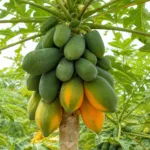 Papaya (Carica papaya) care guideCarica papaya
 Rattlesnake-plant (Goeppertia insignis) care guideGoeppertia insignis
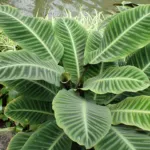 Zebra-plant (Goeppertia zebrina) care guideGoeppertia zebrina
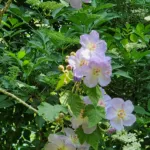 Corynabutilon vitifolium care guideCorynabutilon vitifolium
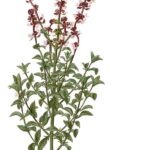 Basil (Ocimum basilicum) care guideOcimum basilicum
 Camphor basil (Ocimum kilimandscharicum) care guideOcimum kilimandscharicum
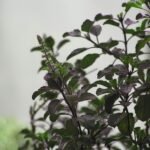 Holy Basil (Ocimum tenuiflorum) care guideOcimum tenuiflorum
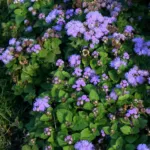 Flossflowe (Ageratum houstonianum) care guideAgeratum houstonianum
 Lemon verbena (Aloysia citrodora) care guideAloysia citrodora
 Gynura bicolor care guideGynura bicolor
 Gynura procumbens care guideGynura procumbens
 New Zealand yam (Oxalis tuberosa) care guideOxalis tuberosa