
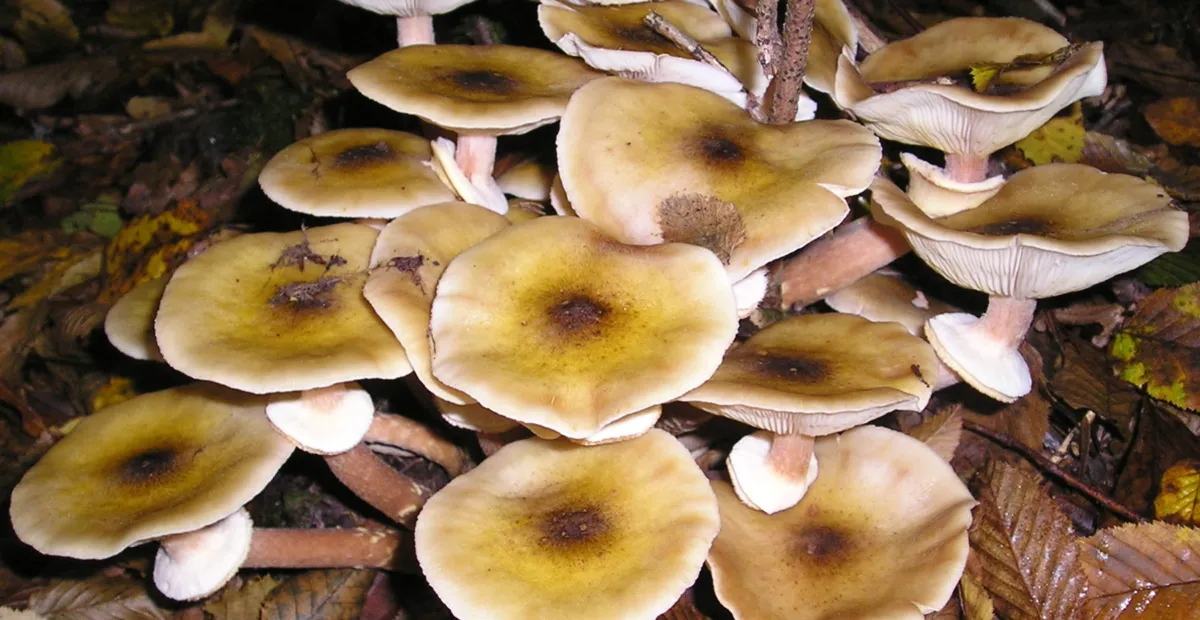
Armillaria Root Rot (Honey Fungus)
Armillaria melleaArmillaria Root Rot (Honey Fungus) overview
Armillaria root rot is a persistent soilborne fungal disease caused here by Armillaria mellea, commonly called honey fungus or oak root fungus. It attacks roots and the lower trunk of many woody plants, causing gradual decline, canopy thinning, dieback and sometimes sudden death. Diagnosis is strongest when white fan-shaped mycelium or black rhizomorphs are found beneath the bark or in soil near infected roots.
Typical conditions
Overview
Armillaria root rot is a destructive fungal disease of roots, root crowns and lower trunks. In the United States, the name Armillaria mellea has historically been applied broadly, but several Armillaria species occur in North America and their host ranges and importance vary by region. Therefore, species-level confirmation may require an experienced diagnostician or laboratory.
The fungus kills the cambium of woody roots and can girdle the trunk base. It also decays structural wood, increasing the risk of branch, trunk or whole-tree failure. Affected plants may decline slowly for years or wilt and die rapidly when infection and environmental stress are severe.
Symptoms and identification
Aboveground symptoms are often nonspecific and may resemble drought, excess irrigation, Phytophthora root rot, nutrient stress, girdling roots or insect injury. Common signs include reduced vigor, sparse or undersized leaves, premature yellowing, wilting, canopy thinning, branch dieback and eventual death. Evergreen hosts may show browning needles, resin flow near the base or an abnormal crop of cones.
Diagnostic signs include creamy-white, fan-shaped sheets of mycelium between bark and wood at the root crown or on major roots. Infected wood may be soft, stringy, spongy and strongly mushroom-scented. Dark brown to black, shoestring-like rhizomorphs may occur under bark or in soil. Honey-colored mushroom clusters may appear around the base of infected plants in fall, but mushrooms are seasonal and may be absent.
In orchards, vineyards and landscapes, diseased plants may occur in expanding patches or infection centers. Severely weakened trees can topple because roots and basal wood have decayed.
Causes and spread
The principal source is infected woody material left below ground, including old stumps, large roots and buried root fragments. Healthy roots become infected when they grow into contact with colonized wood or rhizomorphs. Disease centers can enlarge gradually as neighboring roots connect underground.
Spread is promoted by planting susceptible trees into former woodland, orchard or landscape sites containing residual roots; transporting infected soil or wood; root wounds; soil compaction; grade changes; poor drainage; excessive irrigation and drought or other stresses that reduce host resistance. Aboveground mushroom spores may contribute to reproduction, but they are usually less important than vegetative underground spread.
Life cycle and persistence
Armillaria mellea persists primarily as mycelium in infected roots, stumps and other woody debris. It can remain viable for many years, sometimes decades, after the original host has died. New infection usually begins when a healthy root contacts infected wood or when a rhizomorph grows through soil and contacts a susceptible root.
After penetration, the fungus colonizes the root cortex and cambium, spreads toward the crown and lower trunk, and decomposes structural wood as a white-rot fungus. Rhizomorphs are dark, cordlike fungal structures that aid underground spread. Honey-colored mushrooms may form near infected wood in favorable fall conditions and release spores, but spore infection is generally less important than root-to-root spread in landscapes and orchards.
Treatment and control
There is no reliable curative treatment for a severely infected mature tree. First confirm the diagnosis because symptoms overlap with other root disorders. A certified arborist should assess structural risk before work is undertaken.
- Remove and properly dispose of trees with advanced decline, extensive crown infection, major basal decay or dangerous structural weakness.
- Remove the stump and as many major roots as practical to reduce inoculum before replanting.
- For selected, moderately affected trees, carefully excavating soil from the root collar and upper structural roots may slow disease progression by keeping infected tissue drier. Use hand tools or suitable air excavation methods and avoid wounding roots or bark; leave the root flare exposed as recommended for the site.
- Correct chronic overwatering, improve drainage where feasible and reduce drought stress, recognizing that these steps may prolong functional life but do not remove the fungus.
- Do not replant immediately with a highly susceptible host in the same infested root zone.
Low-impact and biological control
No dependable organic treatment cures established Armillaria root rot. Organic and low-input management should focus on reducing inoculum and plant stress rather than applying unverified biological products.
- Remove infected trees, stumps and as many large infected roots as practical, especially before replanting.
- Do not move infected chips, firewood, roots or stump material to clean areas.
- Improve drainage and avoid routine irrigation that keeps the root crown or upper roots wet.
- Maintain a broad mulch ring to reduce drought stress, but keep mulch away from the trunk and root collar.
- Prevent mower, string-trimmer, construction and cultivation injuries to roots and trunks.
- Composted or chipped woody material may support naturally occurring antagonists such as Trichoderma, but commercial biological control products are not proven to eradicate established Armillaria and should not be treated as a cure.
Prevention
Before planting, investigate any history of Armillaria-related tree death, woodland clearing or old orchards. Remove stumps and large roots as thoroughly as feasible; small residual roots can still support infection, so complete eradication is difficult. Avoid planting highly susceptible replacement trees in heavily infested ground.
- Choose planting sites with good drainage and do not bury the root flare.
- Water according to soil moisture and plant need rather than a fixed frequent schedule.
- Keep irrigation off the trunk base and allow the upper root zone to dry appropriately between irrigations.
- Prevent root-zone compaction, construction damage and grade changes.
- Inspect declining trees promptly and have questionable trees evaluated by a certified arborist, particularly near buildings, roads or play areas.
- Use regional host-resistance information cautiously: tolerance differs among plant species, cultivars, Armillaria species and environmental conditions.
Interesting facts
- The common names “honey fungus,” “shoestring root rot” and “oak root fungus” refer to visible mushrooms, rhizomorphs or historical host associations; the disease is not restricted to oaks.
- Armillaria can function both as a pathogen on living roots and as a saprobe on dead woody material, allowing inoculum to persist after tree removal.
- Armillaria species formerly grouped under the name A. mellea have since been separated in North America, so older records may not represent the currently accepted species.
- Mushrooms are useful supporting evidence but are not required for diagnosis; white mycelial fans beneath bark are usually more informative.
- Root and basal wood decay can make an apparently living tree a serious storm-failure hazard.
No routine curative fungicide program reliably eliminates established Armillaria mellea infections. Soil fumigation is a specialized, site-specific measure with significant regulatory, environmental and practical limitations and may require licensed professionals or permits. Use only products legally authorized for the specific crop, site and problem in the United States, and follow the current product label exactly.
Affected plants
The plants below are linked to this problem by structured host-plant data. The list updates automatically as new plant profiles are added.
 Field maple (Acer campestre) care guideAcer campestre
 Paperbark Maple (Acer griseum) care guideAcer griseum
 Downy Japanese Maple (Acer japonicum) care guideAcer japonicum
 Boxelder (Acer negundo) care guideAcer negundo
 Acer palmatum care guideAcer palmatum
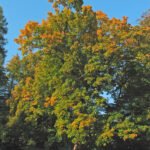 He Norway maple (Acer platanoides) care guideAcer platanoides
 Sycamore maple (Acer pseudoplatanus) care guideAcer pseudoplatanus
 Red maple (Acer rubrum) care guideAcer rubrum
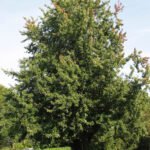 Silver maple (Acer saccharinum) care guideAcer saccharinum
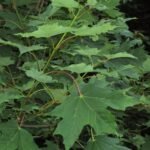 Sugar maple (Acer saccharum) care guideAcer saccharum
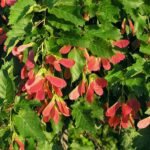 Tatar Maple (Acer tataricum) care guideAcer tataricum
 Amur Maple (Acer tataricum ginnala) care guideAcer tataricum ginnala