
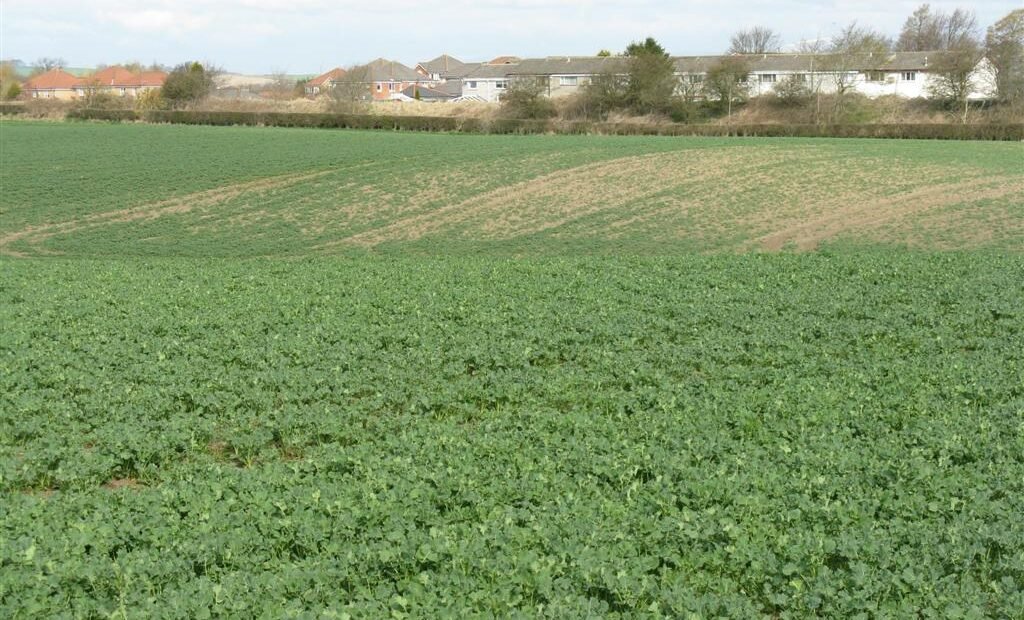
Waterlogging
Waterlogging overview
Waterlogging is an environmental disorder caused when soil remains saturated long enough to displace the air that roots need for respiration. Affected plants may wilt despite wet soil, develop yellow leaves, stop growing, shed foliage, or suffer root death and secondary root rots. Severity depends on plant species, root-zone temperature, soil texture, drainage, and how long saturation persists.
Typical conditions
Overview
Healthy soil contains both water and air. During waterlogging, water fills most or all pore spaces, restricting oxygen diffusion to the root zone. Root respiration, growth, nutrient uptake, and membrane function decline; prolonged oxygen deprivation can kill fine roots and, in severe cases, the whole plant.
Some plants tolerate saturated conditions better than others. Rice and several wetland-adapted species are relatively tolerant, while many vegetables, fruit trees, ornamentals, and container plants are sensitive. Waterlogging may occur after heavy rain, flooding, overirrigation, leaking irrigation systems, poor grading, compacted soil, heavy clay, or containers without effective drainage.
Symptoms and identification
- Wilting or drooping even though the soil is wet.
- Yellowing, premature leaf drop, stunting, reduced flowering, or poor fruit development.
- Slow root growth, sparse fine roots, brown to black soft roots, and a sour or anaerobic soil odor.
- Stem-base injury, dieback, or plant collapse after prolonged saturation.
- Greater susceptibility to secondary root and crown rots, including diseases favored by wet soil.
Symptoms are not diagnostic by themselves. Dig into the root zone and compare soil moisture, root color, firmness, and odor with a healthy plant. Drought, nutrient disorders, root-feeding pests, and infectious root diseases can produce similar foliage symptoms.
Causes and spread
Common causes include excessive rainfall or flooding, frequent irrigation, slow-draining clay soil, compaction from foot traffic or machinery, high water tables, low planting sites, blocked drains, downspout discharge, and containers lacking open drainage holes. A shallow hardpan or dense subsoil can also perch water above the root zone.
Waterlogging itself does not spread between plants like a pathogen. However, saturated conditions can move soilborne pathogens in runoff or floodwater and can increase infection by organisms such as Phytophthora and Pythium. Saturated, compacted soil also drains more slowly after each additional rainfall event.
Life cycle and persistence
This disorder develops whenever the root zone remains saturated longer than the plant can tolerate. Oxygen levels fall rapidly, respiration becomes inefficient, and toxic reduced compounds may accumulate. Root tips and fine feeder roots are often injured first; impaired roots then reduce water and nutrient uptake, causing aboveground wilting and chlorosis.
After drainage improves, new roots may regenerate if the crown and major roots remain alive. Recovery can be slow because damaged roots cannot immediately support the existing canopy. Secondary root rots may continue after the soil surface appears dry, so monitor the root zone rather than judging recovery only by surface conditions.
Treatment and control
- Stop irrigation and remove avoidable sources of water while protecting plants from additional flooding.
- Restore drainage by clearing outlets, opening blocked channels, redirecting runoff, or carefully improving surface flow.
- Do not cultivate, till, or walk on saturated soil; compaction can permanently reduce pore space and drainage.
- For container plants, move them to a protected draining location, empty saucers, and repot only when necessary into a clean, well-drained medium. Remove only clearly dead, soft roots.
- For garden plants, avoid aggressive root disturbance while the soil is wet. Once workable, improve the site or transplant small plants to a raised, better-drained location.
- After drainage returns, resume moderate irrigation only when the root zone begins to dry. Delay heavy fertilization until active root growth resumes.
- Inspect recovering plants for root or crown rot. Remove plants that have collapsed or whose roots and crown are extensively decayed.
Low-impact and biological control
There is no organic spray that reverses oxygen starvation. The most effective nonchemical control is cultural: stop excess water, restore drainage, reduce compaction, use raised beds or containers with adequate drainage, and select plants suited to the site. Mature compost can improve structure in some soils, but it will not correct a high water table or a blocked outlet by itself.
Use clean pots and fresh, appropriate growing medium for container plants. Remove severely rotted plants and roots, sanitize reusable containers and tools, and avoid moving contaminated soil or flood sediment to clean beds. Biological products should not be treated as substitutes for drainage correction; use only products with reliable, crop-specific evidence and legal directions for the intended use.
Prevention
- Choose planting sites and species according to drainage conditions; reserve wet areas for plants documented as moisture tolerant.
- Correct grading and direct roof or surface runoff away from beds and foundations.
- Use raised beds, berms, or mounded planting when appropriate, while avoiding buried root collars.
- Improve soil structure with organic matter based on a soil test, and avoid working or driving on wet soil.
- Install or maintain functioning surface or subsurface drainage where justified.
- Water according to soil moisture and plant need, not a fixed calendar. Allow containers to drain fully and keep drainage holes open.
- Use drip or soaker irrigation where practical, inspect irrigation systems for leaks, and avoid repeated shallow watering.
- Remove badly affected annual plants and dispose of diseased root material; clean tools and containers before reuse.
Interesting facts
Waterlogged roots can produce drought-like wilting because damaged roots cannot transport enough water to the leaves, even when abundant water surrounds them. Soil oxygen can remain limiting below the surface after the top layer appears dry.
Plant responses vary widely. Some wetland-adapted plants form aerenchyma, porous root tissue that helps move oxygen internally, whereas many garden crops lack sufficient adaptation. Duration of saturation is often more important than the number of separate watering events.
Waterlogging can also reduce nutrient uptake and alter soil chemistry, so chlorosis after flooding is not automatically proof of iron or nitrogen deficiency.
Chemical treatment is generally not the primary solution for waterlogging, and pesticides cannot restore oxygen to saturated soil. If a secondary root or crown disease is diagnosed, use only products legally authorized for that specific crop and problem in the United States, and follow the current label exactly. Do not apply fungicides or other pesticides solely because a plant has been waterlogged.
Affected plants
The plants below are linked to this problem by structured host-plant data. The list updates automatically as new plant profiles are added.
 Common juniper (Juniperus communis) care guideJuniperus communis
 Creeping juniper (Juniperus horizontalis) care guideJuniperus horizontalis
 Compressa (Juniperus communis ‘Compressa’)Juniperus communis 'Compressa'
 Dwarf Japanese garden juniper (Juniperus procumbens ‘Nana’)Juniperus procumbens 'Nana'
 Savin juniper (Juniperus sabina) care guideJuniperus sabina
 Rocky Mountain Juniper (Juniperus scopulorum) care guideJuniperus scopulorum
 Flaky juniper (Juniperus squamata) care guideJuniperus squamata
 Eastern redcedar (Juniperus virginiana) care guideJuniperus virginiana
 Juniperus × media ‘Gold Star’Juniperus × media 'Gold Star'
 Juniperus × media ‘Old Gold’Juniperus × media 'Old Gold'
 Pfitzer’s juniper (Juniperus pfitzeriana) care guideJuniperus pfitzeriana
 Magnolia ‘Star Wars’Magnolia 'Star Wars'