
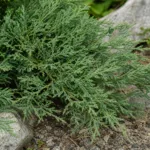
 AI-generated illustration
Juniperus × media ‘Gold Star’ short overview
Juniperus × media 'Gold Star' is a low, spreading evergreen hybrid juniper selected for its persistent golden-yellow scale foliage. Developed by J.C. Bakker & Sons in 1971, it forms a broad, layered habit suited to sunny rock gardens, slopes, retaining walls, borders, and large containers. This durable conifer tolerates drought, poor soil, and severe cold, but its foliage is brightest in full sun and may become yellow-green in shade.
Taxonomic classification
Juniperus × media ‘Gold Star’ care guide
Light and placement
Give this cultivar full sun for the strongest gold color, ideally with an open south-, east-, or west-facing exposure and good air movement. It tolerates partial shade, especially in hot climates, but shaded foliage may shift toward yellow-green and growth may become less dense. Scorched tips can indicate reflected heat or drought, while weak color and sparse growth usually indicate insufficient light.
Watering and humidity
Water deeply and slowly after planting, then allow the upper soil to dry slightly before watering again. During the first growing season, provide regular irrigation during dry spells; once established, water mainly during prolonged drought. Reduce watering in cool weather and avoid constantly wet soil, which increases root-rot risk. Humidity is not normally a care issue outdoors.
Soil and growing medium
Plant in any reasonably fertile or poor soil that drains freely. Sandy, gravelly, loamy, and clay soils are acceptable if compaction and prolonged winter saturation are avoided. The hybrid tolerates a broad pH range from moderately acidic through alkaline conditions, but drainage is more important than exact pH.
Feeding
Usually needs little fertilizer once established. Apply a thin layer of compost or a slow-release evergreen fertilizer in early spring if growth is weak or soil is demonstrably poor. Do not overfeed, fertilize drought-stressed plants, or apply high-nitrogen products late in the season, since soft growth can be more vulnerable to winter injury.
Growth and habit
This is a low, broad, spreading hybrid with layered or slightly arched branch growth. It remains close to the ground and gradually occupies surrounding space, making early weed control important during establishment. Its durable structure requires little routine maintenance beyond removing damaged branches and preventing nearby plants from crowding it.
Planting and repotting
Plant in spring or early fall while soil temperatures support root establishment. Set the root flare level with the surrounding soil and never bury the crown. Space about 4–6 feet apart for individual plants where a broad spread is desired; closer spacing creates faster groundcover but increases disease and pruning pressure.
Repot container plants in early spring before strong new growth, using a sharply drained potting mix with added grit or pumice. Move to the next container size only when roots have filled the existing pot. Avoid disturbing the root ball unnecessarily, and water thoroughly after transplanting.
Propagation and pruning
Propagation
Usually propagated from semi-hardwood cuttings taken in late summer or early fall. Use healthy non-flowering shoots, rooting hormone, sterile free-draining medium, and high humidity without waterlogging. Seed is not a reliable way to reproduce the named cultivar true to type.
Pruning
Little pruning is normally required. Remove dead, broken, crossing, or diseased branches in late winter or early spring. If shaping is necessary, make light cuts into younger green growth; avoid cutting deeply into old, leafless wood because junipers may not reliably regenerate from it.
Overwintering
Hardy outdoors through cold USDA Zone 4 conditions when well established and planted in well-drained soil. Water thoroughly before the ground freezes in regions with dry autumns, then protect young plants from drying winter winds with a loose windbreak if needed. Container plants are more vulnerable because roots are exposed; overwinter them in a sheltered location and prevent repeated freeze-thaw cycles.
Uses
Use as a low evergreen specimen, slope stabilizer, rock-garden accent, retaining-wall planting, border framework, or large-container conifer. Its golden foliage provides year-round contrast against dark evergreens and stone. It is ornamental rather than a culinary juniper, and the cultivar should not be promoted for food or medicinal use.
Appearance
Dense, evergreen scale foliage is bright golden yellow, with somewhat greener coloration in shade. Branches grow in low, successive oblique tiers and may arch slightly at the tips. The foliage is generally non-spiny and the plant develops a broad, ground-hugging outline rather than a narrow upright form.
Pollination and visitors
Junipers are wind-pollinated gymnosperms rather than insect-pollinated flowering plants. No reliable cultivar-specific evidence was found showing that 'Gold Star' attracts bees, butterflies, or other animal visitors.
Diseases and pests
Diseases
Avoid chronically wet soil, overhead irrigation, and poor air circulation. Potential problems include Phytophthora root rot, cankers, honey fungus, and browning associated with root stress. Remove dead or infected material, improve drainage, disinfect pruning tools, and avoid planting into sites with a history of severe root-rot disease.
Pests
Watch for aphids, juniper scale, bagworms, spider mites, and occasional caterpillars. Inspect dense branch junctions and new growth. Use strong water sprays for light infestations, improve plant vigor, and reserve horticultural oil or labeled insecticides for confirmed problems and suitable weather.
Related diseases and pests
Only Plant Doctor profiles whose host data indicate this plant may be affected are shown here.
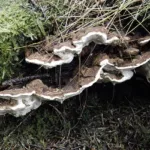 DiseaseHeterobasidion root diseaseHeterobasidion annosum
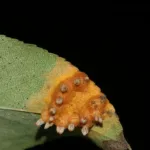 DiseasePear trellis rustGymnosporangium sabinae
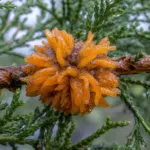 DiseaseCedar-Apple RustGymnosporangium juniperi-virginianae Schwein.
 PestBrown Garden SnailCornu aspersum (Müller, 1774)
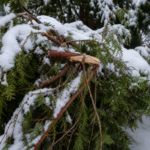 Environmental stressSnow Load Damage
 Environmental stressWind scorch
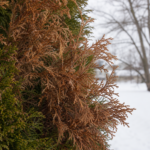 Environmental stressWinter desiccation (winter burn)
 Environmental stressRoot Anoxia
Toxicity and pollen
Reliable cultivar-specific toxicology information is limited. Junipers are not generally grown as edible plants, and ingestion of foliage or fleshy cones may cause gastrointestinal upset. Sap, foliage, or crushed plant material may irritate sensitive skin. Keep pruning waste away from children and pets and do not use this ornamental cultivar for food.
- Typical season
- Typically late winter through spring for junipers in the United States, but cultivar timing varies
- Pollination / pollen
- Airborne pollen released from male cones
Junipers release airborne pollen from male cones, commonly during late winter or spring in the United States. The allergy relevance of this exact cultivar is not well documented, and sex expression varies among plants, so a precise pollen-risk rating cannot be assigned. Sensitive gardeners should avoid handling pollen-producing plants during peak release and monitor local allergy forecasts.
Native habitat
The cultivar is horticultural rather than native to a defined wild habitat. Its hybrid background combines traits associated with Juniperus chinensis from eastern Asia and Juniperus sabina from Eurasia and North Africa. In cultivation it performs best in open, sunny, well-drained sites resembling dry rocky or upland conditions.
Interesting fact
The cultivar was selected by J.C. Bakker & Sons in 1971.
It is an improved, more spreading form of 'Pfitzeriana Aurea'.
Golden foliage is retained more consistently than in many older golden forms.
The hybrid combines parentage from Juniperus chinensis and J. sabina.
Its reproductive structures are cones, not botanical flowers.
Frequently asked questions (FAQ)
The most relevant questions about this plant, with short and direct answers.
🌱Quick care
Is Juniperus × media 'Gold Star' evergreen?⌄
Yes, Juniperus × media 'Gold Star' is an evergreen conifer that keeps its foliage year-round. Its spreading branches have green foliage with bright golden-yellow tips, although the color may be less vivid in partial shade.
How big does Juniperus × media 'Gold Star' get?⌄
Juniperus × media 'Gold Star' typically reaches about 2 to 3 feet tall and 5 to 8 feet wide, depending on growing conditions and pruning. Allow ample horizontal space because it forms a broad, spreading shrub rather than a compact upright plant.
How fast does Juniperus × media 'Gold Star' grow?⌄
Juniperus × media 'Gold Star' grows slowly to moderately, usually taking several years to reach mature size. Growth is faster when the plant receives full sun, well-drained soil, and consistent water during establishment.
Is Juniperus × media 'Gold Star' low maintenance?⌄
Yes, it is generally a low-maintenance shrub once established. It needs occasional watering during drought, little or no routine pruning, and good drainage to remain healthy.
🌤️Environment and placement
What light does Juniperus × media 'Gold Star' need?⌄
Plant Juniperus × media 'Gold Star' in full sun for the strongest growth and brightest golden foliage. It tolerates partial shade, but the foliage may become greener and the plant may grow less densely.
Can Juniperus × media 'Gold Star' grow in partial shade?⌄
Yes, Juniperus × media 'Gold Star' can grow in partial shade, especially where it receives several hours of direct light. Expect less intense yellow coloration and a potentially looser habit than plants grown in full sun.
What USDA hardiness zones are suitable for Juniperus × media 'Gold Star'?⌄
Juniperus × media 'Gold Star' is generally suitable for USDA Zones 4 or 5 through 8, depending on the local plant source and winter exposure. Protect newly planted specimens from drying winter winds until their roots are established.
What type of soil does Juniperus × media 'Gold Star' need?⌄
It grows in sandy, loamy, clay, rocky, or gravelly soil as long as the site drains well. Avoid persistently wet or compacted ground, because poor drainage can contribute to root problems.
Is Juniperus × media 'Gold Star' drought tolerant?⌄
Yes, Juniperus × media 'Gold Star' is drought tolerant once established. Water it deeply during its first growing season and provide occasional supplemental water during prolonged heat or drought.
Is Juniperus × media 'Gold Star' salt tolerant?⌄
Junipers often tolerate urban conditions and some exposure to salt, but salt tolerance can vary with the site and cultivar. Avoid piling deicing salt or salty snow directly around the root zone whenever possible.
💧Care and problems
How often should I water Juniperus × media 'Gold Star'?⌄
Water deeply when the soil begins to dry during the first growing season, rather than using frequent shallow irrigation. After establishment, water mainly during prolonged hot, dry weather, and avoid keeping the soil constantly wet.
Why is my Juniperus × media 'Gold Star' turning green?⌄
Reduced sunlight is a common reason the golden foliage becomes greener. Excess nitrogen, seasonal variation, dense interior growth, or general plant stress can also affect color, so improve light and drainage before adding fertilizer.
Why is my Juniperus × media 'Gold Star' turning brown?⌄
Brown foliage can result from drought stress, winter desiccation, root problems caused by wet soil, pests, or fungal disease. Check soil moisture and drainage first, then inspect for mites, scale, cankers, and sharply defined dead patches.
What pests affect Juniperus × media 'Gold Star'?⌄
Potential pests include aphids, scale insects, spider mites, and occasional caterpillars. Inspect yellowing or browning foliage and fine webbing closely, since symptoms can also be caused by drought or poor drainage.
What diseases affect Juniperus × media 'Gold Star'?⌄
Juniperus × media 'Gold Star' may be affected by root or crown rots, cankers, and other problems associated with wet soil or poor air circulation. Plant it in well-drained ground and remove badly damaged branches with clean tools.
🪴Planting and repotting
When is the best time to plant Juniperus × media 'Gold Star'?⌄
In the United States, plant it in spring or fall when temperatures are moderate and the soil is workable. Avoid planting during frozen ground, extreme summer heat, or periods when the site remains waterlogged.
How far apart should I plant Juniperus × media 'Gold Star'?⌄
Space plants about 5 to 8 feet apart for separate specimens, adjusting the distance to the expected mature spread and desired density. Measure from the center of each plant and allow extra room beside paths or buildings.
Can Juniperus × media 'Gold Star' grow in a container?⌄
Yes, it can grow in a large container with drainage holes and a sharply draining potting mix. Container plants dry out and experience winter temperature changes faster than plants in the ground, so monitor moisture and protect the root ball in severe cold.
✂️Propagation and pruning
How do you propagate Juniperus × media 'Gold Star'?⌄
Juniperus × media 'Gold Star' is usually propagated from semi-hardwood cuttings, commonly taken in late summer or early fall. Rooting can be slow and variable, so nursery-grown plants are generally more reliable for landscape planting.
Can you prune Juniperus × media 'Gold Star'?⌄
Yes, prune it lightly to remove damaged branches or control the outline. Avoid cutting deeply into old, leafless wood because junipers often produce little or no new growth from those sections.
When should Juniperus × media 'Gold Star' be pruned?⌄
Light formative or cleanup pruning is best done in spring or during the active growing season, depending on the task. Remove dead or damaged growth promptly, but avoid severe pruning during hot, dry weather or before extreme winter conditions.
⚠️Toxicity and safety
Is Juniperus × media 'Gold Star' toxic to dogs, cats, or people?⌄
Juniperus × media 'Gold Star' has low potential for harm if small amounts are eaten, but its foliage and cone-like fruits should not be consumed. Juniper plants can cause stomach upset, and handling may cause skin irritation in sensitive people.
Can touching Juniperus × media 'Gold Star' cause a rash?⌄
Yes, contact with Juniperus × media 'Gold Star' may irritate the skin in sensitive individuals. Wear gloves and long sleeves when pruning or handling the plant, and wash exposed skin afterward.
🌸Flowering and special interest
Does Juniperus × media 'Gold Star' flower?⌄
No, it does not produce showy flowers. Like other junipers, it produces small reproductive cones rather than ornamental blooms, and these may be inconspicuous or sporadic.
Does Juniperus × media 'Gold Star' produce berries?⌄
It may produce small, berry-like seed cones, although fruiting is not always prominent. Because juniper fruits can vary in toxicity and are not intended as food from this cultivar, do not eat them or allow pets to consume them.
Similar plants
 Rocky Mountain Juniper (Juniperus scopulorum) care guideJuniperus scopulorum
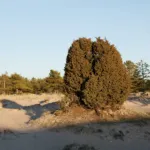 Common juniper (Juniperus communis) care guideJuniperus communis
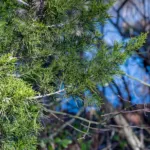 Eastern redcedar (Juniperus virginiana) care guideJuniperus virginiana
 Savin juniper (Juniperus sabina) care guideJuniperus sabina
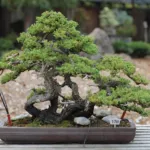 Dwarf Japanese garden juniper (Juniperus procumbens ‘Nana’)Juniperus procumbens 'Nana'
 Creeping juniper (Juniperus horizontalis) care guideJuniperus horizontalis