
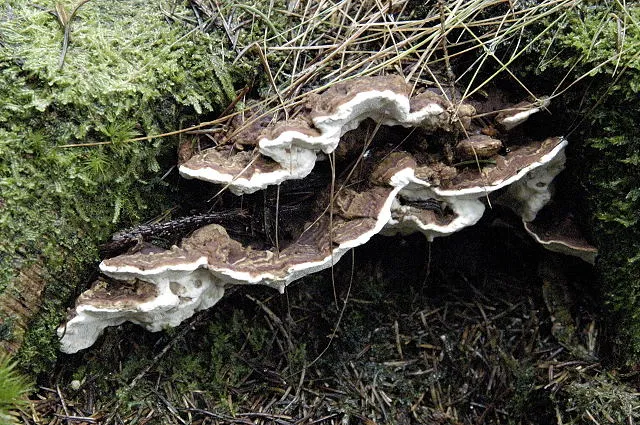
Heterobasidion root disease
Heterobasidion annosumHeterobasidion root disease overview
Heterobasidion root disease—historically called annosus root rot or annosus root and butt rot—is a destructive fungal disease of conifers. It often remains hidden until much of the root system has decayed, then appears as crown thinning, yellowing foliage, reduced vigor, windthrow or mortality. Fresh stumps and large wounds are important infection courts, while root contacts help the disease expand through a stand.
Typical conditions
Overview
Heterobasidion root disease attacks the roots, root crown and basal trunk of conifers. Infected trees may show no obvious canopy symptoms for a year or longer, and more than half of the root system can be lost before decline becomes visible. As decay advances, trees may become unstable and are especially vulnerable to windthrow.
In the United States, disease importance and host susceptibility vary by region and Heterobasidion biological species. It is particularly important in pine plantations and managed conifer forests, and also affects firs, hemlocks, cedars and other conifers. Broadleaf infections are reported but are uncommon.
Symptoms and identification
Early symptoms are often subtle or absent. Later signs and symptoms may include:
- thinning, yellowing or browning crowns;
- reduced shoot growth, sparse foliage and abnormal stress-cone production;
- tufted needles or branch flagging in some conifers;
- reddish, purplish or resin-stained bark near the base;
- windthrow or sudden decline caused by weakened roots;
- white, stringy or laminated decay in roots and butt wood;
- silver-white fungal flecks beneath loosened bark on recently dead pine roots;
- small buff-to-white button conks or larger woody, shelf-like fruiting bodies near the root collar, in stumps or on exposed roots.
Symptoms overlap with Armillaria root disease, laminated root rot, bark beetle injury, drought stress and other butt rots. A conk, characteristic decay and laboratory testing provide stronger evidence than crown symptoms alone.
Causes and spread
The primary spread pathway is airborne spores infecting fresh conifer stumps and substantial wounds. Root-to-root movement then occurs when infected roots contact healthy roots or form root grafts. Harvesting, thinning, storm damage, construction, logging traffic and other activities that create fresh wounds or leave large stumps can increase infection opportunities.
Spread and severity are also influenced by host susceptibility, stand age, drought, soil conditions, repeated management entries and secondary insects or pathogens. The fungus is not spread like a foliar disease by routine leaf-to-leaf contact.
Life cycle and persistence
Heterobasidion produces airborne basidiospores on conks and other fruiting bodies. Spores can travel long distances and commonly colonize freshly cut conifer stumps or large stem wounds. The fungus then grows through the stump and roots. When infected roots contact or graft with healthy roots, mycelium can move locally from tree to tree.
Stump and wound surfaces may remain susceptible for roughly 2–4 weeks after cutting or injury, although susceptibility depends on weather, tissue size and host. Disease centers generally expand slowly—about 1.5–5 feet per year in the western US sources—while large colonized stumps can remain important inoculum sources for decades. Fruiting bodies may be difficult to find, so diagnosis often relies on a combination of stand pattern, root examination, decay features and laboratory analysis.
Treatment and control
Once extensive root and butt decay is established, fungicides generally cannot reverse the structural damage. Management focuses on safety, diagnosis and reducing future inoculum.
- Have hazardous or structurally compromised trees assessed and removed by qualified professionals.
- For valuable trees with uncertain diagnosis, expose selected roots or submit fresh symptomatic tissue and decay samples to a diagnostic laboratory rather than relying only on crown appearance.
- Remove infected stumps and major roots when feasible and appropriate for the site; this is more practical in landscapes than in large forests.
- In localized high-value sites, professional root excavation or trenching may limit expansion, but these operations are disruptive and must be designed to avoid injuring remaining trees.
- Do not spread firewood, untreated stump material, root pieces or contaminated soil from an infected area.
- Replace removed trees with species appropriate for the region and site, taking the documented host range and disease history into account.
Low-impact and biological control
There is no dependable curative organic treatment that restores a substantially decayed tree. Integrated nonchemical management is therefore most important:
- remove and properly dispose of severely declining or hazardous trees when safety and site objectives require it;
- remove infected stumps and major roots where practical, particularly in high-value landscapes or small disease centers;
- consider a physical trench or root-zone separation around a confirmed disease center only with professional assessment, because excavation can damage remaining trees and utilities;
- avoid moving infected wood, root fragments, chips or contaminated equipment into uninfested areas;
- reduce avoidable root and trunk wounds during pruning, thinning, construction and mowing;
- maintain appropriate tree vigor through correct planting depth, irrigation during drought and avoidance of soil compaction;
- replant with locally suitable, less-susceptible or nonhost species when disease history and site conditions justify a change.
Biological stump products have variable performance and should not be assumed effective unless supported by local extension guidance and the product label.
Prevention
Prevention is more effective than attempting to cure established root decay.
- Plan thinning and removals to minimize large fresh stumps and avoid unnecessary wounds to residual trees.
- Where local forestry or extension guidance recommends it, treat freshly cut susceptible conifer stumps with a legally registered product immediately after cutting and exactly according to the current label.
- Schedule operations and sanitation practices according to regional risk; do not assume a product or timing used in one state is authorized or effective in another.
- Clean soil and wood debris from equipment before moving between disease centers.
- Inspect trees near large old stumps, skid trails, construction wounds and known infection centers.
- Improve stand diversity and use site-appropriate species or genotypes with lower susceptibility where replanting is possible.
- Have questionable trees evaluated by a certified arborist, consulting forester or plant disease diagnostic laboratory, especially near homes, roads or recreation areas.
Interesting facts
- The disease was formerly widely called annosus root disease, annosus root rot, Fomes root disease or annosus root and butt rot.
- Infection centers may begin at a single large stump and gradually expand through root contacts.
- Some infected trees have no visible crown symptoms even though substantial root decay is already present.
- Heterobasidion root disease can create hazardous trees by weakening the root system and butt.
- US taxonomy has been revised: older records under H. annosum may represent different biological species, including H. irregulare in many eastern and southern situations and H. occidentale in parts of the West.
Do not apply a pesticide or stump treatment unless the product is legally authorized for Heterobasidion root disease, the specific crop or site, and the intended use in the United States. Always follow the current EPA-approved label, state requirements, protective-equipment directions and disposal instructions. Preventive stump treatments may be used in some forestry settings, but product registration and label directions must be verified before use.
Affected plants
The plants below are linked to this problem by structured host-plant data. The list updates automatically as new plant profiles are added.
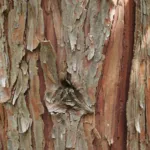 Incense Cedar (Calocedrus decurrens) care guideCalocedrus decurrens
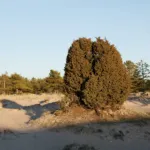 Common juniper (Juniperus communis) care guideJuniperus communis
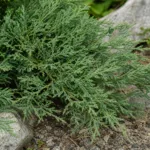 Creeping juniper (Juniperus horizontalis) care guideJuniperus horizontalis
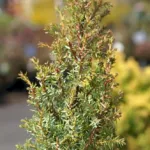 Compressa (Juniperus communis ‘Compressa’)Juniperus communis 'Compressa'
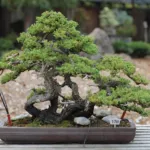 Dwarf Japanese garden juniper (Juniperus procumbens ‘Nana’)Juniperus procumbens 'Nana'
 Savin juniper (Juniperus sabina) care guideJuniperus sabina
 Rocky Mountain Juniper (Juniperus scopulorum) care guideJuniperus scopulorum
 Flaky juniper (Juniperus squamata) care guideJuniperus squamata
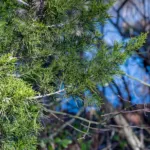 Eastern redcedar (Juniperus virginiana) care guideJuniperus virginiana
 Juniperus × media ‘Gold Star’Juniperus × media 'Gold Star'
 Juniperus × media ‘Old Gold’Juniperus × media 'Old Gold'
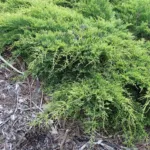 Pfitzer’s juniper (Juniperus pfitzeriana) care guideJuniperus pfitzeriana