Fruit Sunburn
Fruit Sunburn overview
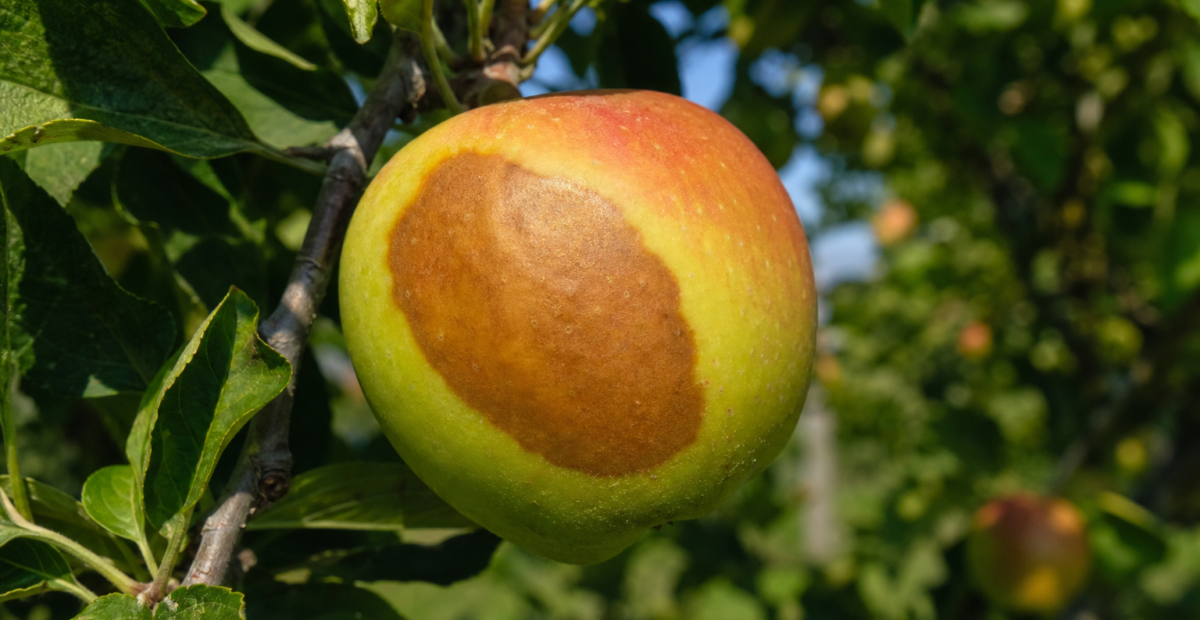
Fruit sunburn is a noninfectious heat and light injury that develops when exposed fruit tissue becomes hotter than it can tolerate, especially during heat waves, drought stress, sudden canopy loss, or excessive pruning. Damage commonly appears as yellow, bronze, brown, black, bleached, or sunken patches on the sun-facing side and may later crack, shrivel, or worsen in storage.
Typical conditions
Overview
Fruit sunburn, also called fruit sunscald, occurs when direct sunlight and heat injure the skin and sometimes the underlying flesh of developing fruit. It is especially important in apples and pears but can affect many fruiting plants, including avocado, peach, pomegranate, walnut, grape, and other crops.
Symptoms are usually strongest on fruit in the outer canopy and on the south- or southwest-facing side. The disorder can reduce fresh-market quality, create cracking or shriveling, and make fruit more vulnerable to postharvest decay. It does not spread from fruit to fruit as an infectious disease.
Symptoms and identification
Typical symptoms include:
- Yellow, pale, bronze, bleached, red-brown, dark brown, or black discoloration on the exposed side of fruit.
- A sharply localized patch corresponding to the direction of direct sunlight.
- Dry, sunken, hardened, wrinkled, or necrotic skin in severe cases.
- Surface cracking, splitting, shriveling, or internal browning beneath the injured skin.
- Small brown or blackened lenticels on apples and related fruit.
- Damage that becomes darker and more conspicuous during storage.
Sunburn is more likely when damage is concentrated on the sun-facing side and there is no pattern of soft rot, ooze, fungal growth, insect tunneling, or feeding punctures. Diagnosis can vary by crop and cultivar.
Causes and spread
Fruit sunburn results from excessive light exposure combined with high fruit temperature. Risk increases during heat waves, low humidity, drought stress, inadequate irrigation, sudden removal of leaves or limbs, storm or pest-related defoliation, and over-thinning of the canopy.
Overpruning, especially late in the season, can expose fruit that was previously shaded and poorly acclimated to intense sunlight. Weak roots, root damage, compacted soil, or irregular watering can reduce canopy growth and cooling. The disorder is not contagious and has no pathogen or insect vector.
Life cycle and persistence
There is no biological lifecycle because fruit sunburn is an environmental injury. Susceptible fruit may be injured within hours during intense heat and sunlight, particularly after abrupt exposure. Initially, tissue may appear pale or bleached; with continued heating it can turn yellow, bronze, brown, red, or black as cells die.
Injury remains on the fruit and cannot heal. Cracks, dead tissue, and weakened skin may enlarge as the fruit grows. Secondary fungi or bacteria may enter damaged areas later, but those organisms are consequences of the injury rather than its original cause.
Treatment and control
Existing sunburn cannot be reversed. Harvest lightly injured fruit for prompt fresh use or processing if quality and food safety remain acceptable; discard fruit with extensive cracking, decay, or severe tissue breakdown.
Correct the conditions that increase future injury: restore regular irrigation, avoid additional canopy removal, maintain healthy foliage, and protect newly exposed fruit during subsequent heat events. On small plantings, a properly applied reflective kaolin-clay film can reduce fruit heating. Follow the product label for crop timing, coverage, reapplication, and harvest restrictions.
Do not confuse sunburn with fruit rots, scab, russeting, insect injury, bitter pit, hail injury, or storage disorders. If symptoms are widespread or atypical, submit representative samples to a state university extension diagnostic laboratory.
Low-impact and biological control
Useful non-synthetic and organic-compatible approaches may include:
- Maintaining natural leaf shade with careful pruning and training.
- Using adequate irrigation and organic mulch to reduce drought stress.
- Applying a labeled kaolin-clay particle film to exposed fruit when permitted for the crop and production system.
- Using shade cloth or overhead protective netting on susceptible high-value plantings.
- Managing leaf-feeding pests and foliar diseases with integrated methods so premature defoliation does not expose fruit.
Kaolin does not repair existing injury and may require thorough coverage and reapplication after rain or canopy growth. Organic certification and allowed-use requirements differ by product and operation.
Prevention
Reduce exposure before hot weather arrives:
- Maintain a healthy, continuous leaf canopy through balanced pruning and training.
- Avoid severe or late-summer pruning before harvest, particularly on the exposed southwest side.
- Inspect trees after storms, disease outbreaks, or pest damage and protect newly exposed fruit when practical.
- Maintain even soil moisture through heat waves; irrigate deeply and consistently according to soil type, root depth, weather, and plant demand.
- Use mulch over the root zone to moderate soil moisture and temperature, while keeping mulch away from trunks.
- Choose cultivars and training systems suited to the local climate and site.
- For commercial orchards or high-value plantings, consider properly installed shade cloth, hail netting, or other protective structures where economically justified.
Interesting facts
Fruit sunburn has several recognized injury patterns. Photo-oxidative injury can occur when previously shaded fruit is suddenly exposed, while heat-related browning and necrosis develop as fruit temperature rises further. The damaged surface may initially look minor but become dark brown during storage.
Damage is often greatest on the southwest side of a tree because that surface receives intense afternoon sunlight. Adequate irrigation helps maintain canopy cover and plant cooling, but irrigation alone cannot compensate for severe canopy removal or direct exposure.
Sunburn is an abiotic disorder: it does not spread between plants, and fungicides or insecticides cannot reverse the original injury.
No pesticide is required to cure fruit sunburn because it is an environmental disorder. Use only products legally authorized for the specific crop and problem in the United States, and follow the current label exactly, including application rate, protective equipment, reentry interval, preharvest interval, crop listing, and permitted production-system requirements. Do not apply any product during heat conditions unless the current label and crop guidance support that use.
Affected plants
The plants below are linked to this problem by structured host-plant data. The list updates automatically as new plant profiles are added.