
 Source:
 Dwarf Japanese garden juniper (Juniperus procumbens ‘Nana’) short overview
Juniperus procumbens 'Nana' is a compact, slow-growing evergreen conifer that spreads into a dense blue-green mat. Its prickly, awl-shaped needles may take on a purplish cast in winter, while stiff branches can cascade over walls or mound where space is limited. Give it full sun, excellent drainage, and room to spread. It is useful in rock gardens, on slopes, in borders, containers, and bonsai collections.
Taxonomic classification
Dwarf Japanese garden juniper (Juniperus procumbens ‘Nana’) care guide
Light and placement
Give full sun—at least 6 hours of direct light daily—for the densest habit and strongest blue-green color. An open south- or west-facing position is usually suitable. Partial shade is tolerated, but low light can produce looser, thinner growth; excessive heat combined with reflected light may scorch foliage if roots become dry. Avoid enclosed, stagnant sites.
Watering and humidity
Water deeply when the upper few inches of soil begin to dry, then allow excess water to drain fully. Keep newly planted specimens evenly moist during their first season, reducing frequency after establishment. Mature plants tolerate short dry periods but perform poorly in constantly wet soil. Container plants need more frequent checks, especially in summer.
Soil and growing medium
Use sharply drained soil with a sandy, loamy, or rocky structure. The plant tolerates a broad pH range from acidic through alkaline, but persistent saturation and heavy, poorly drained clay can cause root problems. In containers, use a coarse, fast-draining conifer or bonsai mix rather than dense garden soil.
Feeding
Feed sparingly in early spring with a balanced, slow-release fertilizer at the label rate, or top-dress with a thin layer of finished compost. Avoid heavy nitrogen applications, late-season feeding, and fertilizing drought-stressed or newly transplanted plants. Mature specimens in fertile soil may need little supplemental nutrition.
Growth and habit
This cultivar forms a low, dense, spreading mat from stiff branches whose tips rise slightly. It grows slowly and may extend outward over time, cascade over walls, or mound on itself where space is restricted. Avoid routine shearing into bare wood, because old interior wood may produce little new foliage.
Planting and repotting
Plant in spring or fall when soil can be worked. Set the root flare at the soil surface rather than burying the crown. Allow roughly 5 to 6 feet of lateral space for a typical landscape specimen, or more where a broad mat is wanted. Water consistently during the first growing season while roots establish.
Repot container-grown plants in early spring before strong new growth, disturbing the root ball as little as practical. Move to only a slightly larger container, refresh compacted medium, and ensure generous drainage holes. Bonsai specimens require a specialized coarse mix and should not be kept waterlogged after repotting.
Propagation and pruning
Propagation
Propagate primarily from semi-hardwood cuttings, usually taken in late summer or early fall and rooted under consistent humidity. Cuttings preserve the cultivar, whereas seed is unreliable for maintaining 'Nana' characteristics. Rooting is practical but slower and more technical than ordinary division.
Pruning
Little pruning is normally needed. Remove dead, diseased, or badly misplaced branches in late winter or early spring, cutting back to a living lateral branch. Avoid repeatedly shearing into leafless older wood, which may not readily resprout. Tip pruning can maintain a container or bonsai silhouette.
Overwintering
Outdoor plants should remain dormant outside in their hardiness range. Protect young or container-grown specimens from drying winter winds with a sheltered position and water the root ball before the ground freezes. Containers are more vulnerable to root freeze-thaw injury; move them to an unheated protected location rather than a warm indoor room.
Uses
Use as a low groundcover, rock-garden plant, slope planting, border accent, wall cascade, container specimen, or bonsai subject. Its drought and erosion tolerance are useful on sunny, difficult sites. Do not treat the cultivar as a culinary juniper or use its cones for food without verified species and preparation guidance.
Appearance
The plant has dense, blue-green, sharply pointed awl-shaped needles arranged in whorls of three. Stiff branches spread close to the ground, with ascending tips that can overlap and form a textured mat. Needles may develop a purplish cast in winter, and the foliage remains evergreen year-round.
Pollination and visitors
Animal pollinator attraction is not well documented for this exact cultivar. Junipers are generally wind-pollinated, with male plants releasing pollen from small pollen cones; female plants may produce fleshy, berry-like seed cones. Therefore, no characteristic insect visitor group is assigned here.
Juniperus procumbens 'Nana' photos
Click any photo for a larger view. Source, author and license are shown separately.
Diseases and pests
Diseases
Avoid wet, poorly drained soil, which increases the risk of root rot. In rainy conditions, monitor for Phomopsis and other juniper tip or twig blights, seen as browning or dieback at shoot tips. Remove affected material during dry weather and improve air circulation; avoid overhead irrigation and disinfect pruning tools.
Pests
Inspect for spider mites, scale, aphids, bagworms, webworms, and twig borers. Drought-stressed plants are more vulnerable to mites, while dense or neglected growth can conceal scale and blight. Improve site conditions first, then use targeted treatment only when pests are confirmed.
Related diseases and pests
Only Plant Doctor profiles whose host data indicate this plant may be affected are shown here.
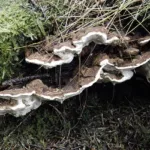 DiseaseHeterobasidion root diseaseHeterobasidion annosum
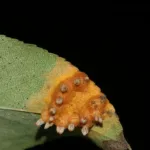 DiseasePear trellis rustGymnosporangium sabinae
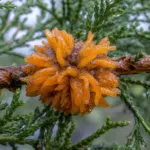 DiseaseCedar-Apple RustGymnosporangium juniperi-virginianae Schwein.
 PestBrown Garden SnailCornu aspersum (Müller, 1774)
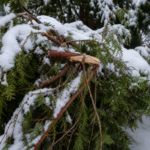 Environmental stressSnow Load Damage
 Environmental stressWind scorch
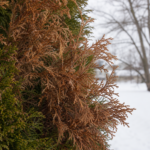 Environmental stressWinter desiccation (winter burn)
 Environmental stressRoot Anoxia
Toxicity and pollen
Reliable cultivar-specific human and pet toxicity data are limited. Juniper foliage is prickly and may irritate skin, while ingestion of juniper plant material or berry-like seed cones may cause gastrointestinal upset. Do not use this ornamental cultivar for culinary purposes, and seek veterinary or medical advice after significant ingestion.
- Typical season
- Late winter to spring, variable by region and plant sex
- Pollination / pollen
- Wind-dispersed conifer pollen
Junipers produce airborne pollen from male cones, commonly during late winter or spring in the United States. Exposure varies greatly with plant sex, weather, and regional juniper populations. The cultivar’s pollen-allergy risk is not well quantified, so sensitive gardeners should avoid handling or pruning during active pollen release.
Native habitat
The species is native to southern and western Japan, including coastal and temperate areas, and is associated with exposed, well-drained sites. It tolerates heat, drought, rocky soil, salt exposure, and erosion better than many broadleaf groundcovers, provided drainage remains good.
Interesting fact
The cultivar was introduced in Japan in 1922 and is widely used as a low groundcover and bonsai subject. Its specific epithet, procumbens, refers to the prostrate growth habit. The needle undersides can show two pale markings near the base, a useful identification feature.
Frequently asked questions (FAQ)
The most relevant questions about this plant, with short and direct answers.
🌱Quick care
What is Juniperus procumbens 'Nana' commonly called?⌄
Juniperus procumbens 'Nana' is commonly called dwarf Japanese garden juniper. It is a low-growing, evergreen conifer used as a ground cover, rock-garden plant, landscape accent, or bonsai subject.
How big does Juniperus procumbens 'Nana' get?⌄
Juniperus procumbens 'Nana' usually grows about 6–12 inches tall and 4–6 feet wide. Its slow, spreading branches may cascade over rocks or retaining walls as the plant matures.
Is Juniperus procumbens 'Nana' evergreen?⌄
Yes, Juniperus procumbens 'Nana' is an evergreen conifer that retains its blue-green needles year-round. The foliage may develop a purplish-green tint during winter.
How fast does Juniperus procumbens 'Nana' grow?⌄
Juniperus procumbens 'Nana' has a slow growth rate. Its eventual spread can take several years, so allow room for the branches to expand rather than planting it as a small, permanent mound.
🌤️Environment and placement
Does Juniperus procumbens 'Nana' need full sun?⌄
Yes, full sun is preferred, meaning at least 6 hours of direct sunlight daily. Strong light helps maintain dense foliage and reduces problems associated with weak, open growth.
Can Juniperus procumbens 'Nana' grow in partial shade?⌄
It may tolerate light partial shade, but full sun is better for compact growth and foliage color. Dense shade can produce thinner growth and may increase moisture-related problems.
What USDA hardiness zones are suitable for Juniperus procumbens 'Nana'?⌄
Juniperus procumbens 'Nana' is generally hardy in USDA Zones 4–9. Protection may still be useful for container-grown plants exposed to severe winter cold or drying winds.
Can Juniperus procumbens 'Nana' tolerate drought?⌄
Yes, established Juniperus procumbens 'Nana' tolerates drought and dry soil reasonably well. Water it during prolonged drought, especially during its first growing season or when grown in a container.
What soil is best for Juniperus procumbens 'Nana'?⌄
Use well-drained sandy, loamy, rocky, or clay soil. Drainage is more important than soil type because constantly wet soil can cause root problems.
Can Juniperus procumbens 'Nana' grow in clay soil?⌄
Yes, it can grow in clay soil if excess water drains away. Amend or mound a poorly drained site rather than planting the roots in a location that stays wet after rain.
Is Juniperus procumbens 'Nana' suitable for a rock garden?⌄
Yes, it is well suited to rock gardens, slopes, borders, and areas where it can spread or cascade. Its drought tolerance and low, mat-forming habit work especially well in sharply drained sites.
Can Juniperus procumbens 'Nana' be grown indoors?⌄
No, it is an outdoor plant and is not suited to long-term indoor growing. A juniper bonsai still needs outdoor light, airflow, and seasonal temperature changes.
💧Care and problems
How often should I water Juniperus procumbens 'Nana'?⌄
Water when the soil begins to dry, then soak the root zone thoroughly. Established landscape plants usually need only occasional watering, while containers may require more frequent checks during hot or windy weather.
Why is my Juniperus procumbens 'Nana' turning brown?⌄
Brown foliage can result from drought, root rot, winter injury, spider mites, or fungal dieback. Check soil moisture and drainage first, then inspect the foliage and branch tips for pests or disease.
Why is my Juniperus procumbens 'Nana' turning purple in winter?⌄
A purplish or purplish-green winter tint is usually a normal seasonal color change. It does not necessarily indicate damage if the foliage remains firm and resumes greener coloring in warmer weather.
What pests affect Juniperus procumbens 'Nana'?⌄
Possible pests include spider mites, scale, aphids, bagworms, webworms, and twig borers. Spider mites are more likely during hot, dry conditions, so inspect foliage for stippling, webbing, or dull gray color.
What diseases affect Juniperus procumbens 'Nana'?⌄
Potential problems include Phomopsis tip blight, other twig blights, cedar-apple rust, and root rot. Wet soil and unusually rainy weather can increase disease risk, so provide good air circulation and drainage.
Does Juniperus procumbens 'Nana' need fertilizer?⌄
It usually needs little fertilizer when planted in reasonably fertile soil. If growth is weak, apply a balanced, slow-release fertilizer in spring according to the product label rather than overfertilizing.
Is Juniperus procumbens 'Nana' deer resistant?⌄
Juniperus procumbens 'Nana' is generally considered deer resistant. Deer resistance is not absolute, especially when other food is scarce.
🪴Planting and repotting
When is the best time to plant Juniperus procumbens 'Nana'?⌄
Plant it in spring or fall when temperatures are moderate and the soil is workable. Avoid planting during extreme summer heat or when the ground is frozen.
How far apart should Juniperus procumbens 'Nana' be planted?⌄
Space plants according to the desired coverage, usually about 4–6 feet apart for mature individual spreads. Closer spacing creates faster visual coverage but increases competition and can reduce airflow.
Can Juniperus procumbens 'Nana' be grown in a container?⌄
Yes, it can grow in a container with drainage holes and a fast-draining potting mix. Container plants dry and freeze more quickly than plants in the ground, so monitor moisture and winter exposure carefully.
How do I repot a Juniperus procumbens 'Nana' bonsai?⌄
Repot it during an appropriate active-growth or early-season window using a sharply draining bonsai mix and a container with drainage holes. Avoid removing all the roots at once, and protect the repotted plant from severe stress while it reestablishes.
Can Juniperus procumbens 'Nana' be used as a ground cover?⌄
Yes, it is an effective evergreen ground cover with a low, spreading habit. It is particularly useful on slopes, in rock gardens, beside foundations, and where branches can spill over walls.
✂️Propagation and pruning
How do you propagate Juniperus procumbens 'Nana'?⌄
Propagate Juniperus procumbens 'Nana' primarily from semi-hardwood cuttings. Because rooting can be slow and variable, maintain consistent moisture and humidity without keeping the propagation medium waterlogged.
Can Juniperus procumbens 'Nana' be grown from seed?⌄
It can produce berry-like seed cones, but seed propagation is not the usual method for preserving the 'Nana' cultivar. Cuttings are preferred because they produce plants genetically identical to the parent.
When should Juniperus procumbens 'Nana' be pruned?⌄
Prune lightly in late winter, early spring, or when needed to remove damaged growth and maintain its outline. Avoid severe cuts into old, bare wood because junipers may not reliably regrow from leafless branches.
Can Juniperus procumbens 'Nana' be shaped as bonsai?⌄
Yes, it is a popular bonsai subject because of its low, spreading habit, evergreen foliage, and flexible branches. Keep bonsai specimens outdoors and use gradual pruning and wiring rather than drastic cuts.
How do I prune an overgrown Juniperus procumbens 'Nana'?⌄
Remove selected branches gradually and shorten live, green growth without cutting deeply into bare interior wood. If the plant is severely overgrown, renovation over several seasons is safer than one drastic pruning.
⚠️Toxicity and safety
Is Juniperus procumbens 'Nana' toxic to people or pets?⌄
The toxicity of this exact cultivar is not well established, so avoid ingesting the foliage or berry-like cones. Wear gloves when handling it because the sharp needles may irritate skin.
Can Juniperus procumbens 'Nana' cause skin irritation?⌄
Yes, its prickly foliage may cause skin irritation or aggravate sensitivity in some people. Wear gloves and long sleeves when planting, pruning, or moving the plant.
🌸Flowering and special interest
Does Juniperus procumbens 'Nana' produce flowers?⌄
No conspicuous flowers are produced because it is a conifer. Instead, female plants may develop small, berry-like seed cones, although cultivated plants may produce few or none.
Does Juniperus procumbens 'Nana' produce berries?⌄
It may produce blue-black, berry-like seed cones, but fruiting is not guaranteed. These structures are technically cones rather than true berries, and production depends partly on plant sex and pollination.
Similar plants
 Siberian Iris (Iris sibirica) care guideIris sibirica
 Algerian Iris (Iris unguicularis) care guideIris unguicularis
 Jasminum nudiflorum care guideJasminum nudiflorum
 Compressa (Juniperus communis ‘Compressa’)Juniperus communis 'Compressa'
 Iris x germanica (Iris germanica) care guideIris germanica
 Savin juniper (Juniperus sabina) care guideJuniperus sabina