

Winter desiccation (winter burn)
Winter desiccation (winter burn) overview
Winter desiccation, also called winter burn, is an abiotic dehydration injury of evergreen and semi-evergreen plants. Foliage continues losing water through winter sun and drying wind, while frozen or dry soil restricts root uptake. Browning is often concentrated on south-, southwest-, or wind-facing sides and may range from needle or leaf scorch to twig dieback and plant death.
Typical conditions
Overview
Evergreen leaves and needles remain living during winter and can continue losing water, especially during sunny, windy weather. If roots cannot replenish that water because the soil is frozen, dry, or poorly rooted, foliage cells dehydrate and die. Damage is commonly most severe on the south, southwest, west, or prevailing-wind side of the plant.
Newly planted trees and shrubs, plants entering winter drought-stressed, and species poorly adapted to the site are especially vulnerable. Winter desiccation is not caused by a pathogen, although dead or weakened tissue may later be colonized by opportunistic fungi or insects.
Symptoms and identification
- Needles or leaves turn gray-green, yellow, bronze, reddish, tan, or brown, usually from the tips or margins inward.
- Damage is often one-sided and follows the exposed, sunny, or windward part of the canopy rather than appearing uniformly throughout the plant.
- Broadleaf evergreens such as rhododendron may show curled, drooping, leathery, or marginally scorched leaves.
- Severe injury can cause bud death, twig dieback, foliage shedding, or death of the entire plant.
- Brown foliage is usually dead and will not return to green, but surviving buds may produce new growth in spring.
Causes and spread
This is an environmental water-balance disorder rather than a contagious disease, so it does not spread from plant to plant. Risk increases when winter wind and bright sun drive transpiration while frozen soil prevents root uptake. Dry autumn conditions, drought, exposed sites, reflective snow, shallow or damaged roots, salt exposure, transplant shock, and late-season succulent growth can intensify injury.
Winter desiccation can resemble salt injury, foliar disease, cold injury, or drought scorch. The characteristic exposure pattern and timing—often visible in late winter or early spring—help distinguish it from infectious problems.
Life cycle and persistence
The disorder develops seasonally. Plants with inadequate soil moisture or incomplete root establishment enter winter under stress. During winter, foliage loses water during sunny or windy periods while frozen soil limits uptake. Tissue injury accumulates, often beginning at exposed tips and margins. Symptoms become conspicuous during late winter or early spring as browned foliage and dieback appear. Recovery depends on whether buds, cambium, and roots remain alive; new growth may fill gaps during the growing season, while dead woody tissue will not regenerate.
Treatment and control
- Do not prune immediately after winter damage. Wait until mid-spring, when living buds and new growth show which shoots survived.
- Remove dead foliage and branches by pruning back to healthy living tissue; sterilize tools between visibly diseased or questionable plants.
- Water deeply during dry periods after the soil thaws, allowing excess water to drain.
- Maintain mulch and reduce additional wind, sun, drought, and salt stress during the recovery season.
- Do not assume all browning is recoverable: dead needles and leaves will not green up, and severely girdled or dead woody tissue may require replacement.
- Inspect recovering plants for secondary cankers, root problems, or insect attack, but do not treat without confirming the cause.
Low-impact and biological control
There is no biological control for winter desiccation because it is not caused by an organism. Practical nonchemical management includes deep watering before freeze-up, maintaining a 3–4-inch organic mulch layer, placing plants behind windbreaks, using loosely positioned burlap screens, and allowing protective snow cover to remain where it does not damage branches. Pine boughs can provide temporary wind and sun protection for small evergreens.
Prevention
- Choose species and cultivars suited to the local USDA hardiness zone and site exposure.
- Water plants adequately throughout the growing season, then provide a thorough soaking in late fall before the soil freezes. Continue watering during winter thaws when the ground is workable and the root zone is dry.
- Give newly planted evergreens extra attention until roots are established; avoid both drought stress and waterlogged soil.
- Apply about 3–4 inches of organic mulch over the root zone, keeping mulch away from trunks and root flares.
- Use a permeable burlap screen or windbreak on the south, southwest, west, or prevailing-wind side. Do not tightly wrap foliage or block ventilation.
- Do not apply heavy nitrogen fertilizer or prune late in the season in ways that encourage tender new growth.
- Reduce deicing-salt exposure and rinse salt-contaminated foliage and soil when conditions permit.
Interesting facts
- Evergreens are vulnerable because they retain transpiring foliage while deciduous plants shed their leaves.
- Winter injury is often worse on the south, southwest, or windward side because sunlight and air movement increase water loss.
- Snow can protect roots and foliage, but reflective snow cover may also intensify sunlight on exposed needles.
- Yew, arborvitae, hemlock, boxwood, spruce, fir, pine, juniper and rhododendron are among plants frequently reported with winter-burn symptoms, although susceptibility varies by species, cultivar and site.
- Winter desiccation is sometimes confused with salt injury, fungal disease, cold-temperature kill or drought scorch; distribution within the canopy is an important diagnostic clue.
No pesticide program is indicated for winter desiccation. Antidesiccant or antitranspirant products may have limited or inconsistent value and can injure some plants if misapplied; use them only when the current product label specifically authorizes the crop, plant type and use in the United States. Follow the current label exactly. Never use a pesticide to treat confirmed abiotic winter injury.
Affected plants
The plants below are linked to this problem by structured host-plant data. The list updates automatically as new plant profiles are added.
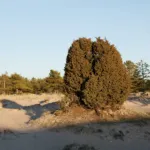 Common juniper (Juniperus communis) care guideJuniperus communis
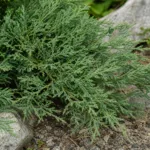 Creeping juniper (Juniperus horizontalis) care guideJuniperus horizontalis
 Compressa (Juniperus communis ‘Compressa’)Juniperus communis 'Compressa'
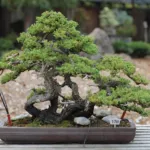 Dwarf Japanese garden juniper (Juniperus procumbens ‘Nana’)Juniperus procumbens 'Nana'
 Savin juniper (Juniperus sabina) care guideJuniperus sabina
 Rocky Mountain Juniper (Juniperus scopulorum) care guideJuniperus scopulorum
 Flaky juniper (Juniperus squamata) care guideJuniperus squamata
 Eastern redcedar (Juniperus virginiana) care guideJuniperus virginiana
 Juniperus × media ‘Gold Star’Juniperus × media 'Gold Star'
 Juniperus × media ‘Old Gold’Juniperus × media 'Old Gold'
 Pfitzer’s juniper (Juniperus pfitzeriana) care guideJuniperus pfitzeriana