Cherry leaf roll virus
Nepovirus aviiCherry leaf roll virus overview
Cherry leaf roll virus is a graft- and nematode-transmitted viral disease primarily affecting sweet cherry and peach, with apple also documented as a host. Infected trees may show narrow, folded or distorted green leaves, leaflike enations on the undersides, shortened shoots, gradual decline, bare lower limbs and reduced fruit production. Symptoms can be sporadic, so laboratory confirmation is important before removing valuable trees.
Typical conditions
Overview
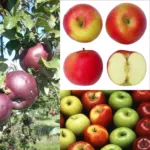
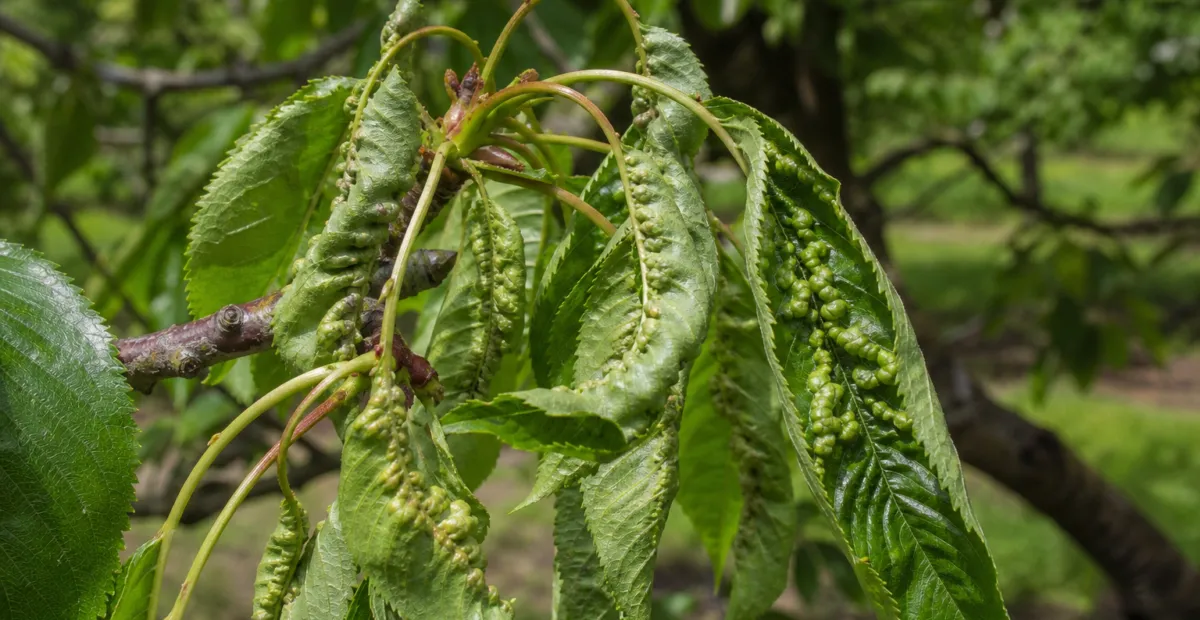
Cherry leaf roll virus is a systemic viral disease of woody fruit plants. In sweet cherry (Prunus avium) and peach (Prunus persica), infection can cause distorted, narrow, folded or puckered green leaves, leaflike outgrowths called enations, shortened internodes and progressive loss of vigor. In apple (Malus domestica), leaves may become small, long, narrow and rolled toward the midrib, and fruit may be flattened.
Symptoms are often uneven within a tree and may develop gradually from lower branches upward. Visual diagnosis is therefore provisional; confirm suspected cases with an accredited plant diagnostic laboratory using appropriate serological or molecular testing.
Symptoms and identification
- Sweet cherry and peach: leaves may be narrow, folded, puckered, deformed or otherwise distorted while remaining green.
- Prominent leaflike enations may develop on the underside between lateral veins and along the midrib.
- Internodes may shorten, fewer leaf buds may form, and lower limbs can become bare as infected spurs and branches decline.
- Symptoms may begin in the lower canopy, move upward slowly and appear sporadically rather than on every shoot.
- Apple: leaves may roll toward the midrib and become small, long, narrow and dry-looking; fruit can be small or flattened.
- Severe infection may reduce tree vigor, yield and fruit quality, but symptom expression varies with host, cultivar, isolate and mixed infections.
Causes and spread
The principal sources are infected propagation material and infected soil containing virus-carrying dagger nematodes. CLRV is transmitted through budding and grafting, making untested scionwood, rootstocks and nursery trees important long-distance pathways.
Documented nematode vectors include Xiphinema americanum sensu stricto, X. californicum and X. rivesi. These vectors generally move only short distances, so orchard spread is slow and may appear as localized or roughly circular patches. Soil movement, irrigation or runoff can assist local movement. Experimental sap transmission and seed transmission in some herbaceous hosts have been reported, but seed transmission in cherry is not considered a principal orchard pathway. Virus has been detected in cherry pollen, although pollen transmission has not been confirmed.
Life cycle and persistence
After introduction in infected planting material or acquisition by a dagger nematode, the virus establishes a systemic infection and gradually moves through the tree. Symptoms may first become visible in lower branches, followed by progressive canopy decline and sporadic symptoms in newer growth. Nematodes acquire the virus while feeding on infected roots and can transmit it during feeding on nearby susceptible roots.
Because vector movement is limited, spread within an orchard is usually slow. The virus can persist in infected perennial hosts for the life of the tree, and propagation from infected budwood or rootstock perpetuates infection immediately in new plantings.
Treatment and control
There is no curative treatment that eliminates CLRV from an infected perennial tree. Do not rely on pruning alone: virus is systemic, and asymptomatic tissues may remain infected. For valuable trees, obtain laboratory confirmation before removal because several other cherry viruses, phytoplasmas, herbicide injuries and nutritional or environmental problems can produce similar symptoms.
In commercial orchards, remove confirmed infected trees and associated propagation material when recommended by a plant pathologist, then replant only with tested stock. Where dagger nematodes are suspected, have soil sampled by a qualified diagnostic laboratory; management decisions should be based on confirmed vector and virus results rather than routine pesticide applications.
Low-impact and biological control
- Use clean, virus-tested propagation material and maintain strict tool sanitation during grafting and pruning.
- Rogue confirmed infected trees and destroy or remove infected budwood and rootstock material.
- Limit soil movement between orchard blocks and clean equipment before entering healthy plantings.
- Maintain good tree vigor through appropriate irrigation, nutrition, weed management and pruning, recognizing that these measures do not cure infection.
- Do not introduce unverified biological or organic nematode products as a substitute for diagnosis; efficacy against CLRV transmission is not established for home-orchard use.
Prevention
- Buy cherry, peach and apple trees, rootstocks and scionwood from reputable suppliers using virus-tested or certified propagation material.
- Do not propagate from trees with unexplained leaf distortion, enations, decline or flattened fruit.
- Use clean budding and grafting tools and avoid transferring budwood from untested trees.
- Inspect new plantings and isolate suspect nursery stock until its health status is known.
- Prevent movement of orchard soil on equipment, vehicles, tools and footwear, especially from a confirmed infested block.
- Remove and replace confirmed infected trees where economically and practically justified; coordinate commercial actions with the state plant regulatory agency or extension specialist.
- Submit representative symptomatic leaves, shoots and root-associated soil when laboratory diagnosis is requested.
Interesting facts
- Cherry leaf roll virus is sometimes confused with cherry rasp leaf virus; they are treated as different virus diseases in modern diagnostic literature.
- Historically, CLRV was grouped with nepoviruses, and older references may use names such as cherry leaf roll nepovirus.
- Sweet cherry cultivars may react similarly, but symptom intensity and visibility can vary greatly among trees and infections.
- Recent molecular work has confirmed CLRV in tree of heaven (Ailanthus altissima), expanding the documented host range and highlighting the importance of distinguishing confirmed hosts from speculative reservoir plants.
- The disease can reduce fruit production through declining spurs and branches even when leaf symptoms are intermittent.
No pesticide program cures an infected tree or reliably eradicates CLRV. Use chemicals only if a confirmed vector or another separately diagnosed problem warrants control, and only products legally authorized for that crop and problem in the United States; follow the current EPA-approved label, state requirements, reentry interval, preharvest interval and all personal-protection directions. Consult your state extension service before attempting nematode management.
Affected plants
The plants below are linked to this problem by structured host-plant data. The list updates automatically as new plant profiles are added.