

White Rust of Crucifers
Albugo candida (Pers.) KunzeWhite Rust of Crucifers overview
White rust, also called white blister rust, is an oomycete disease of cruciferous plants caused by Albugo candida. It produces raised, chalky-white pustules—usually on leaf undersides—and may distort stems, leaves, flowers, or seed heads into characteristic “stagheads.” Disease is favored by cool, wet weather and can spread through windblown or splashed sporangia, infected debris, volunteer plants, and susceptible weeds.
Typical conditions
Overview
Albugo candida infects plants in the mustard family (Brassicaceae). Common United States garden and vegetable hosts include arugula, bok choy, broccoli raab, Brussels sprouts, cabbage, cauliflower, Chinese cabbage, collards, kale, mustard greens, radish, rapini, tah tsai and turnip. Host susceptibility is not uniform: biologically distinct races or pathotypes may attack particular crucifer species or cultivars while failing to infect others.
The disease is often most noticeable in cool-season plantings. In leafy crops, white pustules reduce marketability even when overall plant vigor remains acceptable. Infection of flower stalks and developing seed heads can cause severe distortion, sterility and “staghead” symptoms.
Symptoms and identification
- Small yellow, pale green or chlorotic spots may first appear on the upper leaf surface.
- Raised white to creamy-white blisterlike pustules develop most commonly on leaf undersides, but also on petioles, stems, flower stalks and floral parts.
- When mature, the overlying epidermis ruptures and releases a powdery mass of white sporangia.
- Leaves may curl, distort, brown and die when infection is extensive.
- Systemically infected flowering shoots may become swollen, branched or severely deformed into stagheads; flowers can be sterile and seed yield can be reduced.
- White pustules should be distinguished from downy mildew, insect eggs, scale deposits and superficial powdery residues by examining their raised, blisterlike position and spore release.
Causes and spread
The pathogen is an obligate parasite that requires living susceptible plant tissue. Sporangia released from pustules can move short distances in wind, rain splash, irrigation water, workers’ hands and tools. In free water, they may release motile zoospores that swim across wet plant surfaces and enter chiefly through stomata.
Longer-term carryover may occur through thick-walled oospores in infected crop residue or soil, and through living infected perennial or volunteer hosts. Susceptible weeds and volunteer brassicas can maintain inoculum between plantings. Because host-specific races occur, a disease history on one crucifer does not prove that every crucifer cultivar in the same bed is equally vulnerable.
Life cycle and persistence
Albugo candida produces asexual sporangia in the white pustules. Under cool conditions with free moisture, sporangia germinate and release zoospores. Zoospores encyst, germinate and penetrate susceptible tissue, often through stomata. The pathogen then grows between host cells and forms feeding structures inside them.
New pustules release additional sporangia, creating repeating secondary infection cycles during prolonged cool, wet weather. Sexual reproduction produces thick-walled oospores, especially in older or systemically infected tissue and deformed flower heads. These structures can persist in plant debris or soil and initiate infection when suitable moisture and temperature return. Exact survival importance varies with host, race, climate and production system.
Treatment and control
There is no reliable curative treatment for tissue that is already systemically infected. Remove isolated infected leaves or plants early, bag them and dispose of them away from the growing area. For valuable perennial or root crops, remove infected shoots and reduce volunteer regrowth, but recognize that internal infection may remain.
Reduce new disease by keeping foliage dry as practical, increasing air movement, avoiding overhead irrigation during cool wet periods and removing infected debris. If a crop is being grown for sale, repeated scouting at least weekly during cool, damp weather helps identify new pustules before spores spread widely. Severe outbreaks in leafy greens may make harvest uneconomical, in which case prompt removal followed by a non-crucifer rotation is generally more effective than repeated rescue attempts.
Low-impact and biological control
Prioritize sanitation, crop rotation, weed and volunteer control, clean planting material, wider spacing and irrigation practices that shorten leaf-wetness duration. Remove isolated pustules or affected leaves before they rupture when this can be done without spreading spores. Disinfect tools after handling diseased plants and avoid touching healthy plants while foliage is wet.
No universally dependable organic cure should be assumed for Albugo candida. Products marketed for oomycete or downy-mildew suppression may have limited preventive value in some crops, but efficacy, crop safety and legal status must be verified for the exact crop and formulation. Biological products should be regarded as supplementary rather than a replacement for sanitation and moisture management unless independent local evidence supports them.
Prevention
- Use clean, disease-free seed and transplants from reputable sources.
- Inspect seedlings and transplants before planting; isolate or discard plants with suspicious white pustules or distorted flower shoots.
- Remove and destroy diseased plants and crop residue promptly; do not compost infected material unless the composting system reliably reaches pathogen-killing temperatures.
- Control volunteer brassicas and susceptible cruciferous weeds around beds and field margins.
- Rotate to non-Brassicaceae crops, especially after a serious outbreak. A multi-year rotation is prudent where soilborne carryover or perennial hosts are suspected.
- Use drip or carefully directed irrigation where practical, improve spacing and airflow, and avoid working among wet plants.
- Select cultivars described by the seed supplier as resistant to white rust when resistance is documented for the specific crop and local pathotype; resistance is not universal.
Interesting facts
- Despite its common name, white rust is caused by an oomycete, not by a true rust fungus.
- The disease has both local blister symptoms and systemic forms that can deform flowering structures into stagheads.
- Albugo candida populations contain host-specialized races or pathotypes, so resistance and host range can differ among isolates.
- The pathogen can interact with other crucifer diseases, including downy mildew, and infection may alter host defense responses.
- Commercial damage is often greatest in leafy greens because even small white pustules make leaves unmarketable.
Use chemical products only when they are currently legally authorized in the United States for the specific crop and disease, and follow the current product label exactly, including rate, application interval, personal protective equipment, reentry interval and preharvest interval. Products effective against downy mildews may also suppress white rust in some crops, but label authorization and local recommendations differ. Do not use an off-label pesticide program, and do not assume that a product labeled for one crucifer is legal or safe on another.
Affected plants
The plants below are linked to this problem by structured host-plant data. The list updates automatically as new plant profiles are added.
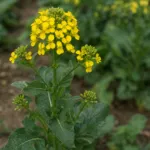 Ethiopian Rape (Brassica carinata) care guideBrassica carinata
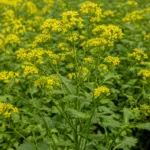 Brown Mustard (Brassica juncea) care guideBrassica juncea
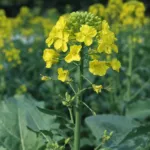 Rapeseed (Brassica napus) care guideBrassica napus
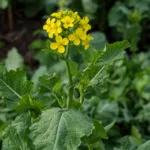 Urnip rape (Brassica rapa) care guideBrassica rapa
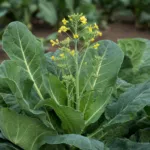 Collard greens (Brassica oleracea) care guideBrassica oleracea
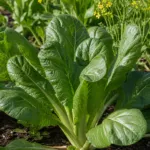 Integrifolia Group (Brassica juncea Integrifolia Group)Brassica juncea Integrifolia Group
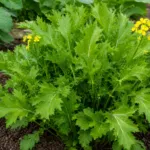 Multiceps Group (Brassica juncea Multiceps Group)Brassica juncea Multiceps Group
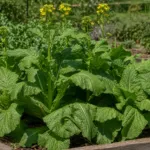 Broad-leaved mustard (Brassica juncea Rugosa Group)Brassica juncea Rugosa Group
 Black Mustard (Brassica nigra) care guideBrassica nigra
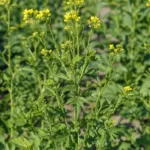 White Mustard (Sinapis alba) care guideSinapis alba
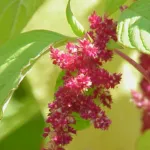 Edible amaranth (Amaranthus tricolor) care guideAmaranthus tricolor
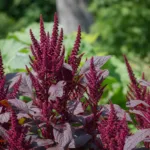 Amaranth (Amaranthus cruentus) care guideAmaranthus cruentus