
 Source:
 Edible amaranth (Amaranthus tricolor) short overview
Edible amaranth is a warm-season annual grown both as a leafy vegetable and as a colorful ornamental. Amaranthus tricolor forms upright stems with tender green, red, purple, or variegated leaves, while its small flowers occur in dense clusters rather than showy petals. It grows quickly from seed, tolerates heat and short dry periods once established, and is best planted outdoors only after the soil has warmed.
Taxonomic classification
Edible amaranth (Amaranthus tricolor) care guide
Light and placement
Grow edible amaranth in full sun with at least 6 hours of direct light for compact growth and strong leaf color. In hot regions, some late-afternoon shade can reduce leaf scorch and wilting. Weak, stretched stems and pale foliage usually indicate insufficient light; bleached patches, crisp margins, or midday collapse despite moist soil suggest excessive heat or root stress.
Watering and humidity
Water deeply when the upper inch of soil begins to dry, keeping the root zone evenly but not constantly saturated. Young plants need more regular watering while establishing; mature plants tolerate brief dry periods but produce tougher leaves when repeatedly stressed. Reduce watering in cool weather and use drip irrigation or a low stream at soil level to keep foliage drier.
Soil and growing medium
Use fertile loam or a well-drained raised-bed mix enriched with finished compost. The soil should retain enough moisture for rapid leafy growth without staying waterlogged, since saturated conditions encourage root problems. A slightly acidic to slightly alkaline reaction is suitable; avoid strongly compacted clay and improve drainage before planting.
Feeding
In garden soil, incorporate finished compost before sowing. For repeated leaf harvests, apply a balanced vegetable fertilizer at label strength after thinning or when plants resume vigorous growth. Avoid heavy nitrogen applications late in the season because excessive lush growth can weaken stems and dilute foliage color. Do not feed drought-stressed or waterlogged plants until conditions improve.
Growth and habit
This fast-growing annual develops an upright, branching habit and may become broad when grown for repeated leaf harvests. Harvesting young shoot tips encourages branching and delays coarse growth. Plants can self-sow where seed matures, although volunteer seedlings may vary in foliage color and are not always true to a named cultivar.
Planting and repotting
Direct-sow after frost danger has passed and the soil has warmed. Scatter or drill the very small seeds shallowly, keep the surface evenly moist, and thin seedlings once they are established. For baby greens, closer spacing and successive sowings work well; for mature plants, provide wider spacing and good airflow. Harden off indoor-grown transplants before setting them outside.
Container-grown plants can be moved into a larger pot when roots fill the current container or growth becomes crowded. Use a fertile, well-drained potting mix and a container with drainage holes. Transplant before the plant becomes root-bound, water thoroughly afterward, and provide several days of protection from intense afternoon heat.
Propagation and pruning
Propagation
Propagate from seed. Sow directly outdoors after the soil warms, or start seed indoors about 4–6 weeks before the intended transplant date. Cover very lightly because the seeds are small. Keep seedlings evenly moist until established, then thin or transplant carefully to avoid disturbing the shallow young roots.
Pruning
Pinch or harvest the growing tips when plants reach usable size to encourage branching and prolong tender leaf production. Remove damaged or diseased foliage promptly. At the end of the season, cut plants to the ground after frost or seed collection; routine structural pruning is not otherwise required.
Overwintering
This species is frost-tender and normally finishes with the first hard freeze. In temperate U.S. regions, collect mature seed before frost and re-sow the following spring. Plants may be grown temporarily indoors in a bright, warm location, but low winter light often causes weak growth and reduced foliage quality.
Uses
Used primarily as a leafy vegetable, microgreen, seed crop, and colorful bedding or container plant. Young leaves and tender shoots can be cooked like spinach, while seeds may be used as a grain or sprouted. Wash produce carefully and avoid harvesting from plants exposed to herbicides, contaminated soil, or uncertain identification. Culinary use should not be treated as a medicinal recommendation.
Appearance
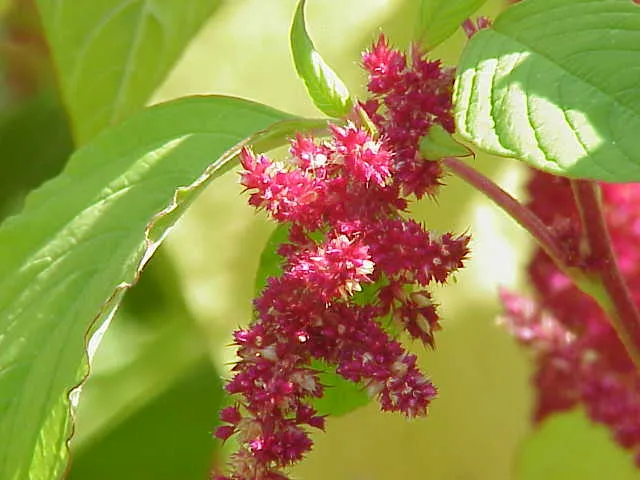
Stems are generally erect and green to reddish, carrying simple ovate to lance-shaped leaves. Foliage may be green, burgundy, red, purple, or patterned with contrasting colors, especially toward the upper growth. The small, mostly inconspicuous flowers are packed into axillary clusters and terminal spikes, making the foliage more ornamental than the floral display.
Flowering
The species produces tiny, unshowy flowers arranged in compact clusters near the leaf axils and toward stem ends. Flowers are unisexual but occur on the same plant. Flowering generally begins in summer and may continue into early fall in warm U.S. gardens. The main ornamental effect comes from the foliage rather than the flowers.
Pollination and visitors
Amaranthus tricolor is primarily self-pollinated and wind-pollinated. Its tiny flowers are not documented as a dependable nectar resource, and animal visitation is not necessary for normal seed production.
Amaranthus tricolor photos
Click any photo for a larger view. Source, author and license are shown separately.
Diseases and pests
Diseases
Root rot is the main risk in persistently wet soil. Use well-drained beds or containers, avoid overwatering, and provide airflow between plants. Leaf spots and downy or white-rust-like symptoms are more likely in crowded, wet foliage; remove affected leaves, water at the soil surface, rotate crops, and avoid saving seed from severely diseased plants.
Pests
Watch for aphids, leaf miners, flea beetles, caterpillars, and spider mites, especially on stressed or crowded plants. Inspect leaf undersides regularly, remove small infestations by hand or with a water spray, and use insecticidal soap only when needed and according to the label. Harvest edible foliage only after observing the product’s stated preharvest interval.
Related diseases and pests
Only Plant Doctor profiles whose host data indicate this plant may be affected are shown here.
 PestTomato red spider mite (Tetranychus evansi)Tetranychus evansi Baker & Pritchard
 PestBeet ArmywormSpodoptera exigua (Hübner)
 PestChilli thripsScirtothrips dorsalis Hood
 DiseasePseudomonas viridiflava bacterial blightPseudomonas viridiflava
 DiseasePolymyxa betae — Vector of Beet RhizomaniaPolymyxa betae Keskin
 DiseaseLettuce mosaicLettuce mosaic virus
 PestBeet Cyst NematodeHeterodera schachtii
 DiseaseCucumber mosaic virusCucumber mosaic virus
Toxicity and pollen
Leaves, tender stems, and seeds are used as food, but edible status depends on correct identification and clean growing conditions. Amaranths can contain oxalates and nitrate levels may rise under certain growing conditions, so use varied portions, cook leaves when appropriate, and avoid produce from contaminated soil or heavily fertilized sites. People with relevant dietary restrictions should consult a qualified clinician.
- Typical season
- Usually summer to early fall in the United States
- Pollination / pollen
- Light, wind-dispersed pollen; flowers can also self-pollinate
The species releases light pollen associated with wind pollination, and Amaranthaceae pollen is documented as an inhalant allergen in some regions. Evidence is stronger for the family and related Amaranthus species than for every U.S. population of this exact species, so sensitivity varies. People with pollen allergies should avoid handling flowering plants in dry, windy conditions and keep windows closed during peak exposure.
Native habitat
The species is native to tropical Asia and is associated with warm, seasonally dry climates, cultivated ground, disturbed sites, and fertile open soils. In the United States it is mainly grown as a summer vegetable or ornamental rather than treated as a reliably hardy perennial. It performs best where warmth, sunlight, and a long frost-free season support rapid growth.
Interesting fact
The specific epithet tricolor refers to the species’ capacity for multicolored foliage. The same species can be grown as a vegetable or as an ornamental, depending on cultivar and harvest stage. Young seedlings thinned from a vegetable planting can be used as microgreens. Amaranthus tricolor has also been treated under the historical name Amaranthus gangeticus.
Frequently asked questions (FAQ)
The most relevant questions about this plant, with short and direct answers.
🌱Quick care
Is edible amaranth, Amaranthus tricolor, easy to grow?⌄
Yes, edible amaranth is a fast-growing, low-maintenance warm-season annual. It performs best in fertile, well-drained soil, moderate moisture, and full sun to partial shade.
Is Amaranthus tricolor an annual or perennial?⌄
Amaranthus tricolor is a frost-tender annual in the United States. It grows during the warm season and usually dies after the first hard freeze.
🌤️Environment and placement
How much sunlight does edible amaranth need?⌄
Edible amaranth grows in full sun to partial shade. In hot climates, afternoon shade can help protect foliage and reduce heat stress.
Can Amaranthus tricolor grow in partial shade?⌄
Yes, Amaranthus tricolor can grow in partial shade, although it may become less colorful or less vigorous than plants receiving more direct light. Aim for several hours of bright light daily.
Can edible amaranth tolerate heat and drought?⌄
Yes, established edible amaranth tolerates heat and short dry periods better than many leafy greens. Regular watering still produces more tender leaves and steadier growth.
💧Care and problems
How often should you water Amaranthus tricolor?⌄
Water edible amaranth when the top inch of soil begins to dry, providing moderate and consistent moisture. Avoid keeping the soil constantly wet because excessive moisture can contribute to root rot.
When can you harvest edible amaranth leaves?⌄
Harvest young leaves and shoot tips when the plants are established, often about 3 to 6 weeks after planting. Pick the outer leaves or cut tender shoot tips so the plant can continue producing.
Can you harvest Amaranthus tricolor more than once?⌄
Yes, edible amaranth can provide repeated harvests when you pick young leaves and shoot tips rather than removing the entire plant. Regular harvesting also helps maintain tender growth.
Why is my edible amaranth turning pale or losing color?⌄
Faded foliage can result from insufficient light, excessive watering, or over-fertilization. Provide brighter light when possible, improve drainage, and avoid applying more fertilizer than the soil requires.
Why is my Amaranthus tricolor wilting?⌄
Wilting is commonly caused by dry soil, extreme heat, root damage, or overly wet soil that prevents healthy roots from functioning. Check soil moisture and drainage before watering again.
Does edible amaranth need fertilizer?⌄
Edible amaranth benefits from fertile soil but usually needs only modest fertilization. Excess nitrogen or frequent feeding can promote lush growth while reducing the intensity of ornamental leaf colors.
🪴Planting and repotting
What soil is best for edible amaranth?⌄
Use fertile, well-drained soil that holds moderate moisture without staying soggy. A loamy garden soil improved with compost is suitable for most home gardens.
When should you plant edible amaranth in the United States?⌄
Plant edible amaranth outdoors after the danger of frost has passed and the soil has warmed. In much of the United States, this means late spring through summer, with timing adjusted for local climate.
Can you grow Amaranthus tricolor in containers?⌄
Yes, edible amaranth grows well in containers that have drainage holes and hold enough soil for its root system. Choose a container at least 12 inches wide and keep the potting mix evenly but not constantly moist.
How far apart should you plant edible amaranth?⌄
Space edible amaranth about 12 to 24 inches apart when growing full-size plants. For baby greens or repeated harvesting, plants can be grown more closely and thinned as needed.
Can you transplant edible amaranth seedlings?⌄
Yes, young edible amaranth seedlings can be transplanted, but direct sowing is usually simpler because the plants grow quickly and may be sensitive to root disturbance. Transplant carefully while seedlings are small.
✂️Propagation and pruning
How do you grow Amaranthus tricolor from seed?⌄
Sow the tiny seeds directly on prepared soil and cover them only lightly. Keep the seedbed evenly moist until germination, then thin crowded seedlings to the desired spacing.
How long does edible amaranth take to germinate?⌄
Edible amaranth commonly germinates within about 5 to 10 days under warm, moist conditions. Cool soil or uneven moisture can delay emergence.
Does edible amaranth reseed itself?⌄
Yes, mature plants can produce many small seeds that may fall and sprout in a later warm season. Remove seed heads before they mature if you want to limit self-sowing.
Should you prune edible amaranth?⌄
Routine pruning is not necessary, but harvesting the growing tips encourages branching and supplies tender greens. Remove damaged or diseased foliage promptly and avoid cutting away more than the plant can replace.
⚠️Toxicity and safety
Is edible amaranth safe to eat?⌄
Yes, properly identified and normally cultivated edible amaranth is generally eaten as a leafy vegetable, and its leaves and seeds are considered edible. Wash harvested parts carefully and do not eat an unknown wild amaranth unless its identity is confirmed.
Can you eat Amaranthus tricolor leaves raw?⌄
Young leaves of Amaranthus tricolor may be eaten raw, but cooking is the more cautious preparation because amaranth leaves can contain oxalates and nitrates. Boiling and discarding the cooking water can reduce some of these compounds.
Can you eat edible amaranth seeds?⌄
Yes, edible amaranth produces edible seeds, although Amaranthus tricolor is more commonly grown as a leafy vegetable than as a grain crop. Harvested seeds should be cleaned and properly cooked before eating.
Does edible amaranth contain oxalates?⌄
Yes, edible amaranth leaves contain oxalates, with levels varying by plant age, variety, and growing conditions. People prone to calcium-oxalate kidney stones or following a medically restricted diet should ask a healthcare professional about appropriate portions and preparation.
Can pets eat Amaranthus tricolor?⌄
Do not offer Amaranthus tricolor to pets without confirming the species and checking with a veterinarian. Plant parts can contain oxalates and nitrates, and animals may react differently from people.
🌸Flowering and special interest
Does Amaranthus tricolor flower?⌄
Yes, Amaranthus tricolor produces small, relatively inconspicuous flower clusters, usually during summer or fall. The plant is generally grown for edible foliage or colorful leaves rather than showy flowers.
How tall does edible amaranth get?⌄
Edible amaranth commonly grows about 1.5 to 5 feet tall, depending on the cultivar and growing conditions. Crowding, low light, and heavy harvesting can change its final size.
Similar plants
 Azure Monkshood (Aconitum carmichaelii) care guideAconitum carmichaelii
 Monkshood (Aconitum ‘Stainless Steel’)Aconitum 'Stainless Steel'
 Monkshood (Aconitum ‘Bressingham Spire’)Aconitum 'Bressingham Spire'
 Golden full moon maple (Acer shirasawanum ‘Aureum’)Acer shirasawanum 'Aureum'
 Globosum (Acer platanoides ‘Globosum’)Acer platanoides 'Globosum'
 Striped maple (Acer pensylvanicum) care guideAcer pensylvanicum