
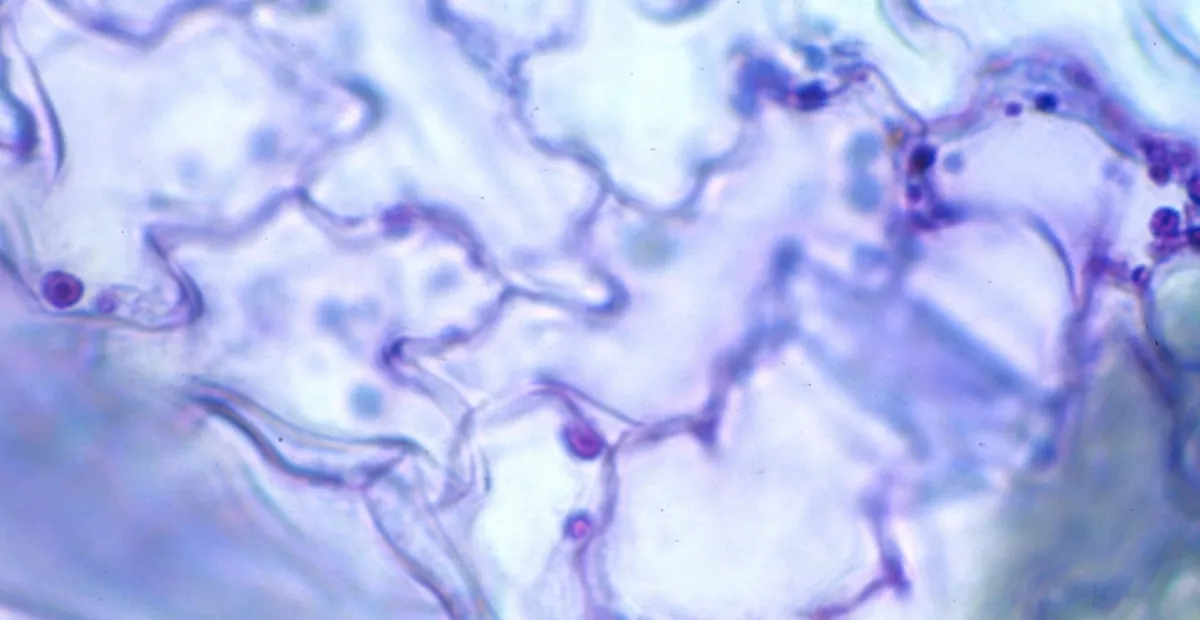
Cucumber mosaic virus
Cucumber mosaic virusCucumber mosaic virus overview
Cucumber mosaic virus is a widespread viral disease affecting cucumbers, other cucurbits, vegetables, ornamentals, and weeds across the United States. Infected plants commonly develop pale and dark green mosaic patterns, vein clearing, distorted young leaves, stunting, and misshapen fruit. Symptoms overlap with other viruses, herbicide injury, and nutrient problems, so laboratory diagnosis may be needed for confirmation.
Typical conditions
Overview
Cucumber mosaic virus occurs in home gardens, field crops, greenhouses, nurseries, and ornamental plantings throughout the United States. Cucumber is a frequent host, but the virus can infect plants in more than 40 families, including cucurbits, tomato, pepper, spinach, celery, beans, potatoes, ornamentals, and weeds.
Symptoms vary with plant species, cultivar, virus strain, plant age at infection, temperature, and mixed infections. A plant showing mosaic symptoms should be treated as suspected viral disease until a plant diagnostic laboratory confirms the cause.
Symptoms and identification
- Vein clearing followed by irregular light-green, yellow-green, and dark-green mosaic patterns or mottling.
- Young leaves may be small, narrow, puckered, cupped, string-like, or otherwise distorted.
- Plants may be stunted, poorly branched, slow-growing, or may decline and wilt severely after early infection.
- Fruit can be reduced in number and size, misshapen, discolored, mottled, bumpy, or warty; zucchini and related squash may develop conspicuous surface deformation.
- Early infection often causes the greatest yield loss. Symptoms may be mild or absent in some hosts and cultivars.
Similar symptoms can result from zucchini yellow mosaic virus, watermelon mosaic virus, squash mosaic virus, herbicide drift, and some nutrient or environmental disorders. Laboratory testing is the most reliable way to identify the virus.
Causes and spread
CMV is transmitted most commonly by many aphid species, including aphids that acquire virus particles while probing infected crops, ornamentals, or weeds. Transmission is generally rapid and can occur before an insecticide would kill the aphid. Aphids do not need to colonize the crop for spread to occur.
The virus can also move mechanically in sap on hands, tools, clothing, or plant-contact operations, particularly in susceptible crops and greenhouse conditions. Seed transmission is possible in some host-virus combinations but is generally less important than aphid transmission for cucurbit outbreaks. Infected perennial weeds and volunteer plants can act as reservoirs between cropping periods.
Life cycle and persistence
CMV survives in living infected plants, including crop volunteers, ornamentals, and weeds. An aphid probes an infected plant and acquires virus particles, then may transmit them during brief feeding probes on nearby healthy plants. The virus spreads systemically through the new host and reaches developing leaves, stems, and fruit.
In the United States, risk increases when infected weeds or volunteer plants are present near susceptible crops and aphid activity is high. The timing and severity of symptoms depend on the host, cultivar, strain, and infection stage. CMV is not a soilborne disease and does not reproduce independently outside living plant tissue.
Treatment and control
There is no curative treatment that removes CMV from an infected plant or reverses established symptoms. Remove and discard badly affected plants as soon as practical to reduce them as sources of virus for aphids and mechanical spread. If only a few plants are affected, removing the entire plant is generally more effective than pruning individual leaves.
Submit a representative sample to a state university or other qualified plant diagnostic laboratory when crop value is significant, symptoms are atypical, or a resistant variety must be selected. Manage aphid-host reservoirs and weeds, protect replacement plants with row cover, and maintain good plant vigor, but do not expect fertilizer, fungicides, or routine insecticide sprays to cure infected plants.
Low-impact and biological control
Use integrated cultural and physical measures rather than attempting to eradicate CMV with sprays. Remove symptomatic plants, suppress weeds and volunteers, use certified or reputable clean planting material, and protect young plants with floating row cover. Silver reflective mulch may reduce or delay aphid landing and virus transmission while the crop canopy is small.
Conserve beneficial aphid predators and parasitoids by avoiding unnecessary broad-spectrum insecticides. Horticultural oils, soaps, and other organically approved insecticides may reduce aphid populations in situations where their labels permit use, but they do not reliably prevent CMV because transmission can occur during brief aphid probes. Always verify organic certification and crop-specific legal labeling before use.
Prevention
- Start with healthy, reputable seed and transplants; do not save seed from symptomatic plants.
- Scout cucumbers and other susceptible crops frequently, especially young growth and field edges.
- Remove symptomatic plants promptly, including roots where practical. Bag material before disposal; do not compost diseased plants unless a properly managed process is known to destroy infected tissue.
- Control weeds and volunteer cucurbits around gardens, fields, greenhouses, and high tunnels, with particular attention to perennial or overwintering hosts.
- Use insect-excluding row cover over young plants, removing it when pollination is required. In protected culture, repair screening and exclude aphids.
- Reflective silver mulch can repel aphids and reduce or delay infection while foliage remains small enough for the mulch to be visible.
- Wash hands and clean tools after handling suspect plants. Avoid unnecessary pruning, pinching, or handling when foliage is wet or visibly infected.
- Choose varieties described as resistant or tolerant to the confirmed virus when such resistance is documented for the specific crop; resistance to one virus does not necessarily protect against CMV.
Interesting facts
- CMV has one of the broadest known host ranges among plant viruses and can infect crops, ornamentals, and weeds from more than 40 plant families.
- The name comes from its characteristic mosaic symptoms, although cucumber is only one of many susceptible hosts.
- CMV is taxonomically distinct from cucumber green mottle mosaic virus, which belongs to a different virus group and spreads differently.
- Aphids can transmit CMV during brief probing activity, so killing aphids after they settle on a plant may not prevent an infection that has already occurred.
- Mixed infections with other cucurbit viruses can produce unusually severe or confusing symptoms.
No pesticide cures cucumber mosaic virus or reverses symptoms. Insecticides are generally unreliable for preventing CMV because aphids can transmit the virus before they are killed and sprays may harm natural enemies. Use pesticides only when legally authorized for the specific crop, pest, and use site in your country, and follow the current product label exactly; the label is the law.
Affected plants
The plants below are linked to this problem by structured host-plant data. The list updates automatically as new plant profiles are added.
 Love-lies-bleeding (Amaranthus caudatus) care guideAmaranthus caudatus
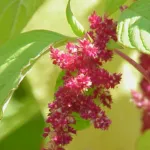 Edible amaranth (Amaranthus tricolor) care guideAmaranthus tricolor
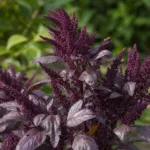 Purple amaranth (Amaranthus blitum) care guideAmaranthus blitum
 Amaranth (Amaranthus cruentus) care guideAmaranthus cruentus
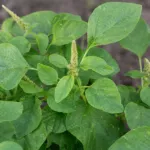 Amaranth (Amaranthus dubius) care guideAmaranthus dubius
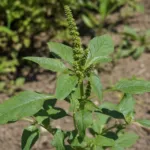 Smooth Pigweed (Amaranthus hybridus) care guideAmaranthus hybridus
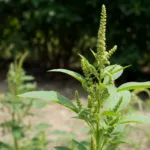 Slender amaranth or green amaranth (Amaranthus viridis) care guideAmaranthus viridis
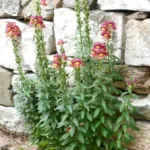 Snapdragons (Antirrhinum majus) care guideAntirrhinum majus
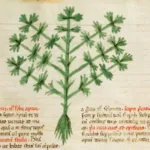 Wild Celery (Apium graveolens) care guideApium graveolens
 Polka Dot Begonia (Begonia maculata) care guideBegonia maculata
 King begonia (Begonia rex) care guideBegonia rex
 Begonia ‘Cocktail’Begonia 'Cocktail'