
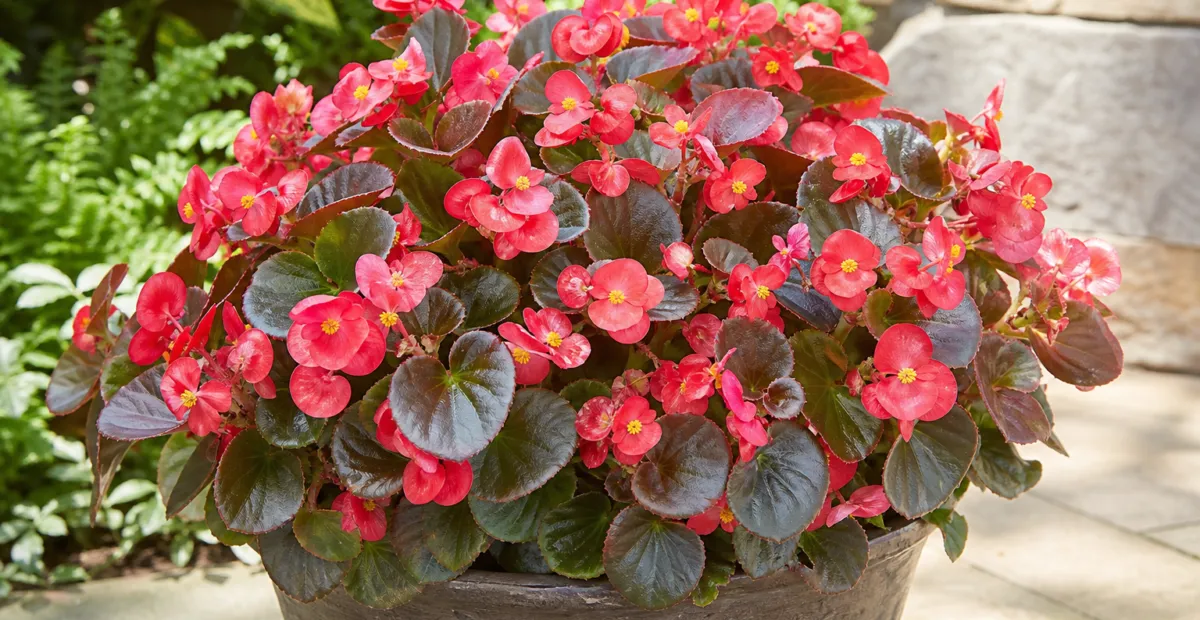
 AI-generated illustration
Begonia ‘Cocktail’ short overview
Begonia 'Cocktail' is a compact wax-begonia group grown for its glossy bronze foliage and small, single flowers. The group includes named forms such as Brandy, Gin, Rum, Vodka, and Whiskey, with blooms ranging from pink and rose to red and white. In the United States, these tender plants perform best as warm-season bedding or container plants in bright light, evenly moist soil, and frost-free conditions.
Taxonomic classification
Begonia ‘Cocktail’ care guide
Light and placement
Provide bright filtered light, morning sun, or partial shade. Bronze-leaved selections tolerate more sun than many green-leaved begonias, but hot afternoon exposure can scorch leaves or cause wilting, especially in containers. Too little light produces weak, stretched growth and fewer flowers; too much direct heat causes bleached patches, crispy margins, or rapid moisture loss.
Watering and humidity
Water thoroughly when the surface begins to dry, then allow excess water to drain fully. Keep the mix evenly moist during active summer growth but never continuously soggy. Reduce watering during cool weather or indoors in winter, when evaporation and growth slow. Water at the soil line when possible to limit leaf disease.
Soil and growing medium
Use a loose, fertile potting mix or well-drained garden loam amended with organic matter. Avoid dense, waterlogged soil because the fleshy stems and fine roots can rot. Slightly acidic to neutral conditions are suitable; a pH around 6.0–7.0 is a practical target.
Feeding
Feed actively growing plants every two to four weeks with a balanced, water-soluble fertilizer diluted to half strength. Container plants may need more regular feeding than plants in amended beds. Do not fertilize drought-stressed, waterlogged, or dormant plants; water the root zone first if the mix is dry.
Growth and habit
This group forms a compact, branching mound with fibrous roots and fleshy stems. It branches readily in warm conditions and responds well to regular deadheading and light tip pinching. Avoid excessive moisture around the crown, because dense growth combined with wet conditions encourages rot.
Planting and repotting
Plant outdoors after the danger of frost has passed and soil has warmed. Set plants at the same depth as in their nursery containers, spacing them about 6–8 inches apart for edging or mass displays. Water thoroughly after planting and keep the root zone consistently moist while plants establish.
Repot container plants when roots fill the pot or growth slows, preferably in spring. Move into a container only one size larger and use fresh, well-drained mix. Avoid burying the crown or stems more deeply than they were previously planted.
Propagation and pruning
Propagation
Seed is commonly used for wax-begonia production, with sowing on the surface because the seed is extremely fine; do not cover it. Stem cuttings can also be rooted in spring or fall. Vegetative propagation is preferable when preserving a particular named selection, because seedlings may not reproduce it exactly.
Pruning
Pinch soft growing tips to encourage branching and remove faded flowers or yellowing leaves. Cut out weak, damaged, or rotting stems with clean shears. Avoid severe cutting when plants are cold or waterlogged; a light trim is usually enough to maintain the compact habit.
Overwintering
Before frost, bring container plants indoors or take cuttings. Place overwintered plants in a bright window at normal household temperatures and reduce watering while growth slows. Outdoor plants are generally discarded after frost in cold climates unless maintained as indoor specimens.
Uses
Use as a compact seasonal bedding plant, edging, window-box subject, patio container plant, or bright-shade filler. Bronze foliage provides contrast with green-leaved annuals. It is ornamental only; do not treat it as an edible or medicinal plant, and prevent pets from grazing on it.
Appearance
Plants have glossy, rounded to heart-shaped leaves with bronze, bronze-red, or mahogany tones and fleshy, branching stems. The compact mounded appearance and contrast between dark foliage and small bright flowers are useful identification features. Exact flower color depends on the named Cocktail selection.
Flowering
The Cocktail Group produces small, single flowers above compact bronze-leaved plants. Flower colors vary by named selection and include pink, rose, red, and white; some forms are bicolored. Outdoor plants generally flower from late spring until frost when regularly watered and lightly fed.
Pollination and visitors
The small open flowers may be visited by bees, bumblebees, and butterflies outdoors, but specific pollinator records for the exact 'Cocktail' cultivar are limited. The low rating reflects the modest flower size and the lack of strong cultivar-specific visitor documentation.
Diseases and pests
Diseases
Prevent gray mold, powdery mildew, and root or stem rot with good spacing, foliage that dries quickly, and well-drained soil. Remove spent or diseased material promptly. Avoid overhead watering late in the day and do not keep containers sitting in saucers of water.
Pests
Watch for thrips, aphids, whiteflies, and spider mites, especially on stressed container plants. Inspect leaf undersides and growing tips regularly. Improve air circulation, isolate infested plants, and use insecticidal soap or another labeled treatment according to the product directions.
Related diseases and pests
Only Plant Doctor profiles whose host data indicate this plant may be affected are shown here.
 PestCyclamen mitePhytonemus pallidus
 PestBroad mitePolyphagotarsonemus latus (Banks)
 PestCitrus mealybugPlanococcus citri
 DiseaseCucumber mosaic virusCucumber mosaic virus
 DiseaseBlack Root RotBerkeleyomyces basicola
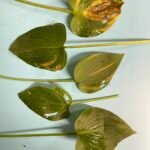 PestStrawberry foliar nematodeAphelenchoides fragariae
 DiseaseGray MoldBotrytis cinerea
 DiseaseMaple powdery mildewSawadaea bicornis
Toxicity and pollen
ASPCA lists Begonia species as toxic to dogs and cats because of soluble calcium oxalates, with the underground parts presenting the greatest concern. Ingestion may cause oral irritation, drooling, vomiting, and gastrointestinal upset; keep pets and children from chewing the plant, especially roots and tubers.
- Typical season
- During outdoor flowering, typically late spring through fall
- Pollination / pollen
- Insect-carried, relatively heavy pollen
Begonia pollen is associated with insect-pollinated flowers and is not typically released as a large, windborne seasonal cloud. Individual sensitivity is still possible, particularly when handling flowers or plant debris, so normal hand washing and indoor ventilation are sensible precautions.
Native habitat
These cultivated hybrids descend from warm-climate Begonia breeding lines rather than representing a wild habitat or naturally distributed species. They perform best in warm, humid growing conditions with fertile, porous soil and protection from cold, saturated roots.
Interesting fact
The name 'Cocktail' covers a group of named wax-begonia selections rather than one single flower color. Clemson Extension documents Brandy, Gin, Rum, Vodka, and Whiskey forms. Bronze foliage is a notable feature of the group, and darker leaves are relatively sun tolerant compared with many green-leaved begonias.
Frequently asked questions (FAQ)
The most relevant questions about this plant, with short and direct answers.
🌱Quick care
What is Begonia 'Cocktail'?⌄
Begonia 'Cocktail' is a compact wax begonia series with bronze-tinted foliage and small single flowers in colors such as red, pink, rose, and white. It is commonly grown as a warm-season annual in U.S. gardens, containers, and borders.
How much light does Begonia 'Cocktail' need?⌄
Grow Begonia 'Cocktail' in bright filtered light, partial shade, or gentle morning sun. Some forms tolerate more sun, but hot afternoon exposure can scorch foliage and reduce performance.
How often should I water Begonia 'Cocktail'?⌄
Water Begonia 'Cocktail' when the soil surface feels slightly dry, keeping the root zone evenly moist but never soggy. Allow excess water to drain fully before watering again.
Is Begonia 'Cocktail' an annual or perennial?⌄
Begonia 'Cocktail' is a tender perennial in warm climates but is usually grown as an annual in most of the United States. It will not survive freezing conditions outdoors.
How big does Begonia 'Cocktail' get?⌄
Begonia 'Cocktail' typically forms a compact, mounded plant about 8–12 inches tall and 8–12 inches wide. Exact size varies among colors and growing conditions.
🌤️Environment and placement
Can Begonia 'Cocktail' grow in full sun?⌄
Begonia 'Cocktail' can tolerate full sun in some mild or northern locations if it is watered consistently. In hot climates, partial shade or protection from intense afternoon sun is safer.
Can Begonia 'Cocktail' grow in shade?⌄
Yes, Begonia 'Cocktail' grows well in bright shade or partial shade. Too much deep shade may produce weaker growth and fewer flowers, so choose a naturally bright location.
Can Begonia 'Cocktail' be grown indoors?⌄
Yes, Begonia 'Cocktail' can be grown indoors near a bright window with filtered light. Use a container with drainage and avoid placing it against a hot window or directly over a heating vent.
Where should I plant Begonia 'Cocktail' outdoors?⌄
Plant Begonia 'Cocktail' in a spot with fertile, loose, well-drained soil and bright filtered light to partial shade. It works well in flower beds, window boxes, patio containers, and mass plantings.
What temperatures can Begonia 'Cocktail' tolerate?⌄
Begonia 'Cocktail' prefers warm weather and is frost tender. Move containers indoors or protect plants before temperatures approach freezing, and plant outdoors only after the local frost danger has passed.
💧Care and problems
Why are the leaves on my Begonia 'Cocktail' turning yellow?⌄
Yellow leaves usually indicate overwatering, poor drainage, insufficient light, or natural aging of older foliage. Check that the pot drains freely and let the soil surface become slightly dry before watering again.
Why is my Begonia 'Cocktail' wilting?⌄
Wilting is most often caused by dry soil, excessive heat, root damage, or waterlogged roots. Check the soil and drainage first, then water thoroughly if it is dry or improve drainage if it remains saturated.
Why is Begonia 'Cocktail' not blooming?⌄
Begonia 'Cocktail' may fail to bloom because of insufficient light, excessive nitrogen fertilizer, drought stress, or cold temperatures. Provide bright filtered light, steady moisture, and warm conditions for the best flowering.
Should I deadhead Begonia 'Cocktail'?⌄
Deadheading is optional because Begonia 'Cocktail' generally flowers continuously without extensive grooming. Remove faded flowers and damaged leaves if you want a tidier appearance or better air circulation.
What fertilizer does Begonia 'Cocktail' need?⌄
Feed Begonia 'Cocktail' with a balanced, water-soluble fertilizer at a reduced strength during active growth. Avoid excessive nitrogen, which can encourage foliage at the expense of flowers.
How do I prevent root rot in Begonia 'Cocktail'?⌄
Prevent root rot by using well-drained soil, a pot with drainage holes, and careful watering. Do not let the container sit in a saucer of standing water, and improve airflow around crowded plants.
What pests attack Begonia 'Cocktail'?⌄
Begonia 'Cocktail' can be affected by aphids, mealybugs, mites, thrips, caterpillars, and other common garden pests. Inspect the undersides of leaves regularly and treat small infestations promptly with an appropriate labeled product.
What diseases affect Begonia 'Cocktail'?⌄
Excess moisture and poor airflow can contribute to gray mold, powdery mildew, stem rot, and root or rhizome rot. Water the soil rather than the foliage, provide spacing, and remove diseased plant material.
🪴Planting and repotting
What soil is best for Begonia 'Cocktail'?⌄
Use fertile, loose, well-drained potting mix or loam for Begonia 'Cocktail'. A standard quality container mix amended with organic matter is suitable as long as it does not stay waterlogged.
When should I plant Begonia 'Cocktail' outside?⌄
Plant Begonia 'Cocktail' outdoors after the danger of frost has passed and nighttime temperatures are reliably mild. In the United States, the correct planting date depends on the local USDA hardiness zone and spring frost schedule.
Can Begonia 'Cocktail' grow in containers?⌄
Yes, Begonia 'Cocktail' performs very well in containers, window boxes, and mixed planters. Choose a container with drainage holes and avoid pairing it with plants that require much drier soil.
How often should I repot Begonia 'Cocktail'?⌄
Repot Begonia 'Cocktail' when roots fill the container, water runs through unusually quickly, or growth becomes crowded. Move it into a pot only one size larger and refresh the well-drained mix.
✂️Propagation and pruning
How can I propagate Begonia 'Cocktail'?⌄
Begonia 'Cocktail' can be propagated from seed or basal cuttings. Seed-grown plants may not reproduce a particular named color exactly, while cuttings are more useful when preserving a selected plant.
Can Begonia 'Cocktail' be grown from cuttings?⌄
Yes, take healthy basal or stem cuttings and root them in a clean, lightly moist propagation medium. Keep the cuttings warm in bright indirect light until roots form, avoiding saturated conditions.
Can Begonia 'Cocktail' survive winter indoors?⌄
Begonia 'Cocktail' may survive winter indoors if brought inside before frost and kept in bright light with restrained watering. Growth may slow during winter, and plants weakened by cold or overwatering may not recover.
Should I prune Begonia 'Cocktail'?⌄
Routine pruning is not required for Begonia 'Cocktail', but light trimming can improve shape and remove damaged or leggy growth. Use clean scissors and avoid removing a large portion of the plant at once.
⚠️Toxicity and safety
Is Begonia 'Cocktail' toxic to dogs and cats?⌄
Yes, Begonia 'Cocktail' is toxic to dogs and cats if ingested. Keep the plant and fallen leaves away from pets, and contact a veterinarian promptly if ingestion occurs or symptoms develop.
Is Begonia 'Cocktail' poisonous to people?⌄
Begonias contain irritating compounds, so Begonia 'Cocktail' should not be eaten. Keep it away from young children and seek medical advice if a significant amount is swallowed or irritation occurs.
Can Begonia 'Cocktail' flowers be used as food or drink garnishes?⌄
No, do not use Begonia 'Cocktail' flowers as food or drink garnishes. The plant is ornamental and potentially irritating, and nursery-grown plants may also have been treated with pesticides.
🌸Flowering and special interest
When does Begonia 'Cocktail' bloom?⌄
Begonia 'Cocktail' usually blooms from late spring through summer and may continue into fall when kept warm and well watered. Flowering slows in cold weather, deep shade, or severe heat stress.
What colors does Begonia 'Cocktail' come in?⌄
Begonia 'Cocktail' is available in several flower colors, including red, pink, rose, and white, often combined with bronze foliage. The exact color depends on the named selection, such as Gin, Tequila, Vodka, or Whiskey.
Does Begonia 'Cocktail' bloom all summer?⌄
Yes, Begonia 'Cocktail' is valued for extended flowering throughout the summer. Consistent moisture, adequate light, warm temperatures, and occasional feeding help maintain continuous bloom.
Similar plants
 Yellow lantern chili (Capsicum chinense) care guideCapsicum chinense
 Capsicum baccatum care guideCapsicum baccatum
 Serrano (Capsicum annuum ‘Serrano’)Capsicum annuum 'Serrano'
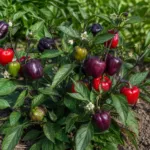 Purple Beauty (Capsicum annuum ‘Purple Beauty’)Capsicum annuum 'Purple Beauty'
 Numex Twilight (Capsicum annuum ‘Numex Twilight’)Capsicum annuum 'Numex Twilight'
 Explosive Ember Chili Pepper (Capsicum annuum ‘Explosive Ember’)Capsicum annuum 'Explosive Ember'