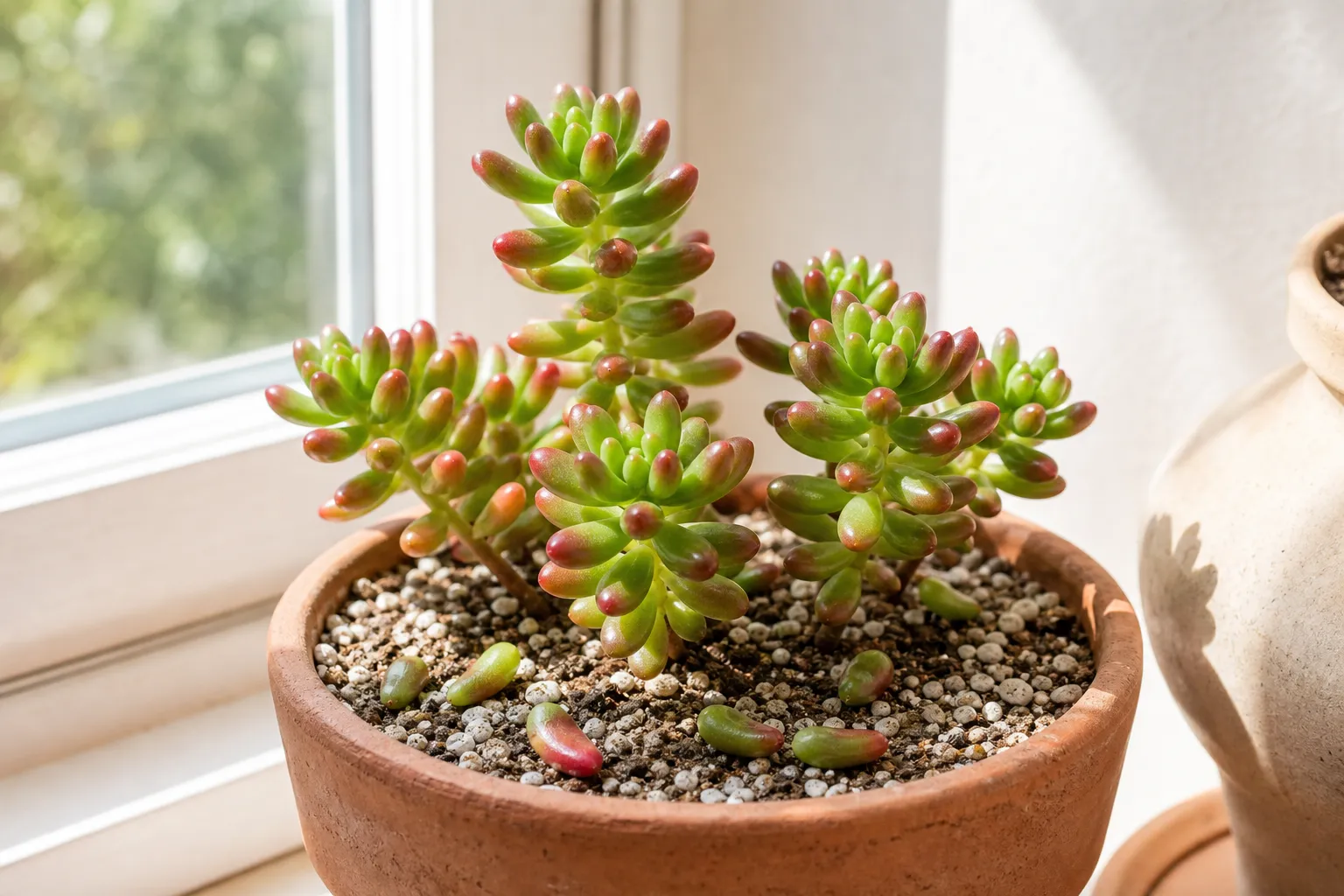
With plump, bean-shaped leaves and red-tipped color, Sedum rubrotinctum brings plenty of personality to a sunny windowsill. You may know it by its common names, jelly bean plant or pork and beans plant. It is a forgiving succulent for beginners, but it still has one firm rule: bright light and fast drainage matter far more than frequent watering.
Give this sedum a warm, sunny location, let its potting mix dry thoroughly between waterings, and resist the urge to fuss over it. The leaves store water, so a little neglect is usually safer than a soggy pot. Here is how to keep your plant compact, colorful and ready to multiply.
What is Sedum rubrotinctum?
Sedum rubrotinctum is a low-growing succulent in the stonecrop family. It is widely grown as a houseplant and container plant, where its rounded leaves may range from green to coppery red depending on light, temperature and growing conditions. The plant is often sold under the name “jelly bean,” although nurseries may also offer related cultivars with different color patterns.
The botanical name is sometimes written as Sedum × rubrotinctum, reflecting its hybrid background. For everyday care, however, the important point is simple: treat it as a sun-loving, drought-adapted succulent with fleshy leaves and shallow roots.
How the different forms compare
- The classic green-and-red form: Typically has green leaves with red or bronze tips when exposed to strong light and suitable seasonal conditions.
- ‘Aurora’ and similar colorful cultivars: Often show cream, pink or pale green tones and may need slightly gentler light than the all-green form to avoid scorching.
- Small nursery plants: These may look compact because they were grown under excellent light. After bringing one home, it may stretch if placed too far from a window.
Do not judge health by color alone. A green plant may simply be receiving less sun, while red tips can be a normal response to bright conditions rather than a sign that the plant is suffering.
Light: give it sun, but introduce outdoor light gradually
For the best shape and color, place your sedum in the brightest window you have. A south- or west-facing window often works well in the United States, although a very hot west window can overheat a small pot in summer. An east-facing window can also succeed if it receives several hours of direct morning sun.
Indoors, aim for several hours of direct sunlight or very bright light each day. If the stems become long and widely spaced, the plant is stretching toward light. Move it closer to the window or supplement with a grow light. Rotate the pot every week or two so growth stays more even.
Outdoor sun is stronger than window light. If you move the plant onto a patio or balcony for the summer, begin in bright shade or gentle morning sun. Increase exposure over about one to two weeks. Moving a plant suddenly from an indoor windowsill into intense afternoon sun can bleach or scorch the leaves.
What healthy light looks like
- Leaves remain plump and closely spaced along the stem.
- Color develops on the leaf tips without widespread crispy patches.
- New growth stays reasonably compact rather than forming long bare sections.
- The potting mix dries at a predictable pace rather than staying wet for many days.
If the leaves are pale green, the stems are floppy or the plant leans heavily, improve light before increasing water. Extra water cannot correct a light problem and may create a root problem instead.
Watering: soak thoroughly, then wait
Most problems with jelly bean plants come from watering too often. Wait until the potting mix is dry throughout, then water deeply until a little water flows from the drainage hole. Empty the saucer after a few minutes so the roots do not sit in standing water.
A calendar is less useful than checking the plant and soil. In a bright, warm room, a small pot may need water every two to three weeks during active growth. In winter, or in a dim and cool room, the interval may stretch to three or four weeks or longer. These are starting points, not fixed rules.
A simple watering measurement test
Try a small experiment with your own plant rather than relying on a generic schedule. Weigh the completely dry pot, plant and soil with a kitchen scale, then water thoroughly and allow excess water to drain. Weigh it again. The difference is approximately the amount of water retained by the pot.
- If the dry setup weighs 24 ounces and the freshly watered setup weighs 32 ounces, the pot has retained about 8 ounces of water.
- Check the weight every few days.
- When the pot returns close to its dry weight and the soil feels dry, water again.
This method is especially useful for small indoor containers, where a finger test may only measure the top inch. Over time, you will learn how quickly your particular plant dries in spring, summer, fall and winter.
Signs of too much or too little water
- Overwatering: Yellowing or translucent leaves, soft leaves that drop easily, a sour-smelling mix, blackened stems or roots, and soil that remains wet for a long time.
- Underwatering: Wrinkled leaves, a slightly limp appearance and a pot that feels very light. A thirsty plant usually recovers after a thorough watering if the roots are still healthy.
- Light stress mistaken for thirst: Red or bronze coloring alone does not mean the plant needs water.
Soil and pot: drainage is the foundation
Choose a container with at least one drainage hole. A small terracotta pot is a practical choice because it dries more quickly than many glazed or plastic containers. Select a pot only slightly larger than the root ball; an oversized container holds more unused wet mix and increases the risk of rot.
Use a commercial cactus and succulent mix, or improve a regular potting mix with plenty of gritty, fast-draining material such as perlite or pumice. The finished mix should drain freely and should not remain muddy after watering. Avoid relying on a layer of gravel at the bottom of a pot to correct poor drainage; improving the mix and using a drainage hole works better.
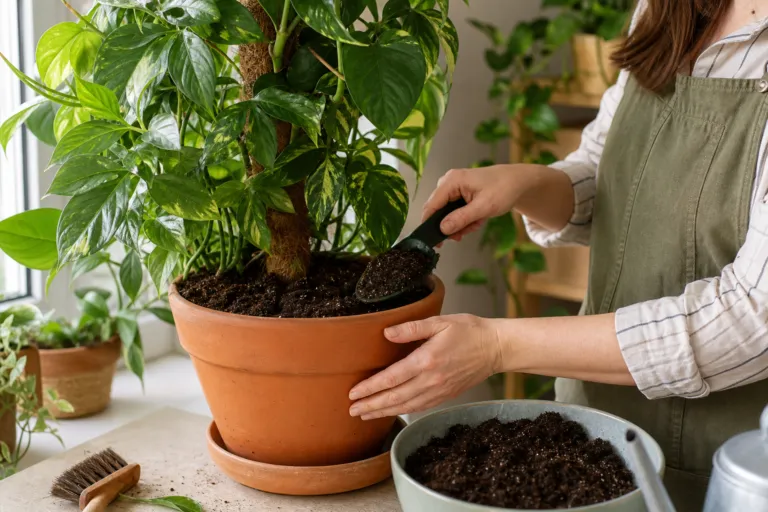
Repot in spring or early summer when the plant is actively growing. Handle the stems gently because the leaves detach easily. After repotting, wait several days before watering so damaged roots can dry and begin to heal.

Propagation: make new plants from leaves or stems
One of the pleasures of growing Sedum rubrotinctum is how readily it propagates. A fallen leaf may root and produce a tiny plant, while a stem cutting can quickly fill an empty section of a pot.
Leaf propagation
- Choose a firm, healthy leaf and twist it away from the stem with a clean, gentle motion.
- Make sure the entire leaf base comes away. A damaged or partial leaf may fail to grow.
- Place the leaf on top of dry or barely moist succulent mix in bright, indirect light.
- Do not bury the leaf or water heavily.
- Wait for small roots or new growth to appear before lightly watering.
Leaf propagation is slow and uneven. Some leaves may root without producing a new plant, while others may begin growing within a few weeks. Once the new plant has several roots and a small cluster of leaves, you can settle the roots gently into the mix.
Stem cuttings
- Cut a healthy stem several inches long with clean scissors or pruners.
- Remove the lowest leaves, leaving a bare section of stem.
- Set the cutting aside in a dry, shaded spot for a few days so the cut end can callus.
- Insert the stem into a gritty, well-drained mix.
- Wait several days before giving a small amount of water, then water sparingly until roots develop.
Stem cuttings are usually the quickest way to create a fuller plant. They are also useful when a parent plant has become leggy: trim the top, root it as a cutting and allow the remaining stem to branch.
Seasonal care in the United States
In spring and summer, brighter light and warmer temperatures usually increase water use. Check the soil more often, but continue to let it dry completely between waterings. If the plant spends summer outdoors, protect it from prolonged heavy rain and make sure the pot drains freely.
In fall, reduce watering as daylight shortens. Before bringing the plant indoors, inspect the stems and leaf joints for pests and remove dead leaves from the soil surface. Keep it away from cold drafts and frosty conditions.
In winter, place the plant in the brightest available window. Growth may slow substantially, so water less often. Do not fertilize a plant that is barely growing. In USDA hardiness zones where winter temperatures can drop below the plant’s tolerance, grow it in a container and bring it indoors before freezing weather.
Common problems and practical fixes
Long, bare stems
This is usually a light issue. Move the plant closer to a bright window or add a grow light. You can cut back stretched stems and re-root the healthy tips. Avoid making a sudden move from shade to intense sun.
Leaves dropping during handling
The leaves are naturally loose and can fall when the pot is moved, brushed or repotted. Collect firm fallen leaves and place them on succulent mix for propagation. If leaves are dropping without disturbance and feel soft, investigate overwatering or root damage.
Soft, mushy stems
Stop watering and remove the plant from its pot. If healthy tissue remains above the damaged section, cut it cleanly, allow the cutting to callus and restart it in fresh, dry mix. Discard collapsed roots and replace saturated soil. A pot without a drainage hole is worth replacing.
Wrinkled leaves
Check the soil before watering. If it is completely dry and the plant is light and limp, water thoroughly. If the soil is wet, wrinkling may indicate damaged roots rather than thirst. Improve drainage and inspect the root system.
Brown, crispy patches
Sudden exposure to strong outdoor sun, reflected heat or a hot window can scorch leaves. Move the plant to bright filtered light while it recovers, then reintroduce direct sun gradually. Damaged leaves will not turn green again, but new growth can remain healthy.
Mealybugs, scale or fungus gnats
Inspect leaf joints and stems regularly. Remove visible insects with a cotton swab or a gentle stream of water where appropriate, and isolate the plant from others. Fungus gnats are encouraged by persistently damp soil, so allow the mix to dry properly and improve drainage. Always follow the label if you choose a registered plant-care product.
A simple care routine that works
- Place the plant in the brightest practical indoor location.
- Use a pot with a drainage hole and a gritty succulent mix.
- Water deeply only after the soil has dried completely.
- Check the plant weekly, but do not water automatically every week.
- Rotate the pot for even growth and prune stretched stems when needed.
- Propagate fallen leaves or healthy stem cuttings in dry, well-drained mix.
- Protect the plant from frost, sudden sun changes and prolonged rain.
Once you understand the rhythm of light, drying and thorough watering, Sedum rubrotinctum becomes remarkably easy to grow. Start with one healthy plant, observe how quickly its pot dries in your home, and adjust from there. With a sunny window and a restrained watering habit, your jelly bean succulent can stay colorful, compact and generous with new plants for years.