
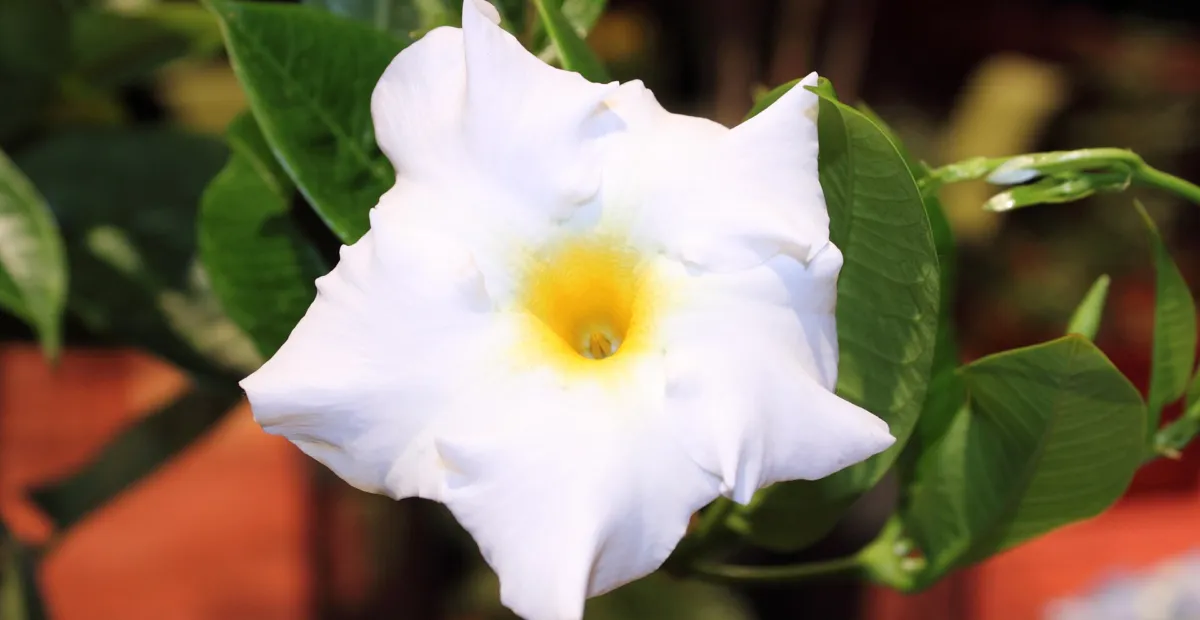
 Source:
Mandevilla splendens short overview
Mandevilla splendens is a tropical Brazilian climber prized for glossy evergreen leaves and large rose-pink, funnel-shaped flowers. It grows vigorously in warmth and bright sun, twining around a trellis or cascading from a container. In the United States, it is reliably perennial only in the warmest regions; elsewhere, grow it as a patio plant or bring it indoors before temperatures fall near the mid-40s Fahrenheit.
Taxonomic classification
Mandevilla splendens care guide
Light and placement
Give full sun, ideally six or more hours of direct light daily, with a warm south- or west-facing exposure and shelter from cold winds. Strong light supports compact growth and flowering. Pale, stretched stems and sparse blooms usually indicate insufficient light; bleached patches or crispy margins suggest excessive reflected heat, drought, or abrupt sun exposure.
Watering and humidity
Water thoroughly when the top inch of mix begins to dry, then let excess drain completely. During hot, active growth, containers may need frequent watering; reduce frequency in fall and winter as light and growth decline. Do not leave the pot standing in water. Moderate humidity is beneficial, but constant wet foliage and stagnant air increase disease risk.
Soil and growing medium
Use a loose, fertile, sharply draining mix based on quality potting soil, compost, and added perlite or coarse bark. Mandevilla tolerates acidic through slightly alkaline conditions, but waterlogged roots are much more damaging than a moderately imperfect pH. In containers, drainage holes are essential.
Feeding
Feed during active spring and summer growth with a balanced, water-soluble fertilizer at the label rate, or use a controlled-release product formulated for flowering containers. Water the plant first if the mix is dry. Reduce or stop feeding during cool, low-light winter conditions, when excess fertilizer can accumulate and stress roots.
Growth and habit
A vigorous twining vine that uses nearby supports rather than attaching with adhesive pads or aerial roots. Regular pinching or heading-back keeps growth fuller and encourages new flowering wood closer to the base. Without support, stems can trail or cascade effectively from a large container.
Planting and repotting
Plant outdoors only after frost danger has passed and nights are consistently warm. Set the root ball level with the surrounding soil, never burying the stem base. Allow 36–60 inches between plants or provide equivalent container space, and install support before vigorous new growth begins.
Repot in spring when roots fill the container or growth dries out quickly after watering. Move up only one pot size and disturb the root ball as little as practical. Refresh compacted mix and provide a trellis or other support immediately after repotting.
Propagation and pruning
Propagation
Stem cuttings are the practical horticultural method. Take healthy nonflowering tip cuttings during active growth, remove lower leaves, and root them in a sterile, airy medium with bottom warmth and high humidity. Seed propagation is less predictable and is not the usual method for maintaining named horticultural material.
Pruning
Prune in late winter or early spring, or after a major flush of flowering, to control length and remove weak, damaged, or congested stems. Pinch growing tips during the season for bushier container growth. Wear gloves because cut stems release milky sap.
Overwintering
Move container plants indoors before temperatures approach 45°F, after checking carefully for scale and mealybugs. Provide the brightest available window or supplemental light, water sparingly when growth slows, and avoid cold drafts. Plants may be kept semi-dormant in a cool, bright location, then acclimated gradually outdoors in spring.
Uses
Use as a flowering trellis vine, patio container specimen, hanging or cascading plant, or seasonal accent in beds. It is especially useful for warm-climate entryways, fences, and small arbors. In colder U.S. regions, containers make it easier to move the plant indoors before frost.
Appearance
This species has slender twining stems, glossy dark-green leaves, and conspicuous rose-pink flowers with a funnel-like corolla. The evergreen foliage gives it value outside the bloom period in frost-free climates. Its stems need a support for vertical display but can also be trained to trail from a container.
Flowering
The species bears showy rose-pink, funnel-shaped flowers, generally with the heaviest flowering in the warm summer season. In USDA Zones 10–11, plants may flower for much of the year; cooler climates restrict flowering to the outdoor growing season. Flowers are produced on vigorous twining growth and benefit from warmth and strong light.
Pollination and visitors
The showy tubular flowers may be visited by insects, but reliable species-specific pollinator records were not located in the reviewed sources. Pollinator attraction is therefore marked unknown rather than inferred from flower color or shape alone.
Mandevilla splendens photos
Click any photo for a larger view. Source, author and license are shown separately.
Diseases and pests
Diseases
Good airflow, clean tools, and a well-drained root zone help prevent problems. Root rot can follow persistent overwatering or poorly drained soil. Watch for leaf spotting or dieback and remove affected tissue; avoid wetting foliage late in the day. Serious disease problems are not usually reported in routine landscape culture.
Pests
Scale and mealybugs are occasional pests. Inspect leaf undersides, stems, and sheltered nodes regularly. Improve airflow, isolate affected containers, and begin with hand removal or a strong water spray. Use insecticidal soap or another product labeled for the plant and pest, following the label carefully; avoid treating drought-stressed plants.
Related diseases and pests
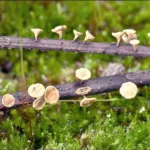
Only Plant Doctor profiles whose host data indicate this plant may be affected are shown here.

Toxicity and pollen
Mandevilla produces milky latex sap that may irritate skin and can be harmful if plant material is eaten. Evidence for severe systemic poisoning from this exact species is limited, so treat it as a low-to-moderate exposure concern: keep sap away from eyes and mouth, wear gloves when pruning, and contact a medical or veterinary professional after ingestion or significant exposure.
- Typical season
- Late spring through summer flowering period
- Pollination / pollen
- Insect-dispersed floral pollen; not typically windborne
This is an insect-pollinated flowering vine, and no strong evidence indicates abundant, widely airborne pollen from typical garden plants. Sensitive individuals should still avoid direct exposure to flowers and sap, and pollen concerns should not be confused with the plant’s latex-related irritation risk.
Native habitat
Kew records the species as native to southeastern Brazil, including Rio de Janeiro, where it grows as a climber in a seasonally dry tropical biome. It is adapted to warmth, strong light, seasonal moisture, and soils that drain freely after rainfall.
Interesting fact
The accepted species is native to southeastern Brazil, especially Rio de Janeiro.
Mandevilla splendens has several historical Dipladenia synonyms.
The species is a twining climber in the dogbane family.
Its milky latex is typical of many Apocynaceae members.
Warm USDA Zones 10–11 can support flowering for much of the year.
Frequently asked questions (FAQ)
The most relevant questions about this plant, with short and direct answers.
🌱Quick care
How do you care for Mandevilla splendens?⌄
Grow Mandevilla splendens in full sun, fertile well-drained soil, and regular moisture without waterlogging. Protect it from frost and provide a trellis or other support for its twining stems.
How much sunlight does Mandevilla splendens need?⌄
Mandevilla splendens needs at least 6 hours of direct sunlight daily for strong growth and abundant flowering. In very hot, humid climates, light afternoon shade can help reduce stress.
How often should you water Mandevilla splendens?⌄
Water Mandevilla splendens when the surface of the soil begins to dry, then water thoroughly until excess drains away. Water more often during hot, active growth and less during cool indoor winter conditions.
What soil is best for Mandevilla splendens?⌄
Use a fertile, well-drained potting mix or loam for Mandevilla splendens. The soil should retain some moisture but never remain soggy around the roots.
🌤️Environment and placement
Can Mandevilla splendens grow outdoors in the United States?⌄
Mandevilla splendens can grow outdoors year-round in warm parts of USDA Zones 10 and 11, but it is commonly grown as a seasonal patio or container plant elsewhere. Move it indoors before frost or prolonged cold.
Can Mandevilla splendens survive frost?⌄
No, Mandevilla splendens is frost tender and should be protected when temperatures approach about 45°F. Freezing temperatures can severely damage or kill the plant.
Can Mandevilla splendens grow in a pot?⌄
Yes, Mandevilla splendens grows well in a container with drainage holes and a support structure. Container growing is especially useful in climates where the plant must be moved indoors for winter.
Does Mandevilla splendens need a trellis?⌄
Mandevilla splendens benefits from a trellis, stake, or other support because its stems naturally twine and climb. Pinching the growing tips can help create a bushier plant if a climbing form is not desired.
Can Mandevilla splendens grow indoors?⌄
Mandevilla splendens can be overwintered indoors in a bright location, preferably near a sunny window or under supplemental light. Keep it away from cold drafts and reduce watering as growth slows.
💧Care and problems
Why is my Mandevilla splendens not blooming?⌄
Insufficient sunlight is a common reason Mandevilla splendens fails to bloom, so provide at least 6 hours of direct light when possible. Excessive shade, overwatering, cool temperatures, or insufficient nutrition can also reduce flowering.
Why are the leaves on my Mandevilla splendens turning yellow?⌄
Yellow leaves on Mandevilla splendens may result from overwatering, poor drainage, low light, cool conditions, or normal winter stress. Check that the container drains freely and allow the surface soil to dry slightly between waterings.
What pests attack Mandevilla splendens?⌄
Mandevilla splendens can occasionally be affected by aphids, mites, thrips, whiteflies, scale, or mealybugs. Inspect leaf undersides and new growth, then use a strong water spray or a labeled insecticidal soap when appropriate.
Should Mandevilla splendens be fertilized?⌄
Yes, fertilize actively growing Mandevilla splendens regularly with a balanced or flowering-plant fertilizer according to the product label. Stop or greatly reduce fertilizing during cool, low-light winter dormancy.
How do you overwinter Mandevilla splendens?⌄
Bring Mandevilla splendens indoors before frost, inspect it for pests, and place it in bright light or a cool, protected dormant location. Reduce watering substantially during winter and resume stronger light, watering, and feeding as new growth begins.
🪴Planting and repotting
When should Mandevilla splendens be planted outside?⌄
Plant Mandevilla splendens outdoors after the danger of frost has passed and nighttime temperatures are consistently mild. Harden an overwintered plant gradually by increasing its outdoor exposure over several days.
When should Mandevilla splendens be repotted?⌄
Repot Mandevilla splendens in late winter or early spring as new growth begins, or when roots fill the container and water runs through unusually quickly. Move it into a pot only one size larger with fresh, well-drained mix.
Can Mandevilla splendens be planted in the ground?⌄
Mandevilla splendens can be planted in the ground in frost-free areas with warm temperatures and well-drained soil. In colder regions, growing it in a container is safer because the plant cannot survive winter frost.
✂️Propagation and pruning
How do you propagate Mandevilla splendens?⌄
Mandevilla splendens is commonly propagated from stem cuttings taken during active growth and rooted in a clean, well-drained medium. Keep the cuttings warm, lightly moist, and in bright indirect light while roots develop.
When should Mandevilla splendens be pruned?⌄
Prune Mandevilla splendens in late winter or early spring before vigorous new growth begins, or lightly pinch growing tips during the season. Remove weak or crowded stems and shorten long growth to control size and encourage branching.
⚠️Toxicity and safety
Is Mandevilla splendens poisonous to people or pets?⌄
Mandevilla splendens has a low toxicity concern but produces irritating milky sap and should not be eaten. Wear gloves when pruning, wash exposed skin, and keep plant material away from children and pets.
How should you handle Mandevilla splendens sap?⌄
Wear gloves when cutting or pruning Mandevilla splendens because its milky sap can irritate skin and eyes. Rinse affected skin promptly with water and avoid touching your face while handling the plant.
🌸Flowering and special interest
When does Mandevilla splendens bloom?⌄
Mandevilla splendens usually flowers from summer into fall when it receives abundant sunlight, warmth, moisture, and nutrition. In frost-free climates, flowering may continue for much of the year.
How can you make Mandevilla splendens flower more?⌄
Provide Mandevilla splendens with full sun, regular moisture, good drainage, and consistent feeding during active growth. Pruning or pinching long shoots can encourage branching and create more flowering sites.
What color flowers does Mandevilla splendens have?⌄
Mandevilla splendens is known for showy pink to rose-colored, funnel-shaped flowers with a contrasting throat. Flower color and form can vary among cultivars sold under this species.
Similar plants
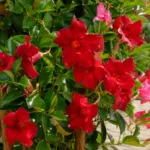 Mandevilla ‘Red Velvet’Mandevilla 'Red Velvet'
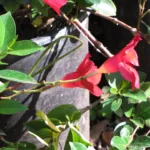 Mandevilla ‘Red Riding Hood’Mandevilla 'Red Riding Hood'
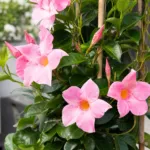 Mandevilla ‘Pink Charm’Mandevilla 'Pink Charm'
 Mandevilla ‘Sundaville White’Mandevilla 'Sundaville White'
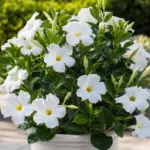 Mandevilla ‘Rio White’Mandevilla 'Rio White'
 Mandevilla ‘Sun Parasol Pink’Mandevilla 'Sun Parasol Pink'