Want to help birds through winter without turning your yard into a full-time feeding station? Start by leaving more of your garden in place. Native berries, dried seed heads, nuts, insects tucked into leaves, and evergreen fruits can provide a dependable natural buffet when snow, ice, and short days make food harder to find.
The best winter bird garden is not perfectly tidy. It is layered, slightly messy, and planted with species that offer food at different times. A few thoughtful changes—delaying the autumn cleanup, protecting fruiting shrubs, and choosing regionally native plants—can make your yard more useful to birds from the first hard frost through early spring.
Why natural food matters in winter
Birds do not all eat the same things, and their diets can change with the seasons. Chickadees and woodpeckers may search bark and dead wood for insects, finches crack open seeds, and robins, waxwings, and mockingbirds turn to fruit when insects are scarce. Jays, nuthatches, and other birds may rely on acorns, nuts, and larger seeds.
Winter also increases the value of high-energy foods. Birds must spend more energy maintaining body temperature, especially during cold nights and storms. A garden that offers several food types gives different species more opportunities to find what they need instead of concentrating every bird around one feeder.
Think of your yard as a small habitat rather than a decorative planting bed. Food, cover, water, and safe places to perch work together. Even a patio garden can contribute, but a yard with shrubs, trees, grasses, and ground-level cover will support a wider range of birds.
1. Berry-laden shrubs and trees
Winter-persistent fruit is one of the most visible ways your garden can feed birds. Some plants hold berries well into the cold season, offering food to birds that remain year-round as well as early spring migrants returning before many plants flower.
Depending on your region, useful choices may include winterberry, native dogwoods, sumacs, viburnums, Virginia creeper, American holly, crabapple, serviceberry, elderberry, and native honeysuckles. The right plant varies widely across the United States, so choose species that naturally occur in your part of the country or are recommended by a local native plant organization.
How to make the most of winter fruit
- Do not prune too early. If branches are still carrying fruit, wait until late winter or early spring unless a safety issue requires immediate work.
- Plant for a sequence. Combine plants that ripen in late summer, fall, and winter rather than relying on one shrub.
- Check pollination needs. Some fruiting plants produce better crops when both male and female plants grow nearby.
- Match plants to your region. A berry-bearing plant that thrives in the Southeast may struggle in the high desert, Great Plains, or northern Midwest.
Do not worry if birds eat the berries quickly. That is a sign the plant is doing its job. A productive shrub may feed cedar waxwings, American robins, cardinals, thrushes, mockingbirds, and other fruit-eating birds, depending on where you live and what is available nearby.
2. Dried flower heads and grass seeds
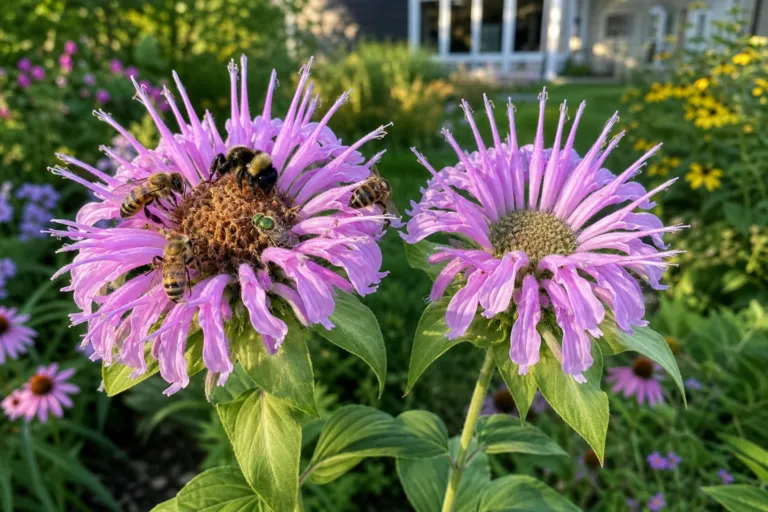
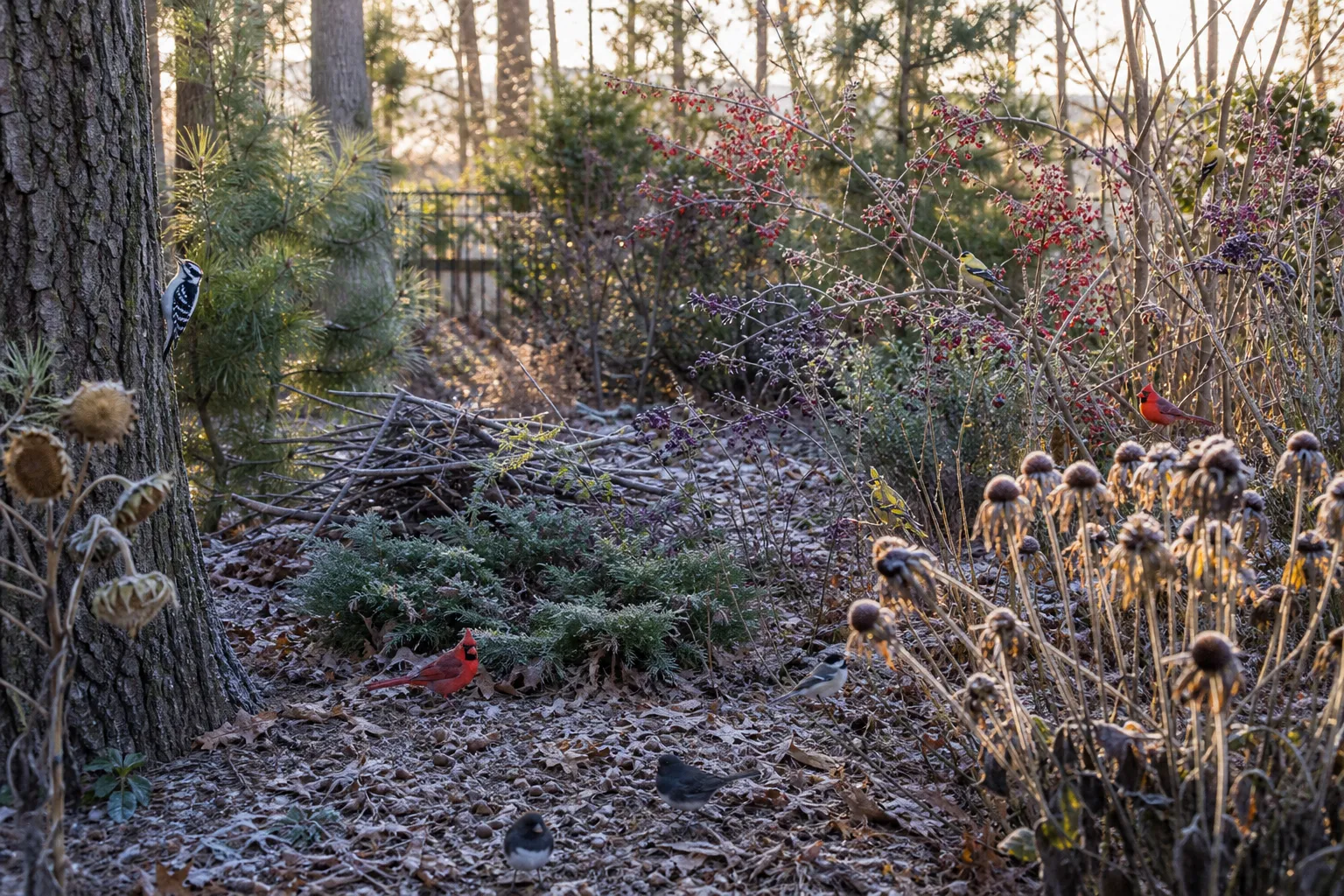
When perennial flowers fade, their seed heads become winter bird feeders. Goldfinches, sparrows, juncos, siskins, and other seed-eating birds often work through dried flower centers and grass stalks, especially when the seeds remain above snow.
Leave plants such as coneflowers, black-eyed Susans, sunflowers, asters, goldenrods, coreopsis, native thistles, switchgrass, little bluestem, and other locally appropriate grasses standing through winter. Their shapes add structure to the garden, and frost or snow can turn them into striking seasonal features.
When to cut back
Try a two-stage cleanup instead of cutting everything to the ground in fall. Remove only damaged, diseased, or unsafe material before winter. Then leave most healthy stems and seed heads until late winter or early spring, when birds have had time to use the seeds and overwintering insects have completed part of their life cycle.
When you eventually cut plants back, leave some stems at different heights. Hollow stems can provide shelter for insects, which become food for birds later. Chop healthy stems and place them loosely under shrubs rather than sending every piece to the trash.
Sunflowers are particularly easy for beginners. Grow several varieties side by side and compare them: branching types often produce many smaller seed heads, while single-stem varieties may offer one large, concentrated head. Either can feed birds, but a succession of plants may extend the period when seeds are available.
3. Acorns, nuts, and large seeds
Do not rake every acorn or nut away from the garden. Oaks, hickories, walnuts, beeches, hazelnuts, and related plants can support jays, nuthatches, woodpeckers, turkeys, squirrels, and other wildlife. Acorns and nuts are energy-dense foods, and some birds carry or hide them for later use.
If you have mature trees, their value extends far beyond the nuts they produce. Native trees also support insects during the growing season, provide places to perch, and create protective layers in the winter landscape. A large tree may be one of the most productive bird-supporting features in an established yard.
Simple ways to preserve this food source
- Leave a natural layer of nuts beneath trees rather than blowing the area completely clean.
- Keep fallen leaves around established trees and shrubs, provided they are not covering walkways or smothering small plants.
- Plant a locally native nut-producing tree or shrub if your property has enough space.
- Choose smaller native hazelnuts or similar shrubs for compact yards where a large oak is impractical.
Never collect unknown nuts and scatter them indiscriminately. Wildlife food plants should be correctly identified, suited to your climate, and planted where their mature size will not create conflicts with buildings, sidewalks, or utility lines.
4. Insects hidden in leaves, stems, and bark
Winter does not eliminate all insect food. Many insects, pupae, spiders, and eggs shelter in leaf litter, hollow stems, under loose bark, or in the soil. Birds such as chickadees, nuthatches, and woodpeckers may search these protected places during cold weather and early spring.
This is why a perfectly manicured garden can be a surprisingly poor habitat. If you remove every leaf, cut every stem, and clear every fallen branch, you also remove many of the small creatures birds depend on.
Try a lighter-touch cleanup
- Leave a thin layer of leaves beneath trees and shrubs.
- Move leaves onto garden beds instead of bagging them, but keep them away from storm drains and vents.
- Stack small branches in a quiet corner to create a loose brush pile.
- Leave some dead stems standing until spring.
- Avoid routine pesticide use, especially on plants that are supporting insects and caterpillars.
Leaf litter should not cover the crowns of plants that are prone to rot, and diseased plant material deserves separate attention. The goal is not to let the entire yard become unmanaged; it is to create intentional pockets where natural food and shelter can remain.
5. Evergreen fruits, cones, and winter browse
Evergreen plants can provide both shelter and food when deciduous branches are bare. Junipers, cedars, pines, spruces, and other conifers may offer berries, cones, or seeds, depending on the species. These plants also block wind and create protected spaces where birds can rest between feeding flights.
In different parts of the United States, birds may use juniper berries, pine seeds, spruce cones, or other evergreen foods. Finches and crossbills are especially associated with conifer seeds in suitable habitats, while some fruit-eating birds use the berry-like cones of junipers.
Choose the right evergreen for your yard
Before planting, check mature height, width, sun requirements, soil drainage, and regional suitability. A tree sold as an ornamental evergreen may provide little food compared with a native species adapted to local birds. Your county extension office, state native plant society, or reputable native nursery can help you compare options.
Evergreens are also valuable as cover near feeding areas. Place them where birds can retreat quickly from weather or predators, but avoid creating dense vegetation immediately beside windows, where startled birds may collide with glass. Window-safe positioning and visible glass treatments remain important parts of a bird-friendly yard.
Build a winter food plan for your region
There is no single national plant list that works equally well from Maine to Arizona. A bird-friendly winter garden should reflect local climate, soil, rainfall, and the birds that actually spend winter in your area.
Start by observing your yard for one season. Note which birds visit, when berries disappear, where snow accumulates, and which plants retain seed heads. Then fill the gaps rather than buying plants at random.
- Northern regions: emphasize persistent fruit, conifers, nut-producing trees, and seed heads that remain above snow.
- Midwestern and central regions: combine prairie seed plants, native shrubs, oaks, and leaf-litter habitat.
- Southeastern regions: include native fruiting shrubs, evergreen cover, seed-producing perennials, and plants that support insects during mild winter spells.
- Western regions: select plants for your specific ecoregion, from Pacific Northwest berry shrubs to drought-adapted desert species, and prioritize water-wise establishment.
Use local plant databases and extension recommendations to confirm that a species is native or well behaved in your state. Avoid introducing invasive plants simply because birds eat their fruit; a short-term food source can create long-term habitat problems.
What about bird feeders?
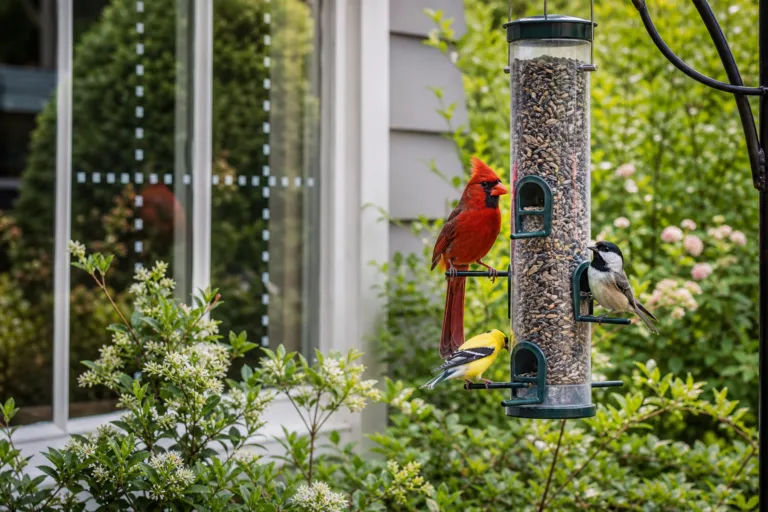
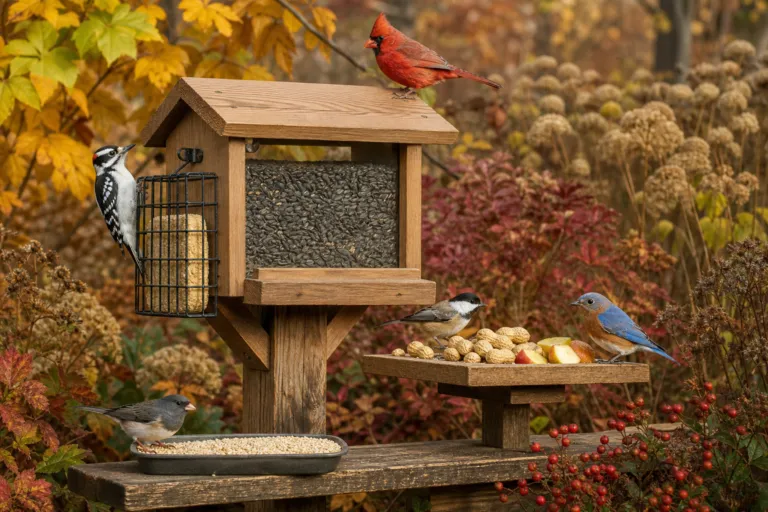
Natural food and feeders can complement each other. During heavy snow, ice, or prolonged cold, a clean, well-maintained feeder may help birds access food that is temporarily buried. Black-oil sunflower seed is widely used because many birds can open its thin shell, while other seed types attract different species.
Feeders are not a substitute for habitat. Clean them regularly, store seed in a dry place, and remove spoiled or wet food. If disease appears among local birds, follow current guidance from wildlife authorities and consider taking feeders down temporarily.
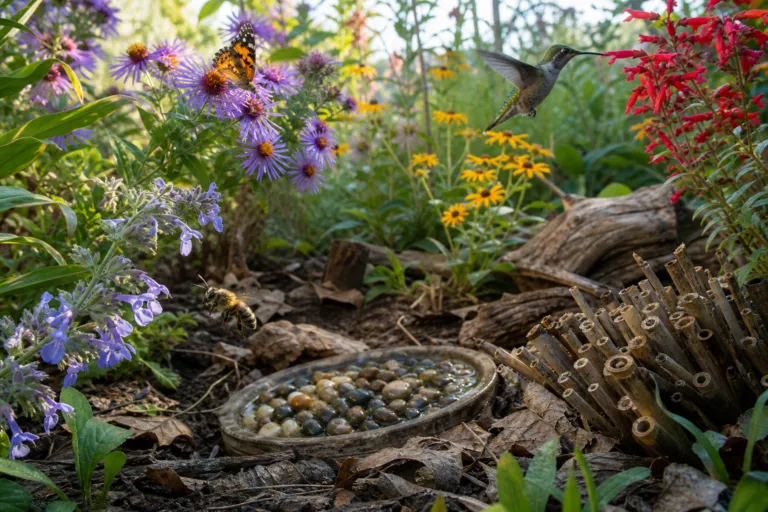
Also provide clean water when possible. In winter, unfrozen water can be as valuable as food, particularly during periods when natural sources are iced over. Use a shallow basin, keep it clean, and position it where birds have nearby cover without creating a hidden ambush point.
A little mess can make a big difference
The simplest winter bird project may be the one you do not do: do not cut every perennial, do not remove every leaf, and do not strip every berry from the garden for decoration. Leave a few natural food sources in place and let birds decide what is useful.
Begin with one berrying shrub, a patch of standing seed heads, and a leaf-litter corner. Add a nut-producing tree or evergreen when space and budget allow. With each season, your garden can become more productive, more resilient, and more interesting to watch.
You do not need a large property or a perfect plan. A handful of locally appropriate plants, thoughtful timing, and a willingness to welcome a little wildness can help birds find food through winter—and give you a livelier garden to enjoy on even the coldest days.