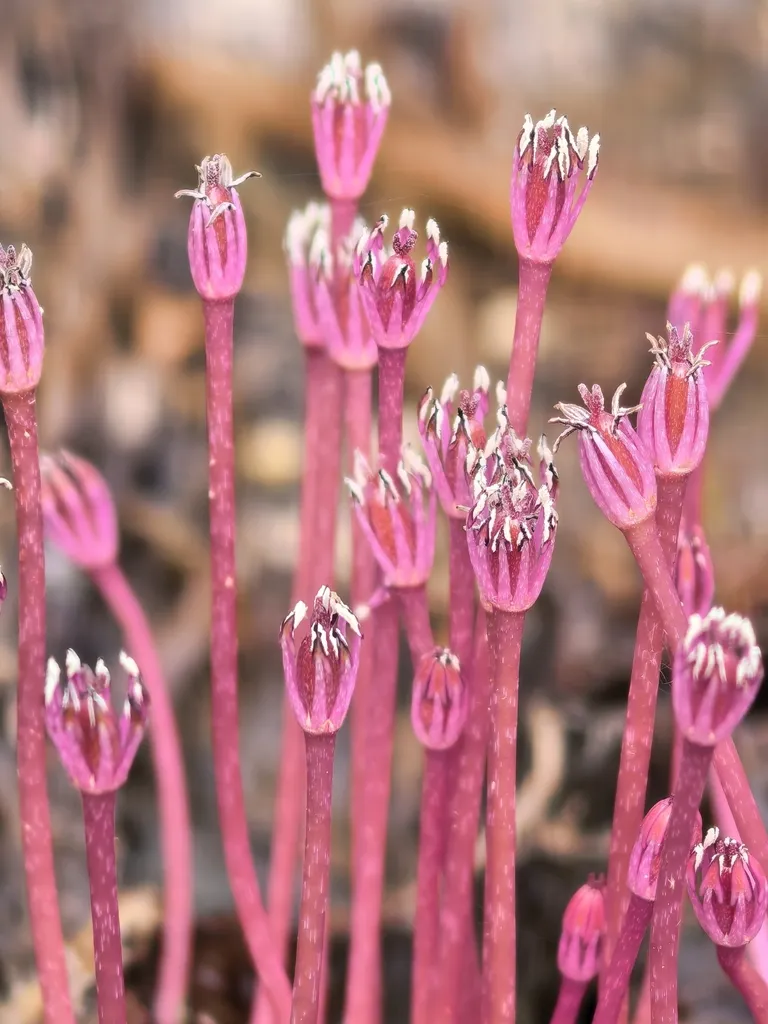
A morning run near the small coastal town of Yelapa, Jalisco, turned into an unexpected botanical encounter when a striking colony of pink-flowering riverweeds appeared among the rocks of a fast-flowing river.
The plants belonged to the genus Marathrum, an unusual group of flowering plants adapted to a habitat that would be impossible for most terrestrial species. Riverweeds grow attached directly to rocks in moving water, creating mats and colonies in tropical rivers and streams.
The observation was made by botanist Pablo Carrillo-Reyes, a professor at the University of Guadalajara and curator of the university herbarium. He recognized the plant immediately because he had encountered the same unusual species decades earlier as a biology student.
Flowers growing where most plants could never survive
Riverweeds belong to the family Podostemaceae, a remarkable group of aquatic flowering plants specialized for life in fast-flowing freshwater.
Instead of growing in ordinary soil, many species attach themselves firmly to submerged or seasonally exposed rocks. Their unusual growth forms allow them to survive strong currents that would quickly wash away most plants.
The genus Marathrum occurs from Mexico and the Caribbean southward into parts of South America.
The colony photographed near Yelapa may belong to Marathrum plumosum, although identification was still being discussed within the iNaturalist community when the observation was published. Another closely related species, Marathrum foeniculaceum, is also known from rivers in the region.
A plant remembered after 25 years
What made the observation especially meaningful was that Carrillo-Reyes had learned about the plant approximately 25 years earlier during an undergraduate botany field trip to the same general area.
At the time, the plant was known as Vanroyenella plumosa. It had only recently been formally described and was notable because Vanroyenella was considered a genus restricted to the Mexican state of Jalisco.
Taxonomic research later changed that interpretation.
A study published in 2011 transferred the species into the genus Marathrum, giving it the currently accepted name Marathrum plumosum. The story provides a good example of how botanical classification can change as researchers obtain more information about relationships between species.
Riverweeds can tell us something about water quality
The beauty of these plants is only part of the story.
Many Mexican members of the Podostemaceae are associated with relatively clean, nutrient-poor, fast-moving rivers. Their specialized habitat means that changes to river systems can have serious consequences for their populations.
Pollution and the construction of dams are among the threats facing riverweed habitats.
Because many species have very specific environmental requirements, their presence can also provide useful information about the ecological condition of a river.
Marathrum plumosum has been documented from rivers in the Mexican states of Jalisco and Oaxaca. Its restricted distribution makes observations of healthy colonies particularly valuable.
An aquatic plant that does not look like a typical aquatic plant
Riverweeds can be surprising even to experienced plant lovers.
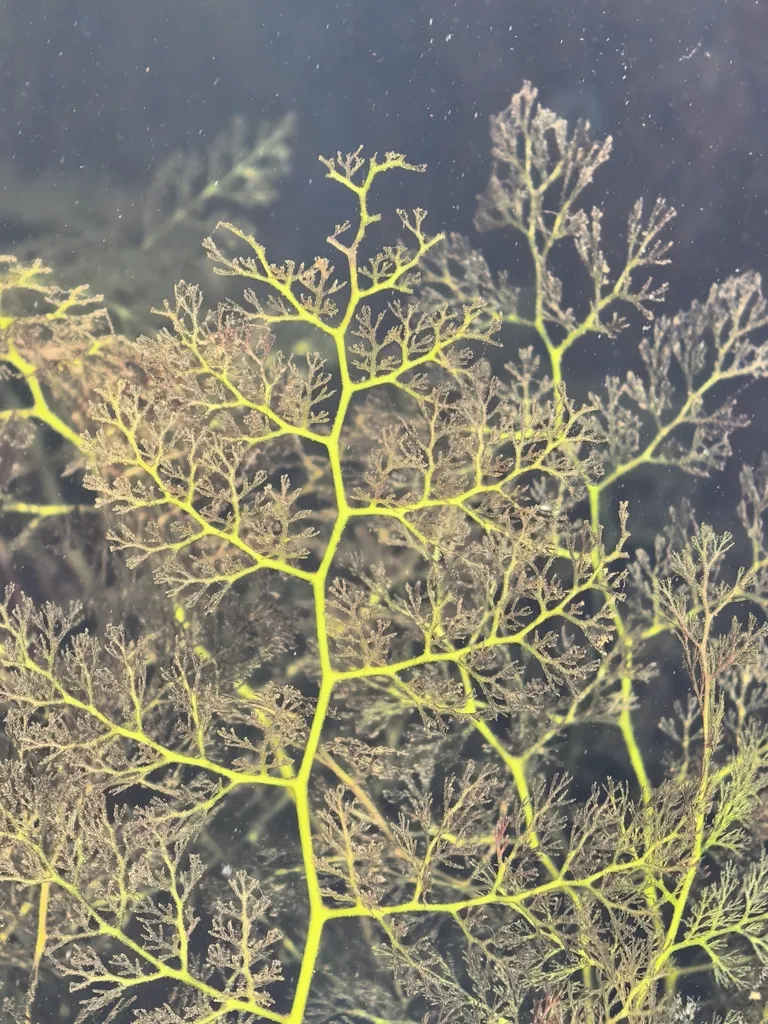
When submerged or attached tightly to rocks, some species resemble algae, mosses or even aquatic ferns more than ordinary flowering plants. During periods when water levels fall, however, they can produce clearly visible flowers.
This unusual life cycle is an adaptation to rivers where water levels and flow conditions change seasonally.
Their roots or root-like structures hold tightly to rock surfaces while flattened vegetative growth remains close to the substrate. This reduces the force exerted on the plant by moving water.
When conditions become suitable for reproduction, flowers emerge and the plant suddenly reveals that it is not an alga at all, but a highly specialized flowering plant.
A casual observation can become useful biodiversity data
Carrillo-Reyes has contributed thousands of observations to iNaturalist, documenting more than 2,800 species.
Interestingly, he was initially skeptical of the platform.
As a professional botanist and herbarium curator, he was concerned by the idea that photographs and smartphone applications might someday be treated as replacements for physical biological collections.
His opinion changed after using the platform.
He came to see citizen-science observations and traditional herbarium collections as complementary rather than competing approaches. A herbarium specimen preserves physical material that can be studied for decades or centuries, while a digital observation can document the organism exactly where it was growing, together with location, date and photographs.
Both types of information can be valuable.
Why herbarium specimens still matter
Traditional botanical collections remain fundamental to taxonomy.
Researchers can examine the structure of preserved plants, compare specimens collected decades apart and sometimes extract genetic information from historical material.
A photograph cannot replace all of these possibilities.
At the same time, platforms such as iNaturalist make it possible to document enormous numbers of living organisms across wide geographic areas. They can also reveal populations that specialists may not otherwise encounter.
In this case, a simple photograph taken during a morning run created a new publicly accessible record of an unusual riverweed colony.
Citizen science is especially useful for rare and overlooked species
Large mammals and spectacular birds naturally attract attention, but biodiversity also includes organisms that most people walk past without noticing.
Riverweeds are a perfect example.
Someone unfamiliar with them might easily mistake a colony for vegetation growing randomly across wet rocks. A botanist, however, may immediately recognize something unusual.
When observations are photographed, georeferenced and shared publicly, specialists elsewhere can contribute to identification.
That process does not make professional taxonomy unnecessary. Instead, it can help scientists discover where further fieldwork, specimen collection or ecological research may be worthwhile.
A reminder to look closely at rivers
The Yelapa observation also carries a broader lesson.
Rivers are not simply channels carrying water through a landscape. Rocks, rapids, pools and seasonal changes in water level can support highly specialized communities of plants and animals.
A small patch of pink vegetation on a rock may represent a species with a very limited geographic range and a remarkable evolutionary history.
That is why ordinary encounters can sometimes become scientifically interesting observations.
The next time you walk beside a clear, fast-moving tropical stream, it may be worth looking more closely at the rocks.
What appears at first to be moss or algae could turn out to be one of the strangest flowering plants in the river.