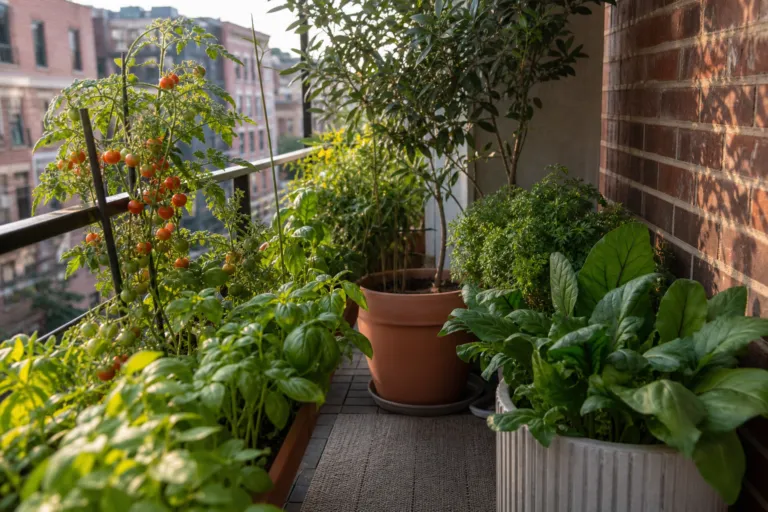
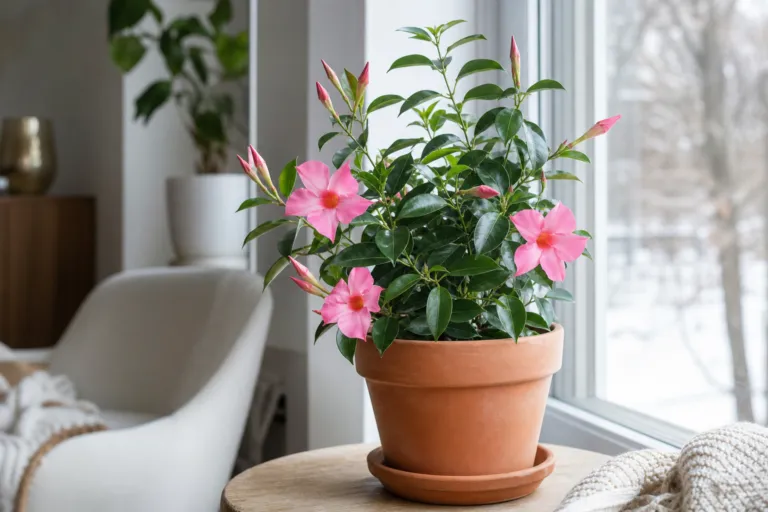
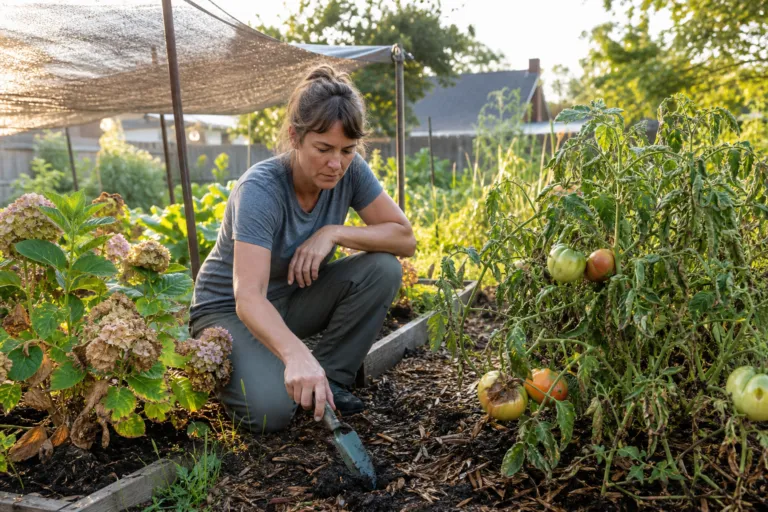
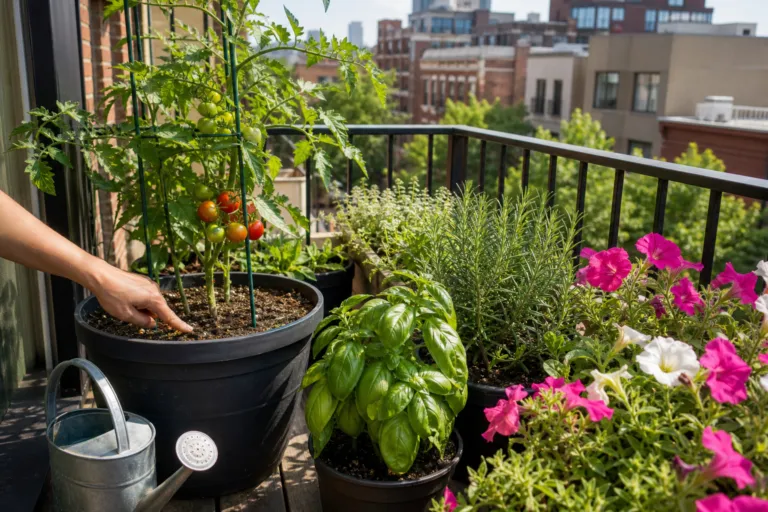
When a potted plant looks undamaged after a blustery day, it is tempting to assume it escaped unharmed. No snapped stems, no torn leaves, no obvious problem. Yet wind can quietly push a container plant into stress long before you see dramatic damage.
The trouble often begins below the surface. Moving air pulls moisture from leaves, dries the potting mix faster, rocks the root ball, and can turn a lightweight pot into a sail. On a balcony, rooftop, porch, or exposed deck, wind may also combine with bright sun and reflected heat, creating conditions far harsher than the thermometer suggests.
The good news is that most wind problems are preventable. With a heavier or wider container, a better position, sensible watering, and a little protection, you can help your plants stay upright, hydrated, and productive.
Wind damage is often a water-balance problem
Plants constantly lose water through tiny openings in their leaves. This natural process, called transpiration, helps move water and nutrients through the plant. Wind speeds up the movement of dry air around the foliage, so the plant can lose water faster than its roots can replace it.
In the ground, a plant may draw from a broad volume of soil. A container plant has a much smaller reservoir. Once the potting mix becomes dry, the plant has little room for recovery, especially if warm sunshine and low humidity continue.
You may notice the results as:
- soft or slightly drooping leaves that recover at night but wilt again by afternoon;
- leaf edges that feel crisp before the rest of the leaf changes color;
- flower buds that dry up or drop;
- slower growth, even though the plant receives adequate light and fertilizer;
- premature yellowing or browning after repeated windy days.
Wind does not need to tear a leaf to affect it. A plant can lose valuable water through perfectly intact foliage.
Why pots are especially vulnerable
A small root zone dries quickly
Most container mixes drain well, which is useful because roots need air as well as water. But good drainage also means a pot has limited water storage. A small container can move from comfortably moist to dangerously dry in a single hot, windy afternoon.
Terracotta and other porous containers can dry faster than glazed ceramic, resin, or plastic pots. Hanging baskets and narrow window boxes are particularly vulnerable because they hold less mix and have a large amount of exposed surface area.
The root ball can move inside the pot
A tall plant catches wind above the rim and transfers that force down into the container. Each gust may rock the root ball slightly. Over time, this movement can disturb fine roots, loosen the potting mix, and create gaps where water runs down the sides instead of soaking evenly through the root zone.
This is one reason a plant can appear leafy and healthy while gradually becoming less vigorous. The leaves may remain intact, but the roots are working in a shifting, drying environment.
Wind can tip the entire plant
Top-heavy plants – such as tomatoes, peppers loaded with fruit, small citrus trees, ornamental grasses, and tall flowering annuals – place more weight above the container than below it. A lightweight plastic pot can tip even when the plant itself suffers no breakage.
Repeated tipping can bend stems, expose roots, spill potting mix, and damage branches when the plant lands against a railing or wall. In severe weather, loose pots can become hazards to people, windows, vehicles, and neighboring property.
Wind, sun, and heat can create a hidden stress triangle
Wind becomes more demanding when it arrives with full sun and heat. A south- or west-facing balcony may receive intense afternoon radiation, while a wall or concrete surface reflects additional heat onto the foliage and container. The mix may dry from above and around the sides at the same time.
Cold wind creates a different problem. In fall and winter, evergreen leaves can continue losing water even while cold roots absorb it slowly. Container roots also experience colder temperatures than roots insulated by surrounding garden soil. A plant may therefore show browning or scorch days after the windy weather passes.
Newly purchased plants deserve extra care. Plants moved from a greenhouse, garden center, or sheltered indoor space may not yet be accustomed to direct sun and outdoor wind. Acclimate them gradually rather than placing them immediately in the most exposed spot.
A simple container wind trial you can run at home
If you want to see how quickly wind changes watering needs, compare two similar plants for seven to ten days. This is more useful than guessing because your results will reflect your balcony, climate, pot material, and plant size.
Set up the comparison
- Choose two similar plants in matching containers, ideally 12 to 14 inches wide.
- Use the same potting mix and give both pots the same amount of water at the start.
- Place one pot in an exposed location and the other beside a wall, screen, or dense group of plants.
- Keep light levels as similar as possible.
- Weigh each pot after watering, then weigh it again at the same time each day.
A practical way to measure is to use a household scale that can handle the container’s weight. For a large pot, weigh it on a sturdy bathroom scale, or measure the water you add and record the amount that drains from the bottom.
Here is an example of the kind of record to keep. The figures are a demonstration format, not a universal watering schedule:
| Day | Exposed pot | Sheltered pot | Weather note |
|---|---|---|---|
| 1 | Watered with 64 fl oz | Watered with 64 fl oz | Starting point |
| 2 | Pot lost 22 fl oz | Pot lost 13 fl oz | Warm, breezy |
| 3 | Pot lost 25 fl oz | Pot lost 14 fl oz | Sunny, gusty |
| 4 | Pot lost 17 fl oz | Pot lost 10 fl oz | Cloudy, calmer |
The difference does not mean you should automatically add a fixed number of ounces every day. Instead, it shows how much faster the exposed container is losing water. Confirm the need by checking the mix with your finger or a moisture meter, and water thoroughly when the plant’s moisture range calls for it.
When you water, apply it slowly until a little drains from the bottom. That helps moisten the full root ball rather than only the top layer. Empty saucers after watering if they hold standing water for a prolonged period; roots generally need moist, airy mix rather than constant saturation.
Choose plants and varieties that handle exposure better
No plant is windproof, but some forms cope more comfortably with exposed conditions. Plants with flexible stems, smaller leaves, gray or waxy foliage, and naturally compact growth often lose less water or present less resistance to gusts.
For a sunny, breezy patio, you might compare:
- Compact versus tall tomatoes: determinate or patio types usually create less leverage than indeterminate vines, but both still need sturdy support.
- Small-leaved herbs versus broad-leaved plants: thyme, rosemary, and some oregano varieties may tolerate drying air better than tender basil, although all require appropriate light and watering.
- Compact ornamental grasses versus tall, fine-stemmed flowers: shorter cultivars generally catch fewer gusts.
- Succulents versus soft annuals: succulents may handle brief dry spells, but their leaves and stems can still suffer from cold wind, hail, or sudden temperature changes.
Read the mature height and spread on the plant tag, not just the size of the plant at purchase. A small shrub that eventually becomes tall and broad may need a heavier pot, a protected position, or both.
Five practical ways to protect container plants
1. Move pots out of the wind tunnel
Look for places where wind accelerates: between buildings, beside a solid railing, at the corner of a house, or along a narrow passage. A pot may be only a few feet from a sheltered wall yet sit directly in a powerful stream of moving air.
Position plants near a wall, hedge, group of shrubs, or other porous barrier. The goal is to filter wind, not create a solid wall that causes turbulent eddies around the edges. On balconies, slatted screens or mesh can reduce exposure while still allowing some airflow.
2. Use a stable container
Choose a wide pot with a low center of gravity for exposed locations. Heavy materials such as thick ceramic, stone, or concrete can improve stability, but remember that a large, wet container may be extremely heavy.
If you use a lightweight pot, place it inside a heavier decorative container or group several pots together. Keep enough space for drainage and avoid stacking containers where they could fall.
3. Support tall plants without over-constraining them
Add stakes, cages, trellises, or plant supports before the plant becomes top-heavy. Secure stems with soft ties that allow a small amount of natural movement. Ties that are too tight can rub or girdle stems as they expand.
For balconies and rooftops, never attach a tall plant or trellis to a railing unless the structure and attachment method can safely support the load. During forecast high winds, move portable plants to a protected area instead of relying on a stake alone.
4. Reduce evaporation at the soil surface
A thin layer of suitable mulch can slow evaporation and moderate the temperature near the roots. Shredded bark, coconut coir, clean straw, or other appropriate organic materials can work, provided you leave a small gap around the stem.
Do not use mulch as a substitute for checking moisture. Wind can still dry the mix around the sides and bottom of the container, where surface conditions may not tell the whole story.
5. Check plants after, not only before, a windy day
Inspect the pot, stem base, and soil line after strong weather. Look for a leaning root ball, exposed roots, cracked stems, spilled mix, loose supports, or a container that has shifted position.
Reposition the plant, firm the mix gently, and water if the root zone is dry. Avoid heavy pruning simply because the plant looks temporarily wilted; first correct the moisture and exposure problem, then give it time to respond.
A quick wind-readiness checklist
- Is the pot wider than it is tall?
- Does the container have open drainage holes?
- Can the plant be moved to a sheltered spot during severe weather?
- Is the plant taller or heavier than the container can safely support?
- Have you checked the root zone rather than relying only on the appearance of the leaves?
- Does the plant need a stake, cage, or trellis?
- Could a screen filter wind without blocking it completely?
- Are saucers, hanging baskets, and loose garden objects secure?
Healthy leaves do not tell the whole story
Wind damage is not always a dramatic torn leaf or broken branch. It can be a gradual loss of water, a loosened root ball, a pot that dries unevenly, or a plant that spends its energy recovering instead of flowering and growing.
Start with the simplest fixes: move the container, stabilize the pot, check moisture more often, and support tall growth. If you compare exposed and sheltered plants for a week, you may discover that a small change in position saves a surprising amount of water.
With a little observation, you can turn a windy patio or balcony from a difficult growing site into a manageable one. Your plants do not need complete stillness – they need the right balance of airflow, moisture, stability, and shelter.