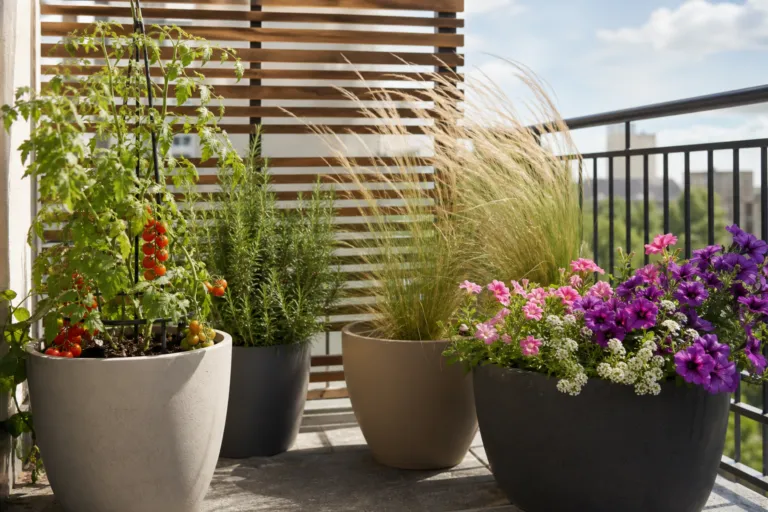
A container can look perfectly healthy at breakfast and wilt dramatically by late afternoon. The change is not just happening in the leaves. Beneath the surface, roots are coping with a fast-rising temperature, shrinking moisture reserves and, sometimes, a shortage of oxygen.
That is the hidden challenge of summer container gardening: a pot has only a small volume of growing medium, and that medium is surrounded by warm air and often exposed to sun-heated pavement, decking or gravel. On a very hot afternoon, the root zone can change noticeably within a few hours.
The good news is that you do not need a complicated setup to reduce the strain. A larger pot, sensible placement, an early watering routine and a little insulation can make a meaningful difference.
The root zone heats faster than garden soil
In the ground, roots benefit from the insulating effect of a large mass of soil. A container has much less soil around the roots, so heat can travel through the pot wall more quickly. Dark plastic pots are especially likely to absorb solar heat, while metal containers can become hot to the touch in direct sun.
The hottest side is usually the side facing the afternoon sun. Roots close to that wall may experience a warmer, drier environment than roots in the middle of the pot. The plant may not show immediate damage, but repeated hot afternoons can reduce root growth and make the entire plant less resilient.
Research and nursery observations have found that container temperatures can climb far above the surrounding air temperature under intense sun. Exact readings vary with pot color, material, size, wind, humidity, plant cover and the temperature of the surface beneath the container. Treat any single temperature figure as an example, not a universal limit.
Why the afternoon is the danger window
By afternoon, several stresses often arrive together:
- The pot wall has absorbed hours of sunlight.
- The growing medium has lost water through evaporation and plant uptake.
- Leaves are transpiring, which means they are releasing water vapor and drawing more water from the roots.
- Warm, dry air increases the demand for water.
- Wind can pull moisture from the foliage and the surface of the potting mix.
A plant can therefore wilt even when the pot felt moist in the morning. The roots may still be alive, but they cannot supply water as quickly as the leaves are losing it.
What heat does to roots
1. Fine feeder roots lose access to water
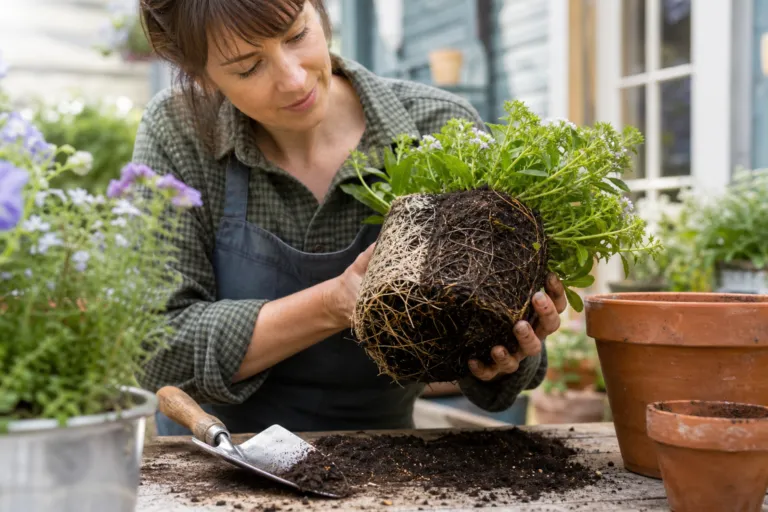
Most water absorption takes place through young, fine roots and the tiny root hairs near their tips. These delicate structures are the first part of the root system to suffer when the surrounding mix becomes too dry or hot.
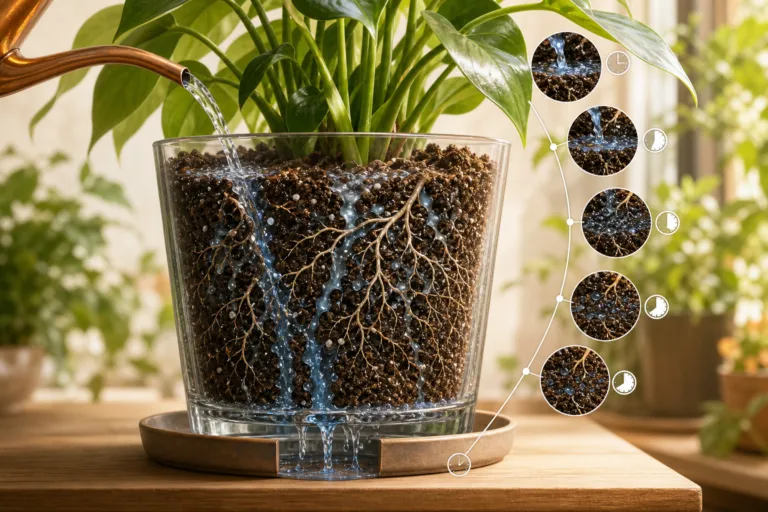
As potting mix dries, water may cling more tightly to particles, making it harder for roots to draw up. In a peat-based mix, the surface can also become difficult to re-wet after severe drying. You may pour water onto the pot and see it run down the sides or out of the drainage holes while the center of the root ball remains dry.
2. Root growth slows
Roots need a workable balance of moisture, air and temperature. When the root zone becomes excessively hot or repeatedly swings from dry to saturated, new root growth can slow. A plant may survive, but it can become less efficient at taking up water and nutrients.
This is one reason a container that has been allowed to dry severely may continue to look weak even after you water it. The problem is no longer just the amount of water in the pot; the root system may need time to recover.
3. Hot, saturated mix can reduce oxygen
Roots need oxygen for respiration, the process that provides energy for growth and absorption. Waterlogged potting mix contains fewer air spaces, and warm, saturated conditions can be particularly stressful because roots are actively growing and respiring during the growing season.
That does not mean you should avoid watering on a hot day. It means you should water thoroughly when the plant needs it, then allow excess water to drain away. Moist is helpful; permanently soggy is not.
4. The outer roots may be injured before the plant collapses
Roots pressed against a hot container wall have less protection than roots in the center of the pot. A small pot, a dark-colored pot and a container sitting on hot concrete create a particularly demanding combination.
Root injury is not always obvious. You may notice symptoms above ground first: midday wilting, scorched leaf edges, flower drop, yellowing or stalled growth. These symptoms can also have other causes, so look at the whole picture before assuming heat alone is responsible.
Not all containers behave the same way
Container material, size and position all change the temperature and drying rate of the root zone.
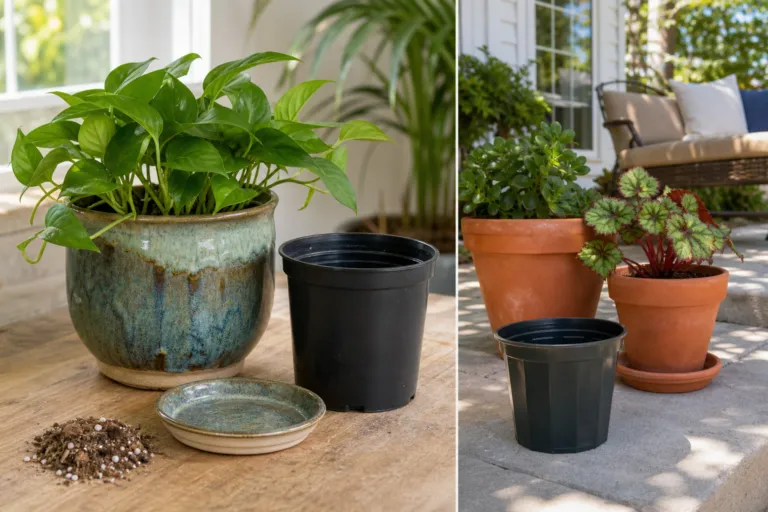
Plastic pots
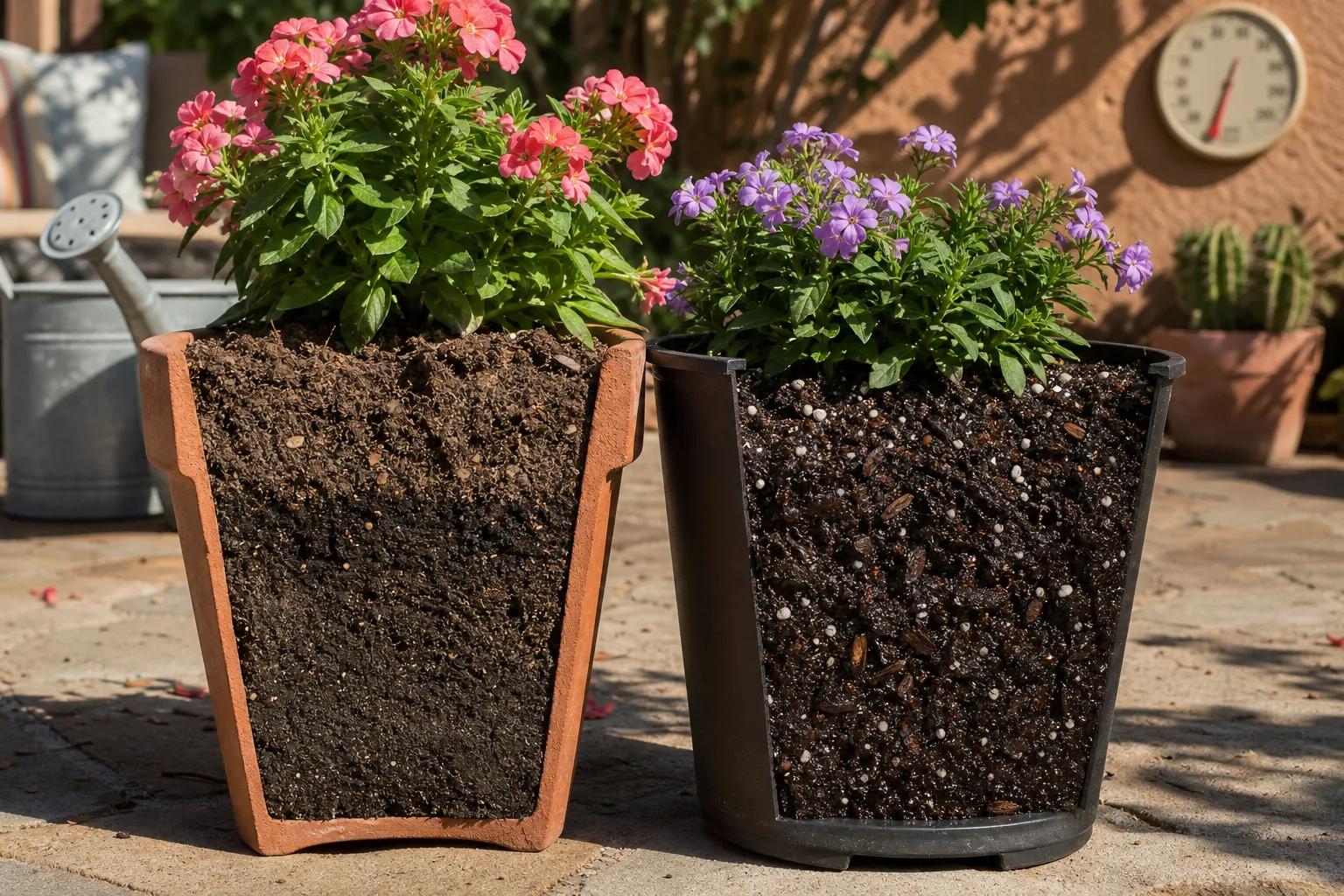
Plastic containers are lightweight and generally lose water more slowly than porous terracotta. However, black plastic can become very warm in direct afternoon sun. A pale or light-colored container usually absorbs less solar energy than a dark one.
Terracotta
Unglazed terracotta allows moisture to move through the pot wall, which can help prevent a persistently soggy root zone but also speeds drying. In hot, windy locations, terracotta may require more frequent checking than glazed ceramic or plastic.
Metal
Metal pots can heat quickly, particularly when they are thin-walled and fully exposed. They look attractive, but they deserve extra care in a sunny spot. Consider using them as decorative outer containers with a nursery pot inside, leaving an insulating air gap between the two.
Large versus small pots
A larger container holds more growing medium, which gives roots a bigger buffer against rapid drying and temperature changes. Small pots can work well for herbs, succulents and compact annuals, but they need closer monitoring during heat waves.
Very large containers are not automatically better. If the pot is much bigger than the plant’s root system and the mix stays wet for a long time, the roots may struggle with poor aeration. Choose a container that gives the plant room to grow without creating a permanently oversized reservoir of wet mix.
A simple afternoon root-zone experiment
If you enjoy testing rather than guessing, compare two similar containers on your patio. Use the same plant type, potting mix and watering amount. Place one pot in full afternoon sun and the other where it receives morning sun followed by afternoon shade.
For a useful home comparison, record:
- Air temperature in the shade.
- Temperature of each pot wall, measured with an infrared thermometer if available.
- Potting-mix temperature about 2 inches below the surface.
- Container weight before watering and again at 4 p.m.
- Whether the plant is wilted, leaf-curled or still upright.
Do not insert a probe directly into a dense root ball if doing so could damage roots. Instead, measure near the inside edge of the pot or use a spare container filled with the same mix as a comparison sample.
For watering, measure rather than estimate. A 1-gallon container might need several cups of water during a hot spell, while a large tomato or shrub container may need considerably more. The correct amount depends on the plant, pot size, weather and how dry the mix is. Water slowly until a small amount drains from the bottom, then record how much you applied.
Repeat the test for three or four hot afternoons. One day can be misleading, but a pattern is useful. You may find that the shaded container stays heavier, cooler and less wilted, even though both plants receive the same total amount of water.
How much water does a container lose?
There is no universal watering volume for every pot, but you can create a reliable schedule by weighing the container. Water the pot thoroughly until drainage begins, let it finish draining, and note its weight. Check it at the same time each afternoon.
If the container has lost 2 pounds since watering, that is roughly equivalent to 4 cups of water because 1 pound of water is about 2 cups. This is an approximation, but it gives you a practical way to compare days and containers.
For example, if a 12-inch patio pot loses 1.5 pounds between 8 a.m. and 4 p.m., it has lost about 3 cups of water. A larger plant in a sunnier or windier position may lose much more. Use the measurement to refine your routine, not to force the plant to receive a fixed amount every day.
What to do before the heat arrives
- Water in the morning. Give the plant access to moisture before the hottest part of the day. Water at the soil surface and apply it slowly so the root ball absorbs it.
- Check the mix below the surface. Push a finger about 2 inches into the potting mix, or use a moisture meter as a guide. The surface alone can be deceptive.
- Move vulnerable plants. Morning sun and afternoon shade can be ideal for plants that wilt or scorch in intense heat. Move containers before the heat peaks, not after the plant has collapsed.
- Group pots together. Closely placed containers can reduce exposed surface area and create a slightly more sheltered pocket, especially when wind is strong.
- Raise pots off hot pavement. Use pot feet, a slatted stand or a wheeled plant caddy. Better airflow beneath the container can reduce heat buildup and improve drainage.
- Add a thin mulch layer. Shredded bark, straw or another suitable organic mulch can slow evaporation and moderate the surface temperature. Keep mulch a little away from the stems.
- Use a light-colored outer pot. A decorative cachepot can shade a dark nursery pot, but make sure water cannot collect around the inner pot.
- Inspect drainage holes. Blocked holes can turn a well-intentioned watering into prolonged saturation.
Do not confuse wilting with a signal to flood the pot
Some plants temporarily droop during intense afternoon heat even when the root zone still contains moisture. This is a protective response to water loss from the leaves, not always proof that the container is dry.
Before watering, check the mix several inches down and lift the pot if you can. If the pot feels light and the mix is dry, water thoroughly. If it feels heavy and damp, move it to a cooler position and improve airflow instead of adding more water.
Repeatedly adding small amounts of water to the surface can leave the upper mix wet while the deeper root ball remains dry. A slow, complete watering is usually more useful than frequent splashes.
Choose plants and varieties with the pot in mind
Different plants tolerate hot containers differently. Succulents and many Mediterranean herbs are adapted to bright, dry conditions, although even they can suffer in a small, heat-soaked pot. Lettuce, spinach and other cool-season crops often need afternoon shade, while tomatoes, peppers and many flowering annuals generally welcome strong light but still need consistent moisture.
Variety matters, too. Compare a compact determinate tomato with a vigorous indeterminate type in identical containers and you will likely see a difference in water demand. The larger plant has more foliage, more transpiration and often a larger root system competing for the same limited volume of mix.
When choosing plants, look for labels such as compact, bush, patio or container-friendly. These descriptions do not guarantee drought tolerance, but they often indicate that the plant’s eventual size is more suitable for a pot.
A practical hot-afternoon routine
In the morning
- Check the moisture 2 inches below the surface.
- Water dry containers slowly until drainage begins.
- Empty saucers if water remains after the pot has drained.
- Move sensitive plants to morning sun and afternoon shade.
At midafternoon
- Look for persistent wilt rather than a brief midday droop.
- Feel the pot wall and check whether the surface beneath the container is radiating heat.
- Provide temporary shade with a shade cloth, umbrella or nearby plant, leaving enough airflow around the foliage.
In the evening
- Recheck plants that remain wilted.
- If the mix is dry, water thoroughly rather than applying a token splash.
- Note which containers dried fastest so you can adjust their placement or insulation.
The bigger picture: protect the roots, not just the leaves
When a container plant wilts on a hot afternoon, it is tempting to focus only on the foliage. But the long-term solution often lies below the surface. Roots need a moderate temperature, steady moisture and enough air to function well.
Start with the simplest changes: move the pot away from reflected heat, water early, use a larger or lighter-colored container, and keep the drainage holes clear. Then observe. Your plants will show you which combinations of sun, wind and pot size create the greatest strain.
A very hot afternoon does not have to become a crisis. With a little preparation and a few measured checks, you can keep the root zone cooler, reduce sudden drying and help your container garden recover quickly when the temperature drops.