At the end of a growing season, it is tempting to dump every pot of faded soil into the trash and start over. But old potting mix is rarely just “dead dirt.” Inside that tired-looking material, you may still find useful organic matter, perlite, bark, mineral particles, fine roots, fertilizer residue, and a community of microorganisms.
The real question is not whether potting soil is old. It is whether the mix is still structurally useful, whether the previous plant was healthy, and what you plan to grow next. With a little inspection and a careful refresh, many batches can serve another season. Others are best moved to the garden or compost pile—and a few should be discarded.
First, remember what potting soil actually does
Most commercial “potting soil” is not ordinary soil from a garden bed. It is usually a soilless growing mix made from materials such as peat moss or coconut coir, composted bark, perlite, vermiculite, and fertilizer. The blend is designed to hold enough moisture for roots while allowing excess water and air to move through the container.
That balance changes with use. Repeated watering can wash away some nutrients. Organic ingredients may slowly break down, while fine particles collect in the spaces between larger pieces. The mix can become denser, slower to drain, and less springy than it was when you opened the bag.
Still, “older” does not automatically mean “useless.” In fact, a potting mix that has supported a healthy plant may remain perfectly serviceable as part of a refreshed blend.
The three-minute inspection: keep, refresh, or retire?
Before reusing any old mix, empty it onto a tarp, wheelbarrow, or clean work surface. Break apart compacted clumps and remove stems, thick roots, labels, and fallen fruit. Then check the material with your eyes, hands, and nose.
Old mix is a good candidate for reuse when it is:
- Free of obvious insects, larvae, and heavy webbing.
- Free of persistent moldy or sour odors.
- Loose enough to crumble rather than forming hard bricks.
- Not packed with a dense mat of roots.
- From a container that held a vigorous plant without serious disease symptoms.
Be cautious when the mix is:
- Waterlogged, sour-smelling, or slimy.
- Infested with fungus gnat larvae, root mealybugs, ants, or other pests.
- Filled with large amounts of dead roots or decomposing plant material.
- So compacted that water runs down the sides instead of soaking through.
- Covered with a thick white crust from accumulated fertilizer salts or hard irrigation water.
A crust on the surface is not always a reason to throw the mix away, but it is a warning that the container has accumulated soluble salts. You can remove the crust and dilute the old mix with fresh material, but sensitive plants may still struggle if the problem is severe.
When you should not reuse it in another container
The biggest concern is not age; it is what the mix may carry. Soilborne plant pathogens can remain in growing media, particularly when a plant died from an unexplained root, crown, or wilt problem. Reusing that mix for a new, susceptible plant may give the disease another opportunity.
It is also wise to avoid reusing mix that held plants with a confirmed or strongly suspected disease, severe root rot, or a heavy pest infestation. Do not simply use it for seedlings because young plants are especially vulnerable and need a clean, consistent growing medium.
For the same reason, do not mix questionable old potting soil into a fresh bag and assume dilution makes it safe. Dilution may reduce the concentration of a problem, but it does not guarantee that pathogens, pests, or weed seeds have disappeared.
When in doubt, move the material to an outdoor ornamental bed or a managed compost system rather than using it for seed starting, cuttings, houseplants, or valuable vegetables. If the mix contains a serious plant disease or a widespread pest problem, follow guidance from your local county Extension office before spreading it around the yard.
How to refresh old potting soil for another season
For a healthy batch, refreshing is usually more useful than trying to “sterilize” it at home. Heat treatments can be difficult to perform evenly, and aggressive chemical treatments are not appropriate for casual container gardening. A practical approach is to improve the structure, replace some of the nutrients, and use the mix for the right kind of plant.
A simple refresh recipe
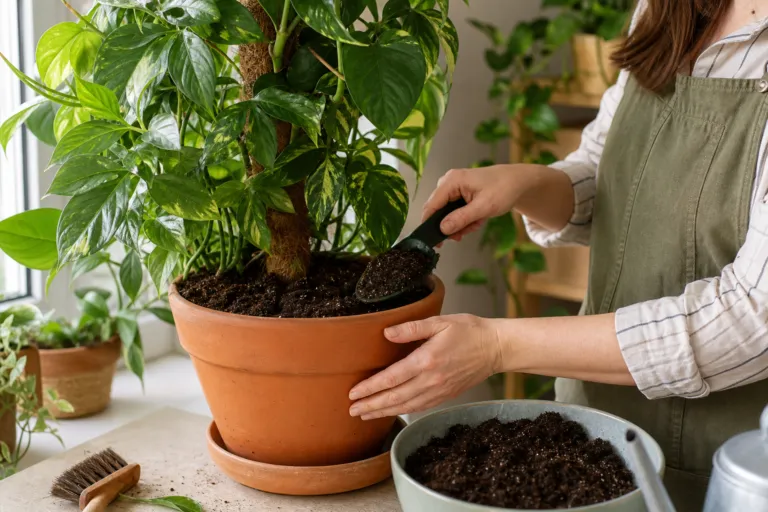
- Remove old roots. Pull out as much of the previous root system as you can. Small root fragments are not a disaster, but thick, woody roots take up space and can harbor problems.
- Break up clumps. Fluff the mix with your hands or a hand cultivator. Discard hard chunks that will not fall apart.
- Add fresh potting mix. For many patio flowers and foliage plants, replace roughly one-third to one-half of the old mix with new commercial potting mix.
- Add finished compost sparingly. A small amount can contribute organic matter, but compost should not replace the airy ingredients that make a container mix drain well. For containers, use only mature, finished compost and keep it as a minority ingredient unless a tested recipe says otherwise.
- Restore nutrients carefully. Follow the label on a complete container fertilizer. Old mix may already contain fertilizer, so avoid automatically doubling the dose.
- Test the drainage. Fill a clean pot with the refreshed mix and water it thoroughly. Water should soak in rather than sit on top, and excess should drain from the bottom within a reasonable time.
Never use straight garden soil as the main replacement. In a container, ordinary garden soil can become heavy and poorly aerated, especially when wet. If you want to include garden soil in a homemade blend, use a recipe developed specifically for containers rather than scooping soil into a pot by guesswork.
Match the old mix to an easygoing plant
Not every plant demands the same level of consistency. A refreshed mix may perform well for a tough ornamental or a seasonal flower but be a poor choice for seed starting or a finicky houseplant.
Usually more forgiving
- Marigolds and many other bedding flowers.
- Geraniums and other established patio plants.
- Mint, chives, and established culinary herbs.
- Hardy foliage plants that tolerate moderate fluctuations in moisture.
- Large, established annuals transplanted into roomy containers.
Usually worth giving fresh mix
- Seedlings and germinating seeds.
- Rooted cuttings.
- Orchids, succulents, and other plants with specialized drainage needs.
- Houseplants recovering from root rot or a pest problem.
- Vegetables that will occupy the same container for a long season, such as tomatoes and peppers.
Variety matters, too. A compact cherry tomato may tolerate a modestly refreshed mix in a large pot, while a vigorous indeterminate tomato places much greater demands on water, nutrients, and root space. Similarly, basil is generally more forgiving than a slow-growing seedling, while a pepper may need a consistently airy mix for months of production.
Try a small home comparison before committing all your plants
If you enjoy practical experiments, compare old and fresh mix with a few identical plants rather than risking an entire patio. Choose one easy crop, such as basil or marigolds, and use the same pot size, location, fertilizer, and watering schedule.
Prepare three groups:
- Fresh mix: commercial potting mix used as directed.
- Half-and-half: one part healthy old mix blended with one part fresh mix.
- Mostly old: two parts healthy old mix blended with one part fresh mix.
Label each pot and watch for new growth, leaf color, wilting, drainage, and root development. This is not a laboratory test, but it can show how your particular old mix behaves with your water, climate, and growing conditions.
Measure watering instead of guessing
Old mix often fails quietly. It may look damp on top while remaining dry around the edges, or it may stay wet in the center because fine particles have filled the air spaces. A simple measurement can reveal more than a quick glance.
For a one-gallon container, try this test after the plant is established:
- Weigh or estimate the pot before watering.
- Slowly apply 2 cups of water and wait five minutes.
- Add another 1 cup if the surface remains dry or water immediately runs down the sides.
- Record how much drains from the bottom.
- Check the pot again 24 hours later by lifting it and feeling the top 1 to 2 inches of mix.
Repeat the test with fresh mix and compare. The exact amount a plant needs will vary with pot size, plant type, temperature, wind, humidity, and sunlight, so these numbers are a comparison method—not a universal watering prescription. The goal is to learn whether water enters the root zone evenly and whether the pot dries at a reasonable rate.
When a dry mix stubbornly repels water, wet it gradually in several passes. Adding a little water, waiting, and adding more often works better than flooding the pot all at once. If the mix repeatedly beads water or channels it down the sides, replacing more of the old material is likely the better choice.
Can old potting soil go into the compost pile?
Yes, healthy used potting mix can be a useful carbon-rich or mineral component in a compost system. Add it in moderate amounts and mix it with fresh “greens,” such as vegetable scraps or grass clippings, and “browns,” such as dry leaves and shredded untreated cardboard.
Remember that old potting mix itself is not finished compost. It may contain partially decomposed bark or peat, fertilizer residues, and root fragments. A compost pile also needs moisture and oxygen, so turn or mix it as appropriate for your system.
Do not add plant material or potting mix from plants affected by serious disease, aggressive weeds, or heavy pest infestations to a backyard pile unless you know your composting system reaches and maintains conditions capable of managing those materials. When the history is uncertain, use the mix as a thin amendment in a non-sensitive outdoor area or dispose of it according to local yard-waste rules.
Give containers a clean start, too
Fresh mix cannot compensate for a dirty pot. Wash used containers to remove old soil and plant debris, then sanitize them before planting again. Clean tools, trays, and saucers as well, especially if the previous plant had root disease or pests.
Always use containers with drainage holes. A decorative cachepot without holes can hold a nursery pot, but it should not become a permanently waterlogged planting container. Good drainage protects both fresh and recycled mix from staying saturated.
The bottom line: reuse thoughtfully, not automatically
Old potting soil deserves a second look before it reaches the trash. If it came from a healthy plant, still has a loose structure, and drains well, refresh it with new potting mix and use it for an established, forgiving plant. If it is compacted, pest-ridden, sour-smelling, or linked to disease, choose a safer destination.
Think of potting mix as a reusable growing tool, not a permanent product. Each season, inspect it, improve what has changed, and match it to the plants you want to grow. With that simple habit, you can save money, reduce waste, and give your containers a healthier start—without taking unnecessary risks.