A single overflowing planter can turn a windowsill into a miniature indoor garden—but only if the plants can live happily together. The prettiest combination is not always the healthiest one. A moisture-loving fittonia may struggle beside a drought-tolerant jade plant, while a fast-growing pothos can quickly smother a smaller companion.
The secret is to plan the planting around care needs first and appearance second. Match light, moisture, temperature, growth rate, and root-space requirements, then use height, texture, and trailing stems to create the look you want. With a little preparation, you can make a mixed container that is attractive, manageable, and much less likely to develop soggy soil or stressed plants.
Start with compatibility, not color
Before choosing plants, study the spot where the container will live. Is it near a bright south- or west-facing window, a few feet from filtered light, or in a lower-light room? Does a heating vent blow across it in winter? These details affect how quickly the potting mix dries and how much light each plant receives.
For a successful combination, choose plants that agree on the following basics:
- Light: Keep bright-light plants together, and group low- or medium-light plants separately.
- Water: Combine plants that prefer similar moisture levels between waterings.
- Humidity: Tropical foliage plants often work well together, while plants that prefer dry air may not appreciate a constantly damp grouping.
- Temperature: Avoid combining a plant that needs a warm, stable location with one that prefers a cool winter rest.
- Growth rate: Fast growers can overtake slow growers and make watering or pruning difficult.
- Root behavior: Plants with aggressive or spreading roots may crowd delicate companions.
A useful rule is simple: if you would care for the plants in very different ways when they lived in separate pots, they probably do not belong in the same container.
Good houseplant combinations for beginners
Look for plants that naturally share similar conditions. The following combinations are starting points rather than rigid recipes; cultivars can vary, so always check the needs of the specific plant you buy.
Bright, evenly moist tropical foliage
In bright, indirect light, try pairing a compact peperomia with a small nerve plant, also called fittonia. Both appreciate a well-drained mix and should not be left bone-dry for long periods. A small upright peperomia can provide structure, while fittonia supplies a low, colorful carpet around the edge.
Another option is a compact syngonium with a small fern, provided the location is bright but not harshly sunny and you are prepared to monitor moisture. Ferns can dry out faster than their companions, particularly in homes with forced-air heat, so this combination works best when the pot is checked frequently.
Bright light with moderate drying
Several foliage plants tolerate the same general routine of letting the upper layer of mix dry before watering thoroughly. A small pothos, heartleaf philodendron, and compact dracaena can make a balanced arrangement in bright, indirect light. Use one upright plant as the anchor, one bushy plant as the filler, and a trailing pothos or philodendron near the rim.
Keep in mind that pothos and philodendrons can grow quickly. Give them room to trail, and pinch or prune them before they shade the other plants.
Dry-loving combinations
Succulents and many cacti can share a container when they receive strong light and grow in a sharply draining mix. Try a small echeveria with sedum, haworthia, or a compact aloe. Select plants with similar watering preferences rather than mixing every plant labeled “easy care.”
Snake plants and many succulents are especially vulnerable to excess moisture. They are poor partners for fittonia, maidenhair fern, or other plants that prefer consistently moist soil. If you love both looks, place them in separate nursery pots inside one decorative planter instead.
The safest option: one display container, several individual pots
Planting directly into one large container creates a unified look, but it also makes maintenance less flexible. A safer arrangement is to keep each plant in its own nursery pot and set the pots inside a larger cachepot or basket. This approach gives you the visual effect of a mixed planting while allowing you to:
- Remove a plant that becomes diseased or infested.
- Water a thirsty plant separately from a drought-tolerant companion.
- Rotate plants for even growth.
- Replace an overgrown or declining plant without disturbing the rest.
- Inspect roots and drainage more easily.
Make sure the inner pots have drainage holes and that they do not sit in standing water inside the decorative container. After watering, empty collected water from the cachepot or saucer.
Choose the container carefully
When planting directly into one container, drainage is essential. Select a pot with at least one unobstructed drainage hole. A container without drainage may hold water around the roots, creating conditions that encourage root problems.
Do not rely on a layer of gravel, pebbles, or broken pottery in the bottom to improve drainage. That layer does not replace a drainage hole and can make the usable soil layer shallower while keeping moisture higher in the root zone. Instead, fill the container with a quality indoor potting mix and place a saucer underneath to protect your furniture.
Choose a container only modestly larger than the combined root balls. An oversized pot holds more unused mix, which can stay wet for a long time after watering. A wide, stable container is often better than a deep, narrow one, especially when the arrangement includes tall or trailing plants.
Use the right potting mix
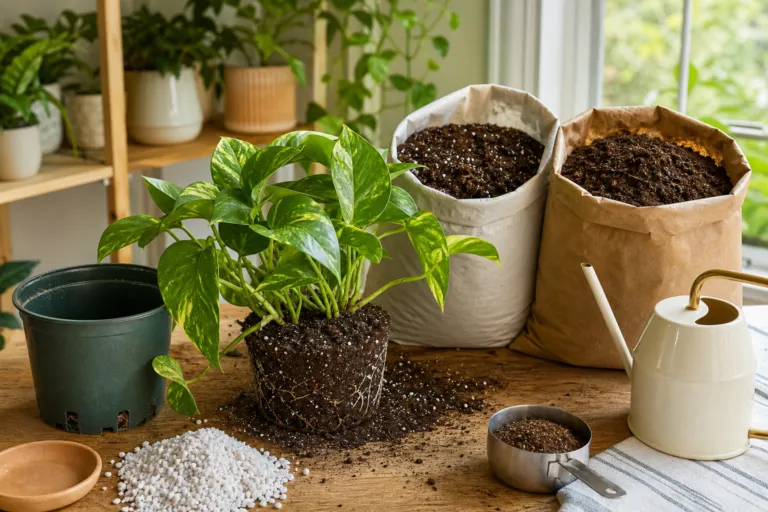
Use a commercial potting mix made for indoor containers rather than garden soil. Garden soil is usually too dense for a houseplant pot and may drain poorly indoors. A general indoor mix works for many foliage combinations; a cactus or succulent mix is better for plants that need rapid drainage.
Do not automatically blend different specialty mixes together. A moisture-retentive mix for ferns may work against a cactus combination, while an extremely gritty mix can dry too quickly for fittonia or prayer plants. Match the mix to the group you have selected.
Before planting, moisten dry potting mix so it absorbs water evenly. Place the plants at the same depth they were growing before, leaving a little space below the rim for watering. Avoid burying stems or packing the mix tightly around the roots.

Build the arrangement with a simple design formula
Once the practical requirements are right, make the container visually interesting. A dependable design uses three roles:
- Thriller: One taller or upright plant that creates a focal point.
- Filler: A bushy or rounded plant that occupies the middle.
- Spiller: A trailing plant that softens the edge of the container.
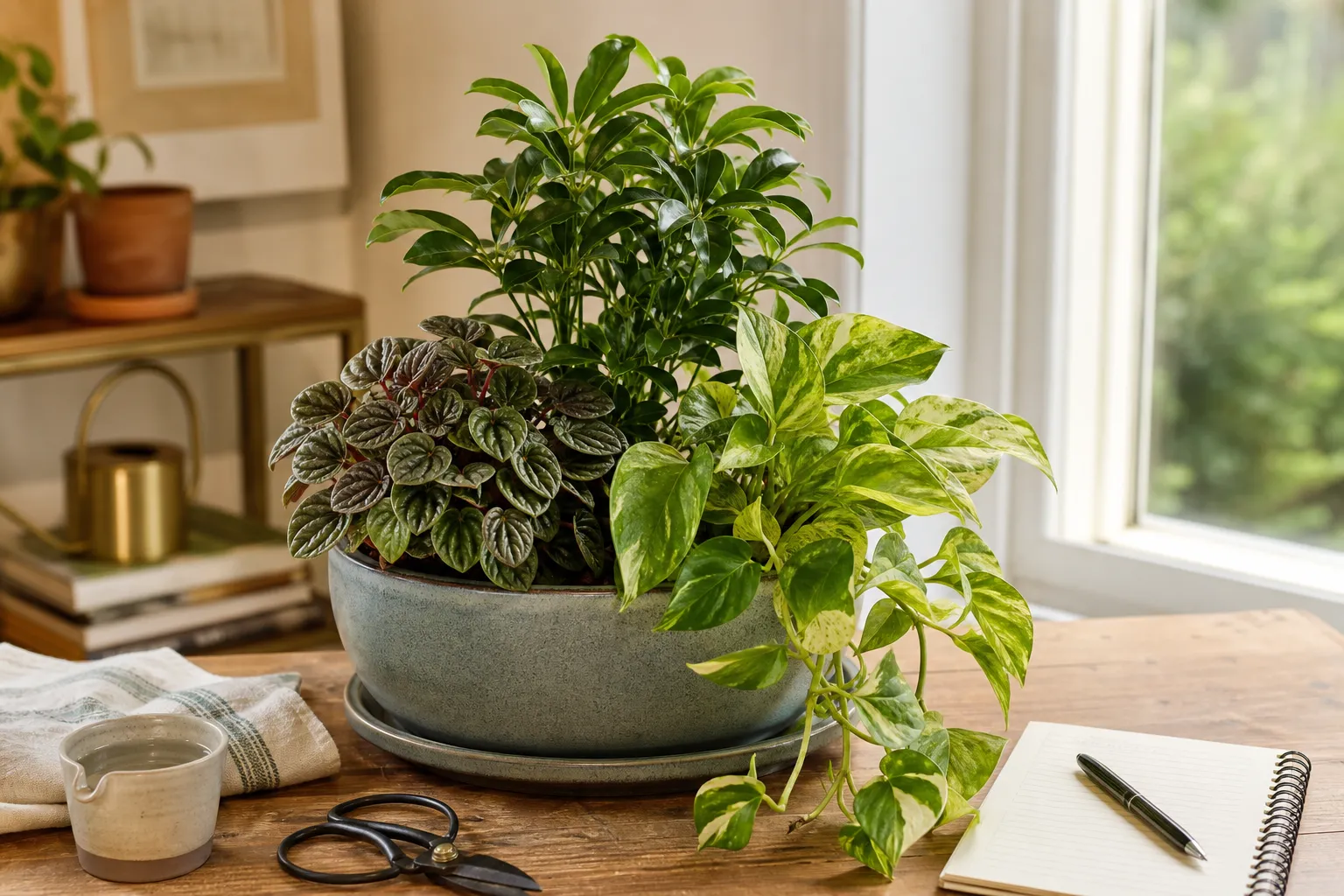
For an indoor example, use a compact dracaena as the thriller, peperomia as the filler, and a small pothos as the spiller. For a dry arrangement, try an upright haworthia, a rounded echeveria, and a trailing sedum. Keep the number of plants modest. Overplanting may look impressive on planting day but quickly leads to crowding, uneven light, and tangled roots.
A practical watering test: measure before you guess
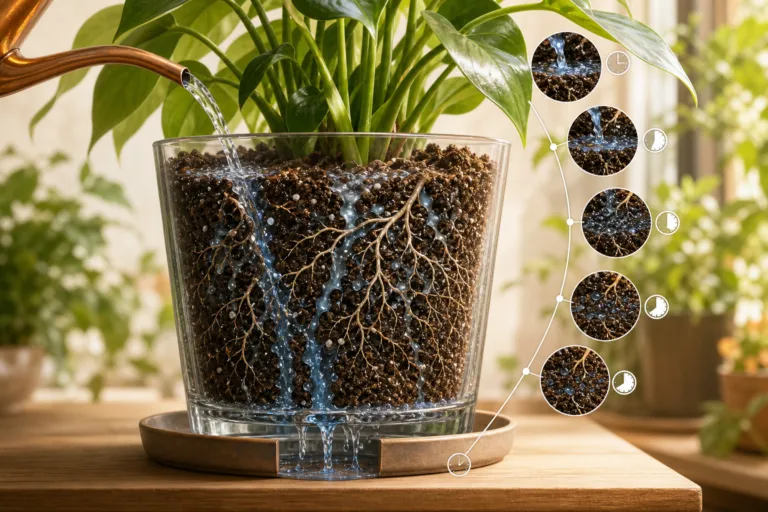
Watering is where mixed containers most often fail. Instead of following a fixed calendar, measure what happens in your own home. Light, temperature, pot material, plant size, and indoor heating all affect drying time.
Try this simple experiment with a newly planted container:
- Water slowly until a small amount begins to drain from the hole.
- Measure the amount of water you apply. For example, start with 2 cups for a small 8-inch container, or 4 cups for a larger 12-inch container, then adjust according to how quickly water drains.
- Let the container drain completely and empty the saucer.
- Check the mix again after two days, then every other day.
- Record the date, the amount applied, and how deep the mix feels dry.
For many ordinary foliage plants, water when the top 1 inch of mix feels dry. In a large container, check a little deeper because the surface can dry while the center remains wet. A wooden chopstick or your finger can help you test below the surface, and lifting the pot can teach you how a well-watered container feels compared with a dry one.
Do not water simply because one plant looks thirsty if the rest of the container is still wet. In a directly planted combination, the plants share the same root zone, so you must choose companions with similar moisture preferences. If the results repeatedly conflict, separate the plants.
Compare varieties before you plant
Plant names alone do not tell the whole story. Different varieties of the same species can have different growth habits. A compact peperomia may stay bushy, while another may become leggy. A dwarf syngonium may suit a mixed container better than a vigorous, vining selection.
When shopping, compare plants for:
- Mature height and spread.
- Upright, mounding, or trailing habit.
- Expected growth speed.
- Light tolerance, especially for variegated forms.
- Whether the plant prefers drying slightly or staying evenly moist.
Read the plant tag, but also inspect the specimen. Avoid plants with mushy stems, a sour smell from the pot, visible pests, or a root ball that is already saturated. Healthy roots are generally firm rather than black, slimy, or foul-smelling.
Prevent crowding, disease, and pest surprises
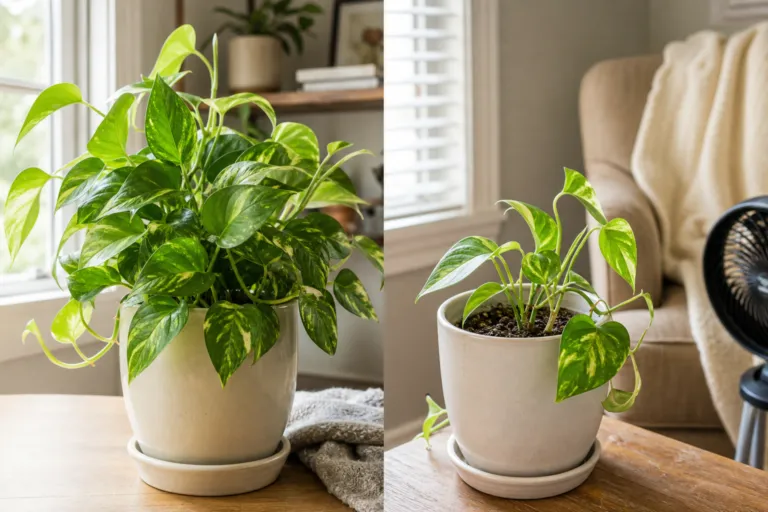
Leave enough space for air to move between leaves. Dense foliage that stays wet after watering can create a poor environment for the plant, while crowded leaves make it harder to spot pests early. Keep the arrangement away from heating and air-conditioning vents, which can create sharp swings in temperature and moisture.
Quarantine new houseplants before combining them with established plants. Keep a newcomer separate for about two weeks while you inspect the leaves, stems, and soil surface regularly. This precaution is especially useful if you are adding plants from different stores or bringing seasonal plants indoors.
Remove yellowing or dead leaves promptly, but do not assume every yellow leaf has the same cause. Overwatering, underwatering, low light, natural aging, and root stress can all produce similar symptoms. Check the mix and the roots before changing your care routine.
When to separate the plants
A mixed container is not a permanent commitment. Separate plants if one consistently wilts while the others remain wet, if one outgrows the arrangement, or if roots become tightly crowded. You should also act quickly if a pest or disease appears in one plant.
At separation time, gently remove the plants, inspect the roots, and move each one into a clean container with an appropriate mix. Water thoroughly after repotting, allow excess water to drain, and give the plants a short recovery period away from intense direct sun.
Your simple recipe for a trouble-free combination
For your first project, choose three small plants that share the same light and watering requirements. Use a container with drainage, a suitable indoor potting mix, and enough room for modest growth. Place the tallest plant toward the center or back, the bushiest plant around it, and the trailer near the rim.
Then observe rather than overmanage. Keep a short watering record for the first month, check the mix before every watering, and prune any plant that begins to dominate. If the combination proves inconvenient, divide it into individual pots—the display can remain beautiful while the care becomes much easier.
With compatible plants and a little measuring, combining houseplants becomes less of a gamble and more of a satisfying design experiment. Start small, pay attention to how the container dries, and let healthy growth—not just a perfect planting-day photograph—be your guide.