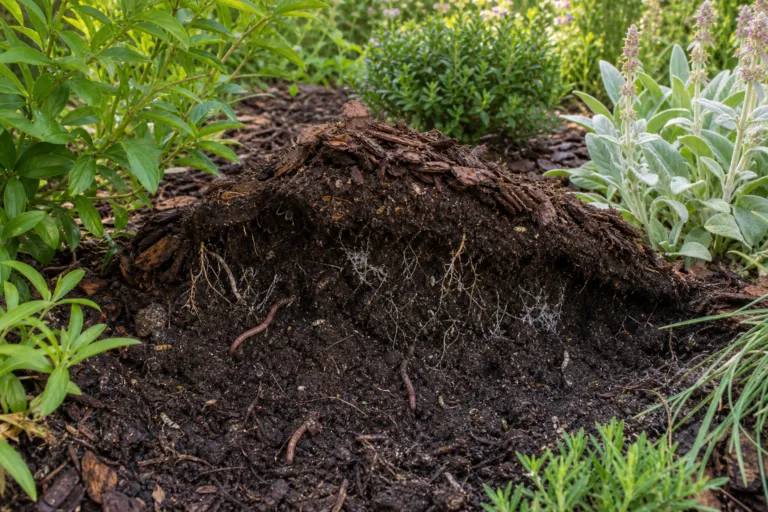
When autumn leaves drift down, your yard may look untidy—but it is also beginning a quiet, valuable recycling project. Left in the right places, fallen leaves shelter wildlife, protect soil, slow evaporation, and gradually return organic matter to the garden. They are not waste; they are raw material for next season’s growth.
That does not mean every leaf should remain exactly where it falls. A thick, wet blanket can smother turf, clog drains, cover low-growing plants, or create problems around tree trunks. The most successful approach is not a spotless yard or a completely hands-off one. It is thoughtful leaf placement.
Leaves begin breaking down almost immediately
Once leaves touch the soil, moisture-loving microorganisms, fungi, earthworms, and other small decomposers begin working on them. These organisms slowly break down the leaf tissue and release some of its nutrients back into the soil.
The process is gradual. In a dry lawn, whole leaves may sit for weeks before they noticeably soften. In a damp garden bed, shredded leaves usually disappear more quickly because smaller pieces have more surface area and make better contact with the soil.
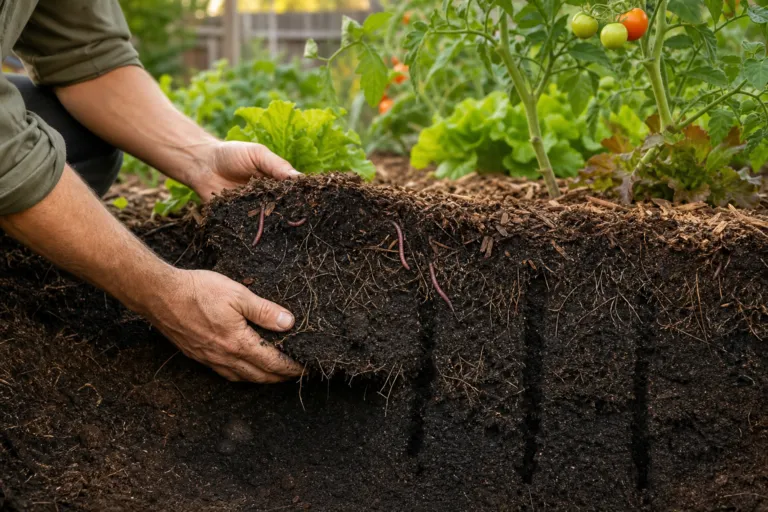
As leaves decompose, they contribute organic matter. That material can improve soil structure over time, helping compacted soil hold more air and allowing water to move into the root zone instead of running across the surface. It also supports the living community beneath your plants.
Where leaving leaves works best
Garden beds and beneath shrubs
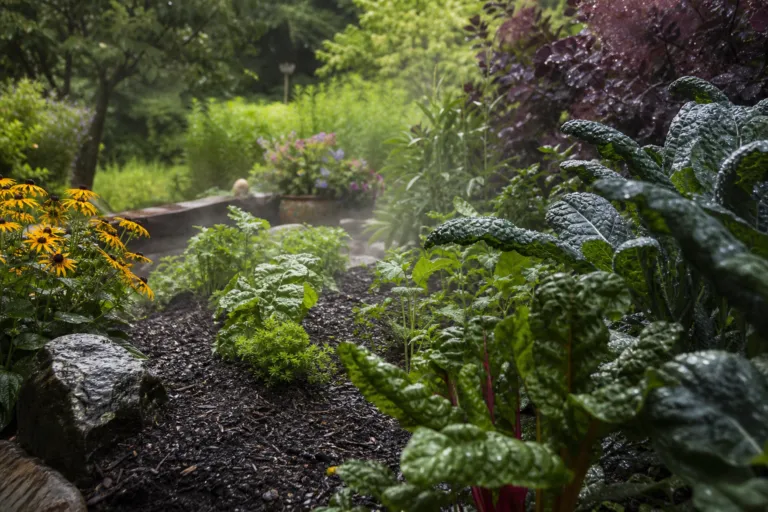
Flower beds, shrub borders, and areas beneath established trees are usually the safest places to leave fallen leaves. A loose layer acts as natural mulch: it shades the soil, slows moisture loss, moderates temperature swings, and can make it harder for some weed seeds to germinate.
Try moving leaves from paths and lawns into beds rather than sending them away. Spread them loosely, ideally after shredding them with a mower or leaf shredder. A practical starting depth is about 2 to 3 inches, keeping the material away from plant crowns and woody stems.
Naturalized corners
A less-manicured corner of the yard can become useful habitat. Leaf litter provides cover for insects, spiders, ground beetles, amphibians, and other small animals. Some butterflies and moths spend part of their life cycle in or beneath fallen leaves, while birds may search the layer for food.
If you want to support backyard wildlife, resist the urge to rake every corner clean. Keep leaves beneath native shrubs, around woodland-edge plants, and in a brush pile where they will remain relatively undisturbed through winter.
Vegetable gardens
Leaves can protect bare vegetable beds during winter and add organic matter as they decay. Spread a thin, even layer over finished beds, then allow it to settle naturally. In spring, rake aside any remaining thick patches before planting so the soil can warm and dry.
For a new bed, leaves work especially well when combined with other organic materials. You can also collect them separately and allow them to become leaf mold—a dark, crumbly material made mostly from decomposed leaves.
Why a lawn is different
Turfgrass needs light and air at its leaf blades. A thin layer of shredded leaves can be beneficial, but a heavy layer of whole leaves can block sunlight, trap moisture, and create a matted surface. In cool, wet regions, prolonged leaf cover may also increase the chance of winter lawn problems such as snow mold.
The useful distinction is not simply “leaves on the lawn” versus “leaves removed.” It is shredded leaves in a thin layer versus thick, intact leaves that stay wet.
Run a mulching mower over dry leaves when they are only lightly scattered. Continue until the pieces settle into the grass canopy and you can still see much of the lawn surface. If the grass disappears beneath the leaves, rake or collect the excess and use it in beds or compost.
A simple lawn test
- Mow when the leaves are dry enough to chop rather than smear.
- Make one or two passes, changing direction if needed.
- Look down at the turf. If the grass remains visible through the shredded material, the layer is probably manageable.
- Remove remaining clumps from low spots, shaded areas, and places where leaves pile against fences.
Because lawn types and climates vary, treat this as a practical observation rather than a rigid rule. A sunny lawn in the Southeast may process leaves differently from a shaded Kentucky bluegrass lawn in the Upper Midwest. If the turf looks pale, flattened, or persistently damp, remove more material.
Different leaves behave differently
Not all leaf litter breaks down at the same speed. Soft, thin leaves such as birch or willow usually collapse quickly, especially when shredded. Broad leaves such as maple can mat when wet, so shredding is particularly helpful.
Oak leaves often break down more slowly because they are tougher and contain compounds that can slow decomposition. That does not make them bad mulch. It simply means you may want to shred them, mix them with faster-decomposing materials, or give them more time in a separate leaf-mold pile.
Pine needles are also slower to decompose than many broadleaf leaves. They can make a useful surface mulch in appropriate garden settings, but they should not be treated as a universal soil-acidifying solution. Soil pH changes depend on the material, its age, the soil beneath it, and local conditions.
Compare two leaf mixes in your own yard
If you enjoy small gardening experiments, compare a pile of shredded maple leaves with a pile of whole oak leaves. Place equal volumes in two wire bins or mesh bags, keep both slightly moist, and check them once a month.
Record the starting depth, texture, moisture, and approximate volume. You may find that the shredded maple leaves settle quickly while the oak leaves remain recognizable longer. The result will not be a laboratory comparison, but it can help you decide which materials belong on the lawn, in beds, or in the compost pile.
Leaves can reduce watering—but they do not replace it
Leaf mulch slows evaporation from the soil surface, so plants may need watering less often than they would in bare soil. It also helps rain soak in gradually instead of striking exposed soil and running away.
Still, mulch does not create water. Newly planted trees, shrubs, perennials, and fall-planted bulbs may need regular irrigation if rainfall is insufficient. Check the soil beneath the leaf layer rather than judging moisture from the surface.
Measure instead of guessing
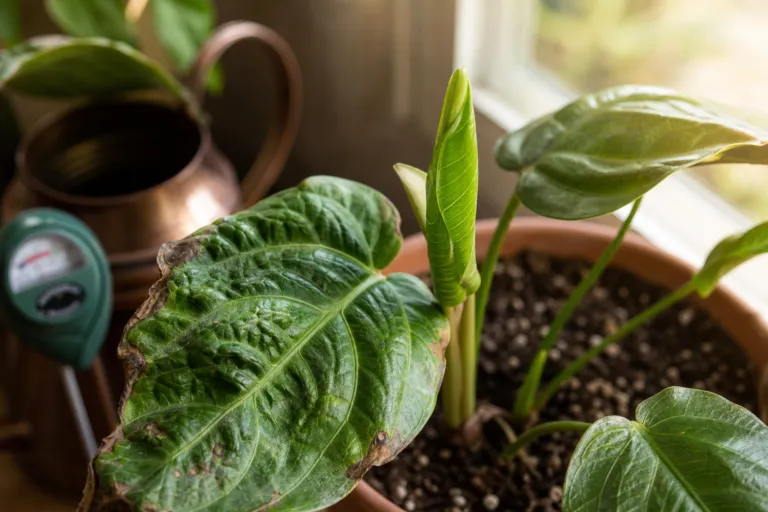
Try a simple watering comparison beside two similar shrubs. Leave one area bare and cover the other with about 2 to 3 inches of shredded leaves, keeping the mulch several inches away from each stem. After a rain-free period, push a finger or a soil probe 3 to 4 inches into the soil in both areas.
For a more precise home experiment, place a straight-sided container under your sprinkler or hose spray and measure the collected water. One inch of water equals about 0.62 gallons per square foot. If a 1-square-foot container collects 0.25 inch, that is roughly 0.16 gallon, or about 21 fluid ounces, in that spot. Repeat the measurement in both mulched and unmulched areas, then monitor soil moisture over several days.
This does not produce a universal watering schedule. It shows how much water your equipment applies and whether the leaf-covered soil stays moist longer. During hot, windy weather, check more frequently; during cool, rainy periods, check less often.
What happens to wildlife when leaves remain
The leaf layer is a small ecosystem. It offers hiding places, insulation, nesting material, and hunting grounds for creatures that are easy to miss. Insects and other invertebrates feed within the decaying material, while birds and small mammals may forage there.
For many backyard species, removing every leaf also removes part of their winter shelter. Leaving some areas undisturbed can support a more diverse garden without requiring feeders, pesticides, or elaborate equipment.
You do not need to turn the entire property into a wild patch. Even a few leaf-filled zones beneath shrubs or along a fence can provide useful cover. Keep these areas away from sidewalks, doors, and places where leaves could create slippery conditions.
When you should move or remove leaves
Leaf litter is valuable, but location matters. Move leaves when they create a clear horticultural or safety problem.
- On lawns: Remove thick, wet, or matted layers that hide the grass.
- On roofs and in gutters: Clear leaves safely or hire help, especially on multistory homes.
- Near storm drains: Sweep leaves away so they do not wash into drainage systems or waterways.
- Over small evergreen plants: Remove heavy accumulations that flatten or bend the foliage.
- Against trunks and stems: Pull leaves back to keep bark dry and reduce shelter for rodents.
- On paths and steps: Clear them when they become slippery.
- In diseased areas: If leaves show signs of a serious plant disease, follow local extension guidance rather than spreading them around the garden.
Avoid building a volcano of leaves around trees. Keep the base of the trunk visible and spread mulch outward in a broad, shallow layer. Deep, wet piles can limit oxygen near roots, keep bark damp, and create conditions that stress plants.
Three easy ways to use surplus leaves
1. Make leaf mold
Put leaves in a wire ring, breathable bin, or loose pile. Moisten dry leaves, keep the pile damp but not saturated, and turn it occasionally if you want faster breakdown. Leaf mold may take many months or longer, depending on leaf type, moisture, temperature, and particle size.
2. Add them to compost
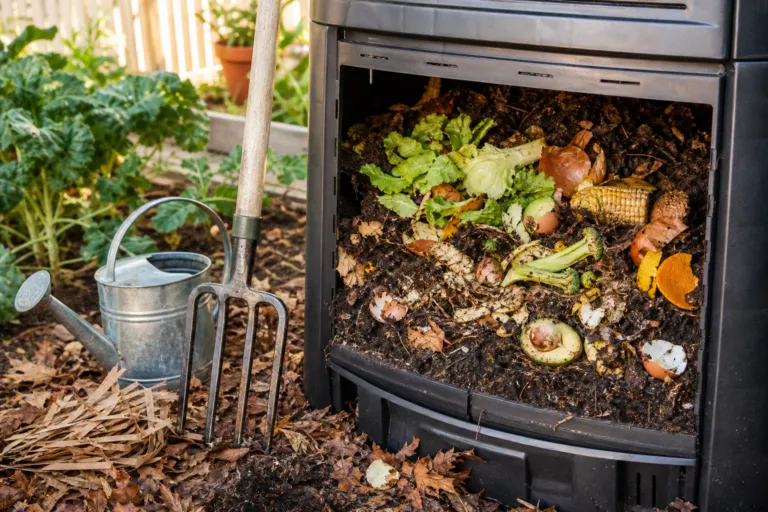
Dry leaves are a carbon-rich “brown” material. Combine them with nitrogen-rich “green” materials such as fresh grass clippings and vegetable scraps. Shredding, maintaining moisture similar to a wrung-out sponge, and turning the pile can improve decomposition.
Use finished compost when it is dark, crumbly, and earthy-smelling. Add it to garden beds, around trees, or to potting mixes according to the needs of the plants you grow.
3. Share or use municipal collection
If your yard produces more leaves than you can use, ask your city or county about curbside leaf collection, drop-off sites, or community composting. Some programs turn collected leaves into compost or mulch. Keep plastic bags, trash, rocks, and other nonorganic materials out of yard-waste piles unless your local program specifically allows them.
The best fall cleanup is selective
Leaving leaves where they land works beautifully in some places and poorly in others. Let nature do the work beneath shrubs, in woodland corners, and across protected garden beds. Shred or relocate leaves on lawns, paths, drains, and plant crowns.
Think of your rake as a redistribution tool rather than a waste-management tool. With a few minutes of sorting, you can protect the lawn, feed the soil, and preserve winter habitat at the same time.
Next fall, try leaving one small area undisturbed, mulching another with shredded leaves, and composting the rest. Watch what changes by spring. You may discover that the messiest-looking part of your yard is also one of the busiest, most useful, and least expensive parts of your garden.