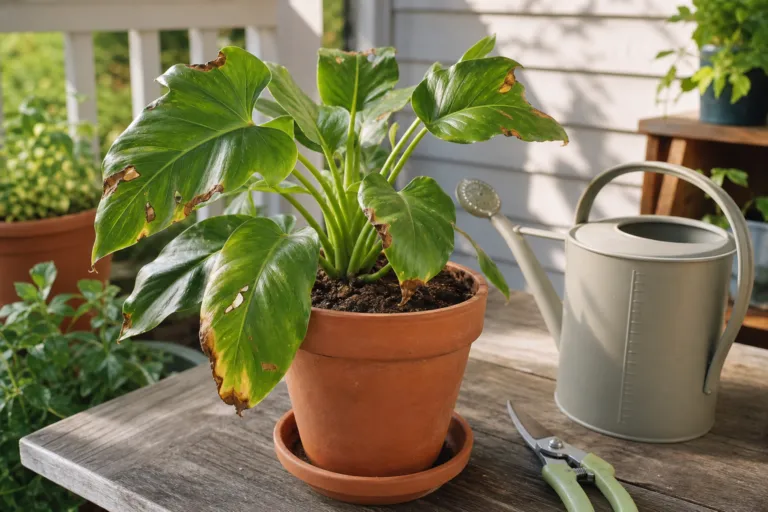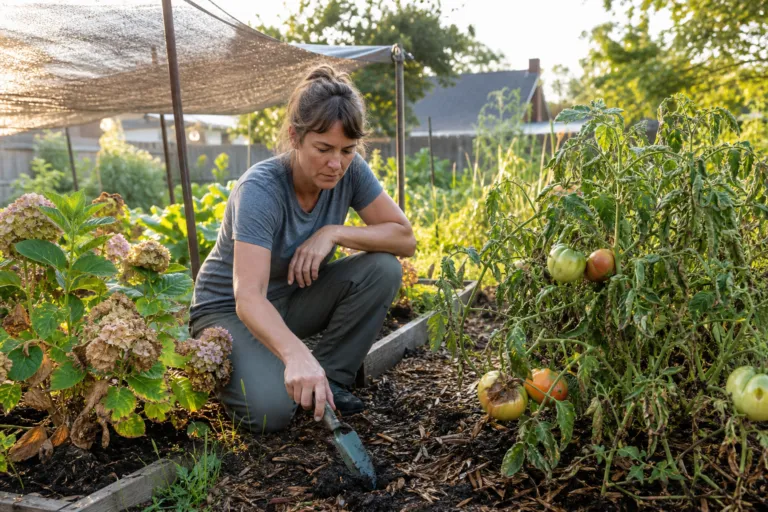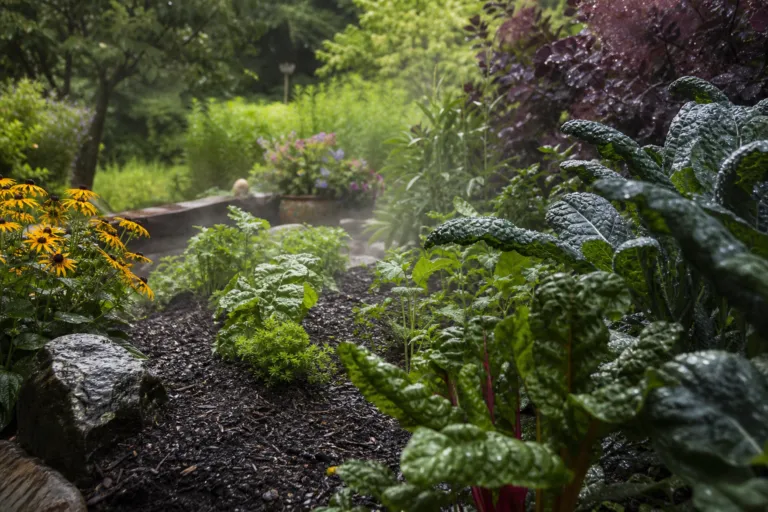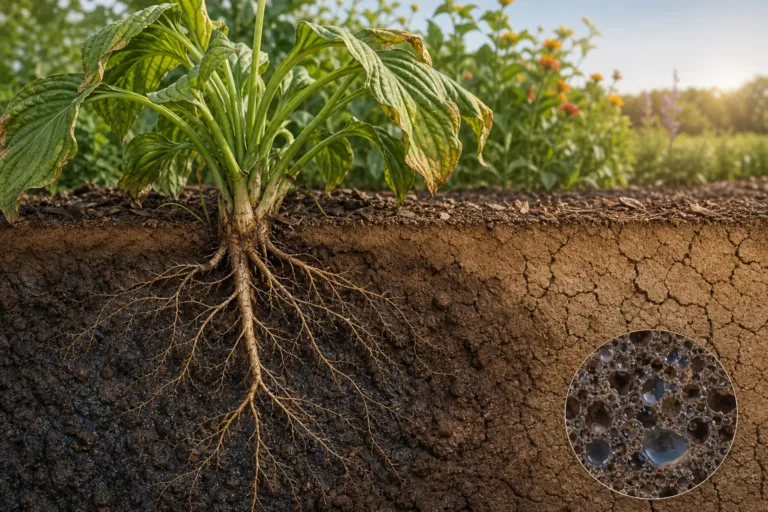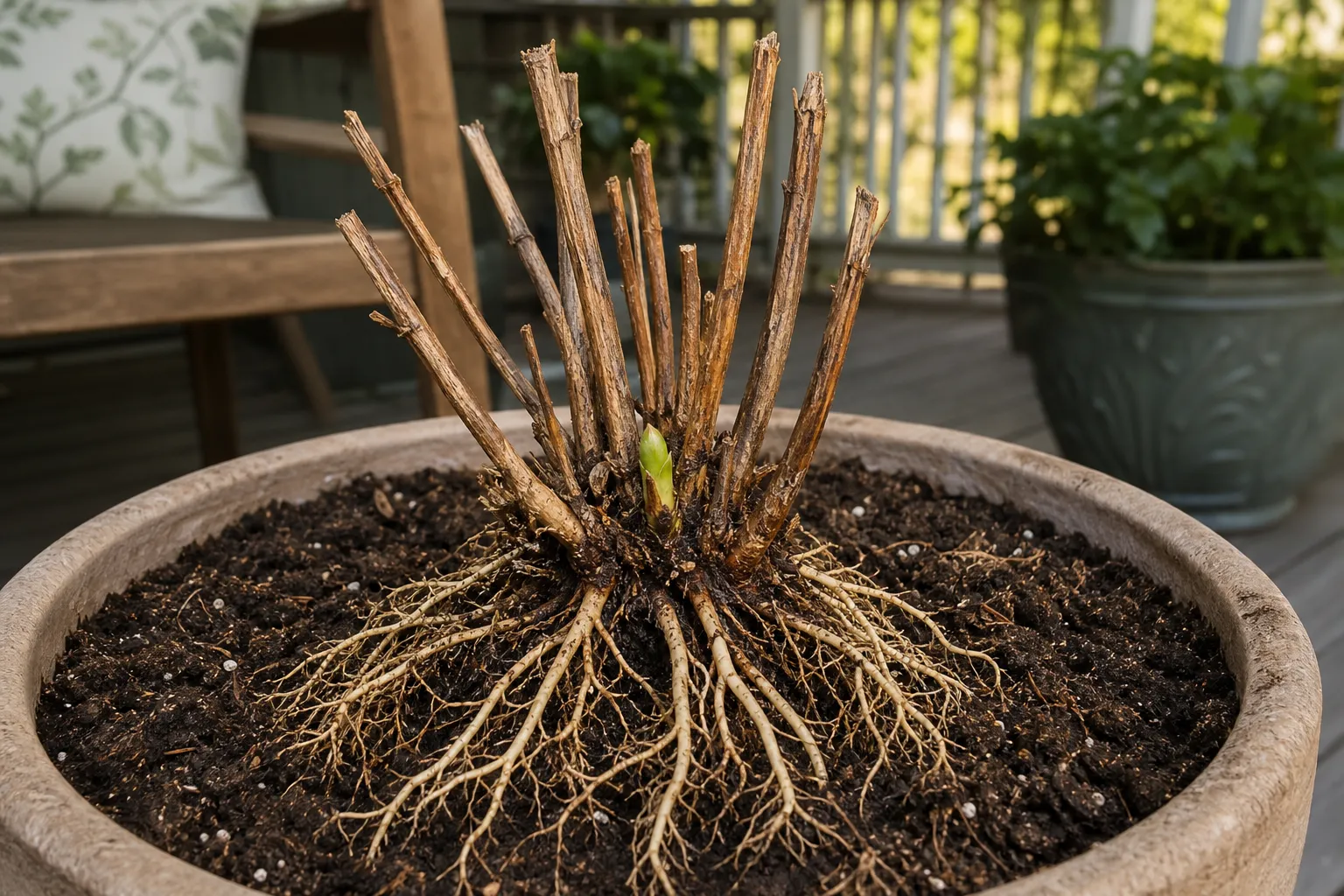
For three long months, the pot on my back porch looked like a failed experiment. Its stems were bare, the leaves had disappeared, and the soil seemed to hold nothing but a dry, woody stub. I nearly pulled it out and replaced it.
Then, after a stretch of mild weather and a careful drink, tiny green buds appeared at the base. A week later, the plant was unmistakably alive. What looked like death was a pause: the roots and crown had been waiting for better conditions before spending their stored energy.
That pause is called dormancy. It helps many perennials, bulbs, grasses, shrubs and houseplants survive cold, heat, drought or seasonal changes. Understanding it can save you from throwing away a perfectly viable plant – or from watering a genuinely dead one until the roots rot.
Dormant is not the same as dead
A dead plant has lost the living tissues needed to recover. A dormant plant has slowed its activity, often dramatically, but still has a living crown, bud, root, bulb, rhizome or stem capable of producing new growth.
The distinction matters because plants do not always keep their leaves as proof of life. During a difficult season, they may shed foliage, stop producing new shoots or allow the tops to dry back. The plant reduces its demands while protecting the parts that matter most.
In many herbaceous perennials, the crown – the short, thickened area where roots meet stems – contains buds that can produce new shoots. In bulbs and tubers, stored food supports the next season’s growth. In some grasses, the growing points remain close to the soil surface, protected from heat, grazing and cold.
Why roots sometimes wait
Roots need more than water to grow. They also need suitable temperatures, oxygen in the soil and a plant that has enough stored energy to pay for new tissue.
When soil is too cold, root activity slows because chemical reactions inside the plant proceed more slowly. When soil is too dry, roots cannot maintain the water balance needed for cell expansion. When soil is saturated, air spaces fill with water and roots may lack oxygen. In all three situations, a plant may delay growth rather than risk producing delicate new roots that cannot function well.
Seasonal signals also play a role. Shorter days and cooler nights can prepare many plants for winter, while increasing daylight and warming soil help release them from dormancy. Some plants respond mainly to temperature; others also need a period of cold before their buds can open reliably.
During drought, dormancy becomes a water-saving strategy. A plant may close leaf pores, stop making new leaves and draw on stored carbohydrates. Once moisture and temperature return to a workable range, the plant can redirect those reserves into new roots and shoots.
The hidden fuel stored below ground
Roots do more than absorb water and minerals. In many perennials, roots, crowns, rhizomes, bulbs and tubers also act as storage organs. They can hold carbohydrates that the plant uses when leaves are absent or when new growth begins before enough foliage exists for photosynthesis.
This explains why a dormant plant can produce a surprisingly vigorous shoot after months of apparent inactivity. The first leaves are not necessarily paying for themselves yet. They are being supported by reserves accumulated during the previous growing season.
That reserve is limited, however. A plant weakened by repeated drought, severe defoliation, poor drainage or disease may have too little energy to restart. A small, newly planted perennial is also more vulnerable than an established plant with a broad root system.
Four ways to tell whether a plant is still alive
Before you decide that a plant has failed, inspect it gently. Avoid tugging hard on the stem or digging up the entire root ball immediately.
- Check for firm tissue. Scratch a small area of stem with a clean fingernail. Green or moist tissue beneath the surface suggests life; brown, dry tissue alone is less encouraging. Make only a tiny test, since every wound costs the plant some protection.
- Look at the crown. A living crown is usually firm rather than hollow, slimy or collapsing. Small buds, swelling points or pale new shoots are strong signs of recovery.
- Examine roots if the plant is already out of its pot. Healthy roots vary in color by species, but they should generally feel firm. Mushy tissue, a sour smell and extensive decay point toward root damage rather than simple dormancy.
- Allow time for a fair test. Some plants restart at the soil line, not at the tips of old stems. In spring, a perennial may remain quiet for several weeks while the soil warms.
Do not use one visual rule for every plant. A dormant deciduous shrub can look completely bare in winter, while a succulent may retain leaves but suffer serious root loss beneath the soil.
A small backyard experiment: three plants, one watering plan
To understand delayed recovery, try a simple comparison with three established plants of similar size. Good candidates include a dormant-looking perennial, a cool-season grass and a container plant that has been stressed by a dry spell. Do not deliberately injure healthy plants; use specimens already showing seasonal slowdown.
Place the plants in similar light and record the starting date, air temperature and soil moisture. Then water thoroughly only when the root zone needs it. Measure the water rather than guessing. For a 10-inch container, you might apply 24 fluid ounces of water slowly, wait 10 minutes, and check whether water has reached the lower root zone. For an established in-ground plant, measure rainfall or irrigation over a marked 2-by-2-foot area.
One practical schedule could look like this:
- Day 1: record plant height, number of green buds and soil moisture at 2 inches deep.
- Day 4: check the soil again without watering if it is still cool and damp.
- Day 7: provide about 1 inch of water over the test area only if the soil has dried several inches down and the plant’s needs justify irrigation.
- Days 10–21: photograph the crown or stem base every three days and record any swelling, new roots or leaf emergence.
The goal is not to force growth. It is to observe whether the plant responds when moisture, temperature and oxygen are favorable. A plant that remains unchanged after several weeks of suitable conditions deserves a closer root and crown inspection.
Not all plants wake up at the same speed
Variety matters. Two plants that appear similar may have different dormancy patterns, root structures and preferred growing temperatures.
Spring bulbs
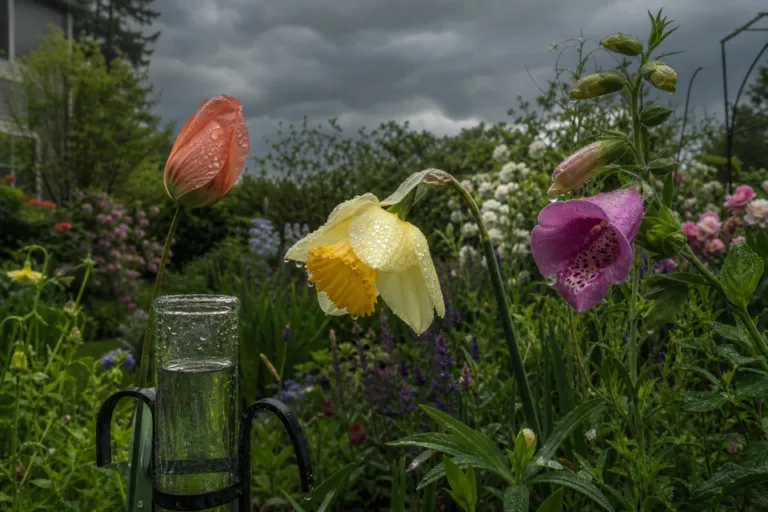
Tulips, daffodils and crocuses grow leaves and flowers during the cool part of the year, then retreat underground for summer. Their foliage may disappear while the bulb remains alive. The bulb needs a dry resting period, but it should not sit in persistently wet soil.
Cool-season grasses
Kentucky bluegrass and other cool-season turfgrasses may turn brown during summer heat and drought. If the crown and roots remain viable, growth can resume when temperatures moderate and moisture returns. Avoid heavy traffic or aggressive mowing while the grass is dormant; removing what little green tissue remains can delay recovery.
Herbaceous perennials
Plants such as butterfly weed, peonies and many native wildflowers can disappear above ground and return from crowns, tubers or woody root structures. Butterfly weed, for example, develops a substantial root system but can be slow to establish from seed. A young plant may need more consistent care than an older one.
Woody plants
Shrubs and trees can look lifeless after winter injury, drought or transplant shock. Some branches may die back while lower buds or protected stems survive. Test several branches rather than assuming the whole plant has failed, and wait for the normal seasonal budbreak window for your region.
Water carefully when growth resumes
The most common mistake is swinging from neglect to saturation. A dormant or badly stressed plant cannot always use a large volume of water immediately, and damaged roots are especially vulnerable in airless, soggy soil.
Start by checking moisture 2 to 4 inches below the surface. If that layer is dry, water slowly at the root zone until the soil is evenly moist but not waterlogged. In a container, empty any saucer that holds standing water. In the ground, improve drainage rather than watering more often if the area stays wet for days.
For a useful measurement, place a straight-sided tuna can or rain gauge beneath a sprinkler. One inch of water equals about 0.62 gallons over 1 square foot, or roughly 2.5 gallons over a 2-by-2-foot area. The exact amount a plant needs depends on soil type, weather, root depth and species, so use the measurement as a starting point rather than a rigid prescription.
Mulch can help conserve moisture and moderate soil temperature. Apply a 2- to 3-inch layer of organic mulch, keeping it a few inches away from crowns and woody stems. Do not bury the plant’s growing point.
When patience is helpful – and when it is not
Patience is useful when the plant shows firm tissue, a healthy crown, viable buds or gradual improvement. It is less useful when the root ball is collapsing, the base is soft, pests are tunneling through the crown or the plant has been sitting in stagnant water.
Consider replacing the plant when:
- all stems and the crown are dry, hollow or brittle;
- roots are extensively mushy or have largely disappeared;
- the plant shows no living buds after an appropriate growing period;
- the soil remains saturated and the root system has a strong rotting odor; or
- the plant repeatedly declines despite suitable light, moisture and temperature.
If you are unsure, take a small sample or photograph to a local university extension office, garden center or master gardener program. Identification comes first: you need to know a plant’s normal season and growth habit before judging its recovery.
Give the quiet plant a chance
A bare stem is not always a verdict. Sometimes the real action is happening below the soil line, where roots and crowns are conserving water, protecting stored energy and waiting for the right combination of warmth and moisture.
Inspect before discarding, measure before watering and give established plants time to respond. With a little observation, you may discover that the “dead” plant on your porch was never gone at all – it was simply waiting for its next growing season.