Turning a potted plant toward the window feels like a small act of kindness. You notice that one side is getting all the light, give the pot a quarter-turn, and imagine the leaves soaking up their fair share of sunshine. In most cases, that instinct is sound – but the result depends on how often you turn the pot, how much light the plant receives, and what kind of plant you are growing.
Rotate a plant occasionally and you can encourage more even growth, a fuller shape, and better-looking foliage. Turn it constantly, however, and you may create a plant that is always readjusting instead of settling into a stable pattern. The goal is not to keep the pot in motion. The goal is to manage light thoughtfully.
Why plants lean toward the window
Most shoots grow toward a light source. This response is called phototropism, which simply means growth directed by light. When light comes mainly from one side, the stem redistributes growth so it bends toward that brighter direction.
Plant hormones called auxins help control this process. In a stem receiving light from one side, auxin tends to build up on the shaded side. Cells there lengthen more, causing the stem to curve toward the window. The plant is not “walking” toward the light; it is growing unevenly in response to its surroundings.
That distinction matters. Turning the pot does not instantly straighten an existing stem. It changes the direction from which the plant receives light, so new growth may gradually develop in a different direction. Older stems can remain permanently curved unless you prune, stake, or reshape them.
What occasional turning can do
A plant sitting in one position for months often develops a bright side and a dim side. Leaves near the window may grow more vigorously, while shaded leaves become smaller, thinner, or less numerous. The whole plant may lean, and a top-heavy specimen can eventually become unstable.
Rotating the pot gives different sides access to the strongest available light. Over time, this can help create:
- more balanced stem growth;
- a more symmetrical silhouette;
- better light exposure across the leaf surface;
- less dramatic leaning toward the glass;
- more attractive growth from plants displayed in living spaces.
University extension advice commonly suggests turning houseplants every few weeks during low-light seasons to even out exposure. That schedule is a useful starting point, not a rigid rule. A slow-growing rubber plant may need less frequent attention than a fast-growing vine, while a plant in a very bright window may respond more quickly than one several feet from the glass.
Can turning a pot make a plant grow faster?
Not by itself. Rotation redistributes the light the plant already receives; it does not increase the total amount of light entering the room. If the location is too dim, turning the pot may produce a more evenly stretched plant rather than a compact, vigorous one.
Light intensity remains the deciding factor. When light is insufficient, many houseplants develop long spaces between leaves, thin stems, pale new growth, or a noticeably “reaching” shape. This stretched growth is often called legginess. Turning the plant may prevent one-sided legginess, but it cannot replace a brighter location or supplemental lighting.
Think of rotation as an equal-opportunity measure, not a cure for poor light. If the plant is leaning dramatically, move it closer to a suitable window gradually, or add a properly positioned LED grow light. Avoid making a sudden jump from a dim corner to intense direct sun.
What happens if you turn it too often?
There is no magic number of turns that harms every plant. A gentle quarter-turn every week or two is unlikely to cause trouble for most foliage plants. The problems usually come from rapid changes in light, temperature, orientation, or watering rather than from rotation itself.
Constantly moving a pot can make care less predictable. One week a leaf faces the glass; the next week it faces the room. If the plant is near a hot south- or west-facing window, a newly exposed leaf may receive stronger sun than it has adapted to handle. On the other hand, a side that was previously warm and bright may suddenly sit in cooler shade.
Frequent repositioning can also make it harder to notice patterns. You may overlook which side dries fastest, where pests are hiding, or whether a particular leaf is bleaching because of too much sun. A stable placement with occasional, measured rotation usually works better than daily fussing.
Watch for these warning signs
- Bleached or tan patches: the leaf may be receiving too much direct sun, especially after a move.
- Crispy brown margins: light stress, dry air, irregular watering, or several factors together may be involved.
- New leaves becoming smaller: the plant may not have enough usable light or may be under other stress.
- Persistent leaning: the light source may be too weak or too far away for the plant.
- Leaf drop after moving: the plant may be reacting to a sudden change in light, temperature, drafts, or moisture.
Different plants respond in different ways
Rotation is especially useful for upright foliage plants that receive light from one side. Fiddle-leaf figs, rubber plants, dracaenas, palms, and many young tropical plants often look more balanced when you turn them periodically.
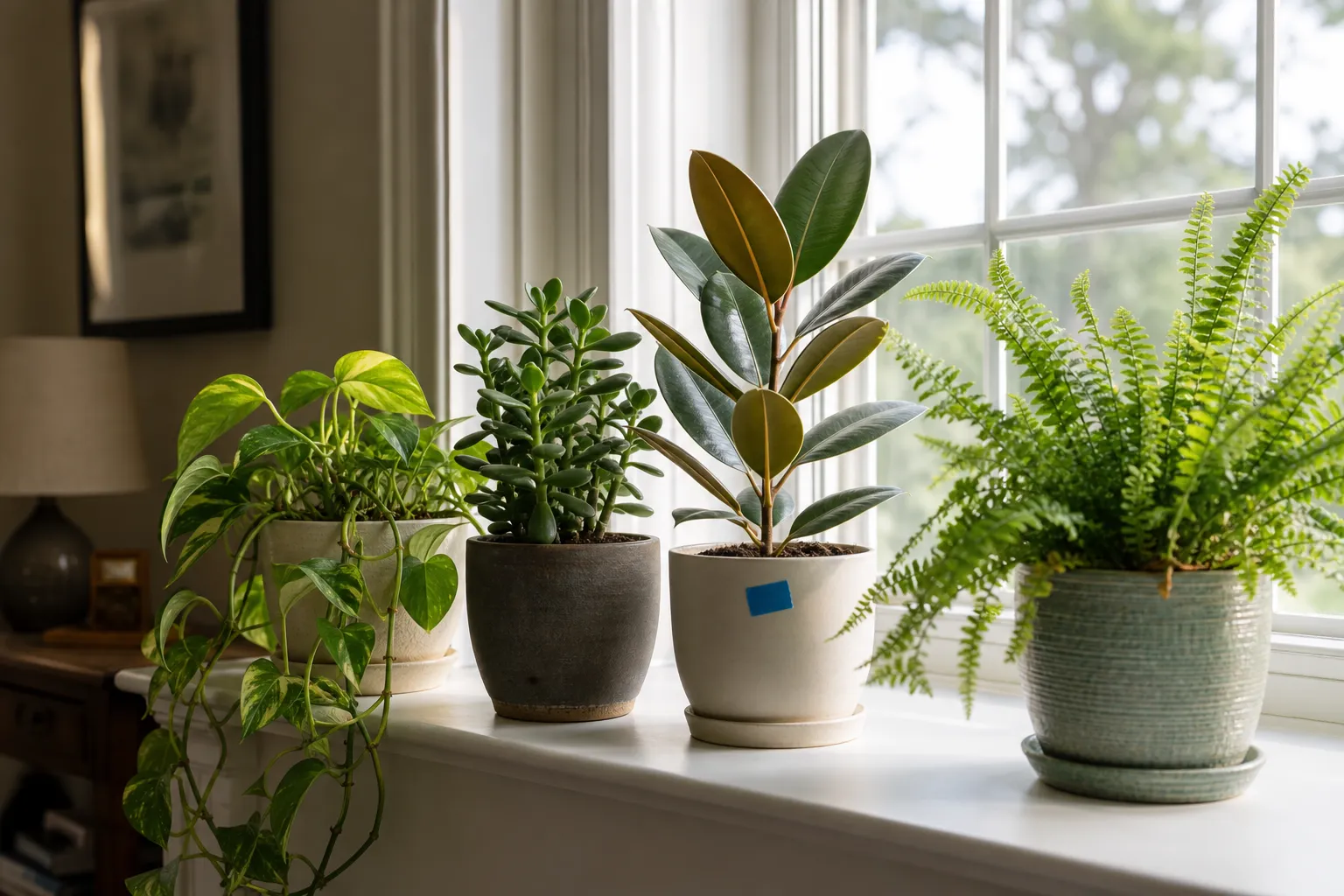
Trailing plants need a different strategy. Pothos, heartleaf philodendron, hoya, and tradescantia naturally spill or reach. Turning the pot can distribute growth around the container, but it may also change where the vines hang. If you want a fuller plant, rotate it and prune selected stems just above a leaf node when active growth resumes.
Succulents and cacti often show a strong response to one-sided light. A jade plant, for example, may lean or develop a lopsided crown when light comes from a window. Gentle rotation can help, but these plants generally need much brighter light than shade-tolerant houseplants. If you keep turning a succulent in a dim room, it may still become stretched.
Plants adapted to shady forest floors, including many ferns, peace lilies, and some aglaonemas, may not bend as dramatically. They still benefit from appropriate, even illumination, but do not assume that more direct sun is better. A bright window filtered by a sheer curtain may be safer than unfiltered afternoon light.
A simple home experiment: turn versus don’t turn
You can see the effect for yourself without special equipment. Choose two healthy plants of the same species and similar size, or use two comparable cuttings. Place them in the same room, at the same distance from the same window, and keep their watering and potting conditions as similar as possible.
Four-week setup
- Mark the side of each pot that faces the window with a small piece of painter’s tape.
- Leave one plant in the same orientation for four weeks.
- Turn the second plant 90 degrees once each week.
- Photograph both plants from the same angle every seven days.
- Measure the tallest new stem and count newly opened leaves.
Do not treat this as a laboratory trial. Room temperature, window glass, clouds, plant genetics, and slight differences in the root systems can all affect the outcome. Still, you may see a clear difference in shape: the stationary plant may lean more strongly, while the rotated plant may develop a more even outline.
For a useful comparison, try the test with contrasting plants. A pothos may distribute its vines around the pot, while a jade plant may show a more noticeable change in stem direction. A slow-growing hoya may show very little visible change in four weeks, even though its leaves are still responding to the light environment.
Measure watering instead of watering by the calendar
Turning a pot can change which part of the soil surface receives light and warmth, but it does not create a fixed watering schedule. The plant’s water use depends more on species, pot size, soil, temperature, humidity, airflow, and light intensity.
Try recording actual measurements for one month. Water the plant thoroughly until a small amount drains from the bottom, then let the pot drain fully. Record the amount of water you add and the date. Check the soil before watering again, rather than watering every Sunday simply because it is Sunday.
Example tracking method
- Plant: 6-inch pothos in a pot with drainage.
- Initial watering: 12 fluid ounces, applied slowly until drainage begins.
- Check interval: inspect the top 1 inch of soil every two days.
- Next watering: only when the top inch feels dry and the plant’s condition supports watering.
- Record: date, amount added, drainage observed, soil feel, and leaf condition.
The 12-fluid-ounce figure is only an example, not a universal recommendation. A 6-inch pot filled with a fast-draining mix may need water sooner than one holding moisture-retentive soil. A cactus may need much less frequent watering than a leafy tropical plant, even if both sit on the same windowsill.
Keep the pot orientation in your notes. If the window-facing side of the container dries noticeably faster, rotating the pot may even out exposure – but you should still water based on the soil and the plant, not on the position of the pot alone.

How to rotate a plant safely
- Check the light first. Confirm that the plant’s location suits its needs before trying to correct its shape.
- Turn gradually. A quarter-turn, or about 90 degrees, every one to three weeks is a reasonable starting point for many houseplants.
- Avoid sudden sun exposure. If one side has been shaded, do not swing it directly into intense midday sun for hours.
- Keep conditions steady. Avoid placing the plant against cold glass, near a heating vent, or in a draft after turning.
- Support tall plants. A stake can prevent a heavy stem from tipping while new growth adjusts.
- Mark the pot if needed. A simple tape mark helps you remember how far you turned it.
- Observe before acting again. Give the plant time to respond. New growth, not yesterday’s leaf angle, tells you most about the long-term effect.
When not to rotate
Some plants are best left alone during a sensitive moment. Avoid unnecessary movement when a plant is flowering, forming buds, recovering from repotting, or adjusting to a major change in location. A flowering hoya, for instance, may be better left in a stable position rather than repeatedly moved while buds are developing.
Also take care with plants that have a distinct display direction. A fern may naturally arch toward the room, a trailing plant may be trained along a support, and a specimen tree may have been pruned into an intentional shape. Rotation is not automatically an improvement if the plant already looks healthy and balanced.
The seasonal adjustment that matters most
Indoor light changes through the year. In winter, the sun sits lower in the sky and daylight is often weaker. A window that provided plenty of light in July may be inadequate in December, particularly for sun-loving plants. In spring, the reverse can happen: stronger sun may scorch leaves that tolerated a dim winter position.
As seasons change, move plants toward brighter locations gradually. Give shade-adapted plants protection from intense afternoon rays, and consider supplemental LED lighting when natural light remains inadequate. Keep lights on a consistent daily schedule and provide a dark period at night.
The bottom line
Turning a plant toward the window is neither a miracle treatment nor a dangerous habit. Done occasionally, it can help distribute one-sided light and encourage a more balanced shape. Done constantly, it may create unnecessary movement and make it harder to judge what the plant actually needs.
Choose the right location first, rotate with a light touch, and watch new growth over time. If you pair that simple habit with measured watering, seasonal observation, and a little patience, your plants will tell you whether the adjustment is working. You do not need to keep spinning the pot – just give every side a fair chance to grow.