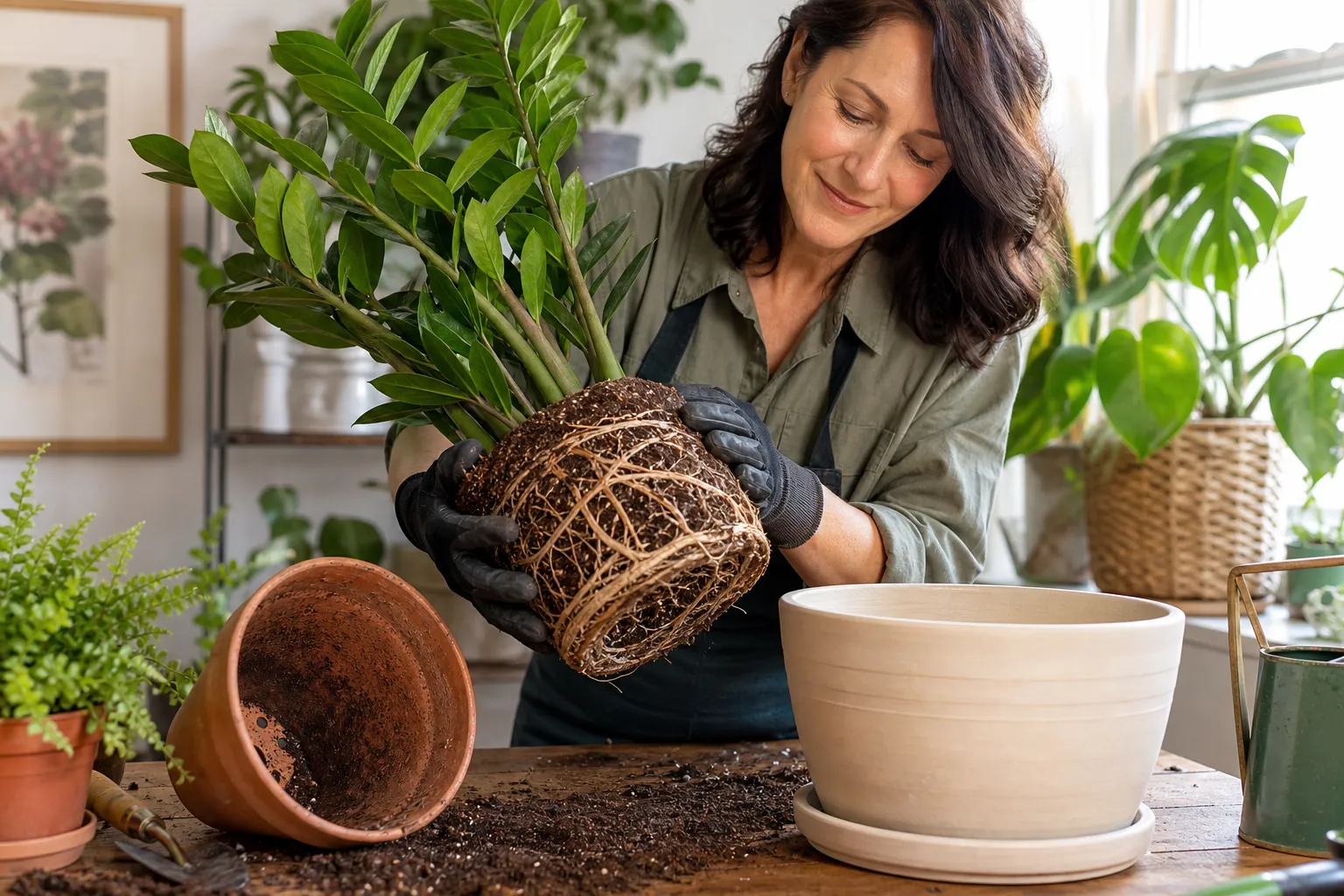
A plant can look healthy on top while struggling below the soil line. Its leaves may droop between waterings, new growth may become smaller, and a container that once held moisture for days may dry out by lunchtime. When you finally slide the plant from its pot, you may discover a tight cylinder of roots circling the outside of the soil ball.
That is a root-bound, or pot-bound, plant. The condition is common in houseplants, annual flowers, herbs, nursery shrubs, and young trees. It is not automatically a death sentence – but it is a sign that the roots have run out of useful space and need your help.
What “root-bound” actually means
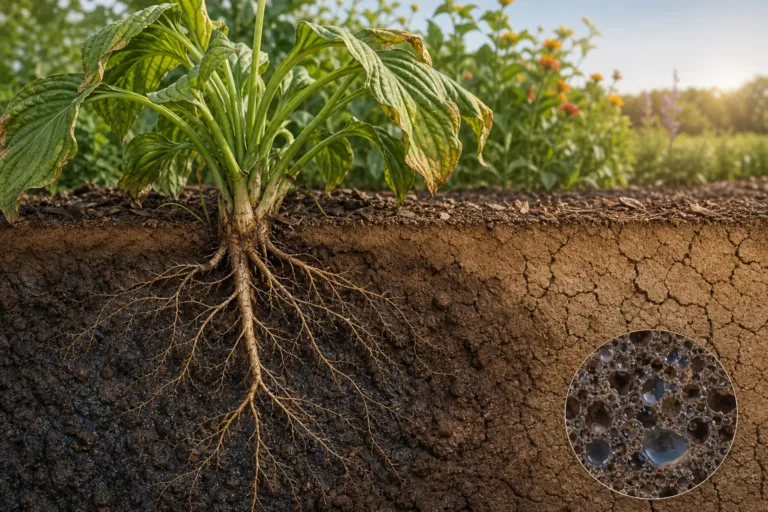
Roots normally grow outward through open spaces in the growing medium. In a container, they soon meet a hard wall. Instead of continuing into new soil, many roots turn and follow the inside of the pot, creating spirals along the sides and bottom.
Over time, the root system becomes densely packed. You may see a fine web of roots, thick roots circling the root ball, or roots emerging from drainage holes. In a mild case, the plant simply needs a little more room. In a severe case, the roots can form a tight shell that sheds water and leaves very little potting mix available for air, moisture, or nutrients.
Container plants are especially vulnerable because they cannot send roots beyond the pot. They also have access only to the nutrients held in the container mix, unlike plants growing in the ground, whose roots can explore a much larger volume of soil.
What changes inside the pot?
Water starts behaving strangely
A root-bound plant may seem thirsty all the time, but watering it can become surprisingly ineffective. A dense root mat can leave narrow channels between the roots, allowing water to run down the sides of the pot or pass through quickly without evenly wetting the root ball.
At the same time, the exposed outer roots can dry rapidly. This creates an awkward combination: the plant wilts from lack of available water even though the pot was recently watered. If the root ball has become very dry, place the container in a shallow tray of water for about 15 to 30 minutes, then allow it to drain completely. This can rehydrate the mix before you repot.
Oxygen becomes limited
Roots need oxygen as well as water. A tightly packed root ball has fewer air spaces, especially if the potting mix has broken down or stays wet for long periods. Poor drainage and compacted mix can weaken roots and make them less efficient at taking up water and nutrients.
Root-bound plants are not always overwatered, and wilting does not prove that a plant needs more water. Before increasing your watering schedule, check the root ball, the drainage holes, and the condition of the potting mix.
Growth slows above ground
Roots support shoots, leaves, flowers, and fruit. When the root system has little room to expand, top growth may slow. Common clues include:
- New leaves that are smaller than usual.
- Long gaps between new leaves or shoots.
- Wilting between otherwise normal waterings.
- Yellowing or premature leaf drop caused by general stress.
- Fewer flowers or smaller harvests in container-grown plants.
- Roots visible at the soil surface or pushing through drainage holes.
These symptoms can also result from low light, pests, poor drainage, temperature stress, or nutrient problems. Treat them as clues, not a diagnosis. The most reliable test is to remove the plant gently and inspect the roots.
How to tell whether a plant is truly root-bound
Water the plant lightly a day before inspection if the soil is bone dry, but avoid working with a saturated root ball. Tip the container sideways, support the stems or root ball, and ease the plant out without pulling hard on fragile foliage.
Look for a healthy network of light-colored, firm roots mixed through the potting medium. A root-bound plant will usually show roots circling around the sides or bottom, with a dense mass that leaves little visible mix – especially in the lower third of the root ball.
Roots that are brown or tan are not automatically unhealthy. Color depends on the plant and growing medium. Be more concerned about roots that are soft, slimy, collapsing, or foul-smelling, as these signs can indicate decay rather than simple crowding.
Not every plant needs the same amount of root space
Different plants tolerate crowded roots differently. Some species continue flowering when slightly pot-bound, while others decline quickly once their roots fill the container.
- Succulents and many cacti: Usually prefer drying between waterings and may tolerate a snug pot, provided drainage is excellent.
- Snake plants and some slow-growing houseplants: Often cope well with limited space for several years.
- Pothos, philodendrons, and vigorous tropicals: May need repotting more often as roots and stems expand.
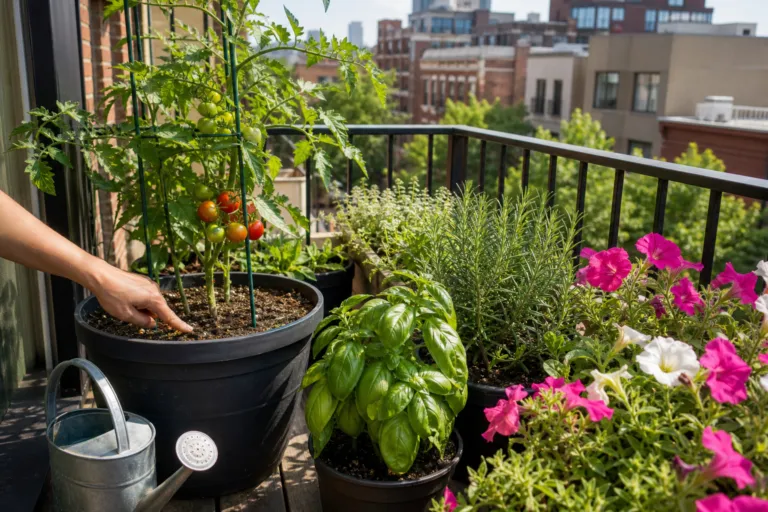
- Annual flowers and herbs: Can become stressed quickly in small nursery pots, particularly during hot, dry weather.
- Tomatoes, peppers, and other vegetables: Need enough root volume to support their top growth and fruit production.
- Trees and shrubs: Require special attention because circling roots left in place can continue growing around the trunk or main stems after planting.
Variety matters, too. A compact determinate tomato generally needs less root volume than a vigorous indeterminate variety. A dwarf patio pepper may remain productive in a smaller container than a full-size bell pepper. When choosing plants for pots, compare mature size and look for terms such as “dwarf,” “compact,” or “patio.”
A simple watering experiment you can try
If you are unsure whether a plant is drying too quickly, make a small measurement-based trial rather than guessing. Choose a plant in a container with drainage holes and record the pot’s weight immediately after thorough watering and draining.
For example, suppose the container weighs 8 pounds after watering. Check it at the same time each day. If it reaches 6 pounds within 24 hours and the plant wilts, the root ball may be crowded, the mix may be hydrophobic, or the plant may be receiving excessive heat or sun. If the container remains at 7½ pounds for several days but the soil stays soggy, poor drainage or root damage may be the bigger concern.
You can also measure water directly. Pour 2 cups of water slowly over the soil, wait a few minutes, and note how much drains into the saucer. Empty the saucer afterward. If most of the water runs straight through while the center of the root ball remains dry, the roots and mix may be so compacted that repotting is more useful than simply watering more often.
This is not a universal watering formula. Container material, potting mix, plant size, airflow, indoor humidity, sunlight, and temperature all affect water use. The value of the trial is that it gives you comparable numbers for your own growing conditions.
What to do when the plant is root-bound
1. Choose the next pot carefully
If you want the plant to grow larger, choose a container only moderately larger than the current one. For most houseplants, moving up about 1 to 2 inches in diameter is a sensible step. A very large pot can hold excess moisture around a relatively small root ball, increasing the risk of slow drying.
Always choose a container with drainage holes. A decorative cachepot can work as an outer cover, but do not leave the plant standing in collected water.
2. Prepare fresh potting mix
Use a quality potting mix suited to the plant. Avoid digging ordinary garden soil into indoor containers because it can drain poorly and compact around roots. For outdoor containers, select a mix labeled for containers and follow the plant’s light and moisture needs.
3. Loosen the outer roots
For a lightly crowded plant, gently tease the outer roots apart with your fingers. If the roots have formed a tight shell, make several shallow vertical cuts around the sides of the root ball with a clean, sharp knife. You can also make a shallow crisscross cut across the bottom.
The goal is not to shred every root. You are disrupting the circular pattern and encouraging roots to grow into the fresh mix. Work more gently with delicate plants, and avoid rough handling of the crown – the point where roots and stems meet.
4. Repot at the same depth
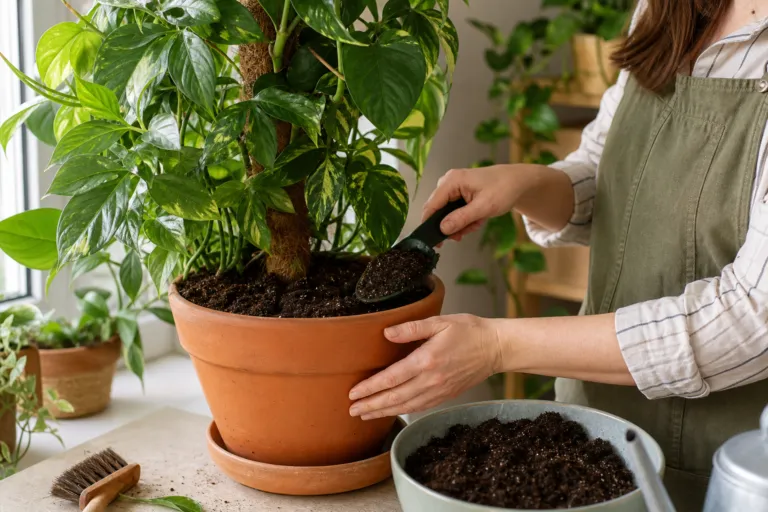
Add enough mix to the new pot so the plant sits at the same depth as before. Do not bury the stem or trunk under extra potting mix. Fill around the root ball, firming lightly to remove large air pockets while keeping the mix porous.
Leave about ½ to 1 inch of space below the rim so you can water without overflow. Water thoroughly, let the excess drain, and return the plant to an appropriate light level.
5. Give the plant a calm recovery period
Repotting disturbs roots, even when you do it correctly. For several days, protect the plant from harsh afternoon sun, strong drafts, and intense heat. Keep the mix lightly and evenly moist according to the plant’s needs, but do not compensate for root disturbance by watering constantly.
Hold off on strong fertilizing until the plant begins active new growth. Fresh potting mix may already contain nutrients, and tender new roots can be sensitive to excess fertilizer.
What if you do not want a larger plant?
You can refresh a mature plant without continually increasing pot size. Remove it from the container, trim a portion of the outer root mass, and return it to the same pot with fresh mix. It also helps to reduce some top growth so the smaller root system does not have to support the entire original canopy.
This approach suits plants that have reached the size you want, specimens that must fit a particular shelf, and bonsai-style displays. Make gradual changes rather than removing most of the roots at once. If the plant is already weak, replace the mix and improve drainage first, then consider root pruning when it has recovered.
Special care for trees and shrubs
Root-bound nursery trees and shrubs deserve extra attention before planting. A circling root near the trunk can remain in that pattern after the plant enters the landscape. As the trunk and roots enlarge, the root may press against the trunk or other roots, restricting growth.
Inspect the root ball before planting. If you see circling roots, cut or separate them with a sharp knife, pruning saw, or spade, depending on the size and density of the root system. Several vertical cuts around the sides and a cut across the bottom can help redirect growth outward.
Set the plant so the root flare – the area where the trunk broadens into major roots – sits at or slightly above the surrounding soil level. Water deeply after planting and monitor the root ball during the first growing season, especially when a container-grown plant was raised in a fast-draining, soilless nursery mix.
When repotting is not the answer
A larger pot will not fix every struggling plant. Before you repot, check for:
- Water sitting in the saucer or a blocked drainage hole.
- Soil that remains wet for many days.
- Insufficient light or sudden changes in temperature.
- Insect pests, leaf diseases, or damaged stems.
- Salt-like fertilizer buildup on the soil surface.
- A plant that is naturally slow-growing or entering dormancy.
Sometimes the correct solution is a smaller pot, a better-draining mix, a brighter location, or more careful watering. Repot only when the evidence points to a root or container problem.
The good news about root-bound plants
Root-bound does not mean hopeless. Many plants respond quickly once their roots can access fresh, open growing medium. Within the following weeks, watch for steadier moisture levels, firmer leaves, new roots at the edge of the pot, and fresh top growth.
Make a habit of checking containers in spring or early summer, when many plants are entering active growth. If you catch circling roots early, a gentle move to a slightly larger pot may be all that is needed. When the root ball has become a solid mat, take a little more time to loosen it – and remember that a few clean root cuts are often kinder than leaving the roots trapped in a permanent spiral.
With careful inspection, measured watering, and the right-sized container, you can turn a crowded root system into a fresh start. Your plant does not need unlimited space; it needs enough room, air, moisture, and support to keep growing in the direction nature intended.