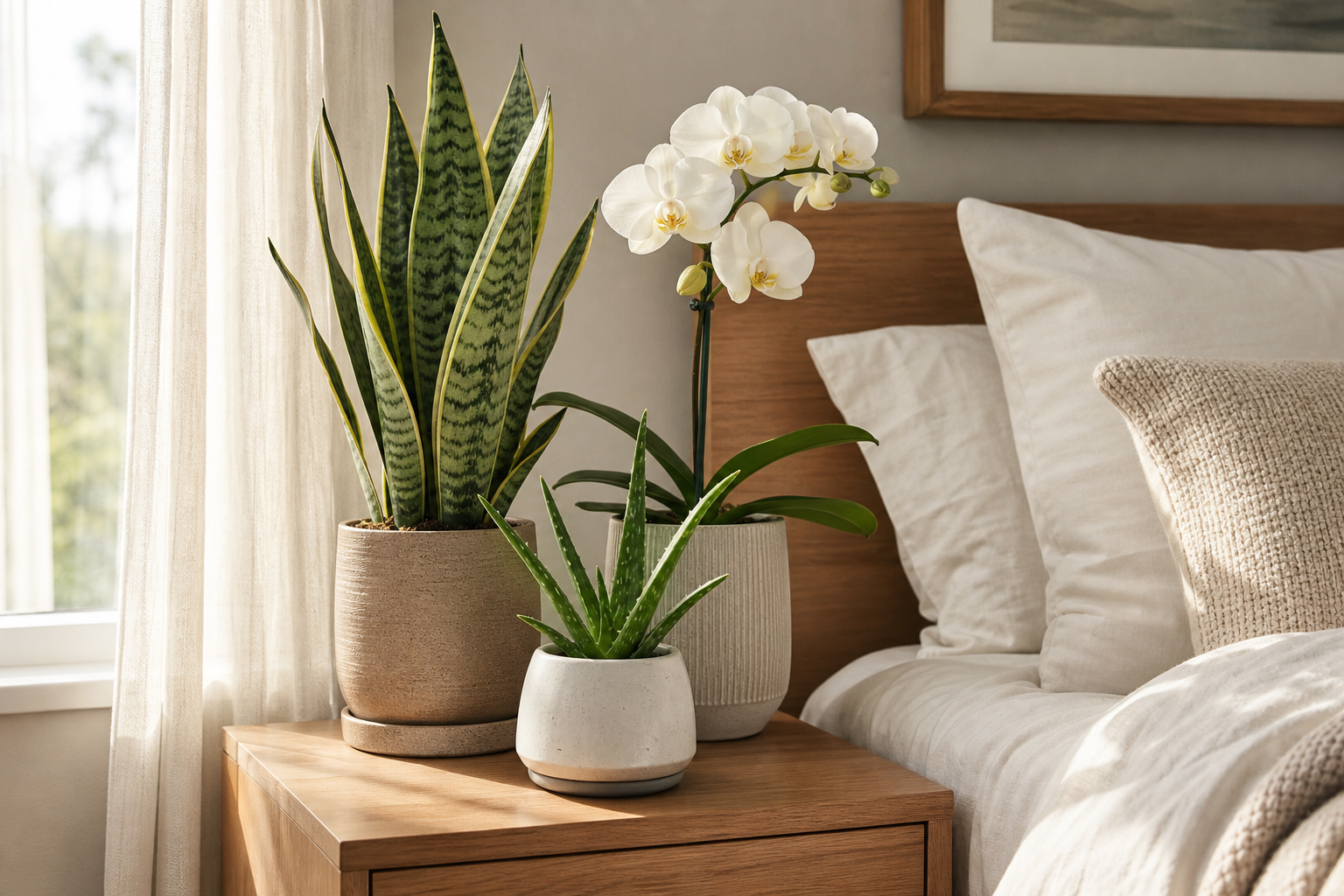
Few houseplants have earned as much bedroom fame as the snake plant, aloe vera, and orchid. They are often described as “oxygen-producing plants for nighttime,” and there is a useful piece of science behind that reputation – but the claim needs a little context.
Most plants exchange gases mainly during daylight because photosynthesis requires light. Plants with a special adaptation called Crassulacean acid metabolism, or CAM, open their leaf pores at night to take in carbon dioxide and conserve water during the day. Snake plants, aloe vera, and many orchids use some form of this strategy, so they can continue nighttime gas exchange when ordinary houseplants are no longer photosynthesizing.
That does not mean one small plant will noticeably raise the oxygen level of a bedroom or replace ventilation. Think of these selections as attractive, low-maintenance plants with interesting nighttime biology – not as medical devices or air purifiers. Good ventilation, source control, and a properly maintained HVAC system remain much more important for indoor air quality.
What “releases oxygen at night” really means
CAM plants separate part of their carbon-dioxide intake from the rest of the photosynthesis process. At night, they open microscopic pores called stomata and absorb carbon dioxide. During the day, they close those pores to reduce water loss and use the stored carbon dioxide when light is available.
The exact amount of oxygen produced depends on plant size, light exposure, health, temperature, and the surrounding air. A small plant on a dresser makes a very modest contribution compared with the volume of air in a room, so avoid promises that these plants will improve sleep, cure allergies, or remove pollutants at household scale.
Older laboratory research did find that some houseplants and their growing media could remove certain volatile organic compounds from sealed chambers. However, a sealed research chamber is very different from a ventilated American bedroom. The most reliable benefit for most gardeners is simpler: plants add greenery, encourage care routines, and make a room feel more welcoming.
1. Snake Plant: The easiest choice for a bedroom
Why it belongs on the list
The snake plant, now commonly classified as Dracaena trifasciata, is the standout choice if you want a durable, upright plant that tolerates neglect. Its thick, architectural leaves store water, and its CAM metabolism allows nighttime gas exchange.
It is also one of the best options for a bedroom with inconsistent natural light. University extension guidance lists snake plant among low-light houseplants, although “low light” does not mean no light. A north-facing room, a few feet from an east- or west-facing window, or a space supported by a balanced LED grow light can work well.
Varieties worth comparing
- ‘Laurentii’: tall green leaves with yellow edges; a classic choice for a floor planter.
- ‘Moonshine’: pale, silvery foliage that brightens a darker room but may scorch in hot direct sun.
- ‘Hahnii’: a compact bird’s-nest form that suits a nightstand or bookshelf.
- Cylindrical snake plant: round, upright leaves and a more sculptural appearance.
Choose the variety according to the space, not just the label. A tall ‘Laurentii’ can eventually dominate a small bedside table, while ‘Hahnii’ remains easier to position near a lamp or window.
Light and watering routine
Allow the potting mix to dry thoroughly between waterings. In a typical 6-inch nursery pot, a reasonable starting point is about 8 to 12 fluid ounces of water every 3 to 4 weeks in a bright, warm room. In winter, especially in a cool room with less light, the interval may stretch to 5 or 6 weeks. Treat those numbers as a measurement exercise, not a fixed calendar.
Before watering, push a wooden skewer or your finger 2 to 3 inches into the soil. If it comes out cool, dark, or damp, wait. When the mix is dry, water slowly until a little drains from the bottom, then empty the saucer. A pot with drainage holes is essential because constantly wet roots can lead to rot.
Best bedroom placement
- Place it 2 to 6 feet from an east- or west-facing window, or farther from a bright south-facing window.
- Keep leaves away from radiators, heating vents, and cold drafts.
- Wipe dusty leaves with a damp cloth every month so the plant can use available light more effectively.
2. Aloe Vera: A compact, sun-loving succulent
Why aloe is a good nighttime plant
Aloe vera is another CAM plant, and its fleshy leaves are designed to conserve moisture. Its rosette form looks particularly good in a bright bedroom, sunroom, or windowsill garden. It is a better choice for a sunny room than for a dim corner.
Aloe is often sold in small decorative pots, but a healthy plant needs real sunlight. Bright, indirect light is a safe starting point indoors. A few hours of gentle morning sun through an east-facing window can be helpful; strong afternoon sun through unfiltered glass may cause leaf stress or bleaching, especially after a plant has been raised in a shaded store.
Compare aloe forms before buying
- Standard aloe vera: broad, blue-green leaves with useful visual structure and a mature height of roughly 1 to 2 feet indoors.
- Compact aloe hybrids: slower-growing and easier to fit on a small shelf.
- Spotted or red-edged aloes: attractive alternatives, but not every nursery plant sold as “aloe” has the same mature size or care needs.
Read the botanical label when possible. “Aloe” covers many species, and their final size, leaf shape, and sun tolerance can differ.
Measure the watering instead of guessing
Let the potting mix dry completely before watering again. For a 6-inch pot, try measuring 10 to 14 fluid ounces of water, applying it slowly until drainage begins. Then discard the excess. In a bright summer window, aloe may need water every 2 to 4 weeks; in a dim winter bedroom, it may need it only every 5 to 8 weeks.
The leaves offer clues. Slightly thinner leaves and a dry pot usually indicate that watering is due. Soft, yellowing, or translucent leaves often point to excess moisture rather than thirst. Use a gritty cactus-and-succulent mix, and avoid placing the pot inside a decorative cachepot where drainage water can collect unnoticed.
A simple growing experiment
If you are unsure whether your bedroom has enough light, try a two-week comparison. Keep one aloe 12 to 18 inches from an east-facing window and another 4 to 6 feet away. Mark the position of each pot and record leaf color, firmness, and new growth every few days.
The plant with firmer, more upright leaves and steady new growth is receiving the better balance of light. If both plants stretch, lean, or become pale, move them closer to the window gradually or add a small full-spectrum LED grow light on a timer.
3. Moth Orchid: The elegant nighttime option
Why choose Phalaenopsis
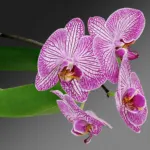
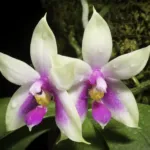
The moth orchid, Phalaenopsis, is one of the most approachable orchids for a home. It uses CAM-related nighttime gas exchange and offers a benefit the other two plants do not: long-lasting flowers in white, pink, purple, yellow, and patterned shades.
Unlike aloe, a moth orchid does not want harsh direct sun. Give it bright, indirect light near an east window, or place it several feet from a brighter south- or west-facing window behind a sheer curtain. Dark green leaves can signal insufficient light, while a reddish cast or scorched patches may indicate too much sun.
Orchid care in practical terms
Most store-bought moth orchids grow in bark or sphagnum moss, and the medium changes how often they need water. A mature orchid in bark may need a thorough watering about once a week in an average home, while moss usually stays wet longer.
Water in the morning with room-temperature water. Set the pot in a sink, soak the growing medium thoroughly, and let it drain completely. Never leave the orchid standing in water, and do not pour water into the central crown where the leaves meet. Ice cubes are not a reliable substitute for a full watering and can chill tropical roots.
For a quick measurement trial, weigh or measure the water you use for three consecutive waterings. Many mature orchids in a 4- to 6-inch pot may use roughly 8 to 16 fluid ounces per watering, but the correct amount depends on the bark, pot, root mass, and drainage. The useful target is not a particular number: it is evenly moistened bark followed by complete drainage.
Phalaenopsis compared with other orchids
- Phalaenopsis: generally the best beginner choice; lower light, warm indoor temperatures, and long-lasting blooms.
- Paphiopedilum: also suitable for homes, but it prefers a more consistently moist medium and has a different slipper-shaped flower.
- Cattleya and Vanda: often require brighter light and may be less forgiving in a typical bedroom.
If your room is dry during a U.S. winter, group plants together or use a humidity tray with the pot sitting above the water line. Avoid keeping the orchid pressed against a cold window or directly over a heat register.

How many bedroom plants do you need?
For most bedrooms, one healthy plant is enough to add greenery without creating a watering burden. Two or three plants can make a pleasant grouping, but more is not automatically better. Overwatering several pots at once can raise the risk of fungus gnats, root problems, and damp surfaces.
Use a small fan for gentle air movement if the room feels stagnant, especially around orchids. Keep foliage from touching damp walls, and inspect new plants for insects before placing them beside an established collection.
My practical ranking
- Best for beginners: snake plant. It tolerates lower light and infrequent watering better than the other two.
- Best for a sunny bedroom: aloe vera. Its compact form and drought tolerance suit a bright windowsill.
- Best for flowers: Phalaenopsis orchid. It needs more attentive watering but rewards you with months of bloom.
Final thoughts
Snake plant, aloe vera, and moth orchid are appealing nighttime plant choices because their CAM metabolism allows gas exchange after dark. Their oxygen contribution in an ordinary bedroom is modest, so enjoy them for realistic reasons: attractive foliage, living color, and the satisfaction of growing something well.
Start with the plant that matches your light. Check the soil before watering, use a pot with drainage, and make small adjustments rather than dramatic ones. With those simple habits, your bedroom can become a calm, green corner – and your plants have a much better chance of thriving all year.