
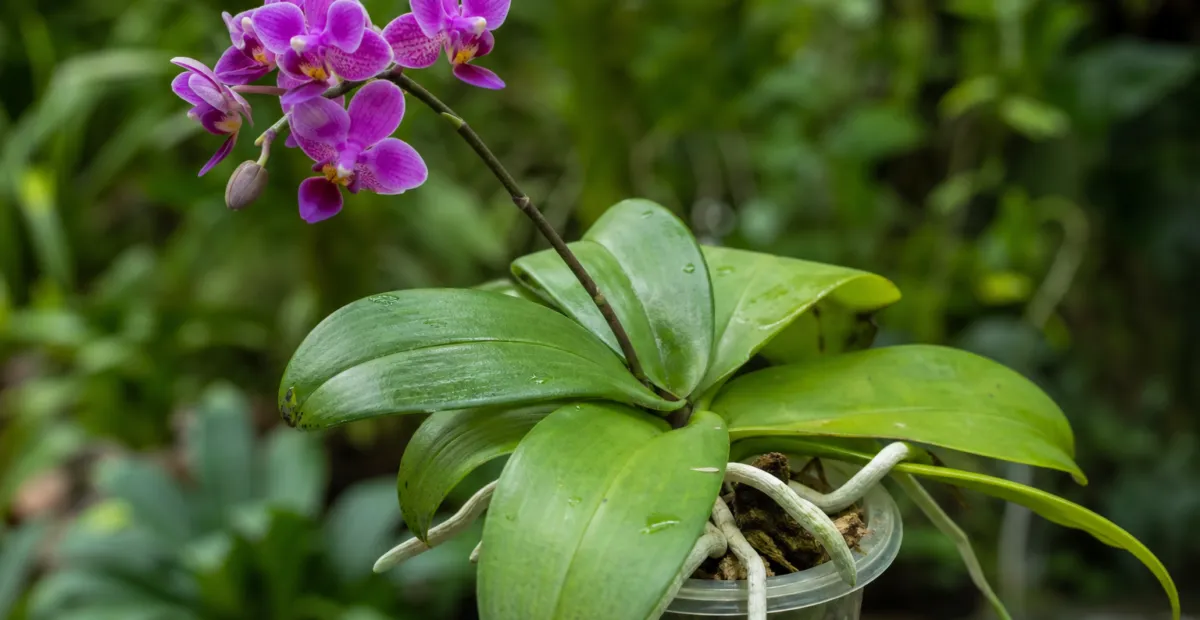
 AI-generated illustration
Orchid (Phalaenopsis violacea) short overview
Phalaenopsis violacea is a fragrant tropical epiphytic orchid native to Peninsular Malaysia and Sumatra. Its broad, evergreen leaves support compact flowering stems with small violet-purple blooms, often carrying a noticeable daytime scent. In the United States it is usually grown as a houseplant or greenhouse specimen, where it needs bright filtered light, warm temperatures, good air circulation, consistent but careful watering, and an open orchid mix that never stays waterlogged.
Taxonomic classification
Orchid (Phalaenopsis violacea) care guide
Light and placement
Place near an east-facing window or behind a sheer curtain at a brighter south- or west-facing window. Aim for strong filtered light rather than direct midday sun, which can scorch leaves. Too little light produces dark green leaves, weak growth, and poor flowering; excessive light causes yellowing, reddish stress coloration, or bleached patches. Gentle air movement should continue around the foliage.
Watering and humidity
Water thoroughly when the upper portion of the mix is nearly dry and the roots are beginning to turn silvery, then let excess water drain completely. Keep water out of the crown and leaf axils. Water more often in warm, bright active growth and less often in cool or dim conditions. Humidity is helpful, but stagnant wetness is more dangerous than slightly dry air.
Soil and growing medium
Use a coarse, airy epiphytic orchid mix based on medium-grade bark with optional sphagnum, perlite, or charcoal. The roots require rapid drainage and abundant air spaces rather than dense potting soil. A slightly acidic reaction is generally suitable, but avoid compact, water-retentive media that exclude oxygen from the root zone.
Feeding
Feed during active root and leaf growth with a complete orchid fertilizer at the label's diluted rate, commonly every second or third watering. Flush the pot with plain water periodically to reduce salt buildup. Reduce feeding when growth slows, roots are damaged, or the plant has recently been repotted; never fertilize a severely dehydrated plant.
Growth and habit
This evergreen epiphyte grows from a short central stem with a basal rosette of leaves and produces new roots from the stem. It is not a terrestrial orchid and should not be treated like a conventional houseplant. Good ventilation, stable warmth, and periodic drying of the root zone help maintain healthy roots and reduce crown problems.
Planting and repotting
Grow mounted or in a small, well-ventilated orchid container rather than planting in garden soil. Set the plant at the same depth it previously grew, keeping the crown and leaf bases dry. Establish it in warm weather or during active root growth, and allow room for the plant to expand without burying aerial roots.
Repot when the bark has decomposed, roots have outgrown the container, or drainage has declined. Use a small pot that fits the root mass, trim only dead or rotted roots with sterile tools, and keep the crown above the medium. Repotting is easiest after flowering or when new root growth begins.
Propagation and pruning
Propagation
Commercial propagation is mainly by seed through sterile laboratory culture, which is difficult because orchid seeds depend on specialized germination conditions. Division is possible only for a large, multi-growth specimen with several healthy root systems. Divide during active growth and keep each section securely rooted; ordinary stem cuttings are not a reliable method.
Pruning
Remove spent flower spikes only after they have fully dried, or cut back to a healthy node if the spike remains green and the plant is vigorous. Remove dead leaves and roots with sterile tools. Do not cut healthy aerial roots or trim green tissue merely for appearance.
Overwintering
Keep indoors or in a heated greenhouse before temperatures fall below about 60°F. Protect the plant from cold drafts, unheated windows, and prolonged wet roots during cool weather. Provide bright filtered light, moderate humidity, and reduced watering when growth slows, while avoiding abrupt temperature changes.
Uses
Primarily grown as a collectible ornamental orchid, houseplant, or warm-greenhouse specimen. Its compact, fragrant flowers make it valuable in species collections and breeding programs. It has no well-supported culinary or medicinal use for household cultivation.
Appearance
The plant has thick, leathery, evergreen leaves arranged in a close basal rosette. Fleshy aerial roots emerge from the short stem and may extend beyond the container. Flower spikes are relatively compact compared with many modern moth-orchid hybrids, and the small waxy blooms are distinctive for their violet-purple coloration and noticeable fragrance.
Flowering
The species bears small, waxy flowers on compact or arching inflorescences. Blooms are typically violet to purple, and the flowers are noted for fragrance that is strongest during daylight. Exact flowering dates vary with clone, temperature, light, and indoor culture; a dependable United States month range is not well established.
Pollination and visitors
The flowers are adapted for insect pollination, but a specific pollinator species or reliably documented visitor group was not confirmed in the sources reviewed. The plant's fragrant floral volatiles are produced and released in a daylight-linked pattern, consistent with a role in attracting flower visitors.
Phalaenopsis violacea photos
Click any photo for a larger view. Source, author and license are shown separately.
Diseases and pests
Diseases
Prevent bacterial and fungal problems with clean tools, good air circulation, dry foliage before night, and a rapidly draining medium. Watch for soft, water-soaked leaf or crown tissue, blackened roots, and spreading spots. Isolate affected plants, remove severely damaged tissue with sterile tools, and correct excess moisture before considering a labeled orchid treatment.
Pests
Inspect leaf undersides, roots, and flower spikes for scale, mealybugs, thrips, and spider mites. Quarantine new plants, remove small infestations mechanically, and improve plant vigor with appropriate light and watering. Use only products labeled for orchids and follow the label; avoid spraying open flowers or allowing residues to collect in the crown.
Related diseases and pests
Only Plant Doctor profiles whose host data indicate this plant may be affected are shown here.
 PestLong-tailed mealybugPseudococcus longispinus
 PestBrown Soft ScaleCoccus hesperidum
 DiseaseCitrus black spotPhyllosticta citricarpa
 DiseaseBacterial soft rotPectobacterium carotovorum
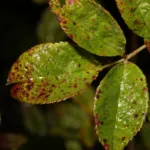 DiseaseRose black spotDiplocarpon rosae
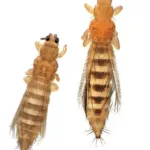 PestOnion thripsThrips tabaci Lindeman
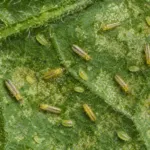 PestMelon thripsThrips palmi Karny
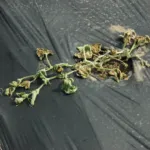 DiseaseBacterial WiltRalstonia solanacearum species complex
Toxicity and pollen
ASPCA lists Phalaenopsis orchids as non-toxic to dogs and cats. That database is published for Phalaenopsis orchids generally rather than this exact species, so it is the best available genus-level safety evidence. Any plant material or potting products may still cause mild gastrointestinal upset if eaten, and fertilizers or pesticides can be hazardous.
- Pollination / pollen
- Pollinia held in pollen masses
Orchid pollen is packaged into pollinia rather than released as a loose airborne cloud, so exposure from a flowering plant is expected to be low compared with many wind-pollinated plants. Sensitive people may still react to floral material, plant dust, moldy medium, or greenhouse chemicals; this is not a guarantee of zero allergy risk.
Native habitat
In nature it grows as an epiphyte in wet tropical forest from Peninsular Malaysia to Sumatra. Its roots occupy bark, branch surfaces, and organic debris rather than mineral soil. Warm temperatures, high atmospheric moisture, filtered forest light, and frequent air movement reflect its native ecological setting.
Interesting fact
The species is accepted by current Kew taxonomic treatment and has several historical synonyms. It is an epiphyte of wet tropical forests and is closely associated horticulturally with fragrant Phalaenopsis species. Floral scent emission is strongly influenced by daylight, with volatile release reported mainly during the day.
Frequently asked questions (FAQ)
The most relevant questions about this plant, with short and direct answers.
🌱Quick care
How do you care for Phalaenopsis violacea indoors?⌄
Grow Phalaenopsis violacea in bright filtered light, a coarse bark-based orchid mix, moderate even moisture, good drainage, and warm, humid indoor conditions. Protect it from cold drafts, frost, and harsh midday sun.
🌤️Environment and placement
How much light does Phalaenopsis violacea need?⌄
Phalaenopsis violacea needs bright, filtered or indirect light. An east- or shaded west-facing window is usually suitable; protect the leaves from strong direct midday sun, which can cause burns.
What is the best window for Phalaenopsis violacea?⌄
An east-facing window is generally the safest choice, while a west-facing window can work if the afternoon sun is filtered. A shaded south-facing window may also be suitable in the United States.
What temperature does Phalaenopsis violacea prefer?⌄
Keep Phalaenopsis violacea warm, ideally around 70–85°F during the day and above about 60°F at night. Avoid frost, cold drafts, heating vents, and sudden temperature changes.
Does Phalaenopsis violacea need high humidity?⌄
Yes, Phalaenopsis violacea grows best with moderate to high humidity, generally about 50% or higher, combined with air movement. A humidifier or pebble tray can help, but the pot should never sit in water.
Can Phalaenopsis violacea grow outdoors in the United States?⌄
Phalaenopsis violacea can grow outdoors year-round only in reliably warm, frost-free areas comparable to USDA Zones 10–12, with filtered light and protection from heavy rain. In most of the United States, grow it indoors or move it inside before temperatures become cool.
💧Care and problems
How often should you water Phalaenopsis violacea?⌄
Water Phalaenopsis violacea when the bark mix is nearly dry and the roots have changed from green to silvery gray. Water thoroughly with lukewarm water, then let the pot drain completely; frequency may range from weekly to more often in hot, dry conditions.
Should Phalaenopsis violacea dry out between waterings?⌄
Let the growing medium dry slightly between waterings, but do not leave Phalaenopsis violacea completely dry for extended periods. Its fleshy leaves store some water, but prolonged dryness can cause wrinkling and weak growth.
Can you water Phalaenopsis violacea with ice cubes?⌄
No, ice cubes are not recommended for Phalaenopsis violacea because cold water can shock the roots and provides too little moisture. Use room-temperature or lukewarm water instead.
How do you prevent crown rot on Phalaenopsis violacea?⌄
Prevent crown rot by watering in the morning, keeping water out of the central leaf crown, and providing good airflow. If water collects in the crown, blot it gently with a paper towel.
Why are Phalaenopsis violacea leaves wrinkled?⌄
Wrinkled leaves usually indicate dehydration or damaged roots. Check whether the mix is staying too dry or whether soggy conditions have caused root rot, then correct the watering and drainage problem.
Why are Phalaenopsis violacea roots turning brown or mushy?⌄
Brown, mushy roots usually result from excess moisture, poor drainage, or decomposing potting media. Remove the damaged roots with sterilized tools and repot the plant into fresh, airy orchid mix.
How often should Phalaenopsis violacea be fertilized?⌄
Fertilize Phalaenopsis violacea during active growth with a balanced orchid fertilizer at reduced strength, following the product label. Water first if the roots are dry, and occasionally flush the medium with plain water to reduce salt buildup.
🪴Planting and repotting
What potting mix is best for Phalaenopsis violacea?⌄
Use a coarse, airy bark-based orchid mix that drains quickly while retaining modest moisture. Regular garden soil is unsuitable because it holds too much water and restricts air around the roots.
Should Phalaenopsis violacea be grown in a clear pot?⌄
A clear orchid pot can be useful because it lets you monitor root color, moisture, and root health, although it is not essential. Choose a pot with generous drainage holes and avoid using an oversized container.
When should you repot Phalaenopsis violacea?⌄
Repot Phalaenopsis violacea after flowering or when the bark has broken down, drainage has declined, or the roots have outgrown the container. Under typical indoor conditions, repotting every one to two years is often appropriate.
Can Phalaenopsis violacea grow mounted on bark?⌄
Yes, Phalaenopsis violacea can be mounted on cork or another suitable orchid mount because it is an epiphytic orchid. Mounted plants dry faster and therefore need more frequent watering and consistently higher humidity than potted plants.
✂️Propagation and pruning
How do you prune Phalaenopsis violacea after flowering?⌄
Do not prune healthy leaves or roots unnecessarily. After flowering, leave a green spike if it remains healthy and cut it just above a lower node to encourage possible branching; remove the spike at its base once it turns yellow or brown.
Can Phalaenopsis violacea produce keikis?⌄
Mature Phalaenopsis violacea plants may produce keikis, or plantlets, on a flower spike. Separate a keiki only after it has several leaves and roots at least about 1 inch long, then pot it in a small, airy orchid medium.
Can Phalaenopsis violacea be propagated from seed at home?⌄
Propagation from seed is generally not practical at home because orchid seeds require sterile laboratory conditions and specialized fungal or nutrient media. Keikis are the more realistic propagation method for hobby growers.
⚠️Toxicity and safety
Is Phalaenopsis violacea toxic to dogs and cats?⌄
Phalaenopsis violacea is generally regarded as non-toxic to dogs and cats. Even non-toxic plants can cause mild stomach upset if eaten, so keep the orchid and its potting materials away from pets that chew plants.
Is Phalaenopsis violacea safe to grow around children?⌄
Phalaenopsis violacea is generally considered a low-risk, non-toxic ornamental orchid. Young children should still be supervised around the plant because bark, fertilizer, pots, and other growing materials can present separate hazards.
🌸Flowering and special interest
Is Phalaenopsis violacea fragrant?⌄
Yes, Phalaenopsis violacea is a fragrant orchid, commonly described as having a spicy or warm floral scent. Fragrance intensity can vary with the plant, time of day, temperature, and the number of open flowers.
When does Phalaenopsis violacea bloom?⌄
Phalaenopsis violacea commonly flowers in spring and summer, although indoor plants may bloom at other times when conditions are favorable. Its short, arching spike can produce several waxy flowers successively rather than all at once.
How large are Phalaenopsis violacea flowers?⌄
Individual Phalaenopsis violacea flowers are relatively small, usually about 1¼–1½ inches across. They are waxy and star-shaped, with rich violet to purple coloring and a contrasting lip.
Why is my Phalaenopsis violacea not flowering?⌄
Poor flowering is most often related to insufficient light, weak plant health, inconsistent watering, unsuitable temperatures, or a lack of seasonal cues. Improve filtered light and root health first, and avoid stressing the plant with cold or prolonged dryness.
Why are Phalaenopsis violacea flower buds falling off?⌄
Bud drop, or bud blast, can result from sudden changes in temperature, light, humidity, watering, or location. Keep the plant stable, protect it from drafts and heating vents, and avoid moving it while buds are developing.
How long do Phalaenopsis violacea flowers last?⌄
Individual flowers can remain attractive for several weeks, and the short spike may open flowers successively over a longer period. The exact duration depends on plant health and growing conditions.
How do you tell Phalaenopsis violacea apart from Phalaenopsis bellina?⌄
True Phalaenopsis violacea typically has flowers strongly suffused with purple and a spicy fragrance, while Phalaenopsis bellina usually shows more green or green-white coloring and a sweeter scent. Cultivated plants may be hybrids, so identification from flowers alone can be uncertain.
Similar plants
 Azure Monkshood (Aconitum carmichaelii) care guideAconitum carmichaelii
 Monkshood (Aconitum ‘Stainless Steel’)Aconitum 'Stainless Steel'
 Monkshood (Aconitum ‘Bressingham Spire’)Aconitum 'Bressingham Spire'
 Golden full moon maple (Acer shirasawanum ‘Aureum’)Acer shirasawanum 'Aureum'
 Globosum (Acer platanoides ‘Globosum’)Acer platanoides 'Globosum'
 Striped maple (Acer pensylvanicum) care guideAcer pensylvanicum