
 Source:
 Golden full moon maple (Acer shirasawanum ‘Aureum’) short overview
Acer shirasawanum 'Aureum', often called golden full moon maple, is a slow-growing deciduous maple with rounded, shallow-lobed leaves that emerge pale gold and remain yellow to yellow-green through summer. Red flowers appear in spring, followed by winged fruits, while autumn foliage may turn orange, red, or gold. It performs best in moist, well-drained soil, sheltered from drying wind and intense heat.
Taxonomic classification
Golden full moon maple (Acer shirasawanum ‘Aureum’) care guide
Light and placement
Give full sun to partial shade, with protection from hot afternoon sun, reflected heat, and drying wind in warm climates. Morning sun with afternoon shade is a dependable placement. Pale, crispy margins or premature leaf drop indicate excessive heat, drought, wind, or sun exposure; weak color and elongated growth suggest insufficient light.
Watering and humidity
Water deeply when the upper soil begins to dry, rather than giving frequent shallow sprinkles. Keep young plants evenly moist through establishment and increase attention during summer heat, container culture, and drought. Maintain mulch over the root zone, but keep it several inches away from the trunk. Avoid both prolonged saturation and repeated severe drying.
Soil and growing medium
Use fertile, moisture-retentive but well-drained soil with good organic structure. Loam, sandy loam, and clay soils can work if drainage is reliable and compaction is avoided. Slightly acidic through neutral soil is a good target, although established plants tolerate a broader pH range. Mulch the root zone without piling mulch against the trunk.
Feeding
Apply a balanced, slow-release tree and shrub fertilizer in early spring only if growth is weak or soil fertility is poor. Compost or leaf mold can be used as a surface mulch. Do not overfeed, fertilize drought-stressed plants, or apply high-nitrogen fertilizer late in the season, as this can encourage soft growth and reduce winter readiness.
Growth and habit
This is a slow-growing, rounded, bushy maple that develops into a small tree or large shrub. Its restrained growth makes it suitable for specimen use and large containers, but young plants may take many years to achieve mature form. Maintain consistent moisture and avoid unnecessary pruning to preserve its natural architecture.
Planting and repotting
Plant in spring or fall when the soil is workable, setting the root flare level with or slightly above the surrounding soil. Water deeply after planting and maintain even moisture during the first two growing seasons. Allow enough room for the eventual canopy, and avoid sites exposed to strong, drying wind or reflected heat.
Container-grown plants should be shifted only when roots have filled the pot, preferably in early spring before full leaf expansion. Move to a container just one size larger, preserve the root ball, and use a moisture-retentive but sharply draining tree-and-shrub mix. Container maples need more frequent watering and winter root protection than plants in the ground.
Propagation and pruning
Propagation
Commercial plants are normally propagated by grafting, commonly onto compatible maple rootstocks. Seed does not reliably preserve the cultivar's traits. Grafting is best left to experienced propagators and is generally performed during the dormant season or appropriate active-growth window for the chosen technique.
Pruning
Prune sparingly. Remove dead, damaged, crossing, or weakly attached branches during the dormant season or after the strongest spring sap flow has passed. Avoid heavy heading cuts, which can spoil the natural rounded structure and stimulate coarse shoots. Do not prune during drought or extreme heat.
Overwintering
In-ground plants are generally hardy in Zones 5–8, but protect young trees from drying winter wind and rapid freeze-thaw cycles with a mulch layer over the root zone. Container plants are more vulnerable because their roots are exposed; shelter containers in winter, insulate the pot, and prevent the mix from becoming completely dry.
Uses
Use as a specimen tree, accent shrub, woodland-edge planting, patio tree, or container-grown focal plant. Its strongest ornamental value is the luminous yellow foliage and rounded habit. It is not a documented food or medicinal plant, and its samaras should not be treated as edible.
Appearance
Leaves are rounded and shallowly lobed, typically bright yellow or yellow-green and sometimes edged with red. The branches and bark are gray-brown, and the plant develops a dense, rounded, bushy outline. Spring foliage is often especially luminous, while fall color varies from muted to vivid orange, red, or gold.
Flowering
Small crimson to reddish flowers are produced in upright clusters in spring, generally as the leaves emerge. They are followed by paired winged samaras. Flowering is ornamental but secondary to the cultivar's foliage, and exact timing varies with regional spring temperatures.
Pollination and visitors
The small spring flowers can be visited by bees, bumblebees, and other small insects, but this cultivar is grown primarily for foliage rather than for heavy pollinator value. No particular pollinator species is reliably documented for the cultivar.
Acer shirasawanum 'Aureum' photos
Click any photo for a larger view. Source, author and license are shown separately.
Diseases and pests
Diseases
Potential problems include Verticillium wilt, leaf scorch, honey fungus, and occasional fungal leaf disorders. Reduce risk with well-drained soil, careful watering, clean pruning tools, and avoidance of root injury. Leaf scorch is more often associated with heat, drought, wind, or excessive exposure than with a contagious disease.
Pests
Aphids, caterpillars, gall mites, and scale insects may occur. Inspect new growth and leaf undersides, encourage natural predators, and use targeted treatment only when damage is significant. Avoid stressing the tree with drought, root disturbance, or excessive nitrogen, which can increase vulnerability.
Toxicity and pollen
No specific high-severity toxicity is documented for this cultivar in the authoritative horticultural sources reviewed. As with any ornamental woody plant, avoid deliberate ingestion of leaves, flowers, or samaras, supervise children and pets, and contact a poison-control or veterinary service if a substantial amount is eaten or symptoms occur.
- Typical season
- Spring
- Pollination / pollen
- Insect-dispersed pollen
As an insect-pollinated maple, its pollen is not typically dispersed in large airborne clouds like wind-pollinated trees. Nevertheless, flowering plants can still produce some airborne pollen, and sensitive individuals should avoid handling flowers during bloom if symptoms occur.
Native habitat
The species is native to Japan and is associated with cool, moist woodland conditions. In cultivation, it favors sheltered sites with organic, well-drained soil and protection from drying wind, intense reflected heat, and abrupt moisture loss.
Interesting fact
The cultivar was historically distributed under Acer japonicum, but modern horticultural references generally place it under Acer shirasawanum. It is an old cultivar associated with nineteenth-century European introductions. Its bright foliage can remain yellow through summer, while autumn color is variable and may include orange, red, and gold.
Frequently asked questions (FAQ)
The most relevant questions about this plant, with short and direct answers.
🌱Quick care
What is Acer shirasawanum 'Aureum' commonly called?⌄
Acer shirasawanum 'Aureum' is commonly called the golden full moon maple. It is a slow-growing, deciduous maple valued for rounded golden foliage and fall color.
How much light does Acer shirasawanum 'Aureum' need?⌄
Give Acer shirasawanum 'Aureum' full sun to partial shade, with protection from intense afternoon sun where summers are hot. Morning sun and filtered afternoon light are often the safest placement.
How often should I water a golden full moon maple?⌄
Water Acer shirasawanum 'Aureum' deeply whenever the soil surface begins to dry, keeping moisture even but never leaving the roots waterlogged. Newly planted trees may need more frequent watering during hot or dry weather.
Is Acer shirasawanum 'Aureum' slow-growing?⌄
Yes, Acer shirasawanum 'Aureum' is generally slow-growing. Its mature size varies by climate and growing conditions, but it is typically used as a small specimen tree, shrub, or patio plant.
🌤️Environment and placement
What USDA hardiness zones are suitable for Acer shirasawanum 'Aureum'?⌄
Acer shirasawanum 'Aureum' is generally suitable for USDA Zones 5 through 8, although winter protection may be needed in exposed sites or at the colder edge of its range. Container plants need extra root protection.
Can Acer shirasawanum 'Aureum' grow in full sun?⌄
Acer shirasawanum 'Aureum' can grow in full sun when gradually acclimated and adequately watered, but its delicate golden leaves may scorch. Partial shade or afternoon protection is safer in hot, windy, or reflected-heat locations.
Where should I plant a golden full moon maple?⌄
Plant it in a sheltered location with morning sun, afternoon shade, good air circulation, and protection from drying winds. Avoid hot pavement, south- or west-facing walls, and exposed sites that intensify heat or wind.
Can Acer shirasawanum 'Aureum' grow in a container?⌄
Yes, Acer shirasawanum 'Aureum' can grow in a container if the pot has excellent drainage and enough volume for its roots. Container plants dry and freeze faster than in-ground trees, so they require closer watering and winter protection.
Is Acer shirasawanum 'Aureum' suitable for a small yard?⌄
Yes, its slow growth and modest ornamental form make Acer shirasawanum 'Aureum' suitable for many small yards, courtyards, and woodland-style gardens. Allow enough room for its eventual canopy rather than planting it directly beside structures.
💧Care and problems
What type of soil does Acer shirasawanum 'Aureum' prefer?⌄
Acer shirasawanum 'Aureum' prefers moist but well-drained loam or sandy loam enriched with organic matter. Improved clay can also work if drainage is corrected before planting.
Why are the leaves on my Acer shirasawanum 'Aureum' turning brown?⌄
Brown or crispy leaf edges are most often caused by sun scorch, drying winds, heat, or inconsistent moisture. Move container plants from harsh afternoon exposure and keep the root zone evenly moist without overwatering.
How do I prevent leaf scorch on a golden full moon maple?⌄
Prevent leaf scorch by providing morning sun or filtered light, protecting the tree from hot wind, and maintaining even soil moisture. Mulch the root zone, but keep mulch a few inches away from the trunk.
Why is my Acer shirasawanum 'Aureum' losing branches?⌄
Branch dieback can follow winter injury, transplant stress, drought, root problems, or disease. Scratch a small section of bark to check for living green tissue, then prune dead wood back to healthy wood with clean tools.
Does Acer shirasawanum 'Aureum' need fertilizer?⌄
Acer shirasawanum 'Aureum' usually needs little fertilizer when planted in healthy soil. If growth is weak and a soil test shows a deficiency, apply a light, balanced fertilizer in early spring and avoid heavy nitrogen applications.
What pests and diseases affect Acer shirasawanum 'Aureum'?⌄
Possible problems include aphids, caterpillars, gall mites, scale, leaf scorch, Verticillium wilt, and other root or vascular disorders. Good drainage, appropriate watering, and avoiding trunk or root injury reduce many problems.
🪴Planting and repotting
When is the best time to plant Acer shirasawanum 'Aureum'?⌄
Plant Acer shirasawanum 'Aureum' in spring after the ground is workable or in early fall while soil remains warm. Avoid planting during extreme summer heat or immediately before hard winter conditions.
How do I plant a golden full moon maple?⌄
Dig a hole about twice as wide as the root ball and no deeper than the root flare, then backfill with the native soil. Water thoroughly after planting and keep the root zone evenly moist while the tree establishes.
Can I transplant an Acer shirasawanum 'Aureum'?⌄
A young Acer shirasawanum 'Aureum' can usually be transplanted successfully if moved during dormancy and dug with as much of the root system as possible. Water consistently afterward and protect it from drying wind and strong sun.
How should I overwinter Acer shirasawanum 'Aureum' in a pot?⌄
Overwinter a potted Acer shirasawanum 'Aureum' in a sheltered, unheated location or protect the container with insulation while keeping the plant dormant and the soil slightly moist. Do not keep it in a warm indoor room.
✂️Propagation and pruning
How is Acer shirasawanum 'Aureum' propagated?⌄
Acer shirasawanum 'Aureum' is normally propagated by grafting because seed does not reliably reproduce the cultivar. Grafting onto compatible, vigorous maple rootstock is the standard nursery method.
Can I grow Acer shirasawanum 'Aureum' from seed?⌄
You can grow maple seedlings from seed, but they will not reliably be true to Acer shirasawanum 'Aureum'. The distinctive golden foliage and growth habit are maintained through vegetative propagation, especially grafting.
When should I prune Acer shirasawanum 'Aureum'?⌄
Prune Acer shirasawanum 'Aureum' lightly during dormancy or after the main spring sap flow has eased, depending on the type of correction needed. Remove dead, damaged, crossing, or poorly placed branches rather than shearing the canopy.
How much pruning does a golden full moon maple need?⌄
A golden full moon maple usually needs only light structural pruning. Its natural branching habit is part of its ornamental value, so avoid removing large amounts of live growth or repeatedly shortening branches.
⚠️Toxicity and safety
Is Acer shirasawanum 'Aureum' poisonous to dogs, cats, or people?⌄
No specific toxicity is documented for Acer shirasawanum 'Aureum', but it should not be eaten. Keep fallen leaves, seeds, and plant material away from children and pets because any plant material can cause digestive upset if consumed.
Are the seeds of Acer shirasawanum 'Aureum' edible?⌄
No, the seeds should not be eaten. Although this maple is not specifically documented as poisonous, ornamental maple seeds are not considered food and may cause digestive problems if ingested.
🌸Flowering and special interest
Does Acer shirasawanum 'Aureum' flower?⌄
Yes, Acer shirasawanum 'Aureum' produces small, inconspicuous flowers in spring. The foliage, branching structure, and fall color are much more ornamental than the flowers.
What color are the leaves of Acer shirasawanum 'Aureum' throughout the year?⌄
The leaves emerge bright yellow to yellow-green, often become greener during summer, and may turn yellow, orange, or red in fall. Color intensity depends on light, temperature, moisture, and local growing conditions.
Why are the leaves on my golden full moon maple green instead of gold?⌄
Leaves may appear greener because of lower light, seasonal aging, heat, or normal variation. Excessive shade can reduce golden color, while harsh sun can damage the leaves, so bright filtered light is usually the best compromise.
Similar plants
 Osakazuki (Acer palmatum ‘Osakazuki’)Acer palmatum 'Osakazuki'
 Dissectum (Acer palmatum ‘Dissectum’)Acer palmatum 'Dissectum'
 Seiryu (Acer palmatum ‘Seiryu’)Acer palmatum 'Seiryu'
 Vitifolium (Acer japonicum ‘Vitifolium’)Acer japonicum 'Vitifolium'
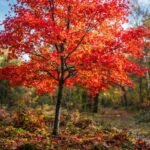 Amur Maple (Acer tataricum ginnala) care guideAcer tataricum ginnala
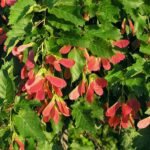 Tatar Maple (Acer tataricum) care guideAcer tataricum