
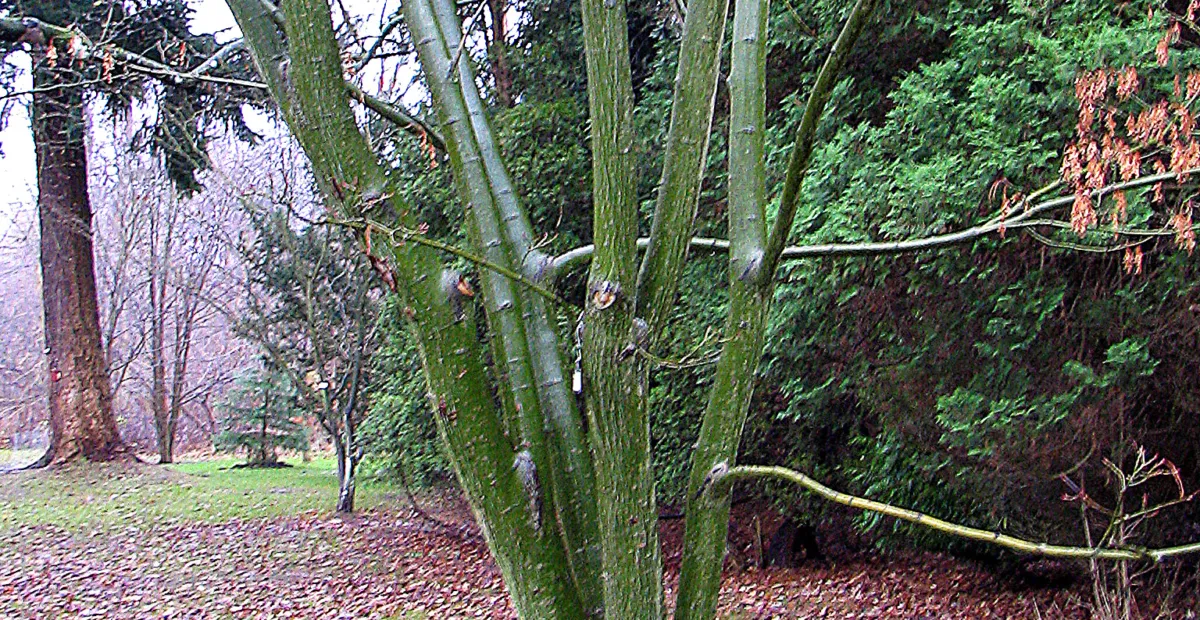
 Source:
 Red Snakebark Maple (Acer capillipes) short overview
Red Snakebark Maple is a distinctive deciduous tree from Japan, valued for olive-green young bark marked with narrow white stripes, red-tinged new leaves, and orange-red fall color. Its small greenish-white flowers appear in drooping racemes and are followed by paired winged fruits. In U.S. gardens it performs best in a sheltered, cool site with partial shade, consistent moisture, good drainage, and slightly acidic soil.
Taxonomic classification
Red Snakebark Maple (Acer capillipes) care guide
Light and placement
Choose bright partial shade, ideally with morning sun and protection from intense afternoon heat and drying wind. A north- or east-facing woodland edge is often suitable. In cool climates it can tolerate full sun if soil moisture is reliable. Scorched margins, premature leaf drop, or bleached foliage suggest excessive heat, sun, or drought; weak, elongated growth may indicate insufficient light.
Watering and humidity
Water deeply when the upper few inches of soil begin to dry, then allow excess water to drain away. Maintain even moisture during establishment and hot summer weather, but never keep the root zone saturated. Reduce irrigation after leaf fall and during cool wet periods, while preventing prolonged winter drought in containers. Average outdoor humidity is adequate.
Soil and growing medium
Use a moisture-retentive but freely draining loam amended with organic matter. Slightly acidic to neutral soil is preferred; avoid persistently waterlogged ground and strongly alkaline conditions, which may reduce vigor and contribute to nutrient problems. Mulch over the root zone without piling mulch against the trunk.
Feeding
Feed in early spring only if growth is weak or soil fertility is poor, using a balanced slow-release tree fertilizer at label rates. Compost or leaf mold can be used as a surface mulch. Avoid heavy nitrogen applications and stop routine feeding by midsummer so late growth can mature before winter.
Growth and habit
Usually develops a rounded to upright, often multistemmed structure with a relatively open crown. Growth is best in cool summers and evenly moist soil. Protect the trunk and shallow roots from mechanical injury, drought, reflected heat, and severe competition from turf.
Planting and repotting
Plant in fall or early spring while the tree is dormant. Set the root flare level with or slightly above the surrounding soil, water deeply, and mulch a broad root zone. Allow room for a small tree or multistemmed specimen to develop without crowding buildings or paving.
Container-grown trees can be shifted into a larger, sturdy container in early spring before full leaf expansion. Refresh compacted soil while disturbing roots as little as possible. Use a free-draining woody-plant mix, provide drainage holes, and do not keep the container standing in water.
Propagation and pruning
Propagation
Propagate from fresh seed, preferably after appropriate cold stratification, or by grafting selected material. Seed-grown plants may vary. Sow or stratify seed in autumn or provide a controlled cold period before spring sowing; grafting is generally best left to experienced propagators.
Pruning
Prune lightly in late winter or after leaf-out to remove dead, crossing, weak, or poorly placed branches. Preserve the natural multistemmed form and avoid unnecessary large cuts, especially on young trunks where the striped bark is a key ornamental feature.
Overwintering
In Zones 5–6, established trees generally overwinter outdoors. Protect young trees and container specimens with a deep, loose mulch layer over the root zone, keeping mulch away from the trunk. Shield containers from repeated freeze-thaw cycles by insulating them or moving them to an unheated sheltered location. Avoid warm indoor overwintering.
Uses
Use as a specimen tree, woodland-edge accent, courtyard tree, or large-container subject where summer heat is moderate. Its striped young bark, spring flowers, winged fruits, and fall color provide multi-season interest. It is not a culinary plant, and no medicinal use should be assumed.
Appearance
The most distinctive feature is the young olive-green to reddish bark marked by narrow pale vertical stripes, creating a snakebark pattern. Leaves are opposite, usually three-lobed, serrated, and may open reddish before becoming green. Slender red-tinged petioles, drooping flower racemes, paired samaras, and orange-red autumn foliage aid identification.
Flowering
Small greenish-white flowers are borne in slender, drooping racemes in spring, generally around April or May in much of the United States. They are followed by paired winged samaras. The flowers are ornamental at close range but are not showy like large-flowered garden plants.
Pollination and visitors
The spring flowers are reported as useful to bees and butterflies, although detailed species-level visitor records for this maple are limited. The plant also supports larvae of some Acer-feeding moths, including the Imperial Moth genus association reported for maples.
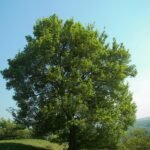
Acer capillipes photos
Click any photo for a larger view. Source, author and license are shown separately.
Diseases and pests
Diseases
Watch for Verticillium wilt, especially where soil drainage is poor or roots are stressed. Maintain good drainage, avoid wounding the trunk and roots, sanitize pruning tools, and remove badly affected material. Do not overwater or plant in compacted soil.
Pests
Potential pests include aphids, caterpillars, gall mites, and scale insects. Inspect new growth and undersides of leaves, encourage natural predators, and use targeted treatment only when damage is significant. Avoid drought stress, which can increase susceptibility to secondary problems.
Toxicity and pollen
Reliable species-specific toxicology information for Acer capillipes is limited. It is not generally listed as a major poisonous ornamental, but ingestion of plant material should still be discouraged. Prevent children and pets from chewing leaves, bark, seeds, or twigs and seek professional advice after substantial ingestion.
- Typical season
- Spring flowering period, generally April–May in the United States
- Pollination / pollen
- Insect-dispersed pollen released during spring flowering
As an insect-pollinated deciduous maple, it is not generally regarded as a major airborne-pollen source. Flowers can still release pollen locally during bloom, so highly sensitive people should avoid assuming zero exposure. Species-specific U.S. allergenicity studies are limited.
Native habitat
Native to temperate, mountainous forests of Honshu and Shikoku, Japan, where it occurs in cool woodland conditions. It is associated with well-drained soils and moderate moisture rather than permanently wet ground, and it generally benefits from shelter from harsh exposure.
Interesting fact
The species name capillipes refers to slender, hair-like stalks. Young stems show conspicuous pale striping that becomes less pronounced with age. The leaves may emerge reddish before maturing green and often turn orange-red in autumn. It is native to mountainous parts of Honshu and Shikoku, Japan.
Frequently asked questions (FAQ)
The most relevant questions about this plant, with short and direct answers.
🌱Quick care
What is Red Snakebark Maple?⌄
Red Snakebark Maple is the deciduous tree Acer capillipes, a Japanese maple valued for its striped olive-green bark, red new growth, and orange-red fall color. It typically develops a rounded, often multi-trunked form.
How fast does Acer capillipes grow?⌄
Acer capillipes has a moderate growth rate under suitable conditions. In cultivation, it may eventually reach roughly 30–40 feet tall, although mature size varies with climate, soil, and growing conditions.
Is Acer capillipes a good tree for a small yard?⌄
Acer capillipes can work in a spacious small-to-medium yard, but it is not a dwarf tree. Allow approximately 24–40 feet of planting space and choose a location where its mature height and spread will not conflict with buildings or utilities.
🌤️Environment and placement
Where should I plant Red Snakebark Maple?⌄
Plant Red Snakebark Maple in a sheltered location with partial shade, moist well-drained soil, and protection from drying winds. It performs especially well where summers are relatively cool.
Can Acer capillipes grow in full sun?⌄
Acer capillipes can tolerate full sun, particularly in cool climates, but partial shade is generally safer. Strong afternoon sun, heat, or drought can increase leaf scorch and stress.
What USDA hardiness zones are suitable for Acer capillipes?⌄
Acer capillipes is generally suitable for USDA Zones 5 and 6, with sheltered specimens sometimes growing in warmer Zone 7 locations. Local summer heat, winter exposure, and site conditions can affect performance.
What type of soil does Red Snakebark Maple need?⌄
Red Snakebark Maple prefers moist but well-drained loam that is slightly acidic to neutral. Avoid compacted or waterlogged soil, and improve drainage before planting if necessary.
How much space does Acer capillipes need?⌄
Plan for a mature tree roughly 30–40 feet tall and potentially 30–40 feet wide, depending on the site and pruning. Keep it well away from overhead lines, structures, and narrow planting beds.
💧Care and problems
How often should I water Acer capillipes?⌄
Water Acer capillipes regularly enough to keep the root zone consistently moist but never saturated. During dry weather, provide a deep watering when the upper few inches of soil begin to dry.
Does Red Snakebark Maple need mulch?⌄
A 2–3 inch layer of organic mulch can help conserve moisture and moderate soil temperature. Keep mulch a few inches away from the trunk to reduce the risk of bark and disease problems.
Why are the leaves on my Acer capillipes turning brown?⌄
Brown leaf edges or patches are commonly associated with drought, hot sun, drying wind, or root stress. Improve consistent watering and shelter, but also check for poor drainage, pests, or disease if symptoms continue.
What pests affect Red Snakebark Maple?⌄
Red Snakebark Maple may be affected by aphids, scale insects, caterpillars, gall mites, and other maple-feeding insects. Inspect new growth and leaf undersides, and address infestations early with an appropriately labeled treatment.
What diseases can affect Acer capillipes?⌄
Acer capillipes can be susceptible to problems including Verticillium wilt, anthracnose, cankers, powdery mildew, and bacterial leaf scorch. Good drainage, reduced drought stress, sanitation, and avoiding trunk or root injuries help limit problems.
🪴Planting and repotting
When is the best time to plant Red Snakebark Maple?⌄
Plant Red Snakebark Maple in fall after leaf drop or in early spring before active growth begins. Planting during mild, cool weather gives the roots time to establish before summer heat or winter extremes.
How do I plant Acer capillipes correctly?⌄
Dig a hole about twice as wide as the root ball and no deeper than the root flare, then backfill with the native soil. Set the tree at the same depth it grew in its container or nursery field and water thoroughly.
Can Acer capillipes be grown in a container?⌄
Acer capillipes is best grown in the ground because it becomes a medium-sized tree. A young plant can be kept temporarily in a large container, but it will require careful watering, root management, and winter protection.
✂️Propagation and pruning
How is Acer capillipes propagated?⌄
Acer capillipes is commonly propagated from seed or by grafting. Seed-grown plants may vary and can require a period of cold stratification, while grafting is generally used to reproduce selected forms.
Can Red Snakebark Maple be grown from cuttings?⌄
Cuttings may be possible but are not generally the most reliable propagation method for Acer capillipes. Seed or grafting is better documented, especially when dependable establishment or true-to-type plants are needed.
When should I prune Acer capillipes?⌄
Prune Acer capillipes during dormancy or in the appropriate mild-weather window for your region, removing dead, damaged, crossing, or poorly placed branches. Avoid unnecessary heavy pruning because the tree generally has an attractive natural form.
How do I prune Red Snakebark Maple?⌄
Use selective cuts to maintain the natural rounded or multi-trunked structure, remove competing leaders when necessary, and preserve the attractive barked stems. Do not remove large amounts of live canopy at once.
⚠️Toxicity and safety
Is Acer capillipes toxic to people or pets?⌄
Acer capillipes has no well-documented major toxicity, but ingestion of leaves, bark, seeds, or other plant material should still be avoided. Keep plant material away from children and pets and contact a medical or veterinary professional if significant ingestion occurs.
Is Red Snakebark Maple safe to plant near a home?⌄
Red Snakebark Maple can be planted near a home if adequate mature space is provided. Keep the trunk and canopy clear of foundations, roofs, overhead lines, and narrow access areas, and avoid sites where falling branches could cause a hazard.
🌸Flowering and special interest
Does Acer capillipes produce flowers?⌄
Yes, Acer capillipes produces small greenish-white flowers in drooping racemes in spring. The flowers are ornamental but relatively subtle compared with the tree’s bark, foliage, and fall color.
When does Red Snakebark Maple bloom?⌄
Red Snakebark Maple generally blooms in mid- to late spring, after or around leaf emergence depending on climate. Exact timing varies with weather, latitude, elevation, and the individual tree.
Does Acer capillipes produce seeds?⌄
Yes, Acer capillipes produces winged samara fruits after flowering, typically maturing later in the growing season. The samaras can add seasonal interest and may provide seed for propagation.
What does Red Snakebark Maple look like in fall?⌄
Red Snakebark Maple commonly develops yellow, orange, or red fall foliage. Color intensity depends on temperature, light, moisture, and the tree’s growing conditions.
Similar plants
 Red maple (Acer rubrum) care guideAcer rubrum
 Silver maple (Acer saccharinum) care guideAcer saccharinum
 Tatar Maple (Acer tataricum) care guideAcer tataricum
 Acer palmatum care guideAcer palmatum
 Sugar maple (Acer saccharum) care guideAcer saccharum
 Field maple (Acer campestre) care guideAcer campestre