
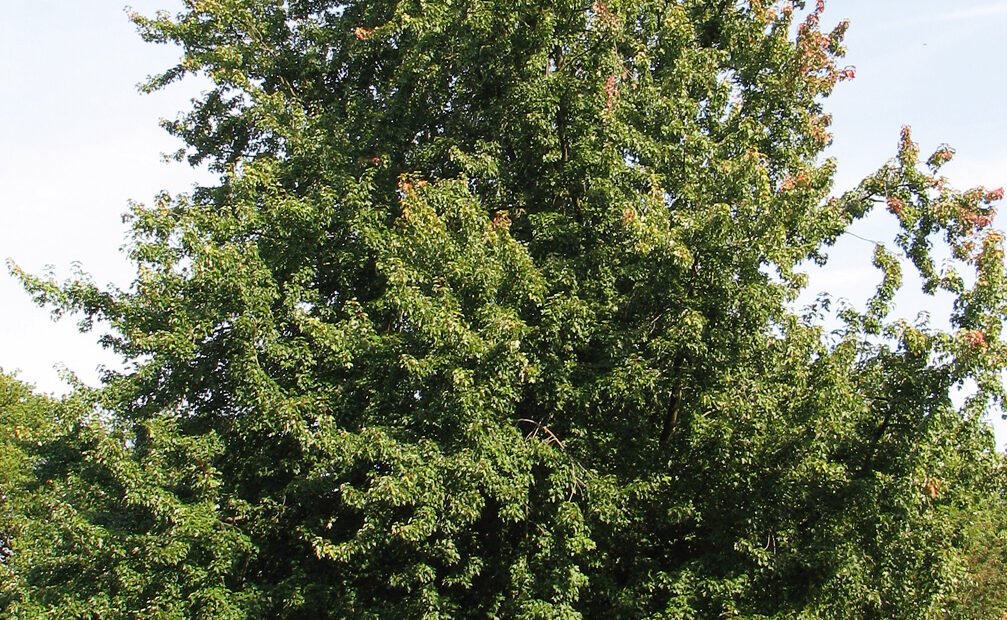
Silver maple (Acer saccharinum) short overview
Silver maple is a fast-growing, deciduous North American tree valued for its deeply lobed leaves, silvery-white leaf undersides, early spring flowers, and paired winged fruits. It is naturally adapted to river floodplains, lake shores, swamps, and other moist habitats. The species tolerates wet ground and urban conditions, but its brittle wood, vigorous roots, and large mature size make careful placement essential, especially near buildings, pavement, and utility lines.
Taxonomic classification
Silver maple (Acer saccharinum) care guide
Light and placement
Plant in full sun for the strongest crown and best growth, or use partial shade where afternoon heat is intense. An open eastern, southern, or western exposure is suitable if the root zone stays moist. Sparse growth and smaller leaves suggest inadequate light; leaf scorch, premature browning, or drought stress indicate excessive heat combined with insufficient soil moisture rather than simply too much light.
Watering and humidity
Water deeply and slowly during establishment, keeping the root zone evenly moist but not permanently waterlogged. Once established, the tree handles wet sites well but has only fair drought resistance; irrigate during prolonged summer heat or drought. Apply mulch over the root zone without piling it against the trunk. Extra humidity is generally unnecessary in the landscape.
Soil and growing medium
Use deep, moisture-retentive soil that still drains enough to prevent stagnant conditions around the root collar. Loam, sandy loam, and many alluvial soils are suitable; compacted or heavy clay can restrict roots and worsen structural problems. Avoid strongly alkaline, saline, or saline-sodic sites, where iron and manganese chlorosis and poor growth are more likely.
Feeding
Do not routinely fertilize a healthy, established tree in fertile soil. If growth is weak, use a soil test before applying nutrients, then add compost or a slow-release, balanced fertilizer in early spring according to the test recommendation. Avoid high-nitrogen feeding during drought, late summer, or just before winter, because it can encourage soft growth and increase stress.
Growth and habit
Silver maple grows rapidly when moisture is adequate and develops a broad, spreading crown with several major limbs. Branches may droop and form weak unions, while surface roots can become prominent in compacted or shallow soil. Its rapid growth provides shade quickly, but regular structural inspection is worthwhile, particularly after ice, wind, or heavy snow.
Planting and repotting
Plant a container or balled-and-burlapped tree during cool weather, preferably in spring or fall. Set the root flare at grade, remove circling roots where practical, and water deeply after planting. Maintain a broad mulch ring while keeping mulch away from the trunk. Choose a spacious site because the canopy, roots, and weak branch structure are poorly suited to confined strips or locations beneath frequent ice loading.
Not a practical long-term container plant because of its eventual size, vigorous roots, and high water demand. If grown temporarily in a nursery container, shift to a larger container before roots circle densely, use a structurally stable mix, and transplant promptly into the landscape. Avoid keeping young trees root-bound.
Propagation and pruning
Propagation
Propagate the species from fresh seed, ideally sown soon after samaras mature because viability declines with drying. Cultivars are commonly propagated by cuttings. Seedlings are genetically variable and may differ in habit and structure, so named selections should be produced vegetatively. Protect young seedlings from drying and competition during establishment.
Pruning
Prune in late winter or during the dormant season, removing dead, damaged, crossing, or poorly attached branches. Begin structural training while the tree is young, selecting well-spaced scaffold limbs and reducing included bark risks. Avoid topping. Because mature branches can fail in storms, have large or high cuts assessed by a qualified arborist.
Overwintering
Established trees are highly cold hardy across much of the United States and generally need no winter protection. Water young trees before the ground freezes if autumn is dry, protect trunks from animal damage, and avoid heavy pruning or late nitrogen applications that stimulate tender growth. Inspect for broken limbs after ice or wet snow.
Uses
Useful as a large shade or specimen tree on spacious properties, in restoration plantings, wetland buffers, floodplain landscapes, and naturalized woodland edges. It can provide nesting structure, browse, seeds, and host-plant value for wildlife. Although its sap has historical ethnobotanical uses, this species is not generally selected for commercial syrup production because sugar maple is more productive and its wood and structure are comparatively weak.
Appearance
Leaves are opposite, simple, and deeply five-lobed, with green upper surfaces and conspicuously silvery undersides. Young twigs and buds may be reddish; mature bark becomes gray and furrowed. The crown is broad and often irregular, with pendulous branch tips. Paired samaras mature quickly, and the leaf display in moving air is especially distinctive because the pale undersides flash into view.
Flowering
Flowers appear very early in spring, commonly from February through April in much of the United States, with timing varying by latitude and weather. The flowers are small and lack showy petals, consisting mainly of reproductive structures clustered near the branches. Fruits develop rapidly after flowering as paired, winged samaras.
Pollination and visitors
Silver maple is primarily wind-pollinated rather than dependent on animal visitors. Its early flowers can contribute to the seasonal food web and wildlife habitat, and the species is recognized as a host and resource plant in native-plant references, but it should not be presented as a flower whose pollination depends on bees, butterflies, or other animal visitors.
Acer saccharinum photos
Click any photo for a larger view. Source, author and license are shown separately.
Diseases and pests
Diseases
Anthracnose, tar spot, leaf spots, leaf scorch, and Verticillium wilt may occur. Cool, wet spring weather favors anthracnose; symptoms include angular brown lesions and premature leaf loss, often with limited long-term effect on healthy trees. Improve air circulation, reduce stress, rake persistent diseased foliage, and avoid unnecessary fungicides. Wilt symptoms or major branch decline warrant professional diagnosis.
Pests
Common problems include leaf-stalk borers, petiole borers, gall mites, aphids, scales, and wood borers. Leaf galls and red erineum patches are usually cosmetic and rarely justify treatment. Prevent severe infestations by maintaining moisture, avoiding trunk injury, and correcting site stress. Investigate dieback, galleries, or repeated borer activity because weak growth can increase susceptibility.
Related diseases and pests
Only Plant Doctor profiles whose host data indicate this plant may be affected are shown here.
 DiseasePhytophthora cactorum crown, collar, root and fruit rotPhytophthora cactorum
 Environmental stressIron Deficiency Chlorosis
 Environmental stressManganese deficiency
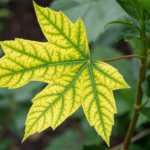 Environmental stressLime-Induced Chlorosis
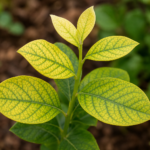 Environmental stressHigh-pH-induced iron deficiency
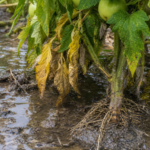 Environmental stressFlooding injury
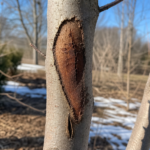 Environmental stressNapégés (sunscald)
 Environmental stressSalt stress
Toxicity and pollen
Authoritative veterinary and poison-control evidence specific to silver maple is limited and does not support confidently assigning a blanket pet-safe or toxic label. Do not allow children or animals to chew large amounts of leaves, bark, twigs, seeds, or sap. Prevent access to treated plant material and contact a veterinarian or poison center if substantial ingestion or concerning symptoms occur.
- Typical season
- Late winter to spring, commonly February–April
- Pollination / pollen
- Light, wind-dispersed tree pollen
Silver maple pollen is released early in the season and is dispersed by wind. Maple pollen is represented in U.S. allergy testing and commercial allergen products, so sensitive people may react even though individual exposure varies by location, weather, and pollen load. Keep windows closed during high-pollen periods, shower after outdoor exposure, and use locally recommended allergy guidance.
Native habitat
Native populations occur in river and stream floodplains, wet forests, lake margins, swamps, and other periodically saturated habitats. The species favors fertile alluvial soils and tolerates flooding better than many upland maples. It is widespread across eastern and central North America, with its ecology closely tied to moisture availability, disturbance, and changing floodplain conditions.
Interesting fact
Silver maple is among the earliest maples to flower in North America. Its paired samaras mature and disperse quickly after flowering. The silvery leaf undersides are especially visible when wind turns the foliage. Buds can break very early in spring, and the tree is a frequent component of floodplain forests. Several historic names, including soft maple and water maple, reflect its wood or habitat.
Frequently asked questions (FAQ)
The most relevant questions about this plant, with short and direct answers.
🌱Quick care
What is silver maple (Acer saccharinum)?⌄
Silver maple is a fast-growing, deciduous tree native to eastern and central North America. It belongs to the maple genus, Acer, and the Sapindaceae family.
How much sun does silver maple need?⌄
Silver maple grows best in full sun but also tolerates partial shade. Full sun generally produces stronger growth and a broader crown.
How often should you water a silver maple?⌄
Water silver maple regularly when establishing it, keeping the soil consistently moist but not permanently waterlogged. Mature trees usually need supplemental water only during extended hot or dry periods.
What USDA hardiness zones are suitable for silver maple?⌄
Silver maple is generally hardy in USDA Zones 3 through 9. Local performance still depends on soil moisture, summer heat, exposure, and cultivar.
How fast does silver maple grow?⌄
Silver maple is one of the faster-growing native maple trees, especially in deep, moist soil. Its rapid growth can produce a large tree sooner than many other landscape species.
🌤️Environment and placement
Where should I plant a silver maple?⌄
Plant silver maple in a spacious location with full sun to partial shade and deep, moist, fertile soil. Stream edges, rain gardens, and other areas with reliable moisture suit it better than cramped urban sites.
Can silver maple grow in wet soil?⌄
Yes, silver maple tolerates moist to wet soil and naturally occurs on floodplains and near streams. It should not be planted where drainage is permanently stagnant or where its mature roots and canopy cannot spread.
Can silver maple tolerate dry soil?⌄
Established silver maple can tolerate short periods of dry soil, but it prefers dependable moisture and may suffer during prolonged drought. Mulch and deep watering help reduce drought stress.
How much space does a silver maple need?⌄
Allow substantial space because silver maple commonly reaches about 50–80 feet tall and 35–70 feet wide, with larger trees possible. Keep it well away from buildings, overhead wires, driveways, and underground utilities.
Are silver maple roots invasive?⌄
Silver maple has a shallow, vigorous root system that can lift paving, interfere with turf, and compete strongly for water. The roots are not invasive in the legal sense, but the tree is a poor choice for confined planting spaces.
Is silver maple a good street tree?⌄
Silver maple can provide rapid shade, but it is often unsuitable for narrow streetscapes because of its large size, shallow roots, weakly attached branches, and susceptibility to storm damage. Choose a more structurally durable species for restricted sites.
💧Care and problems
How do you care for a silver maple tree?⌄
Provide adequate moisture, maintain a mulch ring, protect the trunk from lawn equipment, and inspect the tree regularly for dead or weak branches. Structural pruning while young is especially important because mature trees can develop multiple trunks and brittle limbs.
Why is my silver maple losing branches?⌄
Silver maple branches may break because the wood is relatively soft and the tree often forms weak branch unions or multiple trunks. Storm damage, decay, drought stress, and poor pruning can increase breakage.
Should I mulch around a silver maple?⌄
Yes, apply a 2–4-inch layer of organic mulch over the root zone, keeping it several inches away from the trunk. Mulch helps conserve moisture and moderate soil temperature without causing trunk rot when applied correctly.
What common problems affect silver maple trees?⌄
Common problems include storm-related branch breakage, trunk and branch decay, shallow-root competition, drought stress, and occasional insect or fungal damage. Correct planting, watering, and early structural pruning reduce many of these risks.
Can silver maple tolerate urban conditions?⌄
Silver maple tolerates some urban conditions, including occasional poor soil and wet sites, but it performs poorly when severely confined, compacted, drought-prone, or exposed to repeated mechanical root damage. A large, uncompacted planting area is preferable.
🪴Planting and repotting
When is the best time to plant a silver maple?⌄
Plant silver maple during the dormant season, typically in fall after leaf drop or in early spring before new growth begins. Avoid planting when the ground is frozen, waterlogged, or excessively dry.
What soil is best for silver maple?⌄
Silver maple prefers moist, fertile loam with reliable drainage, but it tolerates a wider range of soils than many maples. Improve compacted soil before planting, and avoid sites that remain stagnant and airless.
Can silver maple be grown in a container?⌄
Silver maple is not a suitable long-term container tree because it becomes large and develops an extensive root system. A young plant may be held temporarily in a large nursery container, but it should ultimately be planted in the landscape.
✂️Propagation and pruning
How do you propagate silver maple from seed?⌄
Sow fresh silver maple samaras soon after they mature in spring because the seeds lose viability when allowed to dry. Place them in moist growing medium and provide light, with transplanting after seedlings develop a strong root system.
Can silver maple grow from cuttings?⌄
Silver maple can be propagated from cuttings, layering, or grafting, but successful cutting propagation depends on timing and technique. Seed propagation is often simpler for the species, while named selections are usually propagated vegetatively.
When should silver maple be pruned?⌄
Prune silver maple during late winter or the dormant season, removing dead, damaged, crossing, or poorly attached branches. Begin structural training when the tree is young rather than making large corrective cuts on an older tree.
⚠️Toxicity and safety
Is silver maple toxic to people or pets?⌄
There is no reliable broad safety classification establishing silver maple as generally toxic to people or pets. Prevent pets and children from chewing large quantities of plant material, and consult a veterinarian or poison-control service after a suspected ingestion.
Is silver maple wood safe to burn?⌄
Silver maple wood can be used as firewood after it is properly seasoned, although it is relatively soft and produces less heat per cord than dense hardwoods. Do not burn painted, treated, or contaminated wood.
🌸Flowering and special interest
When does silver maple bloom?⌄
Silver maple usually blooms very early, from late winter through spring, often between February and April depending on latitude and weather. The small greenish-yellow flowers appear before or as the leaves emerge.
Does silver maple produce seeds?⌄
Yes, silver maple produces abundant paired winged seeds called samaras, which commonly mature and disperse from spring into early summer. Seedlings may appear wherever moist soil and sufficient light are available.
Does silver maple make good maple syrup?⌄
Silver maple sap can be used for syrup, but its sugar concentration is generally lower than that of sugar maple, so more sap is typically needed. It is not usually the first choice for home syrup production.
Similar plants
 Sycamore maple (Acer pseudoplatanus) care guideAcer pseudoplatanus
 Paperbark Maple (Acer griseum) care guideAcer griseum
 Downy Japanese Maple (Acer japonicum) care guideAcer japonicum
 Amur Maple (Acer tataricum ginnala) care guideAcer tataricum ginnala
 Acer palmatum care guideAcer palmatum
 Tatar Maple (Acer tataricum) care guideAcer tataricum