
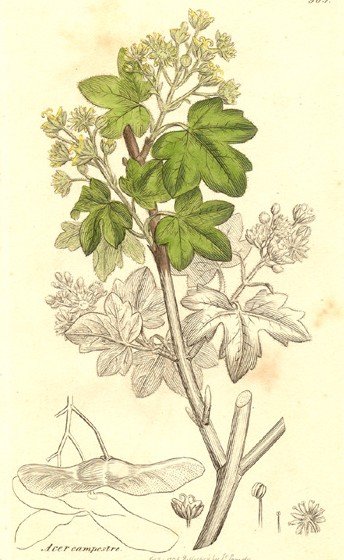
Field maple (Acer campestre) short overview
Field maple is a durable, medium-sized deciduous tree with a dense, rounded crown and small five-lobed leaves that turn yellow to orange-red in fall. Its greenish spring flowers are modest but provide an early nectar and pollen resource for insects. Native across much of Europe and western Asia, it tolerates clay, chalk, compaction, dry periods, and urban pollution, making it useful for hedges, streetscapes, woodland edges, and wildlife-focused gardens.
Taxonomic classification
Field maple (Acer campestre) care guide
Light and placement
Grow in full sun for the densest crown and best fall color, or partial shade where summers are hot. An east-, west-, or south-facing exposure is generally suitable if soil moisture is adequate. Sparse growth and smaller leaves may indicate excessive shade; scorch, premature leaf drop, and bleached foliage can indicate heat, drought, or reflected light stress.
Watering and humidity
Water deeply and slowly when the upper few inches of soil begin to dry, especially during the first two or three growing seasons. Once established, the tree tolerates occasional dry periods, but prolonged drought can reduce vigor and increase pest stress. Water at the soil line and keep mulch away from the trunk; extra humidity is not required.
Soil and growing medium
Use fertile, well-drained loam, clay, sand, or chalky soil. The species tolerates a broad pH range, approximately 5.0–8.0, but avoid persistently waterlogged ground. Improve drainage rather than heavily amending the planting hole, and mulch the surface without covering the root flare.
Feeding
Field maple usually needs no routine heavy fertilization once established. In poor soil, spread a thin layer of compost or apply a slow-release balanced tree fertilizer in early spring according to the label. Do not fertilize drought-stressed, newly planted, or late-season trees, since soft late growth can be more vulnerable to winter injury.
Growth and habit
This species forms a compact, dense, rounded crown and can grow as a multi-stemmed shrub or small-to-medium tree. It is slower growing than many landscape maples and responds well to formative pruning, hedging, coppicing, and clearance pruning beneath the crown. Establishment is easier when roots are kept evenly moist during the first growing seasons.
Planting and repotting
Plant during dormancy, from fall after leaf drop through early spring, whenever the soil is workable. Set the root flare level with or slightly above the surrounding soil, backfill with native soil, water deeply, and maintain a mulch ring. Allow about 25–35 feet for an unpruned specimen; closer spacing is possible for a managed hedge.
Usually grown in the ground rather than containers. If container-grown, transplant while dormant into a large, sturdy pot with excellent drainage; refresh the outer root zone every few years and avoid allowing the root ball to become permanently dry.
Propagation and pruning
Propagation
Propagate primarily from seed. Fresh samaras can be sown in fall for natural stratification; stored seed commonly needs cold, moist stratification. Selected cultivars may be propagated by cuttings or grafting, but these methods are less reliable for the species and require specialized technique.
Pruning
Prune during dormancy for structural work, removing crossing, weak, damaged, or poorly attached branches. It tolerates regular hedge trimming and can be reduced substantially when managed as a hedge. Avoid indiscriminate topping; retain a natural framework and make cuts just outside the branch collar.
Overwintering
Field maple is suitable for cold-winter landscapes within its supported hardiness range. Newly planted trees benefit from a 2–3 inch mulch layer over the root zone, kept away from the trunk. Protect young trunks from rodent injury and sunscald where relevant, but do not wrap branches tightly or keep the soil saturated in winter.
Uses
Useful as a specimen, street tree, hedge, screen, woodland-edge planting, or pollinator-garden component. Its tolerance of pruning, compaction, dry periods, and air pollution supports urban use. The dense crown provides shade and cover for wildlife. Do not present the plant as a food or medicinal species without separate authoritative confirmation.
Appearance
Leaves are opposite, simple, and usually five-lobed with blunt lobes, giving the tree a distinctive compact maple texture. Young twigs may show corky ridges, while mature bark is gray-brown and shallowly fissured. The crown is dense and rounded, and paired samaras develop after the inconspicuous spring flowers.
Flowering
Small, greenish-yellow flowers appear with or just before the expanding leaves in spring. They are borne in upright clusters and are not showy, but they produce nectar and pollen. Flowers are followed by paired winged samaras that mature in fall.
Pollination and visitors
Spring flowers provide nectar and pollen for insect visitors, including bees and hoverflies. Maples can help fill an early-season forage gap, although a single tree should be combined with other plants flowering before and after it for more continuous support.
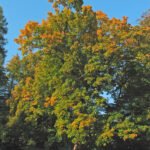
Acer campestre photos
Click any photo for a larger view. Source, author and license are shown separately.
Diseases and pests
Diseases
Generally resilient, but watch for verticillium wilt, anthracnose, tar spot, cankers, and root problems in poorly drained soil. Reduce stress with correct planting depth, good drainage, adequate establishment watering, and sanitation of heavily infected fallen leaves. Avoid unnecessary fungicide use.
Pests
Potential pests include aphids, scale insects, maple bladder or erineum mites, leafhoppers, and wood-boring insects in stressed trees. Inspect new growth and bark, encourage beneficial insects, water during prolonged drought, and avoid broad-spectrum insecticides during bloom. Treat only confirmed, consequential infestations.
Related diseases and pests
Only Plant Doctor profiles whose host data indicate this plant may be affected are shown here.
 DiseasePhytophthora cactorum crown, collar, root and fruit rotPhytophthora cactorum
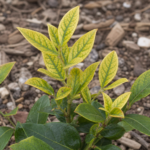 Environmental stressIron Deficiency Chlorosis
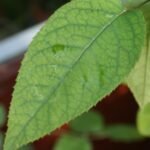 Environmental stressManganese deficiency
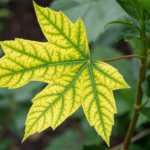 Environmental stressLime-Induced Chlorosis
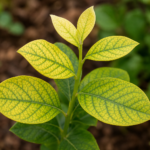 Environmental stressHigh-pH-induced iron deficiency
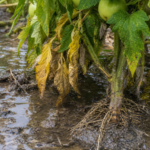 Environmental stressFlooding injury
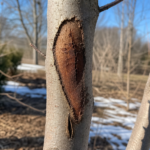 Environmental stressNapégés (sunscald)
 Environmental stressSalt stress
Toxicity and pollen
No reliable species-specific evidence was found supporting a recognized toxic effect from ordinary contact or incidental exposure to field maple. Do not assume that any maple part is edible; prevent children and pets from chewing large quantities of unfamiliar plant material and seek professional advice after an ingestion.
- Typical season
- Spring, typically April to May in much of the United States
- Pollination / pollen
- Insect-carried, relatively localized spring pollen
Field maple releases pollen during spring flowering, but reliable species-specific clinical allergy data are limited. The flowers are insect-pollinated, so airborne pollen exposure is generally less direct than for strongly wind-pollinated trees, but sensitive individuals may still react to pollen or plant debris.
Native habitat
Field maple is native across much of Europe, extending into western Asia and North Africa. It occurs in deciduous and mixed woodlands, hedgerows, field margins, woodland edges, and calcareous or clay-rich soils, from lowlands into upland areas. It tolerates seasonal dryness and urban conditions when drainage is adequate.
Interesting fact
The species can be managed as a hedge because it responds well to hard pruning. Its paired samaras usually have nearly opposite wings, a useful identification feature. It tolerates clay, chalk, compaction, dry periods, and urban air pollution better than many ornamental maples. Mature specimens can become substantially larger than the traditional small hedgerow form suggests.
Frequently asked questions (FAQ)
The most relevant questions about this plant, with short and direct answers.
🌱Quick care
What is Acer campestre commonly called in the United States?⌄
Acer campestre is commonly called field maple. It is also known in U.S. horticultural references as hedge maple, but field maple is the requested local common name.
What kind of plant is field maple?⌄
Field maple is a deciduous small to medium-sized tree or large, multi-stemmed shrub in the maple genus, Acer, and the soapberry family, Sapindaceae.
How big does field maple get?⌄
Field maple commonly grows about 25 to 35 feet tall and wide in cultivation. Its final size varies with the cultivar, climate, soil, and pruning.
🌤️Environment and placement
Is field maple hardy in the United States?⌄
Field maple is generally cold hardy in USDA Zones 5 through 8. In colder or hotter parts of its potential range, site protection and adequate moisture may improve performance.
Does field maple grow in full sun or shade?⌄
Field maple grows best in full sun but also tolerates partial shade. More sunlight usually encourages a denser crown and stronger fall color.
What soil is best for field maple?⌄
Field maple grows well in moist but well-drained loam and can adapt to clay, sand, and chalky soils. Avoid sites that remain waterlogged for long periods.
Is field maple suitable for urban or roadside planting?⌄
Field maple generally tolerates urban conditions, compacted soils, and some drought, making it useful for streets, lawns, and other developed sites. Adequate rooting space is still important for long-term health.
Is field maple a good replacement for Norway maple?⌄
Field maple can be a smaller, more manageable alternative to Norway maple for some landscapes, especially where a dense crown or hedge is desired. It is not native to the United States, so regionally native trees may be preferable near natural areas.
💧Care and problems
Is field maple drought tolerant?⌄
Established field maple is moderately drought tolerant, but it needs regular watering during its first growing seasons and during prolonged heat or drought.
How often should I water a field maple?⌄
Water a young field maple deeply when the upper soil begins to dry, typically once or twice weekly during hot, dry weather. Established trees usually need supplemental water only during extended drought.
What pests affect field maple?⌄
Field maple may be affected by aphids, scale insects, borers, caterpillars, and mites. Inspect stressed trees regularly and address watering, drainage, and pruning problems before using insecticides.
What diseases affect field maple?⌄
Possible diseases include leaf spots, tar spot, verticillium wilt, cankers, and root rots. Good drainage, proper watering, and pruning during dry conditions can reduce stress and disease risk.
Why are the leaves on my field maple turning brown?⌄
Brown leaf edges can result from drought, heat, root damage, salt exposure, or disease. Check soil moisture and drainage first, and avoid frequent shallow watering that keeps the trunk and surface soil wet.
🪴Planting and repotting
Can field maple tolerate clay soil?⌄
Yes, field maple can tolerate heavy clay soil better than many ornamental maples. Improve drainage where possible and avoid planting it in persistently saturated ground.
When is the best time to plant field maple?⌄
Plant field maple in fall or early spring when the tree is dormant and the soil is workable. In areas with hot summers, fall planting gives roots more time to establish before heat arrives.
How far apart should field maple trees be planted?⌄
Space standard field maple trees roughly 25 to 35 feet apart when allowing for their mature spread. Hedge-forming plants can be placed closer together, depending on the desired density and cultivar.
How do I plant a field maple tree?⌄
Plant field maple with the root flare level with or slightly above the surrounding soil, backfill with native soil, and water thoroughly. Apply a 2- to 3-inch mulch layer without piling mulch against the trunk.
Can field maple be planted near a house?⌄
Field maple can be planted near a house if there is enough room for its mature canopy and roots. Keep it away from foundations, overhead utilities, and narrow planting strips, and account for its potential spread of about 25 to 35 feet.
Can field maple grow in a container?⌄
A young field maple can be grown temporarily in a large container, but it is ultimately a tree and will outgrow most pots. Container plants need excellent drainage, regular watering, root monitoring, and protection from extreme winter temperatures.
✂️Propagation and pruning
Can field maple be grown as a hedge?⌄
Yes, field maple responds well to pruning and can be trained as a dense hedge or screen. Begin structural training while the plant is young and avoid removing excessive growth at one time.
When should I prune field maple?⌄
Prune field maple during winter dormancy or in mid- to late summer after the strongest spring sap flow has passed. Remove dead, damaged, crossing, or weakly attached branches first.
How do I prune field maple into a tree?⌄
To develop a single-trunk tree, select one strong central leader and gradually remove competing stems and low branches. Make small cuts over several years rather than removing many large limbs at once.
Can field maple be propagated from seed?⌄
Yes, field maple can be propagated from its winged seeds, although germination may be improved by a period of cold, moist stratification. Seed-grown plants may not reproduce the exact traits of a named cultivar.
Can field maple be propagated from cuttings?⌄
Field maple is not usually propagated as easily from ordinary home-garden cuttings as some shrubs. Named cultivars are more reliably produced by specialized nursery grafting or other professional propagation methods.
Can field maple be used for bonsai?⌄
Yes, field maple is suitable for bonsai because it responds to pruning and develops small, lobed leaves under bonsai culture. It needs strong seasonal light, careful watering, and winter dormancy appropriate to the cultivar and climate.
⚠️Toxicity and safety
Is field maple invasive in the United States?⌄
Field maple is not generally treated as a major invasive tree across the United States, but it has been reported as naturalized or potentially invasive in some local areas. Check your state or county plant lists before planting near natural habitats.
Is field maple toxic to dogs, cats, or people?⌄
No recognized species-specific toxicity is firmly established for field maple, but the plant should not be eaten. Keep pets and children from chewing leaves, bark, seeds, or other plant material, and contact a medical or veterinary professional after suspected ingestion.
🌸Flowering and special interest
Does field maple have attractive fall color?⌄
Yes, field maple leaves can turn yellow, orange, or red in fall, although the exact color depends on the cultivar and growing conditions. Bright light and cool autumn weather often improve color.
When does field maple flower?⌄
Field maple usually flowers in spring, commonly around April to May in temperate climates. The flowers are small and yellowish green rather than highly ornamental.
Are field maple flowers useful to pollinators?⌄
The small spring flowers can provide a nectar and pollen resource for insects, although field maple is generally grown for its foliage, form, and adaptability rather than for showy flowers.
Does field maple produce helicopter seeds?⌄
Yes, field maple produces paired winged fruits called samaras, commonly known as helicopter seeds. They mature after flowering and may self-sow in suitable conditions.
Similar plants
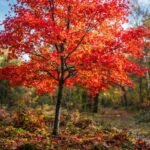 Amur Maple (Acer tataricum ginnala) care guideAcer tataricum ginnala
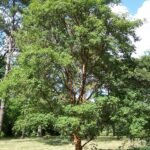 Paperbark Maple (Acer griseum) care guideAcer griseum
 Silver maple (Acer saccharinum) care guideAcer saccharinum
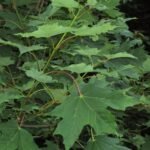 Sugar maple (Acer saccharum) care guideAcer saccharum
 He Norway maple (Acer platanoides) care guideAcer platanoides
 Downy Japanese Maple (Acer japonicum) care guideAcer japonicum