
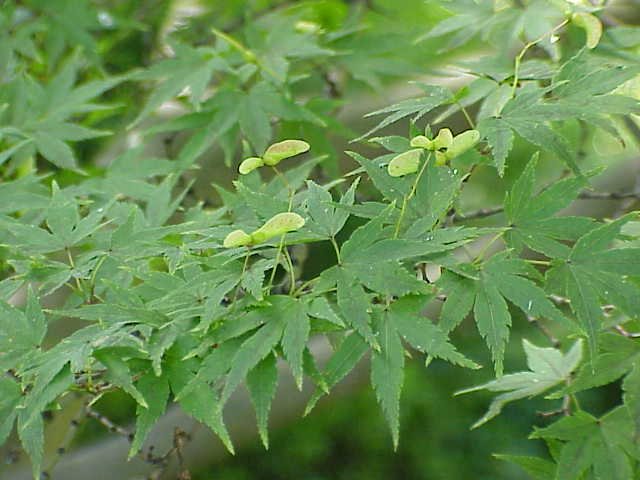
Acer palmatum short overview
Acer palmatum is a small, deciduous maple valued for its hand-shaped leaves, elegant branching, and strong seasonal display. Depending on the seedling or cultivar, foliage may emerge green, bronze, red, or purple before developing yellow, orange, crimson, or burgundy autumn color. It prefers evenly moist, well-drained soil and filtered or partial afternoon shade, especially where summers are hot or windy. The species is widely used as a specimen, woodland accent, patio tree, bonsai subject, or container plant.
Taxonomic classification
Acer palmatum care guide
Light and placement
Grow in full sun to partial shade, with morning sun and afternoon shade preferred in hot-summer areas. Dappled light beneath open trees is especially suitable. Too much sun, reflected heat, wind, or drought can cause brown leaf margins and scorch; too little light may produce weaker growth and less saturated foliage color. Protect young plants from late frosts and drying exposure.
Watering and humidity
Water deeply when the upper few inches of soil begin to dry, then allow excess water to drain. Keep the root zone consistently moist during establishment and during summer heat, but never saturated. Apply mulch over the root area to reduce evaporation. Container plants need more frequent checks, while watering should be reduced after leaf fall without allowing roots to dry completely.
Soil and growing medium
Use fertile, well-drained loam amended with organic matter, while retaining enough moisture for steady growth. Slightly acidic to neutral soil is suitable. Avoid compacted ground, chronically waterlogged sites, and highly alkaline conditions that can contribute to nutrient problems. Mulch the root zone, but keep mulch away from the trunk.
Feeding
If soil is fertile and growth is satisfactory, routine fertilizer may be unnecessary. When needed, apply a slow-release, balanced fertilizer in early spring as growth begins. Avoid heavy nitrogen, late-season feeding, and fertilizing drought-stressed or newly transplanted trees until they are established.
Growth and habit
Growth is generally slow to moderate, with a dense, layered crown and spreading branches. Individual plants may be upright, rounded, multi-stemmed, or cascading. The species responds poorly to repeated drought and exposure, so maintenance is mainly about preserving steady root-zone moisture and an appropriate canopy position.
Planting and repotting
Plant in early spring or fall, setting the root flare level with or slightly above the surrounding soil. Water deeply after planting and maintain an even moisture supply during the first two growing seasons. Allow adequate room for the selected form, and avoid exposed sites with strong drying winds.
Repot container-grown plants in early spring just before bud break, moving only one pot size larger. Preserve the root ball, remove circling roots selectively, and use a free-draining, moisture-retentive mix. Large specimens are best root-pruned and transplanted during dormancy by experienced growers.
Propagation and pruning
Propagation
Grow from seed for genetic variation or rootstock. Seedlings do not reliably reproduce named-cultivar traits. Named cultivars are commonly grafted onto Acer palmatum seedlings; selected cuttings may root, but success is variable and usually requires mist and strong rooting support.
Pruning
Prune sparingly during dormancy or just after the spring flush has hardened. Remove dead, damaged, crossing, or poorly placed branches and preserve the natural layered structure. Avoid topping, large cuts, and heavy pruning during hot weather, because wounds and exposed foliage can increase stress and scorch.
Overwintering
Plants in Zones 5–8 generally overwinter outdoors. Protect young trees and containers from drying winter wind, abrupt temperature swings, and repeated freeze-thaw cycles. Mulch the root zone after the ground cools, keep containers insulated, and avoid indoor overwintering in warm rooms, which can disrupt dormancy.
Uses
Use as a specimen, accent, woodland-edge tree, patio plant, container subject, bonsai subject, or focal plant in an Asian-style garden. Its principal value is ornamental foliage and architecture rather than food or medicine. Small songbirds may use the plant, and maple flowers can contribute seasonal floral resources.
Appearance
Leaves are opposite, simple, and palmately divided, usually with five to nine toothed lobes. The foliage may be green, bronze, red, or purple and often develops vivid fall color. Slender young twigs can be green, red, or glaucous. The trunk and branches develop a refined, smooth-textured appearance, while the crown may be upright, rounded, spreading, or weeping.
Flowering
Small flowers appear in branched clusters in spring, often as the leaves emerge. Flower color varies from greenish to reddish or purplish among plants and cultivars. The flowers are followed by paired winged samaras that mature later in the growing season.
Pollination and visitors
Spring flowers provide nectar and pollen resources for insects, including bees and other small flower visitors. The species is also associated with herbivorous moth larvae in North America. Its pollinator value is seasonal and should be combined with other plants that flower before and after maple bloom.
Acer palmatum photos
Click any photo for a larger view. Source, author and license are shown separately.
Diseases and pests
Diseases
Leaf scorch is common under drought, hot reflected light, or drying wind. Anthracnose, Verticillium wilt, tar spot, and other fungal problems may occur, especially under stress or poor air circulation. Reduce stress, water at the soil line, remove badly affected debris, and avoid unnecessary pruning wounds.
Pests
Watch for aphids, scale, leafhoppers, leafrollers, and caterpillars. Inspect new growth and leaf undersides, encourage natural predators, and use targeted horticultural oil or insecticidal soap only when needed and according to the product label. Avoid broad-spectrum sprays during bloom.
Related diseases and pests
Only Plant Doctor profiles whose host data indicate this plant may be affected are shown here.
 DiseasePhytophthora cactorum crown, collar, root and fruit rotPhytophthora cactorum
 Environmental stressIron Deficiency Chlorosis
 Environmental stressManganese deficiency
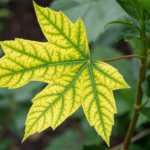 Environmental stressLime-Induced Chlorosis
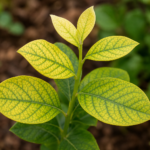 Environmental stressHigh-pH-induced iron deficiency
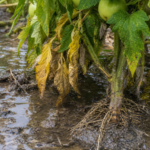 Environmental stressFlooding injury
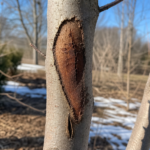 Environmental stressNapégés (sunscald)
 Environmental stressSalt stress
Toxicity and pollen
No well-supported evidence was found identifying Acer palmatum as a major human or companion-animal poison. As with any plant material, ingestion can still cause gastrointestinal upset or choking, and ornamental plants may have treatments or contaminants. Do not encourage pets or children to chew the foliage, twigs, or seeds.
- Typical season
- Late winter to spring in the United States, with local timing varying by climate
- Pollination / pollen
- Insect-associated tree pollen with limited airborne dispersal
Acer palmatum produces pollen, but its small stature and relatively low pollen output generally make it a lower-concern maple for airborne exposure than large, extensively planted maple trees. Sensitive individuals may still react during the local spring tree-pollen season, so personal symptoms should guide exposure decisions.
Native habitat
In its native range, Acer palmatum occurs in temperate regions of Japan and parts of the Korean Peninsula, often in woodland and forest-edge settings. It favors climates with seasonal dormancy, adequate summer moisture, and soils that drain well while retaining organic matter. Many cultivated forms reflect selection from naturally variable seedling populations.
Interesting fact
The epithet palmatum refers to the hand-shaped outline of the leaves. Leaves commonly have five to nine lobes, and the species includes both upright and weeping horticultural forms. Named cultivars are often grafted because seed-grown plants vary and many desirable forms do not reproduce true from seed. The paired samaras mature after flowering and can be dispersed by wind.
Frequently asked questions (FAQ)
The most relevant questions about this plant, with short and direct answers.
🌱Quick care
How fast does Acer palmatum grow?⌄
Acer palmatum is generally a slow- to moderate-growing ornamental tree, with growth varying substantially by cultivar, climate, and care. Dwarf, dissected-leaf, and heavily colored cultivars are often slower.
How big does Acer palmatum get?⌄
Mature size varies by cultivar, from compact trees a few feet tall to upright forms that can reach roughly 15 to 25 feet. Check the cultivar label rather than relying on the species name alone.
🌤️Environment and placement
How much sun does Acer palmatum need?⌄
Acer palmatum grows best in full sun to partial shade, with protection from intense afternoon sun in hot climates. Morning sun and afternoon shade can help preserve delicate or finely cut foliage.
Can Acer palmatum grow in full shade?⌄
Acer palmatum can survive in bright partial shade but usually develops better color and structure with some direct sun. Dense shade may reduce vigor and autumn color.
Is Acer palmatum hardy in the United States?⌄
Acer palmatum is hardy outdoors in many U.S. regions, especially in protected sites suited to the selected cultivar. Winter wind, late spring freezes, and summer heat can reduce performance even where winter temperatures are acceptable.
💧Care and problems
How often should I water Acer palmatum?⌄
Water Acer palmatum when the soil surface begins to dry, keeping the root zone evenly moist but never waterlogged. Newly planted trees may need frequent watering during their first growing season and during summer drought.
Why are the leaves on my Acer palmatum scorched?⌄
Leaf scorch is commonly caused by hot sun, drying winds, drought, or damaged roots. Water deeply, mulch the root zone without touching the trunk, and provide afternoon protection in exposed sites.
How do I overwinter Acer palmatum in a container?⌄
Protect container-grown Acer palmatum from severe root freezing and drying winter winds. Move the container to a sheltered location outdoors, insulate the pot, and water occasionally when the mix is not frozen.
How do I protect Acer palmatum from winter damage?⌄
Plant Acer palmatum in a sheltered location away from drying winter winds and strong winter sun. Mulch the root zone and avoid late-season fertilizing that encourages tender new growth.
Why is my Acer palmatum producing shoots from the trunk or base?⌄
Shoots below a graft union are usually rootstock growth and should be removed promptly. Cut them cleanly at their point of origin rather than leaving stubs that can regrow.
Does Acer palmatum need fertilizer?⌄
Acer palmatum usually needs little fertilizer when planted in fertile soil. If growth is weak, use a soil test and apply a light, balanced fertilizer according to the product directions rather than stimulating excessive tender growth.
What pests commonly affect Acer palmatum?⌄
Acer palmatum may be affected by aphids, scale, mites, and other occasional pests, particularly when stressed. Inspect new growth and undersides of leaves, and correct drought or planting problems before using pesticides.
🪴Planting and repotting
What type of soil does Acer palmatum need?⌄
Acer palmatum prefers fertile, well-drained loam enriched with organic matter. Avoid compacted or poorly drained soil because constantly wet roots can lead to decline.
Does Acer palmatum need acidic soil?⌄
Acer palmatum generally performs well in slightly acidic to neutral, fertile soil. Good drainage and consistent moisture are more important than aggressively changing soil pH.
When is the best time to plant Acer palmatum?⌄
Plant Acer palmatum in spring or fall when temperatures are mild and soil moisture is reliable. Avoid planting during extreme summer heat or when the ground is frozen.
How deep should I plant Acer palmatum?⌄
Plant Acer palmatum with the root flare level with or slightly above the surrounding soil. Do not bury the trunk, and spread roots outward rather than forcing them into a narrow hole.
How far apart should Acer palmatum trees be planted?⌄
Spacing depends on the cultivar’s mature size, because Acer palmatum ranges from compact forms to small trees around 15 to 25 feet tall. Leave enough room for the mature canopy and root flare without crowding buildings or other trees.
Can Acer palmatum be grown in a container?⌄
Yes, Acer palmatum can grow in a container if it has excellent drainage, a stable pot, and a well-drained potting mix. Container trees need more frequent watering and periodic root management than trees planted in the ground.
✂️Propagation and pruning
When should I prune Acer palmatum?⌄
Prune Acer palmatum lightly during winter dormancy or in mid- to late summer, depending on the goal and local conditions. Remove dead, crossing, or poorly placed branches first and avoid unnecessary heavy pruning.
Can I prune Acer palmatum in spring?⌄
Avoid major pruning in spring when sap flow is active, because cuts may bleed and the tree is beginning new growth. Small removal of dead or damaged wood is usually less problematic.
Can Acer palmatum be grown from seed?⌄
Yes, Acer palmatum can be grown from seed, but seedlings are genetically variable and usually will not reproduce a named cultivar exactly. Fresh seed typically benefits from a period of cold, moist stratification before germination.
How long does Acer palmatum seed take to germinate?⌄
Acer palmatum seed may take several months because it commonly requires cold stratification before it will germinate. Results vary with seed freshness, stratification conditions, and the individual tree.
Can I grow a named Acer palmatum cultivar from seed?⌄
Usually not reliably, because seedlings from named Acer palmatum cultivars can differ in leaf color, form, and growth habit. Grafting or suitable cuttings are preferred when an identical cultivar is required.
Can Acer palmatum be propagated from cuttings?⌄
Some Acer palmatum cultivars can be propagated from softwood cuttings, but success varies considerably. Commercial growers commonly use grafting, especially for difficult, dwarf, dissected, or weeping forms.
⚠️Toxicity and safety
Is Acer palmatum toxic to dogs and cats?⌄
No specific serious toxicity is firmly established for Acer palmatum, but it should not be intentionally eaten by pets or people. Contact a veterinarian or poison-control service if a significant amount is ingested or symptoms occur.
Is Acer palmatum safe for horses?⌄
Acer palmatum should not be treated as forage for horses or other livestock. Because toxicity information can vary among maple species and plant parts, prevent substantial consumption and consult a veterinarian after suspected ingestion.
🌸Flowering and special interest
Does Acer palmatum flower?⌄
Yes, Acer palmatum produces small flowers in spring, followed by paired winged fruits called samaras. The flowers are usually less conspicuous than the tree’s foliage and fall color.
Does Acer palmatum produce seeds?⌄
Yes, mature Acer palmatum can produce paired winged samaras after flowering. Seed production varies by tree and cultivar, and seedlings may not resemble the parent plant.
Similar plants
 Tatar Maple (Acer tataricum) care guideAcer tataricum
 Paperbark Maple (Acer griseum) care guideAcer griseum
 Silver maple (Acer saccharinum) care guideAcer saccharinum
 Downy Japanese Maple (Acer japonicum) care guideAcer japonicum
 Red maple (Acer rubrum) care guideAcer rubrum
 Field maple (Acer campestre) care guideAcer campestre