
 Source:
 Vitifolium (Acer japonicum ‘Vitifolium’) short overview
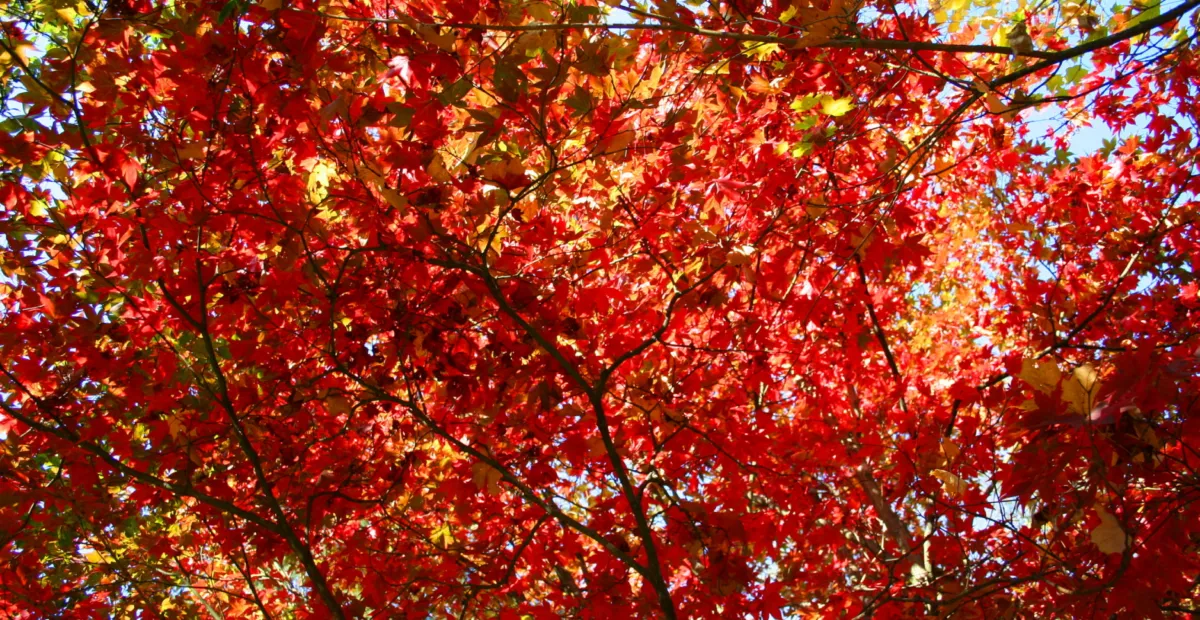
Acer japonicum 'Vitifolium' is a refined fullmoon maple cultivar with broad, grape-like leaves and a graceful spreading habit. Small reddish flowers appear in spring, followed by winged samaras, while the foliage develops one of the cultivar’s strongest features: dependable autumn color ranging from purple and burgundy to scarlet, orange, and yellow. Give it moist, well-drained soil, shelter from drying winds, and morning sun or filtered light in hotter climates.
Taxonomic classification
Vitifolium (Acer japonicum ‘Vitifolium’) care guide
Light and placement
Provide morning sun, bright filtered light, or partial shade, especially in hot-summer regions. A sheltered east-, north-, or west-facing site helps limit leaf scorch and wind damage. Too much intense afternoon sun combined with dry soil can cause browned margins and premature leaf drop; too little light may reduce density and autumn color.
Watering and humidity
Water deeply and thoroughly when the upper few inches of soil begin to dry, keeping the root zone evenly moist but never saturated. Newly planted trees need regular irrigation through their first two growing seasons; established plants need supplemental water during drought. Mulch helps moderate soil temperature and evaporation, but keep it away from the trunk.
Soil and growing medium
Use a deep, fertile, moisture-retentive but well-drained soil. Loam enriched with organic matter is suitable, provided it does not remain waterlogged. Slightly acidic to neutral conditions are preferred. Avoid compacted sites, prolonged drought, and highly alkaline construction fill; improve drainage before planting rather than relying on frequent surface watering.
Feeding
Apply a thin layer of compost or a balanced slow-release fertilizer in early spring as growth begins. Avoid heavy nitrogen feeding, which can produce weak shoots and larger-than-normal leaves that scorch more easily. Do not fertilize drought-stressed, newly transplanted, or late-season growth.
Growth and habit
Forms a broad, spreading small tree or large shrub, usually with several substantial branches and a rounded crown. Growth is generally moderate when young and slows with maturity. Maintain an open root zone, protect the trunk from mechanical injury, and avoid hard structural cuts unless necessary.
Planting and repotting
Plant in spring or fall while the soil is workable, setting the root flare level with or slightly above surrounding soil. Water deeply during establishment and mulch broadly without touching the trunk. Allow enough space for a broad, spreading crown and choose a sheltered east-, north-, or west-facing position where afternoon heat and drying wind are limited.
Repot container-grown plants in early spring before bud break, moving up only one pot size. Use a free-draining loam-based mix with organic matter, keep the root flare at the original level, and avoid excessive root disturbance. Large specimens are best planted out rather than repeatedly shifted between containers.
Propagation and pruning
Propagation
Usually propagated by grafting onto compatible Acer rootstock because cultivar traits are not reliably preserved from seed. Grafting is generally performed during dormancy or early growth by specialist growers. Seed may produce variable offspring and is not a dependable method for reproducing 'Vitifolium'.
Pruning
Prune sparingly. Remove dead, damaged, crossing, or weakly attached branches in late winter or after the main flush of spring growth. Make clean cuts just outside the branch collar and avoid topping, repeated shearing, or large cuts that spoil the natural branching structure.
Overwintering
In USDA Zone 5 and other exposed cold locations, protect young trees from drying winter wind with a sheltered site and a generous root-zone mulch. Water thoroughly before the ground freezes. Container plants are more vulnerable than in-ground trees and should be moved to an unheated protected location or insulated from severe freezes.
Uses
A high-value specimen for Japanese-style, woodland, courtyard, and fall-color gardens. It also works near patios or paths where the large leaves and seasonal color can be appreciated. It is ornamental rather than culinary, and no medicinal use should be inferred.
Appearance
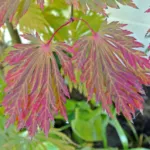
The leaves are large, rounded, and palmately lobed, commonly with 7–11 toothed lobes and a texture reminiscent of grape foliage. Young growth and petioles may be softly hairy, while young twigs can show reddish tones. The gray bark becomes rougher and more scaly with age, and the branching forms a broad, layered crown.
Flowering
Small reddish to purplish-red flowers are borne in hanging clusters in early spring, often before or as the leaves emerge. They are more noticeable at close range than from a distance. Winged samaras develop after flowering and mature through summer into early fall.
Pollination and visitors
Acer flowers provide early-season pollen and nectar resources for insects. General maple evidence supports visits by bees, bumblebees, hoverflies, moths, and other small insects, but cultivar-specific visitor records for 'Vitifolium' are limited.
Acer japonicum 'Vitifolium' photos
Click any photo for a larger view. Source, author and license are shown separately.
Diseases and pests
Diseases
Watch for verticillium wilt, anthracnose, leaf scorch, cankers, and root problems in poorly drained soil. Reduce stress with consistent watering, good air circulation, clean pruning tools, and mulch kept away from the trunk. Remove badly affected debris, but avoid unnecessary pruning during wet weather.
Pests
Potential pests include aphids, scale insects, borers, Japanese beetles, and mites. Inspect young growth and the undersides of leaves, especially during drought stress. Encourage natural enemies, improve plant vigor, and use targeted horticultural oil or another labeled treatment only when pests are confirmed and active.
Related diseases and pests
Only Plant Doctor profiles whose host data indicate this plant may be affected are shown here.
 PestJapanese beetlePopillia japonica
 DiseaseCytospora CankerCytospora chrysosperma
 Environmental stressSalt stress
 PestLeopard mothZeuzera pyrina
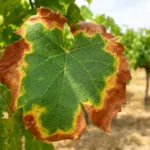 DiseaseXylella fastidiosa bacterial diseasesXylella fastidiosa
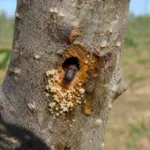 PestEuropean shot-hole borerXyleborus dispar (Fabricius)
 DiseaseMaple powdery mildewSawadaea bicornis
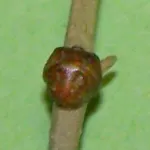 PestBlack scaleSaissetia oleae
Toxicity and pollen
No reliable cultivar-specific toxicity assessment was located. Normal garden contact is not considered a known hazard, but the foliage, bark, flowers, and samaras should not be treated as edible. Prevent children and pets from chewing plant material and seek medical or veterinary advice after ingestion or concerning symptoms.
- Typical season
- Early spring, typically March–April in much of the United States
- Pollination / pollen
- Light, insect-carried pollen
This is an insect-pollinated maple with small spring flowers, so pollen is generally less windborne than pollen from wind-pollinated trees. Exposure is usually localized and brief, but individual sensitivity is still possible during bloom.
Native habitat
A cultivated selection of a maple native to Japan, where Acer japonicum occurs in cool-temperate forest environments. It favors fertile, moisture-retentive soils, seasonal moisture, and sheltered woodland conditions rather than exposed, drought-prone sites.
Interesting fact
The cultivar name refers to the resemblance of its leaves to grape leaves. Its large leaves can reach about 6 inches across. The foliage often displays several autumn colors on the same tree. Exceptional old specimens can become substantially larger than typical nursery descriptions.
Frequently asked questions (FAQ)
The most relevant questions about this plant, with short and direct answers.
🌱Quick care
What is Acer japonicum 'Vitifolium' commonly called?⌄
Acer japonicum 'Vitifolium' is sold under names including grape-leaf fullmoon maple, fullmoon maple, and downy Japanese maple. Some nurseries may also list it under the older synonym Acer palmatum 'Vitifolium'.
How big does Acer japonicum 'Vitifolium' get?⌄
Acer japonicum 'Vitifolium' commonly reaches about 10–15 feet tall and wide in garden settings, although older specimens can become substantially larger in favorable conditions. Its mature form is rounded, broad, and often multi-stemmed.
Is Acer japonicum 'Vitifolium' a tree or shrub?⌄
Acer japonicum 'Vitifolium' can develop as either a large, bushy shrub or a small tree. Its final form depends on its training, growing conditions, and available space.
🌤️Environment and placement
What light does Acer japonicum 'Vitifolium' need?⌄
Give Acer japonicum 'Vitifolium' full sun to partial shade, with protection from intense afternoon sun in hot climates. Consistent moisture is especially important when it is grown in more sun.
Can Acer japonicum 'Vitifolium' grow in full sun?⌄
Acer japonicum 'Vitifolium' can grow in full sun if the soil stays evenly moist and the site is not excessively hot or exposed. Partial shade is safer in areas with intense summer heat and can reduce leaf scorch.
Where should I plant Acer japonicum 'Vitifolium' in the United States?⌄
Plant it in a sheltered location with moist, well-drained soil and morning sun or filtered light where summers are hot. In cooler regions, it can usually tolerate more direct sun if drought stress is avoided.
What USDA hardiness zones are suitable for Acer japonicum 'Vitifolium'?⌄
Acer japonicum 'Vitifolium' is generally suited to USDA Zones 5–7, with some references listing colder limits near Zone 4. Survival depends on the plant’s provenance, exposure, winter wind, and local temperature extremes.
Can Acer japonicum 'Vitifolium' grow in a container?⌄
Acer japonicum 'Vitifolium' can be grown in a large container while young, provided the pot has excellent drainage and the root zone is kept evenly moist. Container plants need extra winter protection because their roots are more exposed to freezing.
💧Care and problems
How often should I water Acer japonicum 'Vitifolium'?⌄
Water Acer japonicum 'Vitifolium' whenever the upper soil begins to dry, supplying a deep soak rather than frequent light sprinkling. Water more often during its first growing season, hot weather, and prolonged drought.
Why are the leaves of my Acer japonicum 'Vitifolium' turning brown?⌄
Brown leaf edges or patches are most often caused by drought, hot wind, excessive afternoon exposure, or root stress. Keep the soil consistently moist, improve shelter, and avoid allowing the root ball to alternate between very dry and saturated.
How do I prevent leaf scorch on Acer japonicum 'Vitifolium'?⌄
Prevent leaf scorch by maintaining even soil moisture, applying a mulch layer over the root zone, and protecting the tree from hot afternoon sun and drying winds. Do not pile mulch against the trunk.
What soil is best for Acer japonicum 'Vitifolium'?⌄
Use moist, well-drained loam enriched with organic matter, preferably slightly acidic to neutral. Avoid sites that remain waterlogged, because poor drainage can damage the roots even though the plant prefers consistent moisture.
Does Acer japonicum 'Vitifolium' need fertilizer?⌄
Acer japonicum 'Vitifolium' usually needs little fertilizer when planted in fertile soil. If growth is weak, apply a balanced, slow-release fertilizer in early spring according to the product label, and avoid heavy nitrogen feeding.
What pests affect Acer japonicum 'Vitifolium'?⌄
Acer japonicum 'Vitifolium' may be affected by aphids, caterpillars, gall mites, and scale insects. Inspect new growth and the undersides of leaves, but treat only when damage is significant or the pest population is increasing.
What diseases can affect Acer japonicum 'Vitifolium'?⌄
Potential problems include Verticillium wilt, leaf scorch, and root or trunk diseases associated with poor drainage or injury. Good planting-site drainage, careful watering, and avoiding unnecessary root and bark damage reduce risk.
🪴Planting and repotting
When is the best time to plant Acer japonicum 'Vitifolium'?⌄
Plant Acer japonicum 'Vitifolium' in fall or early spring when temperatures are moderate and the soil is workable. Container-grown plants can be planted during the growing season if they are watered carefully afterward.
How far apart should I plant Acer japonicum 'Vitifolium'?⌄
Allow roughly 10–15 feet of space from buildings, paths, and other plants for a typical mature specimen. Give extra room if the site is fertile and the tree is expected to reach the larger end of its potential size.
How do I plant Acer japonicum 'Vitifolium' correctly?⌄
Plant it with the root flare at or slightly above soil level in a hole two to three times wider than the root ball. Backfill with native soil, water deeply, and apply 2–3 inches of mulch while keeping mulch away from the trunk.
Can Acer japonicum 'Vitifolium' tolerate clay soil?⌄
Acer japonicum 'Vitifolium' can tolerate clay soil if it drains adequately and is improved with organic matter. Do not plant it in compacted clay that stays saturated after rain.
✂️Propagation and pruning
How is Acer japonicum 'Vitifolium' propagated?⌄
Acer japonicum 'Vitifolium' is commonly propagated by grafting or softwood cuttings. Seed will not reliably reproduce the named cultivar’s characteristic leaf shape and growth habit.
Can I grow Acer japonicum 'Vitifolium' from seed?⌄
You can grow Acer japonicum from seed, but seedlings will not necessarily be true to Acer japonicum 'Vitifolium'. To preserve the cultivar, use grafting or properly prepared softwood cuttings.
When should I prune Acer japonicum 'Vitifolium'?⌄
Prune Acer japonicum 'Vitifolium' during dormancy, preferably in late winter after the harshest cold has passed. Avoid major pruning in spring when maple sap flow is heavy, and remove only crossing, damaged, or poorly placed branches.
Does Acer japonicum 'Vitifolium' need regular pruning?⌄
Acer japonicum 'Vitifolium' generally needs little pruning once its structure is established. Use selective cuts to improve clearance, remove dead wood, or maintain a desired form rather than shearing the canopy.
⚠️Toxicity and safety
Is Acer japonicum 'Vitifolium' toxic to people or pets?⌄
There is no confirmed species-specific toxicity classification for Acer japonicum 'Vitifolium'. Because individual reactions and cultivar data can vary, prevent children and pets from chewing ornamental plant material and contact a medical or veterinary professional if ingestion causes symptoms.
🌸Flowering and special interest
Does Acer japonicum 'Vitifolium' produce flowers?⌄
Acer japonicum 'Vitifolium' produces small red flowers in clusters in spring, usually beneath the branches. The flowers are attractive on close inspection but are less prominent than the foliage and fall color.
What fall color does Acer japonicum 'Vitifolium' have?⌄
Acer japonicum 'Vitifolium' typically develops gold, orange, scarlet, and crimson fall foliage. The exact color display varies with weather, sunlight, moisture, and local growing conditions.
Why are the leaves of Acer japonicum 'Vitifolium' shaped like grape leaves?⌄
The cultivar name 'Vitifolium' refers to its large, deeply lobed leaves, which resemble grape foliage. The leaves usually have nine to eleven lobes and are one of the cultivar’s main ornamental features.
Similar plants
 Sycamore maple (Acer pseudoplatanus) care guideAcer pseudoplatanus
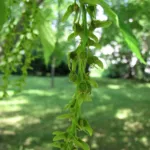 Père David’s Maple (Acer davidii) care guideAcer davidii
 Aconitifolium (Acer japonicum ‘Aconitifolium’)Acer japonicum 'Aconitifolium'
 Amur Maple (Acer tataricum ginnala) care guideAcer tataricum ginnala
 Acer palmatum care guideAcer palmatum
 Red Snakebark Maple (Acer capillipes) care guideAcer capillipes