
 Source:
 Aconitifolium (Acer japonicum ‘Aconitifolium’) short overview
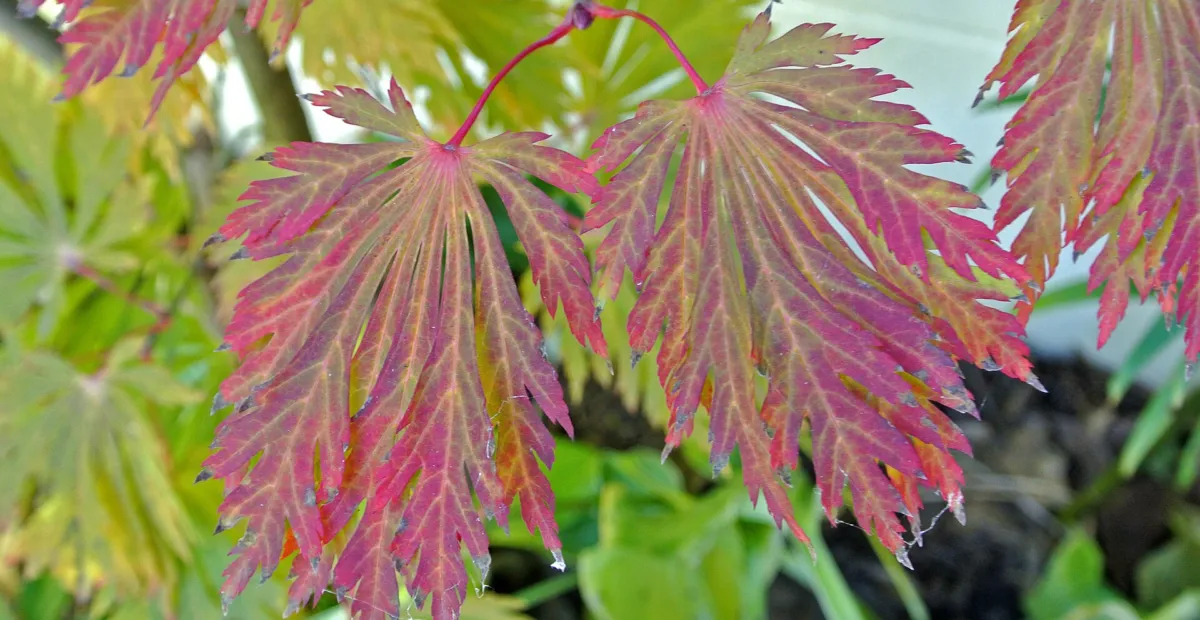
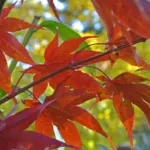
Acer japonicum 'Aconitifolium' is a slow-growing, deciduous fullmoon maple with deeply divided, sharply toothed leaves and a graceful rounded habit. Small purplish-red flower clusters appear in spring, followed by paired winged samaras. Its strongest feature is the dependable autumn display, when the foliage can turn yellow, orange, scarlet, and crimson. Give it evenly moist, well-drained soil and shelter from drying wind and harsh afternoon heat.
Taxonomic classification
Aconitifolium (Acer japonicum ‘Aconitifolium’) care guide
Light and placement
Best in morning sun, bright filtered light, or partial shade with protection from hot afternoon exposure and drying wind. More sun can improve autumn color where soil moisture is reliable. Pale, scorched, or crisp leaf margins suggest excessive heat, drought, wind, or reflected light; weak growth and sparse foliage may indicate excessive shade.
Watering and humidity
Water deeply and slowly when the upper few inches of soil begin to dry, keeping the root zone evenly moist but never saturated. Check container plants more often than in-ground trees. Increase watering during hot, dry weather and reduce it after leaf fall, while preventing winter desiccation in exposed sites.
Soil and growing medium
Use fertile, moisture-retentive but well-drained soil with a loamy structure and ample organic matter. Slightly acidic to neutral conditions are suitable. Avoid compacted ground and persistently waterlogged sites; a broad organic mulch layer helps stabilize moisture and root temperature without touching the trunk.
Feeding
Apply a thin layer of finished compost or a balanced, slow-release fertilizer in early spring if growth is weak or soil fertility is poor. Do not overfeed established trees, fertilize drought-stressed plants, or apply high-nitrogen fertilizer late in the season, since lush growth is more vulnerable to winter injury and scorch.
Growth and habit
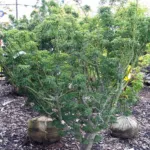
Growth is slow and the plant typically develops a rounded, bushy, often multi-trunked form. Its layered branching and shallow root system make consistent moisture and careful siting more important than frequent pruning. Avoid exposed locations where wind and heat can damage leaves.
Planting and repotting
Plant in spring or fall when the soil can be worked. Set the root flare level with, or slightly above, the surrounding soil; never bury the trunk. Allow room for the rounded canopy and keep the root zone mulched. Water deeply during the establishment period, especially through the first two summers.
Repot container plants in early spring before full leaf expansion, moving to only the next pot size. Protect the shallow root system from drying, loosen circling roots gently, and use a free-draining woody-plant mix. Large specimens are best root-pruned or transplanted during dormancy by experienced growers.
Propagation and pruning
Propagation
Named plants are normally grafted. Layering in fall or early spring is a practical home method, while softwood cuttings can be attempted but are generally difficult. Seed is easy to collect from samaras, but seedlings will not reliably reproduce the cultivar.
Pruning
Prune sparingly. Remove dead, damaged, crossing, or poorly placed branches during dormancy or just after the spring flush. Avoid heavy topping and large cuts, which can spoil the natural layered habit and increase stress.
Overwintering
In-ground plants are generally cold hardy in Zones 5–7. Young trees benefit from a 2–3 inch mulch layer kept away from the trunk. Container specimens need greater protection: place pots out of drying wind, insulate the container, and keep the root ball from repeatedly freezing and thawing or becoming completely dry.
Uses
Use as a specimen tree, small shade tree, woodland-edge accent, courtyard plant, or large-container subject. Its deeply cut foliage and reliable fall color suit Japanese-style and naturalistic gardens. It is ornamental rather than a documented culinary or medicinal plant.
Appearance
Leaves are large, soft green, deeply divided into about 9–11 narrow lobes that extend close to the petiole and have sharp teeth. The canopy is rounded and bushy, with thin drooping branches and gray to gray-brown bark. Paired winged fruits follow the spring flowers, while autumn foliage becomes yellow, orange, scarlet, or crimson.
Flowering
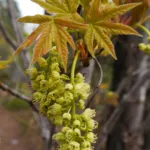
Small, hanging, purplish-red flower clusters appear in early to mid-spring, often as the leaves begin to emerge. The flowers are ornamental but not the main display feature. Paired winged samaras develop afterward and mature later in the growing season.
Pollination and visitors
The flowers are small and hanging, and reliable cultivar-specific visitor records are limited. The plant should not be marketed as a major pollinator resource without local observational evidence.
Acer japonicum 'Aconitifolium' photos
Click any photo for a larger view. Source, author and license are shown separately.
Diseases and pests
Diseases
Potential problems include Verticillium wilt, leaf scorch, honey fungus, and general stress-related decline. Improve drainage, avoid root and trunk injuries, maintain consistent soil moisture, and remove severely affected material. Leaf scorch is more often associated with heat, drought, wind, or exposed sites than with a contagious disease.
Pests
Aphids, caterpillars, gall mites, and scale insects may occur. Inspect new growth and leaf undersides, encourage beneficial insects, and use targeted treatment only when damage is significant. Avoid routine broad-spectrum insecticide use during flowering.
Related diseases and pests
Only Plant Doctor profiles whose host data indicate this plant may be affected are shown here.
 Environmental stressSalt stress
 Environmental stressFlooding injury
 PestLeopard mothZeuzera pyrina
 DiseaseXylella fastidiosa bacterial diseasesXylella fastidiosa
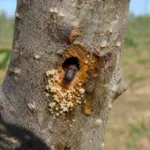 PestEuropean shot-hole borerXyleborus dispar (Fabricius)
 DiseaseMaple powdery mildewSawadaea bicornis
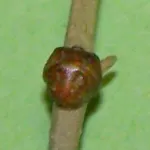 PestBlack scaleSaissetia oleae
 DiseaseMaple Tar Spot (Giant Tar Spot)Rhytisma acerinum
Toxicity and pollen
No cultivar-specific evidence of significant human or companion-animal toxicity was identified in the reviewed horticultural sources. As with any woody plant, avoid ingesting plant material, and prevent contact with sap or plant debris in sensitive individuals. This assessment should not be treated as a veterinary or medical clearance.
- Typical season
- Spring
- Pollination / pollen
- Insect-dispersed floral pollen
This is an insect-pollinated deciduous tree with small spring flowers, so airborne pollen exposure is generally expected to be lower than for strongly wind-pollinated trees. Individual allergy responses vary, and low does not mean zero risk.
Native habitat
The species is associated with cool mountain and woodland habitats in Japan and parts of northeastern Asia. It favors humus-rich, well-drained soils with dependable moisture, moderate summer conditions, and protection from drying exposure.
Interesting fact
The cultivar name refers to leaves resembling monkshood foliage. Its deeply divided lobes extend nearly to the petiole. It is widely valued for unusually strong autumn color and is reputed to be hardier than many other fullmoon maple selections. Named plants do not come true from seed.
Frequently asked questions (FAQ)
The most relevant questions about this plant, with short and direct answers.
🌱Quick care
What is Acer japonicum 'Aconitifolium' commonly called?⌄
Acer japonicum 'Aconitifolium' is commonly called fernleaf full moon maple, fernleaf maple, or fern-leaved fullmoon maple. It is a small deciduous maple valued for deeply divided foliage and vivid fall color.
How big does Acer japonicum 'Aconitifolium' get?⌄
Acer japonicum 'Aconitifolium' typically grows about 8–10 feet tall and wide in cultivation, although size varies with climate and growing conditions. Some specimens may become larger over time.
Is Acer japonicum 'Aconitifolium' a Japanese maple?⌄
Yes, it is a full moon maple in the Japanese maple group, but it is Acer japonicum rather than the more commonly grown Acer palmatum. Its leaves are usually larger and more deeply divided than those of many Japanese maple cultivars.
What USDA zones are suitable for Acer japonicum 'Aconitifolium'?⌄
Acer japonicum 'Aconitifolium' is generally suitable for USDA Hardiness Zones 5–7. It is notably cold hardy, but late spring frosts can still damage newly emerging leaves.
🌤️Environment and placement
Does Acer japonicum 'Aconitifolium' grow in full sun or shade?⌄
Acer japonicum 'Aconitifolium' grows best in partial shade or filtered sun, especially where summers are hot. It can tolerate more sun in cooler climates if the soil stays evenly moist and the site is protected from harsh afternoon heat.
Where should I plant Acer japonicum 'Aconitifolium'?⌄
Plant it in a sheltered location with morning sun or filtered light, protection from strong winds, and moist, well-drained soil. An understory position or woodland-edge setting is often ideal.
Can Acer japonicum 'Aconitifolium' tolerate hot summers?⌄
It can grow in regions with warm summers, but hot, dry conditions increase the risk of leaf scorch. Provide afternoon shade, mulch the root zone, and water consistently during summer drought.
How much space does Acer japonicum 'Aconitifolium' need?⌄
Allow roughly 8–12 feet of open space for a typical mature plant, with additional room if a larger specimen is expected. Keep it away from structures, utility lines, and locations where compacted soil or reflected heat is common.
Can Acer japonicum 'Aconitifolium' grow in a container?⌄
It can be grown in a large container while young, provided the pot has excellent drainage and the root zone does not dry out. Container plants require more frequent watering and may need extra winter protection than plants in the ground.
💧Care and problems
How often should I water Acer japonicum 'Aconitifolium'?⌄
Water deeply whenever the soil begins to dry slightly below the surface, keeping moisture even but not waterlogged. Newly planted trees need regular irrigation during their first growing season and during extended summer drought.
What soil is best for Acer japonicum 'Aconitifolium'?⌄
The best soil is moist, fertile, well-drained loam with good organic matter. Avoid heavy, poorly drained soil and very dry, sandy sites unless irrigation and organic amendments can maintain consistent moisture.
Why are the leaves of Acer japonicum 'Aconitifolium' turning brown?⌄
Brown leaf edges or patches are most often caused by heat, drought, wind, or sudden exposure to strong sun. Keep the soil evenly moist, add a 2–3 inch mulch layer without touching the trunk, and reduce exposure to harsh afternoon conditions.
Does Acer japonicum 'Aconitifolium' need fertilizer?⌄
Usually, Acer japonicum 'Aconitifolium' needs little or no fertilizer when planted in reasonably fertile soil. If growth is weak or leaves show a confirmed nutrient deficiency, use a modest slow-release fertilizer in early spring rather than heavy feeding.
What pests affect Acer japonicum 'Aconitifolium'?⌄
Potential pests include aphids, scale insects, and boring insects, although serious infestations are not inevitable. Inspect new growth and bark periodically, and address plant stress because drought and injury can increase pest problems.
What diseases can affect Acer japonicum 'Aconitifolium'?⌄
Maple diseases such as Verticillium wilt can affect Acer japonicum 'Aconitifolium', and stressed plants may also develop leaf spots or dieback. Good drainage, avoiding root injury, and maintaining appropriate moisture help reduce problems, but wilted branches should be evaluated promptly.
Why is my Acer japonicum 'Aconitifolium' losing leaves in spring?⌄
Spring leaf loss is commonly caused by a late frost, which can damage tender emerging foliage. The tree may produce replacement leaves if the stems and buds remain healthy, but repeated frost exposure can slow recovery.
🪴Planting and repotting
When is the best time to plant Acer japonicum 'Aconitifolium'?⌄
Plant Acer japonicum 'Aconitifolium' during dormancy, ideally in early spring or fall when the soil is workable and temperatures are moderate. Avoid planting during hot, dry weather or when the ground is frozen or waterlogged.
How do I plant Acer japonicum 'Aconitifolium' correctly?⌄
Dig a hole about twice the root ball’s width and no deeper than the root flare, then backfill with the native soil. Water thoroughly, keep the trunk flare above grade, and apply 2–3 inches of mulch without piling it against the trunk.
Can Acer japonicum 'Aconitifolium' be transplanted?⌄
Young Acer japonicum 'Aconitifolium' plants can be transplanted more successfully than established specimens. Transplant during dormancy, preserve as much of the root system as possible, and provide consistent moisture while the tree re-establishes.
✂️Propagation and pruning
How is Acer japonicum 'Aconitifolium' propagated?⌄
Acer japonicum 'Aconitifolium' is most reliably propagated by grafting or other specialist nursery methods. Seed may not reproduce the named cultivar consistently, so seedlings should not be expected to match the parent plant.
Can I grow Acer japonicum 'Aconitifolium' from seed?⌄
You can grow Acer japonicum from seed, but seedlings may differ from 'Aconitifolium' in leaf form, growth habit, and fall color. To preserve the exact cultivar, use a nursery-propagated plant rather than seed.
When should Acer japonicum 'Aconitifolium' be pruned?⌄
Prune Acer japonicum 'Aconitifolium' in late summer or during winter dormancy, removing damaged, crossing, or poorly placed branches. Avoid major spring pruning because maples may bleed sap heavily at that time.
Does Acer japonicum 'Aconitifolium' need regular pruning?⌄
No, it usually develops an attractive rounded or spreading form with minimal pruning. Limit pruning to structural correction, clearance, removal of dead wood, and occasional reduction of an unwanted branch.
⚠️Toxicity and safety
Is Acer japonicum 'Aconitifolium' poisonous to people or pets?⌄
No specific toxicity is well documented for Acer japonicum 'Aconitifolium', but ornamental plant material should not be eaten. Prevent children and pets from ingesting leaves, stems, seeds, or other parts, and contact a poison-control or veterinary professional if ingestion causes concern.
🌸Flowering and special interest
When does Acer japonicum 'Aconitifolium' bloom?⌄
Acer japonicum 'Aconitifolium' produces small reddish to maroon flowers in early spring, often before or as the leaves emerge. The flowers are attractive close up but are not usually the plant’s main landscape feature.
Does Acer japonicum 'Aconitifolium' produce seeds?⌄
Yes, it produces winged samaras that ripen from late summer into early fall. Seed production can vary by tree and growing conditions, and seedlings will not necessarily retain the cultivar’s distinctive foliage.
What fall color does Acer japonicum 'Aconitifolium' have?⌄
Its deeply divided green leaves can turn vivid orange, red, crimson, burgundy, or purple in fall. The exact color depends on genetics, weather, sunlight, moisture, and the timing of autumn temperatures.
Why is Acer japonicum 'Aconitifolium' called fernleaf maple?⌄
It is called fernleaf maple because its palmate leaves are unusually deeply divided, giving them a fine, fern-like appearance. The cultivar name 'Aconitifolium' also refers to the resemblance of its leaves to monkshood foliage.
Similar plants
 Sango Kaku (Acer palmatum ‘Sango Kaku’)Acer palmatum 'Sango Kaku'
 Osakazuki (Acer palmatum ‘Osakazuki’)Acer palmatum 'Osakazuki'
 Lion’s head maple (Acer palmatum ‘Shishigashira’)Acer palmatum 'Shishigashira'
 Bloodgood (Acer palmatum ‘Bloodgood’)Acer palmatum 'Bloodgood'
 Bigleaf maple (Acer macrophyllum) care guideAcer macrophyllum
 Golden full moon maple (Acer shirasawanum ‘Aureum’)Acer shirasawanum 'Aureum'