
 Source:
 Père David’s Maple (Acer davidii) short overview
Père David's Maple is a distinctive deciduous tree from China and Myanmar, grown in the United States for its green bark marked with pale vertical streaks, red-tinged young growth, unusual toothed leaves, and strong yellow, orange, or red fall color. It performs best in a sheltered woodland-style setting with evenly moist, well-drained soil and protection from severe afternoon heat, drought, and drying winds.
Taxonomic classification
Père David’s Maple (Acer davidii) care guide
Light and placement
Grow in partial shade or morning sun with protection from intense late-afternoon heat and drying wind. An east or north-facing exposure, woodland edge, or filtered canopy is suitable. Scorched margins, premature leaf drop, and bleached foliage suggest excessive heat or drought; weak, elongated growth and poor fall color suggest inadequate light.
Watering and humidity
Water deeply and slowly when the upper few inches of soil begin to dry, then allow excess water to drain. Keep the root zone evenly moist during the first two to three growing seasons, reducing frequency after establishment but not allowing prolonged drought. A 2–3 inch organic mulch layer helps moderate soil moisture and temperature.
Soil and growing medium
Use fertile, moisture-retentive but well-drained loam. It tolerates clay, sand, and a moderately broad pH range, approximately 6.0–8.0, provided drainage is reliable. Improve compacted soil with organic matter rather than creating a sharply different planting pocket. Mulch the root zone without touching the trunk.
Feeding
Apply a thin layer of compost or a balanced, slow-release tree fertilizer in early spring only if growth is weak or soil tests indicate a need. Avoid high-nitrogen feeding, late-summer fertilization, and fertilizer applied against the trunk. Established trees in good soil often need little supplemental feeding.
Growth and habit
This is an arching, spreading, sometimes multistemmed tree that can establish quickly in good conditions. Young growth benefits from consistent moisture and shelter from strong wind. Allow the crown to develop naturally, removing only poorly placed, crossing, damaged, or weakly attached branches.
Planting and repotting
Plant in spring or fall, setting the root flare level with or slightly above the surrounding soil. Space approximately 20–30 feet from buildings or other large trees, allowing room for the broad crown. Water deeply during establishment and mulch a wide root zone while keeping mulch away from the bark.
Young container plants can be shifted into the next larger pot in early spring before active growth. Use a sturdy, well-drained tree-and-shrub mix and avoid chronic root saturation. Plant out while dormant where practical; large specimens dislike unnecessary root disturbance.
Propagation and pruning
Propagation
Propagation is primarily by seed, with clean, fully developed samaras sown after appropriate cold stratification. Named selections are generally grafted because rooting cuttings can be difficult. Collect seed promptly, protect it from drying, and expect variable offspring.
Pruning
Prune lightly in late winter or after leaf-out to remove dead, damaged, crossing, or weak branches and to establish a clear structure. Avoid severe topping and unnecessary cuts to the striped bark. Young trees may need structural training, while mature specimens are best left with their natural arching habit.
Overwintering
In Zones 6–7, established trees generally overwinter outdoors. Protect young trees from drying winter winds with a sheltered site and maintain mulch over the root zone without touching the trunk. Water before the ground freezes if autumn is dry. Container plants are more vulnerable and should be insulated or planted out before severe cold.
Uses
An ornamental specimen or understory tree for lawns, woodland gardens, Asian-style plantings, and protected urban landscapes. It is especially useful where attractive bark, unusual foliage, and fall color are desired. The tree is not documented here as a food, medicinal, or culinary plant.
Appearance
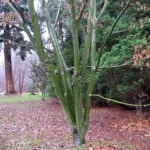
The species is recognized by smooth green bark marked with pale vertical streaks, often becoming duller and grayer at the base with age. Leaves are dark green, ovate, serrated or doubly serrated, and usually unlobed or weakly three-lobed, with paler undersides and often reddish petioles. The crown is arching and spreading.
Flowering
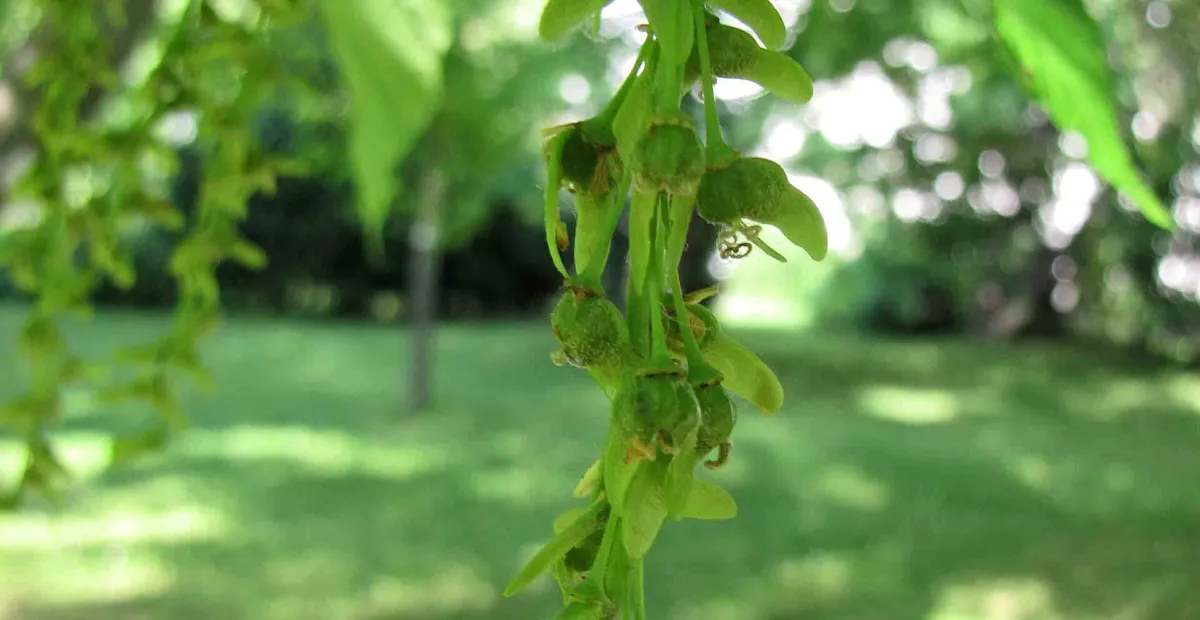
Small pale yellow to yellowish-green five-part flowers are borne in slender racemes as the leaves unfold in spring. Plants are commonly dioecious or functionally separated by sex, and flowering is ornamental but not showy from a distance. Paired winged samaras develop afterward and mature later in the season.
Pollination and visitors
The flowers provide a documented seasonal resource for pollinating insects, with moth visitation specifically listed by a North American extension source. Evidence is not strong enough to assign a specific pollinator species or a high attraction rating.
Acer davidii photos
Click any photo for a larger view. Source, author and license are shown separately.
Diseases and pests
Diseases
Monitor for common maple problems such as verticillium wilt, anthracnose, cankers, and leaf spots, especially where trees are stressed. Maintain even moisture, avoid trunk injury, improve air circulation, and prune out infected wood during dry weather. Confirm a diagnosis before using fungicides.
Pests
Watch for aphids, scale insects, maple borers, and Japanese beetles where locally present. Inspect new growth and bark, maintain tree vigor, and remove heavily infested material when practical. Avoid routine broad-spectrum insecticides, which can harm beneficial insects.
Toxicity and pollen
No reliable, species-specific evidence establishing significant human or companion-animal toxicity was located. Avoid ingesting ornamental plant material, and prevent access to seed or pruned material by children and pets because absence of evidence is not proof of safety.
- Typical season
- Spring, during flowering
- Pollination / pollen
- Insect-dispersed spring pollen
Acer davidii releases pollen during spring flowering, but reliable species-specific clinical allergy data and U.S. airborne-pollen ratings are limited. Do not assume zero allergy risk because the flowers are insect-pollinated; sensitive gardeners should avoid placing the tree directly beside frequently used seating areas during bloom.
Native habitat
Native from China to Myanmar, where it occurs in temperate mixed forests at roughly 1,000–3,000 meters elevation. It is associated with cool mountain climates, fertile soils, and reliable moisture, which explains its preference for sheltered, woodland-like garden conditions.
Interesting fact
The species was named for French missionary and naturalist Père Armand David. Its bark places it among the snakebark maples. Unlike many maples, its leaves are mostly ovate and only weakly lobed. It was introduced to European horticulture through plant collecting for the Veitch nursery in the nineteenth century.
Frequently asked questions (FAQ)
The most relevant questions about this plant, with short and direct answers.
🌱Quick care
How do you care for Père David's Maple, Acer davidii?⌄
Grow Père David's Maple in partial shade or gentle morning sun, in moist well-drained soil, and water regularly while it establishes. Protect it from intense afternoon heat, drought, and poorly drained ground.
Is Père David's Maple evergreen or deciduous?⌄
Père David's Maple is a deciduous tree that loses its leaves in fall. Its striped bark provides ornamental interest during winter.
How large does Acer davidii get?⌄
Acer davidii can reach about 30 to 50 feet tall and 20 to 40 feet wide, although cultivated trees are often smaller and multi-trunked. Allow substantial room for its mature crown.
🌤️Environment and placement
What USDA hardiness zone is Père David's Maple suited to?⌄
Père David's Maple is generally suited to USDA Zones 6–7, although some horticultural references report hardiness into Zone 5. Cold tolerance can vary by provenance, cultivar, and exposure.
Does Acer davidii grow in full sun?⌄
Acer davidii can tolerate full sun where summers are mild, but partial shade or morning sun is safer in much of the United States. Shield it from strong afternoon heat and drying winds.
Where should I plant Père David's Maple?⌄
Plant Père David's Maple in a sheltered location with partial shade, good air circulation, and moist but well-drained soil. A woodland edge or north- or east-facing position is often suitable.
What type of soil does Acer davidii need?⌄
Acer davidii prefers moist, well-drained loam but can tolerate clay, sand, and near-neutral soil if drainage is adequate. Avoid compacted, waterlogged sites.
Can Père David's Maple tolerate clay soil?⌄
Père David's Maple can tolerate clay soil if excess water drains away and the soil is not severely compacted. Improve structure with organic matter over the planting area rather than creating a sharply different pocket in the hole.
💧Care and problems
How often should I water Père David's Maple?⌄
Water Père David's Maple deeply when the soil begins to dry, especially during its first two growing seasons. Established trees need less frequent irrigation but may still require supplemental water during prolonged summer drought.
Why are the leaves of my Acer davidii turning yellow?⌄
Yellow leaves on Acer davidii may result from drought, root stress, poor drainage, or alkaline soil that limits manganese availability. Check soil moisture and drainage first, and consider a soil test before applying nutrients.
Is Père David's Maple prone to pests or diseases?⌄
Père David's Maple is not usually considered highly troublesome, but stressed trees can develop common maple pest or disease problems. Correct watering, planting depth, drainage, and air circulation are the best preventive measures.
Does Acer davidii need fertilizer?⌄
Acer davidii usually needs little or no fertilizer when grown in reasonably fertile soil. Apply fertilizer only when a soil test or clear nutrient deficiency supports it, because excessive nitrogen can produce weak, overly vigorous growth.
🪴Planting and repotting
When is the best time to plant Père David's Maple?⌄
Plant Père David's Maple in fall through early spring while the tree is dormant, provided the ground is workable. Avoid planting during hot, dry weather unless you can maintain consistent irrigation.
How deep should I plant Acer davidii?⌄
Plant Acer davidii so the root flare is level with or slightly above the surrounding soil. Do not bury the trunk flare, and mulch broadly without allowing mulch to touch the trunk.
Can Père David's Maple be grown in a container?⌄
A young Père David's Maple can be grown temporarily in a large container with drainage, but its eventual size makes permanent container culture difficult. Container roots also need protection from severe winter freezing and rapid drying.
✂️Propagation and pruning
How do you propagate Acer davidii from seed?⌄
Acer davidii is commonly propagated from seed, using fresh samaras and a period of cold, moist stratification before sowing. Germination and seedling traits can vary, so seedlings may not reproduce a named cultivar exactly.
Can Père David's Maple be propagated from cuttings?⌄
Père David's Maple may be difficult to root reliably from ordinary cuttings, and seed propagation is the more established method. Specialized nursery techniques may improve cutting success, particularly for selected forms.
When should I prune Père David's Maple?⌄
Prune Père David's Maple during dormancy or shortly after the main spring growth flush, removing dead, damaged, crossing, or poorly attached branches. Avoid unnecessary heavy pruning because maples can bleed sap when cut at unsuitable times.
⚠️Toxicity and safety
Is Père David's Maple toxic to people or pets?⌄
No significant toxicity is documented for Père David's Maple, but evidence is limited and plant material should not be eaten. Prevent children and pets from chewing ornamental plants, and contact a poison-control or veterinary professional if a substantial amount is swallowed.
🌸Flowering and special interest
When does Acer davidii flower?⌄
Acer davidii typically flowers in spring, around April, as the leaves unfold. The small yellowish-green flowers are ornamental but less conspicuous than the striped bark and fall foliage.
Does Père David's Maple produce seeds?⌄
Père David's Maple produces winged samaras after flowering, with fruit commonly developing toward fall. Seed production may vary because the species is often dioecious, with male and female flowers occurring on separate trees.
Why is the bark of Père David's Maple called snakebark?⌄
Père David's Maple is called a snakebark or stripebark maple because its young branches and trunk often show contrasting green, gray, or white vertical striping. The pattern may become less pronounced as older bark develops.
Similar plants
 Boxelder (Acer negundo) care guideAcer negundo
 Acer palmatum care guideAcer palmatum
 Tatar Maple (Acer tataricum) care guideAcer tataricum
 Field maple (Acer campestre) care guideAcer campestre
 Red Snakebark Maple (Acer capillipes) care guideAcer capillipes
 Downy Japanese Maple (Acer japonicum) care guideAcer japonicum