
Citrus black spot
Phyllosticta citricarpaCitrus black spot overview
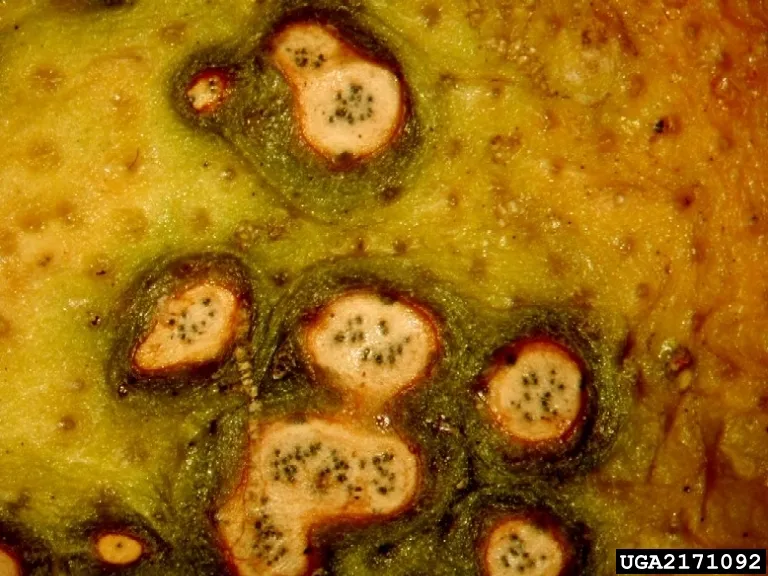
Citrus black spot is a regulated fungal disease caused by Phyllosticta citricarpa. It produces dark, sunken blemishes on ripening citrus fruit, sometimes leaf and twig lesions, and can trigger premature fruit drop under severe pressure. Symptoms may remain latent for months and resemble other diseases or abiotic injury, so suspected cases in the United States require professional confirmation and attention to quarantine rules.
Typical conditions
Overview
Citrus black spot affects citrus fruit, leaves and occasionally twigs. Fruit symptoms are often most apparent as fruit changes color from green to ripe coloration, although infections may have occurred many months earlier. The disease is especially important on late-maturing oranges and lemons; susceptibility varies among citrus species and cultivars.
Fruit lesions can reduce fresh-market quality even when the internal fruit remains suitable for processing. Because similar spots may be caused by other fungi, insects, cold injury or mechanical damage, visual inspection alone is not a reliable diagnosis. Suspected detections in the United States should be reported to the appropriate state plant-health authority or USDA APHIS rather than samples or plant material being moved.
Symptoms and identification
- Hard spot: circular, slightly sunken lesions about 3/16 to 3/8 inch across, with tan-gray centers and distinct brick-red, dark-brown or black margins. They are often more numerous on sun-exposed fruit and may contain black pycnidia.
- Freckle spot: small reddish, depressed lesions about 1/32 to 1/8 inch across that may remain separate or enlarge and merge later in the season or during storage.
- False melanose: numerous tiny, dark-brown, slightly raised spots, usually less than 1/32 inch across, on green fruit.
- Virulent or cracked spot: larger, irregular or coalescing lesions that may crack as disease severity increases.
- Leaves and twigs: small round reddish-brown to gray lesions with dark margins and sometimes a yellow halo; these symptoms are less common than fruit symptoms and are most associated with susceptible citrus or stressed trees.
- Severely affected trees may shed fruit prematurely. Lesions can become more conspicuous after harvest, during storage or shipment.
Causes and spread
Phyllosticta citricarpa survives and produces inoculum in infected fallen citrus leaves, fruit lesions and, to a lesser extent, dead twigs. Rain splash and irrigation can move conidia from infected material to nearby fruit and foliage. In regions where the sexual stage occurs, airborne ascospores from decomposing leaf litter may also contribute to spread.
Fruit is susceptible from fruit set through a substantial portion of early development. Human-assisted movement of infected citrus nursery stock, fruit, leaves, branches, green waste or contaminated material is an important regulatory concern. Older reports of numerous non-citrus hosts are complicated by confusion with other, nonpathogenic Phyllosticta or Guignardia species; documented disease hosts should therefore be treated conservatively as citrus.
Life cycle and persistence
The pathogen forms pycnidia that produce rain-dispersed conidia on infected citrus tissue. In some production regions it also forms pseudothecia in decaying citrus leaves, producing airborne ascospores. Spores germinate on wet citrus surfaces and form infection structures after prolonged leaf or fruit wetness.
Infections of young fruit can remain symptomless for approximately 4 to 6 months. Symptoms commonly appear as fruit matures, especially around color break, although lesions may develop later in storage. In warm, humid, summer-rainfall climates, repeated wetting events and abundant infected leaf litter can maintain disease pressure throughout the susceptible period.
Treatment and control
There is no practical treatment that removes established infections from fruit or permanently cures an infected tree. Management is preventive and must begin before symptoms are visible, using sanitation, inoculum reduction, canopy management and, where appropriate, a locally approved fungicide program.
For home citrus, remove and dispose of visibly affected fruit and fallen leaves where permitted, improve airflow, avoid overhead irrigation and do not move plant material off the property if citrus black spot is suspected. In Florida or other regulated areas, follow current state and USDA APHIS instructions. Commercial growers should use locally validated timing based on fruit development, cultivar susceptibility, rainfall and disease monitoring.
Low-impact and biological control
Organic and low-input management is based mainly on exclusion and sanitation rather than eradication. Use certified clean planting material, remove or manage fallen citrus leaves, improve canopy drying, avoid overhead irrigation and promptly remove badly affected fallen fruit where regulations permit.
Biological products or organically acceptable copper- or mineral-based materials may have a role only when they are legally registered for citrus black spot and the production system involved. Their performance is timing-dependent and should be evaluated with local extension guidance; no organic product should be assumed effective from a general antifungal claim.
Prevention
- In the United States, obtain citrus plants only through legal, inspected and USDA- or state-certified channels; never move citrus plants, branches, leaves, fruit or green waste from a quarantine area without checking current APHIS and state requirements.
- Inspect citrus trees regularly, especially fruit near color break and late in the season. Photograph and report suspicious symptoms before transporting samples.
- Reduce the inoculum reservoir by removing, accelerating decomposition of, or appropriately managing fallen infected citrus leaves according to local commercial recommendations. Avoid practices that spread contaminated debris.
- Maintain balanced irrigation, good canopy airflow and adequate tree vigor. Prefer less-susceptible cultivars where locally appropriate, recognizing that commercial citrus cultivars are generally susceptible to some degree.
- Use clean tools and equipment, and prevent movement of contaminated plant material between blocks or properties.
Interesting facts
- The disease was first confirmed in the United States in Florida in 2010 and remains a USDA-regulated plant-health concern.
- Fruit may be infected while still young but show no visible symptoms until many months later, often near ripening.
- The pathogen name Phyllosticta citricarpa is associated with the asexual stage; Guignardia citricarpa is an older synonym frequently encountered in literature.
- Black spot is mainly a rind and market-quality problem, but severe disease can cause premature fruit drop and yield loss.
- Black pycnidia in a lesion can support diagnosis, but laboratory testing is needed because several citrus disorders produce similar spots.
Use only pesticide products legally authorized for citrus black spot on the specific citrus crop in the United States and state where the tree is grown. Follow the current product label exactly, including rate, timing, personal protective equipment, reentry interval, preharvest interval and restrictions for fruit use. Do not apply a fungicide solely from an online diagnosis, and do not use products prohibited in a quarantine or organic production system. Fungicide resistance management and local extension recommendations are essential.
Affected plants
The plants below are linked to this problem by structured host-plant data. The list updates automatically as new plant profiles are added.
 Bodinier’s Beautyberry (Callicarpa bodinieri) care guideCallicarpa bodinieri
 Urnip rape (Brassica rapa) care guideBrassica rapa
 Collard greens (Brassica oleracea) care guideBrassica oleracea
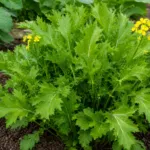 Multiceps Group (Brassica juncea Multiceps Group)Brassica juncea Multiceps Group
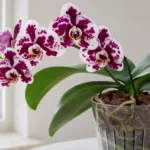 Moth orchid (Phalaenopsis ‘Harlequin’)Phalaenopsis 'Harlequin'
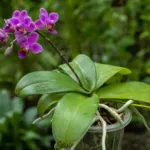 Orchid (Phalaenopsis violacea) care guidePhalaenopsis violacea
 Musa ‘Dwarf Cavendish’Musa 'Dwarf Cavendish'
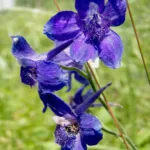 Delphinium ‘Blue Bird’Delphinium 'Blue Bird'
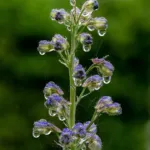 Delphinium elatum care guideDelphinium elatum
 Elkhorn Fern (Platycerium bifurcatum) care guidePlatycerium bifurcatum
 Hoya caudata care guideHoya caudata