
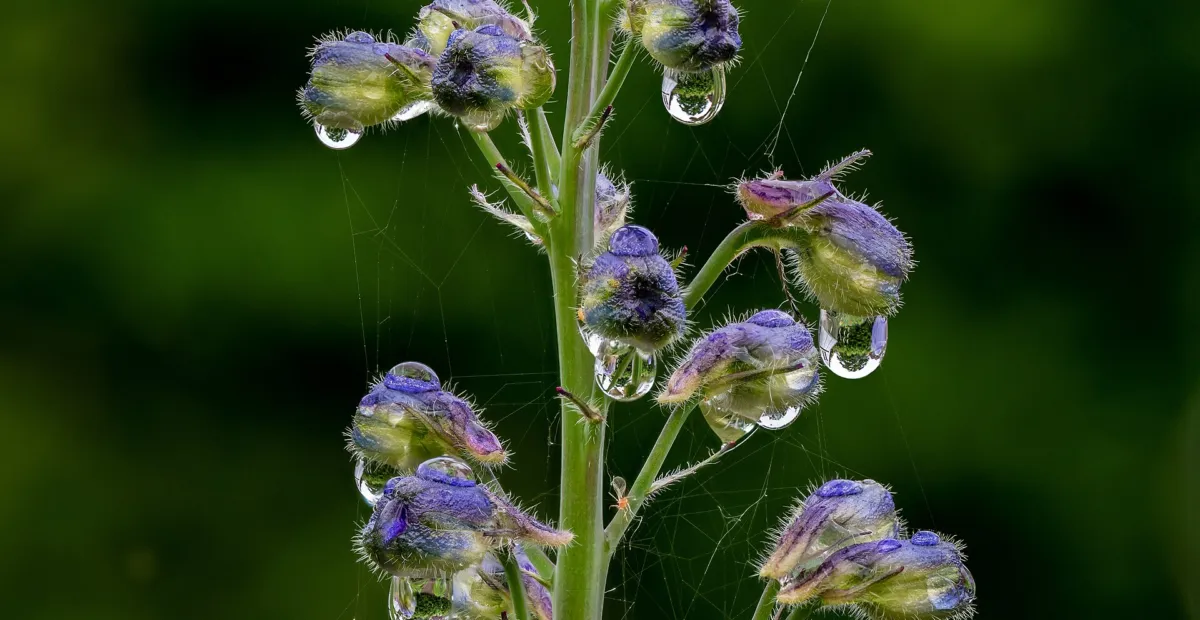
 Source:
 Delphinium elatum short overview
Delphinium elatum is a tall, herbaceous perennial from European mountains to Mongolia, valued for upright summer spires of blue to purplish-blue flowers. It needs full sun, fertile moisture-retentive but well-drained soil, shelter from strong winds, and staking. All parts are considered harmful if eaten, so handle carefully and keep away from children and pets. A tall, cool-climate herbaceous perennial with deeply lobed leaves and upright summer spikes of blue to purplish-blue, spurred flowers. Grow it in full sun, fertile evenly moist soil and a sheltered position, with early staking. All parts are harmful if eaten.
Taxonomic classification
Delphinium elatum care guide
Light and placement
Choose full sun with a sheltered east-, south- or west-facing exposure and protection from strong prevailing winds. Six or more hours of direct light supports sturdy stems and flowering. Too little light produces weak, floppy growth and fewer flowers; intense heat combined with reflected afternoon sun can scorch foliage or shorten bloom, so provide light afternoon relief in very hot climates.
Watering and humidity
Keep soil consistently and evenly moist during active growth, watering deeply at the base when the upper inch begins to dry. Increase frequency during hot, windy weather and while plants are forming flower spikes; reduce after autumn dieback, but do not allow containers or newly planted crowns to dry completely. Good drainage prevents crown problems.
Soil and growing medium
Use fertile soil that holds even moisture without becoming waterlogged. Loam or improved clay and sandy soil can work when enriched with organic matter. Good drainage is essential around the crown; a slightly acidic to slightly alkaline reaction is tolerated.
Feeding
Work compost into the planting area before growth begins. Feed in spring with a balanced fertilizer at the label rate, and water afterward. A second light feeding may help plants in poor soil, but avoid heavy nitrogen applications that produce soft, weak stems and excessive foliage.
Growth and habit
This cool-climate perennial forms a basal clump and sends up strong, mostly upright flowering stems. It performs best with regular moisture, fertile soil and wind protection. Thin crowded shoots on established plants when practical, and stake before the spikes become heavy to reduce lodging.
Planting and repotting
Plant in spring or early fall, setting the crown at the same level as in its nursery pot. Space plants about 18–30 inches apart, water thoroughly after planting, and install support early so developing stems are not damaged later.
Container-grown plants can be shifted in early spring before vigorous growth. Use a deep, heavy container with drainage holes and refresh the potting mix when roots become crowded. Because mature stems are tall and top-heavy, choose a stable pot and avoid frequent disturbance.
Propagation and pruning
Propagation
Sow fresh or properly stored seed in containers or a prepared bed; germination may benefit from a cool period. Basal softwood cuttings can be taken in early spring, and established clumps may be divided carefully. Seedlings may not come true to selected garden forms.
Pruning
Deadhead by cutting spent flower spikes back to side shoots or the basal foliage. Removing finished spikes promptly may encourage a second, usually lighter flush later in the season. Cut remaining stems to ground level after the foliage has withered in fall, and remove diseased debris.
Overwintering
Leave the crown in the ground in cold-winter regions after top growth dies back. A light mulch can buffer freeze-thaw cycles, but keep thick, wet mulch away from the crown. In marginal warm climates, winter drainage and summer heat may be more limiting than frost; container plants need protection from repeated freeze-thaw damage.
Uses
Useful as a tall border accent, cottage-garden perennial, wildlife-garden plant and cut flower. Its vertical form works well behind shorter perennials. Do not use it as food or home medicine; plant material is harmful if eaten and should not be placed where children, pets or livestock can browse it.
Appearance
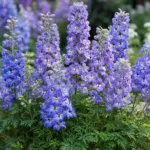
The plant has a basal mound of deeply divided, palmately lobed green leaves and tall, firm stems carrying dense vertical flower racemes. Individual blossoms are asymmetrical and typically show a conspicuous backward-pointing spur. Mature flowering stems can be visually dominant and often need support.
Flowering
The species produces upright racemes or spikes of showy, irregular, spurred flowers in summer. Removing the first spent spikes can encourage a later flush under favorable conditions, although repeat flowering is not guaranteed for every plant or climate.
Pollination and visitors
Single-flowered delphiniums are especially attractive to bumblebees. The elongated, spurred flower structure can favor visitors capable of reaching or manipulating the reproductive parts; available evidence supports a visitor-group identification rather than a single species-specific pollinator for this taxon.
Delphinium elatum photos
Click any photo for a larger view. Source, author and license are shown separately.
Diseases and pests
Diseases
Watch for powdery mildew, botrytis blight, leaf spots, crown rot, black blotch and virus symptoms. Improve airflow, avoid wetting foliage late in the day, provide good drainage, remove infected debris and avoid planting in persistently waterlogged soil.
Pests
Slugs and snails can damage young shoots; aphids, earwigs, leaf miners, caterpillars and delphinium moth larvae may also occur. Inspect new growth, remove pests by hand where practical, improve garden hygiene and use proportionate controls only when damage is significant.
Toxicity and pollen
Delphinium species contain diterpenoid alkaloids and are regarded as harmful if eaten. The greatest practical risk is ingestion of plant material, especially by children, dogs, cats or grazing animals. Wear gloves when handling if skin sensitivity is a concern, wash hands afterward, and seek professional help after suspected ingestion.
- Typical season
- Usually limited to the flowering period, mainly June through August in much of the United States.
- Pollination / pollen
- Insect-dispersed pollen
Delphinium is primarily insect-pollinated, so its pollen is not generally released in large airborne clouds like wind-pollinated grasses or trees. Nevertheless, flowering plants can still contribute localized pollen exposure, and sensitive individuals should avoid unnecessary contact with flowers and foliage.
Native habitat
In nature, Delphinium elatum occurs mainly in temperate mountain regions, including European mountains and parts of northern and central Asia. It is associated with cool climates, open herb-rich vegetation and soils that retain moisture while draining adequately.
Interesting fact
The species has a native range extending from European mountains eastward to Mongolia. Its flowers have a distinctive spur formed by one elongated sepal. The name Delphinium is associated with the Greek word for dolphin, referring to the shape of flower buds in some species. Tall garden forms commonly require support because the flowering stems are vulnerable to wind.
Frequently asked questions (FAQ)
The most relevant questions about this plant, with short and direct answers.
🌱Quick care
What is Delphinium elatum?⌄
Delphinium elatum is a tall, herbaceous perennial in the buttercup family, Ranunculaceae. It produces upright flower spikes and is commonly associated with alpine delphinium, bee larkspur, and candle larkspur.
How much sun does Delphinium elatum need?⌄
Delphinium elatum grows best in full sun, meaning at least 6 hours of direct sunlight daily. In hot Southern gardens, some afternoon shade can help reduce heat stress.
How often should I water Delphinium elatum?⌄
Water Delphinium elatum regularly to keep the soil moderately and evenly moist. Avoid letting the soil remain waterlogged, because poor drainage can lead to root or crown rot.
Is Delphinium elatum hardy?⌄
Delphinium elatum is a frost-hardy perennial and is generally suited to USDA Zones 3 through 7. Performance is usually best where summers are relatively cool rather than hot and humid.
How tall does Delphinium elatum get?⌄
Delphinium elatum commonly grows about 3 to 6 feet tall, depending on the variety and growing conditions. Tall flower stems may require support, especially in exposed gardens.
🌤️Environment and placement
Where should I plant Delphinium elatum?⌄
Plant Delphinium elatum in a sunny, sheltered location with fertile, moist but well-drained soil. A position protected from strong wind and heavy rain helps prevent the tall stems from flopping or breaking.
What type of soil is best for Delphinium elatum?⌄
The best soil is fertile, moisture-retentive but well-drained loam enriched with organic matter. Delphinium elatum can tolerate clay or sandy soil when it is improved with compost and drainage is corrected.
Can Delphinium elatum grow in clay soil?⌄
Delphinium elatum can grow in clay soil if it is amended with organic matter and drains adequately. Avoid planting in compacted clay that stays saturated after rain.
Can Delphinium elatum tolerate heat and humidity?⌄
Delphinium elatum prefers cool summers and may struggle in hot, humid regions. In warmer parts of the United States, provide afternoon shade, excellent air circulation, consistent moisture, and protection from reflected heat.
How much space does Delphinium elatum need?⌄
Allow roughly 2 to 3 feet of horizontal space for a mature Delphinium elatum, with additional room for airflow around the foliage. Spacing should be adjusted for the specific cultivar’s mature width.
💧Care and problems
Does Delphinium elatum need staking?⌄
Yes, tall Delphinium elatum usually benefits from staking or another support system. Install supports early in the season, before the flower stems become tall and difficult to secure without damage.
Why is my Delphinium elatum falling over?⌄
Delphinium elatum commonly falls over because of its tall flower spikes, strong wind, heavy rain, insufficient light, or overly rich, soft growth. Staking, shelter, full sun, and avoiding overcrowding can improve stability.
How do I fertilize Delphinium elatum?⌄
Feed Delphinium elatum in spring with compost or a balanced fertilizer, and provide additional feeding during active growth if the soil is poor. Avoid excessive nitrogen, which can encourage weak leafy growth instead of sturdy stems.
Why are the leaves of my Delphinium elatum turning yellow?⌄
Yellow leaves may result from overwatering, poor drainage, root or crown problems, nutrient deficiency, or natural aging after flowering. Check soil moisture and roots first, and improve drainage before increasing fertilizer.
What pests attack Delphinium elatum?⌄
Common pests include slugs, snails, aphids, leaf miners, mites, and stem borers. Inspect new growth regularly and use controls appropriate for the pest and safe for nearby pollinators.
What diseases affect Delphinium elatum?⌄
Delphinium elatum can develop powdery mildew, leaf spot, blight, bacterial diseases, and root or crown rot. Full sun, good air circulation, careful watering, clean tools, and well-drained soil help reduce disease pressure.
🪴Planting and repotting
When should I plant Delphinium elatum in the United States?⌄
Plant Delphinium elatum in spring after the worst freezes or in early fall while the soil is still workable. Fall planting is most suitable where plants have enough time to establish before the ground freezes.
Can Delphinium elatum be grown in a container?⌄
Delphinium elatum can be grown in a large container with fertile, moisture-retentive, well-drained potting mix and reliable support. Choose a heavy pot that will not tip and expect container plants to need more frequent watering.
✂️Propagation and pruning
How do you propagate Delphinium elatum?⌄
Delphinium elatum can be propagated from seed and, for suitable established plants or cultivars, by division. Seed-grown plants may vary from the parent, while division is more useful for preserving a selected plant’s characteristics.
Can Delphinium elatum be grown from seed?⌄
Yes, Delphinium elatum can be grown from seed, although germination and plant performance may vary. Sow fresh seed according to the supplier’s instructions and provide cool conditions if the seed lot requires them.
Should I divide Delphinium elatum?⌄
Established Delphinium elatum can be divided when the plant is dormant or just beginning growth, provided the crown has healthy shoots and roots. Division can rejuvenate an overcrowded plant, but it may shorten flowering in the season of division.
How do I deadhead Delphinium elatum?⌄
After the first flush of flowers fades, cut the spent stalk down toward the basal foliage while leaving healthy leaves intact. Deadheading may encourage a second, later flush of blooms when growing conditions remain favorable.
⚠️Toxicity and safety
Is Delphinium elatum poisonous?⌄
Yes, Delphinium elatum is harmful or poisonous if eaten, and all parts of the plant should be treated as unsafe to ingest. Keep it away from children, pets, and livestock, and seek professional help promptly after suspected ingestion.
Is Delphinium elatum safe for dogs and cats?⌄
No, Delphinium elatum should not be considered safe for dogs or cats if eaten. Prevent pets from chewing the plant and contact a veterinarian or animal poison service if ingestion is suspected.
Can you touch Delphinium elatum?⌄
Routine handling is generally possible, but wear gloves when planting, pruning, or dividing Delphinium elatum and wash your hands afterward. The main recognized danger is ingestion, so do not use the plant as an edible garnish or herbal remedy.
🌸Flowering and special interest
When does Delphinium elatum bloom?⌄
Delphinium elatum generally blooms in late spring or summer, depending on the climate and cultivar. Removing spent flower stems can sometimes encourage additional blooms later in the growing season.
What color flowers does Delphinium elatum have?⌄
The species typically has blue to purplish-blue flowers, while cultivated forms may also produce white, pink, or lavender blooms. Flowers are arranged in prominent upright racemes or spikes.
Is Delphinium elatum good for cut flowers?⌄
Yes, Delphinium elatum is valued as a cut flower because its tall stems carry many showy florets. Cut stems when lower flowers are opening, and keep the foliage and flowers away from children and pets because the plant is toxic if eaten.
Does Delphinium elatum attract pollinators?⌄
Delphinium elatum flowers attract pollinators such as butterflies and hummingbirds. Its upright flower spikes also provide strong vertical structure in perennial borders and cutting gardens.
Similar plants
 Delphinium ‘Blue Bird’Delphinium 'Blue Bird'
 Doubtful knight’s-spur (Delphinium ajacis) care guideDelphinium ajacis
 Delphinium elatum care guideDelphinium elatum elatum
 Delphinium ‘Blue Mirror’Delphinium 'Blue Mirror'
 Delphinium ‘Black Knight’Delphinium 'Black Knight'
 Delphinium ‘Magic Fountains’Delphinium 'Magic Fountains'