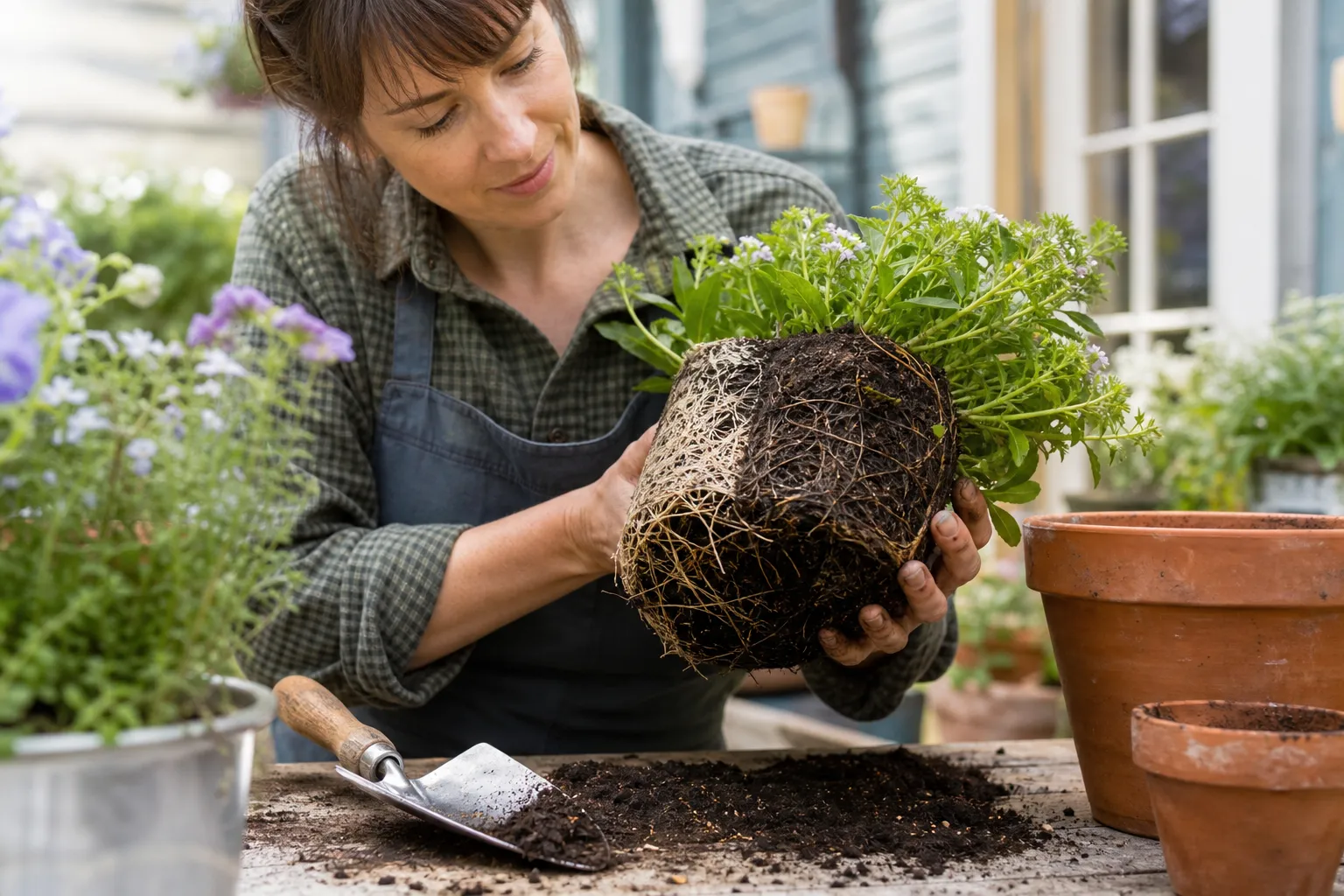
Leaves are often the first place you notice trouble, but they are rarely the first place trouble begins. Long before a plant wilts, yellows or stops flowering, its roots may already be sending clear signals.
Roots reveal whether the soil is staying too wet, drying too quickly, becoming compacted or restricting growth inside a container. They can also show early signs of disease, transplant stress and poor planting technique. The good news is that you do not need specialist equipment to read many of these clues—just a small trowel, clean hands and a willingness to look below the surface.
Think of a root check as a routine health inspection, not an emergency rescue. A few minutes of observation can help you adjust watering, improve drainage or choose a better planting site before a struggling plant becomes difficult to save.
Start with the roots you can see
You do not always need to dig up the whole plant. Begin with the soil surface and the area around the stem or crown—the point where roots meet the plant’s above-ground growth.
- Roots exposed at the surface may indicate soil erosion, compacted soil, shallow watering or a plant that was set too high.
- A plant that rocks easily in the soil may have a weak or reduced root system.
- Cracks pulling away from the sides of a container often point to very dry potting mix and a root ball that has shrunk away from the pot.
- Algae or moss on constantly wet soil can suggest that the surface is staying damp for too long, although it is not proof of root disease.
Surface roots are not automatically unhealthy. Some plants naturally grow shallow roots, especially in heavy clay, dry soil or a container that is too small. The important question is whether the roots look well distributed and whether the soil remains suitable for the plant.
What healthy roots usually look and feel like
Healthy roots vary by plant. Some are fine and threadlike, while others are thick, woody or swollen by nature. Color alone is not a reliable diagnosis: older roots can darken as they age, and certain plants naturally have brown roots.
For many garden and houseplants, young feeder roots are cream, white or light tan. These are the active roots responsible for much of the plant’s water and nutrient uptake. They should feel firm enough to hold their shape. Fine root hairs may be difficult to see, especially after you disturb the soil, so do not expect every healthy root to look pristine.
A promising root system usually has:
- Numerous fine side roots rather than one bare, dominant root;
- Firm tissue that is neither slimy nor hollow;
- New pale root tips, especially during active growth;
- Roots that spread through the potting mix instead of circling tightly at the edge;
- A reasonable balance between roots and the size of the plant’s canopy.
If you are comparing seedlings at a garden center, choose a plant with a well-developed but not severely congested root system. A compact root ball that holds together gently is useful; a dense mat of roots winding repeatedly around the container is a warning that the plant may have been waiting too long for a larger home.
Dark, soft and limp: the classic warning signs
Dark roots do not always mean disease, but dark roots that are also soft, limp or slimy deserve immediate attention. These symptoms commonly occur when roots remain saturated, suffer physical damage or become affected by root-rotting organisms.
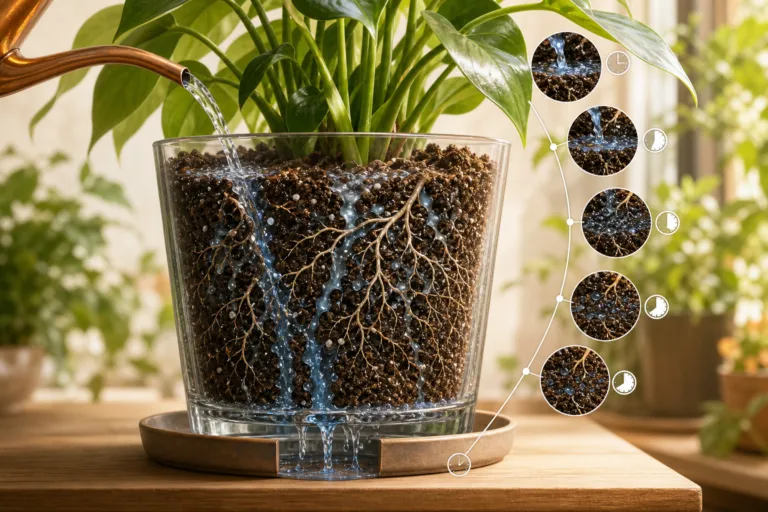
Water fills the air spaces in soil. When soil stays saturated for extended periods, roots have less access to oxygen, and stressed roots become more vulnerable to decay. The result can look confusing: a plant in soggy soil may wilt as if it needs water because damaged roots can no longer supply enough moisture to the leaves.
Watch for this combination:
- Wilted foliage even though the soil feels wet;
- Yellowing lower leaves or premature leaf drop;
- Slow growth or unusually small new leaves;
- Darkened roots that pull apart easily;
- Few healthy feeder roots remaining;
- A sour or unpleasant odor from badly decayed potting mix.
Do not diagnose root rot from leaf yellowing alone. Yellow leaves can also result from natural aging, low light, nutrient problems, temperature stress or underwatering. The roots and the growing conditions need to tell the same story.
Pale roots are helpful—but not a guarantee
Finding white or cream-colored roots is encouraging, but it does not prove that the entire root system is healthy. A plant may have a few living roots surrounded by extensive decay. Some diseases also discolor roots in ways that are not obvious to an untrained eye.
Instead of judging one root, examine the pattern. Are healthy fine roots distributed throughout the root ball? Do they branch actively? Are most roots firm? Is the plant growing at an appropriate rate for the season?
When in doubt, compare the plant with a healthy specimen of the same type. Root color and texture differ greatly between tomatoes, succulents, orchids, shrubs and trees.
Circling roots tell a container story
Roots that circle around the outside of a pot have usually encountered a physical boundary. This is common in plants that have outgrown their containers. If the circling continues for a long time, thick roots can compress the root ball and restrict the formation of new roots.
Look especially for:
- Roots forming a tight spiral at the bottom of the pot;
- A dense outer shell that does not loosen when handled gently;
- Roots growing upward along the container wall;
- Water running quickly down the sides instead of soaking evenly through the root ball;
- A plant that wilts again soon after watering.
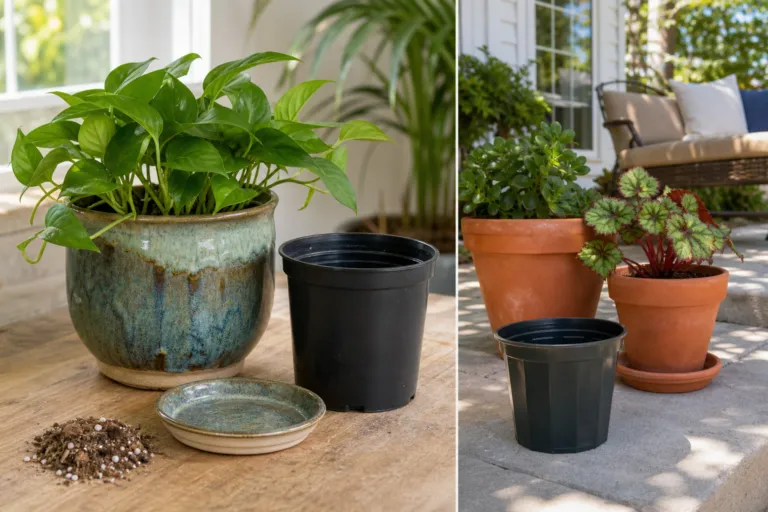
For a small container plant, slide the root ball out carefully and inspect the outside without tearing it apart unnecessarily. If roots are only mildly crowded, loosening the outer layer and moving the plant into a slightly larger container may help. If thick roots have formed tight circles, cut or untangle them according to the plant’s tolerance. Avoid jumping from a small pot to an enormous one; excess unused mix can stay wet and create a new problem.
Different plants, different root clues
Variety matters. Two plants grown side by side can respond differently to the same soil and watering schedule.
Tomatoes and peppers
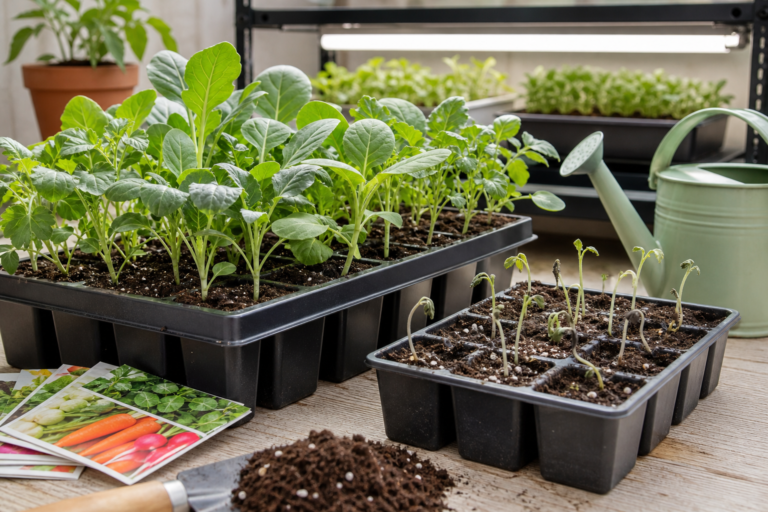
Tomatoes can produce additional roots along buried stems, so a few roots near the soil line are not necessarily a concern. However, stunted roots, dark lesions near the crown and repeated wilting can point to a serious root or crown problem. Peppers generally dislike cold, waterlogged soil and may stop growing before the leaves show dramatic symptoms.
Succulents
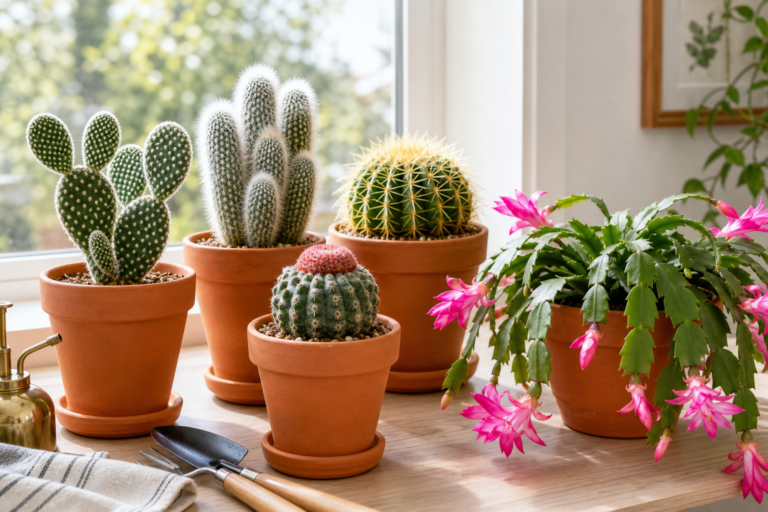
Succulents often have relatively compact root systems and tolerate drying better than many leafy houseplants. A small root ball is not automatically a problem, but soft, collapsing roots combined with wet mix strongly suggest that the watering interval or pot drainage needs attention.
Raspberries and strawberries
Berry plants can show patchy growth when roots or crowns are compromised. In strawberries, older roots may naturally darken, so scrape a small area gently: firm, cream-colored tissue beneath the surface is more reassuring than a root that is brown throughout and deteriorating.
Azaleas, rhododendrons and woody shrubs
Some woody plants naturally have darker roots. For these plants, texture, quantity and new growth may provide more useful information than color. Reduced feeder roots, slow growth, wilt and branch dieback together deserve closer investigation, particularly in poorly drained soil.
A simple watering experiment you can actually measure
Many root problems begin with guesswork. Instead of watering on a fixed calendar, try a one-week observation using a moisture check and measured water.
- Choose one container plant and note its pot diameter, plant type and location.
- Insert a finger about 2 inches into the mix, or use a wooden skewer to check moisture deeper in the pot.
- Record the result each morning: dry, slightly moist or wet.
- When watering becomes necessary, measure the water in a quart container rather than estimating from the faucet.
- Pour slowly until a small amount drains from the bottom, then empty the saucer.
- Record how long the plant takes to dry to the depth appropriate for its species.
For example, in a 10-inch container, you might discover that a thirsty tomato seedling needs about 1 quart of water every two to three days during a warm, sunny week, while a snake plant in the same-size pot may remain moist for 10 days or longer. Those figures are examples from a home observation, not universal rules. Potting mix, temperature, airflow, plant size and sunlight can change water use dramatically.
The value of the experiment is the pattern. If the top inch feels dry but the lower root ball remains wet after several days, the plant may need better drainage or less frequent watering. If the entire root ball dries out within a day and the plant wilts repeatedly, the container may be too small, the mix may repel water or the plant may need a different location.
Roots that stay near the surface
Shallow roots can develop when soil is compacted, water is applied only to the top layer or the soil surface dries and hardens repeatedly. They may also appear after erosion exposes the upper root system.
Rather than piling a thick layer of soil over exposed roots, correct the underlying issue. Improve soil structure gradually with organic matter where appropriate, water deeply enough to moisten the wider root zone and apply a light layer of mulch. Keep mulch several inches away from stems and trunks so the crown stays dry and visible.
For trees and shrubs, avoid changing the grade around the root flare without professional guidance. Covering roots too deeply can reduce oxygen availability and create additional stress.
A small comparison trial for better decisions
If you are unsure whether a problem comes from the plant or the growing conditions, compare two varieties. Grow one compact tomato and one vigorous indeterminate tomato in similar containers, using the same potting mix and measured watering. Check root development when the plants are transplanted or finished for the season.
You may find that one variety fills the container quickly while the other remains less crowded. That does not make one universally better; it tells you that container size, staking, watering frequency and spacing should match the variety’s growth habit.
Keep notes on:
- Days between watering;
- Amount of water used;
- Sun exposure and temperature;
- Growth rate and flowering;
- Root color, firmness and branching at the end of the trial.
This kind of simple comparison turns vague impressions into useful information for next season.
What to do after you inspect the roots
If roots look healthy, return the plant promptly, water the surrounding soil as needed and avoid unnecessary disturbance. If the plant is mildly root-bound, repot or transplant during a suitable growth period and choose a container only modestly larger.
If roots are damaged or decayed, focus first on the environment:
- Check that the container has open drainage holes.
- Remove standing water from saucers and decorative cachepots.
- Allow the mix to dry to the level appropriate for the plant before watering again.
- Improve drainage in garden beds by correcting compaction and avoiding low, persistently wet sites.
- Clean tools and containers before using them with another plant.
- Separate a suspicious houseplant from nearby plants while you monitor it.
Severely damaged plants may not recover, and the exact cause cannot always be identified by appearance alone. If a valuable tree, shrub or large planting is declining, take clear photographs and contact your local county Extension office or a qualified plant diagnostic service.
Let the roots guide your next move
Roots rarely offer a single, perfect answer, but they provide context that leaves cannot. Firm, branching roots suggest a plant with a functioning foundation. Tight circles point to container pressure. Surface roots suggest a soil or watering pattern worth correcting. Dark, limp roots raise concern about prolonged wetness, damage or disease.
You do not need to become a plant pathologist to use this information. Inspect gently, compare like with like, measure your watering for a week and change one condition at a time. Once you start looking below the soil line, your plants become much easier to understand—and many problems become far easier to prevent.