
European Stone Fruit Yellows
‘Candidatus Phytoplasma prunorum’ Seemüller and SchneiderEuropean Stone Fruit Yellows overview
European stone fruit yellows is a serious, vector-borne phytoplasma disease of Prunus trees caused by ‘Candidatus Phytoplasma prunorum’. It is especially damaging to apricot, Japanese plum and peach, where infected trees may show leaf rolling, yellowing or reddening, abnormal off-season growth, reduced fruit production, branch dieback and eventual decline. In the United States, suspected cases should be reported for professional diagnosis.
Typical conditions
Overview
European stone fruit yellows is caused by the wall-less, phloem-inhabiting bacterium ‘Candidatus Phytoplasma prunorum’. It is principally associated with cultivated and wild Prunus species in Europe and is treated as a quarantine concern in U.S. plant-health programs.
Apricot, Japanese plum and peach are the most economically important hosts. European plum and some wild Prunus species may carry the phytoplasma with few or no visible symptoms, so a symptom-free tree is not necessarily free of infection. Symptoms overlap with other phytoplasmas, viruses, graft-transmissible disorders, nutrient problems and abiotic stress; confirmation requires a qualified diagnostic laboratory, generally using molecular testing.
Symptoms and identification
Symptoms differ among species and cultivars and may appear irregularly within a tree.
- Apricot and Japanese plum: leaf rolling or curling, yellowing, reddening, premature leaf development, early or abnormal flowering, shortened internodes, weak shoots, progressive twig and branch necrosis, reduced cropping and eventual tree decline.
- Peach and nectarine: chlorotic or reddish leaves, leaf curling, sparse or abnormal growth, small or poor-quality fruit, dieback and decline.
- Potentially infected but less symptomatic hosts: European plum and some wild Prunus, including blackthorn and cherry-plum, may harbor the pathogen without conspicuous symptoms.
Symptoms can be most noticeable in spring and early summer, but off-season growth and premature flowering may also occur. Similar symptoms can result from other diseases or environmental stress.
Causes and spread
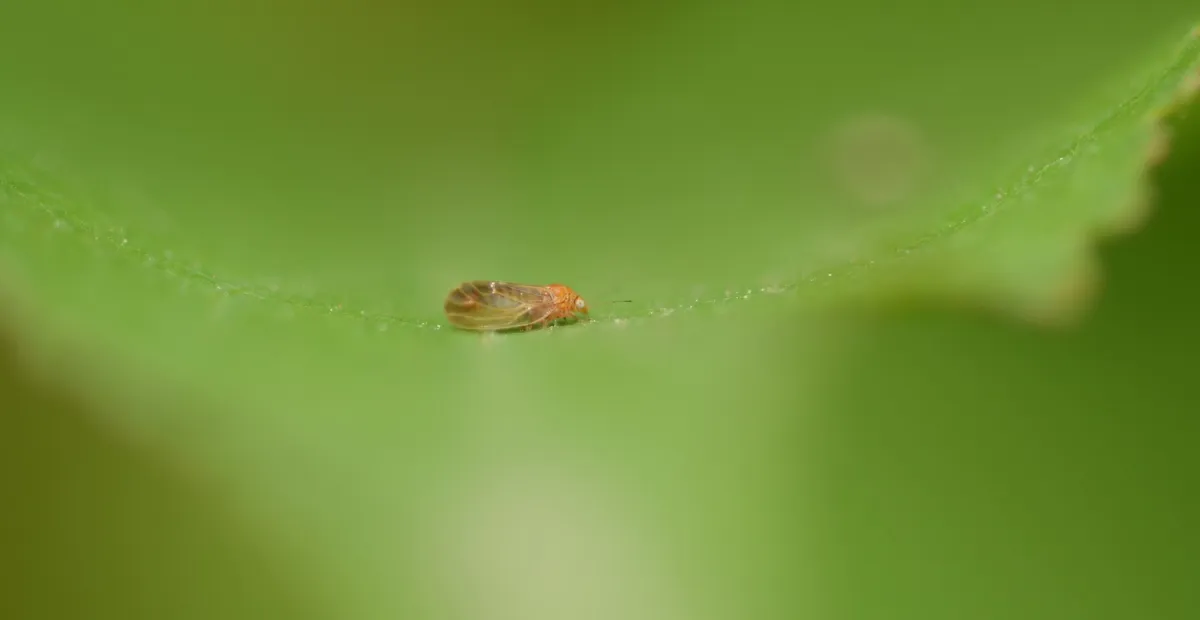
The pathogen is transmitted primarily by the phloem-feeding plum psyllid, Cacopsylla pruni. A psyllid acquires the phytoplasma while feeding on an infected plant; after a latent period in the insect, it can transmit the pathogen to another susceptible Prunus tree. Long-distance spread is most efficiently associated with infected propagation material, including budwood, scions, cuttings and grafted trees.
Wild or neglected Prunus plants can act as reservoirs, especially where they support vector populations near orchards. Mowing or pruning does not cure an infected tree because the phytoplasma is systemic.
Life cycle and persistence
‘Candidatus Phytoplasma prunorum’ survives in infected perennial Prunus hosts and circulates in the plant’s phloem. The vector, Cacopsylla pruni, is associated with a host-alternating seasonal cycle: adults overwinter away from stone fruit, then return to Prunus in spring, when feeding and reproduction permit acquisition and subsequent spread.
Transmission is not immediate. The phytoplasma must multiply and move through the psyllid before the insect becomes infective, so symptoms and new infections may appear well after the original feeding event. In trees, infection may remain latent or unevenly distributed, making seasonal sampling and repeated inspection important.
Treatment and control
There is no reliable curative treatment that eradicates ‘Candidatus Phytoplasma prunorum’ from an infected field-grown tree. Pruning symptomatic limbs may improve appearance temporarily but does not remove a systemic infection and should not be considered a cure.
For a suspected tree, mark it, photograph symptoms, and submit appropriately collected tissue through a qualified plant diagnostic laboratory. If infection is confirmed, promptly remove and destroy the tree and any clearly infected propagated material. Disinfect pruning tools between trees, avoid taking budwood from suspect plants, and reassess nearby trees and wild Prunus hosts. Replacement trees should come from tested, traceable stock.
Low-impact and biological control
Organic and low-input management is centered on exclusion, sanitation and vector-risk reduction rather than curative sprays.
- Use certified pathogen-tested planting material and avoid unverified scion or budwood exchanges.
- Remove confirmed infected trees and promptly destroy prunings; do not compost infected woody material unless the process is validated to eliminate viable plant material and vectors.
- Survey nearby wild and abandoned Prunus plants and remove documented reservoir hosts where legally and ecologically appropriate.
- Use yellow sticky cards or other scouting methods to monitor psyllid activity, recognizing that traps do not diagnose infection and do not provide complete control.
- Maintain orchard sanitation, reduce unmanaged host vegetation around production blocks, and coordinate actions with neighboring growers.
- Biological control and insect-exclusion tactics may reduce psyllid pressure in some systems, but they have not been shown to cure infected trees or guarantee prevention of ESFY.
Prevention
- Plant only certified, pathogen-tested apricot, peach, plum and other Prunus nursery stock from reputable suppliers.
- Do not propagate from trees with unexplained leaf curling, yellowing, premature flowering, weak shoots or progressive decline.
- Inspect new trees during spring and early summer and keep records of symptoms, plant sources and tree locations.
- Remove and destroy confirmed infected trees, including the root system where practical; do not leave prunings or whole trees as a reservoir.
- Manage neglected or wild Prunus near production blocks when permitted and when they are documented reservoirs or vector hosts.
- Use APHIS-compliant import and quarantine procedures for imported stone-fruit propagation material. In the United States, suspected detections should be referred to the state department of agriculture, extension diagnostic laboratory or USDA APHIS as appropriate.
- Control vectors only as part of an integrated program based on monitoring and local recommendations; vector suppression alone will not eliminate established infections.
Interesting facts
- The disease name covers several related syndromes, including apricot chlorotic leafroll, plum leptonecrosis and peach yellows.
- ‘Candidatus Phytoplasma prunorum’ is distinct from the North American X-disease phytoplasma, ‘Candidatus Phytoplasma pruni’; confusing these names can lead to incorrect diagnosis and host assumptions.
- Some infected European plum and wild Prunus plants may show little or no visible damage, allowing silent maintenance of the pathogen.
- The phytoplasma cannot usually be cultured like ordinary plant-pathogenic bacteria, so molecular and graft- or vector-based diagnostic methods are important.
- In the United States, European stone fruit yellows is primarily a plant-health and introduction concern, while visually similar phytoplasma diseases already present in North America require separate diagnosis.
No pesticide program is prescribed here because efficacy, crop registration and legal status vary by state and production system. Use only products legally authorized for the specific crop and target pest or disease in your country and state, and follow the current label exactly. Insecticides, where permitted and recommended by local extension or regulatory authorities, can only reduce vector pressure; they do not cure infected trees.