
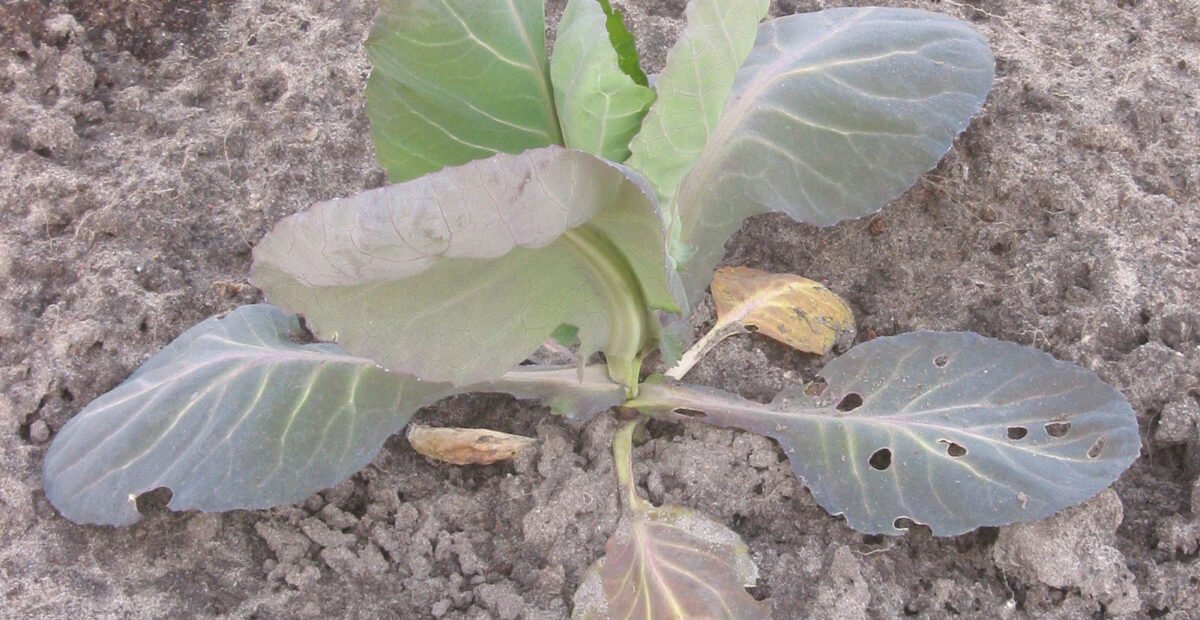
Nitrogen deficiency
Nitrogen deficiency overview
Nitrogen deficiency is a nutritional disorder that reduces chlorophyll production, growth and yield. The earliest visible sign is usually uniform pale-green to yellow foliage, beginning on older, lower leaves because nitrogen can move within the plant. Symptoms may resemble overwatering, root damage, disease, herbicide injury or other nutrient problems, so soil or tissue testing is the safest basis for corrective fertilization.
Typical conditions
Overview
Nitrogen is a major plant nutrient required for chlorophyll, amino acids, proteins and vigorous vegetative growth. When supply or uptake is inadequate, plants commonly become pale green, grow slowly and produce less biomass, foliage and yield.
Because nitrogen is mobile inside plants, the plant reallocates it from older leaves to actively growing tissue. Consequently, symptoms generally begin on lower, older leaves and may progress upward as deficiency becomes more severe. Visual diagnosis is useful for scouting but is not definitive.
Symptoms and identification
- Overall foliage becomes light green, pale yellow-green or yellow, often with relatively uniform chlorosis.
- Older, lower leaves are affected first; they may yellow from the tip or progressively die and turn brown.
- Growth is slow or stunted, stems may be thin, and leaves or new shoots may be smaller than expected.
- In corn, lower leaves can develop a characteristic yellow inverted-V pattern extending from the tip toward the midrib.
- Severe deficiency may cause premature shedding of older leaves, reduced flowering or fruiting, and low yield.
Symptoms can overlap with magnesium or potassium deficiency, root rot, compacted or waterlogged soil, low light, drought, herbicide injury and some diseases. A uniform pattern across a planting and a history of leaching or low fertility support, but do not prove, nitrogen deficiency.
Causes and spread
This disorder has no infectious cause and does not spread from plant to plant. Common causes include insufficient fertilizer or organic nutrient supply, removal of crop residues, excessive rainfall or irrigation that leaches nitrate below the root zone, and water-saturated soil that promotes denitrification. Nitrogen can also be temporarily immobilized by soil microorganisms when large amounts of high-carbon material, such as uncomposted wood products or straw, are incorporated.
Plants may show deficiency even when total soil nitrogen is present if roots are damaged, soil is compacted, temperatures are unfavorable, pH or salinity restricts root function, or the nitrogen form is temporarily unavailable. In containers and hydroponic systems, an incorrectly formulated or depleted nutrient solution is a frequent cause.
Life cycle and persistence
There is no pathogen or pest life cycle. Nitrogen deficiency develops as plant demand exceeds the amount of plant-available nitrogen reaching healthy roots. Symptoms often intensify during rapid vegetative growth, after prolonged rain, in coarse sandy soil, or when roots are confined or oxygen-starved. Correcting the root-zone supply can stop new symptoms, but already yellow or necrotic tissue will not regain its original color.
Treatment and control
- Confirm the diagnosis with a soil test and, where appropriate, plant-tissue analysis. Sample according to the laboratory's crop and growth-stage instructions.
- Check for root restriction, waterlogging, drought, salinity, compaction and competing symptoms before adding fertilizer.
- If nitrogen deficiency is supported, apply a crop-appropriate nitrogen source at the soil-test or label rate. For gardens, distribute granular material evenly and water it into the root zone; avoid placing concentrated fertilizer against stems or roots.
- In containers or hydroponic systems, correct the complete nutrient solution according to the product formulation and monitor electrical conductivity and pH as appropriate.
- Do not expect damaged leaves to turn green again. Judge recovery by new growth, improved color and renewed vigor over the following days or weeks.
- Avoid excessive nitrogen, which can cause overly lush growth, delayed fruiting, weak tissues, nutrient imbalance, water-quality problems and greater pest or disease pressure.
Low-impact and biological control
Organic management is based on building a steady nitrogen supply rather than relying on a rapid rescue application. Use mature compost or properly composted manure according to soil-test and crop needs, maintain suitable mulch, and grow nitrogen-fixing cover crops such as clover, vetch or peas where appropriate. Incorporate cover crops early enough for decomposition before the next crop needs substantial nitrogen.
Organic fertilizers such as blood meal, fish-based products or feather meal can supply nitrogen, but their release rate varies with temperature, moisture and microbial activity. Use only products whose labels permit the intended crop and follow the current label; avoid repeated applications without testing because organic amendments can contribute phosphorus, salts or excess nitrogen.
Prevention
- Test soil before planting and follow crop-specific recommendations rather than applying nitrogen routinely or by guesswork.
- Use a balanced fertility plan that accounts for compost, manure, previous legumes, cover crops, irrigation and expected crop removal.
- Improve drainage, avoid compaction, and irrigate deeply but not excessively so roots can function and nitrate losses are minimized.
- Apply nitrogen at the appropriate crop stage, often in split applications for vegetables and other high-demand crops.
- Use well-composted organic matter, retained residues and suitable legume cover crops; avoid incorporating large quantities of fresh, high-carbon material immediately before planting.
- For orchards and high-value crops, combine soil testing with properly timed leaf or tissue analysis.
Interesting facts
- Nitrogen is mobile within plants, which explains why older leaves usually show deficiency before young leaves.
- Yellowing alone does not establish the diagnosis: overwatering, root disease, low light, herbicide injury and other nutrient disorders can look similar.
- Heavy rain can create temporary nitrogen deficiency through leaching, denitrification or reduced root uptake even when nitrogen was previously present.
- In corn, an inverted-V yellowing pattern on lower leaves is a particularly useful field clue.
- More nitrogen is not always better; excessive nitrogen may delay flowering and fruiting and produce soft, pest-prone growth.
Nitrogen fertilizers are not pesticides. Use only fertilizer products legally registered or authorised for the intended crop and use in the United States, follow the current product label, observe application-rate and water-quality restrictions, and keep fertilizer out of drains and surface waters. Do not use a pesticide to treat a nutrient deficiency.
Affected plants
The plants below are linked to this problem by structured host-plant data. The list updates automatically as new plant profiles are added.
 Ethiopian Rape (Brassica carinata) care guideBrassica carinata
 Brown Mustard (Brassica juncea) care guideBrassica juncea
 Rapeseed (Brassica napus) care guideBrassica napus
 Urnip rape (Brassica rapa) care guideBrassica rapa
 Collard greens (Brassica oleracea) care guideBrassica oleracea
 Maroon cucumbe (Cucumis anguria) care guideCucumis anguria
 Horned Melon (Cucumis metuliferus) care guideCucumis metuliferus
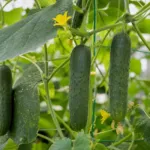 Cucumber (Cucumis sativus) care guideCucumis sativus
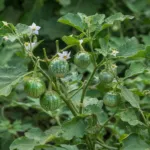 Solanum aethiopicum care guideSolanum aethiopicum
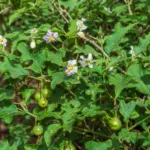 Solanum macrocarpon care guideSolanum macrocarpon
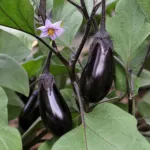 Eggplant (Solanum melongena) care guideSolanum melongena
 Garden Huckleberry (Solanum scabrum) care guideSolanum scabrum