
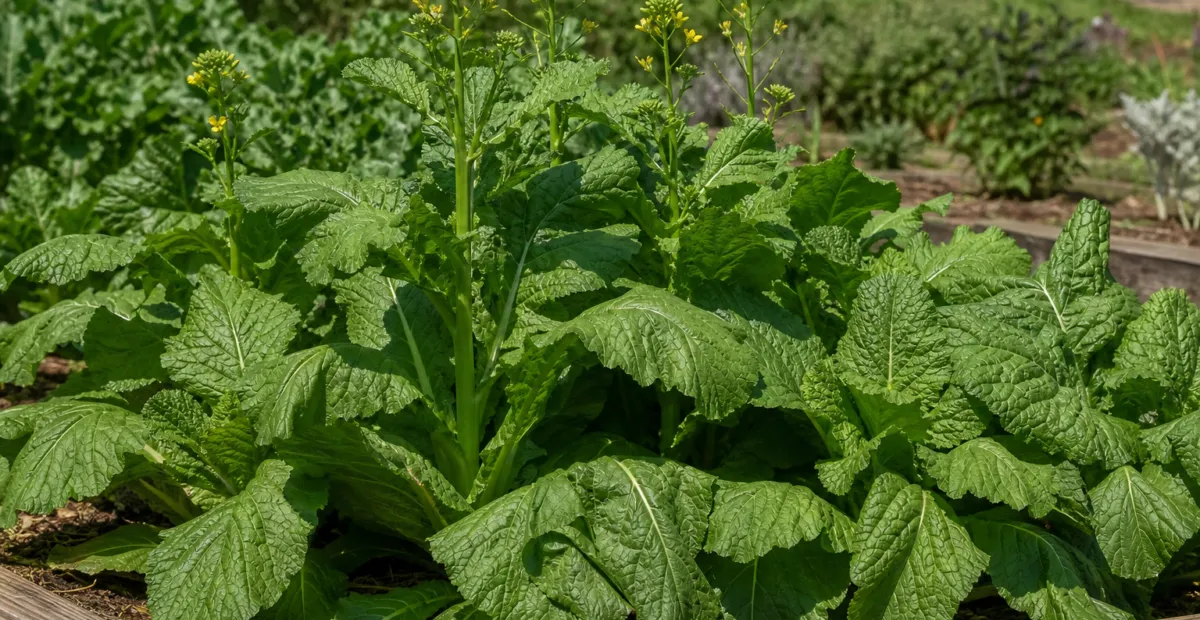
 AI-generated illustration
Broad-leaved mustard (Brassica juncea Rugosa Group) short overview
Brassica juncea Rugosa Group is a broad-leaved, edible mustard type cultivated for its substantial green leaves and compact leafy growth. It is associated in taxonomic databases with the broad-leaf or headed mustard forms of Brassica juncea and is especially useful as a cool-season vegetable. Plants grow quickly in full sun, tolerate light frost, and produce yellow four-petaled flowers if allowed to mature. The exact limits of the horticultural Group are not consistently treated across databases.
Taxonomic classification
Broad-leaved mustard (Brassica juncea Rugosa Group) care guide
Light and placement
Place in full sun with at least 6 hours of direct light, ideally with morning sun and some afternoon protection in hot climates. East- or south-facing beds are suitable. Thin, pale leaves and weak petioles suggest inadequate light; scorched margins, midday wilt and premature bolting can indicate excessive heat or reflected afternoon exposure.
Watering and humidity
Keep the root zone evenly moist but never waterlogged. Water deeply when the top inch of soil begins to dry, preferably at the base to keep foliage cleaner. Increase frequency during hot, windy weather and reduce it during cool, rainy periods. Uneven moisture can produce tougher leaves and encourage premature bolting.
Soil and growing medium
Use fertile soil with good structure, reliable drainage and enough organic matter to hold moisture without becoming saturated. Loam or amended sandy loam is suitable. A slightly acidic to neutral reaction supports nutrient availability; avoid compacted clay and beds with standing water. Incorporate mature compost before sowing rather than fresh manure.
Feeding
Mix finished compost into the bed before sowing. If leaf growth is pale or slow, apply a balanced vegetable fertilizer at the label rate once plants are established, or use a modest side-dressing of a nitrogen-containing fertilizer. Do not overfeed late in the season, and avoid heavy nitrogen applications where lush growth is more prone to pest damage.
Growth and habit
This is a fast-growing leafy annual that forms a basal cluster of broad leaves before sending up a flowering stem in warm, lengthening days. Harvesting outer leaves can extend the useful leafy phase, but plants eventually bolt and become more fibrous. Succession sowing is more reliable than trying to keep one planting productive indefinitely.
Planting and repotting
Direct-sow into prepared soil as soon as it can be worked in spring, or sow in late summer for fall harvest. Place seed about 1/4 inch deep and keep the surface evenly moist until emergence. Thin seedlings promptly so plants develop broad leaves and good air movement. Use row cover during establishment to reduce flea beetle and caterpillar damage.
For containers, transplant only young seedlings and disturb roots as little as possible. Choose a container at least 8–12 inches deep with drainage holes and refresh the potting mix between crops. Mature plants are better direct-sown because older seedlings can check or bolt after root disturbance.
Propagation and pruning
Propagation
Propagate by seed. Direct-sow about 1/4 inch deep in early spring or late summer. Seed usually germinates quickly in cool, evenly moist soil. For a continuous harvest, sow small batches every 2–3 weeks during the suitable cool-season window. Maintain separation from other flowering Brassica crops if saving seed and varietal purity matters.
Pruning
No structural pruning is needed. Harvest outer leaves regularly with a clean knife, leaving the growing point intact if continued production is desired. Remove flowering stems when the goal is tender greens; once plants bolt heavily, replace them with a succession sowing. Remove spent plants after harvest to reduce pest and disease carryover.
Overwintering
In mild climates, fall-sown plants can continue through winter with row cover, a low tunnel or protection from drying wind. Light frost is usually tolerated, but prolonged temperatures below the upper 20s °F can cause injury. In colder regions, treat it as an annual and resow in late winter or spring.
Uses
Primarily grown as an edible leafy vegetable, harvested young for salads or mature for cooking. The leaves have a pungent mustard flavor that becomes stronger with age and heat. It can be grown in garden beds, containers and succession plantings. Do not present it as a medicinal plant; people with mustard or Brassicaceae food allergies should avoid eating it.
Appearance
Plants form broad, green, often puckered or rugose leaves on visible petioles. The foliage is generally more substantial and broad-bladed than finely cut mustard types. Mature plants produce an upright flowering stem with small yellow cruciform flowers and slender seed pods. The exact leaf shape varies among material assigned to this Group.
Flowering
The flowering stem carries small yellow, four-petaled flowers typical of the mustard family. Flowering usually follows bolting as day length and temperature increase. Timing varies with sowing date and local climate; cool conditions delay the transition, while heat and drought can accelerate it. Flowers are followed by narrow siliques containing mustard seeds.
Pollination and visitors
The open yellow flowers provide accessible pollen and nectar for small insect visitors, including bees and syrphid flies. Visitor abundance depends on weather, nearby habitat and whether plants are allowed to flower. No single pollinator species is sufficiently documented for this exact horticultural Group to name confidently.
Diseases and pests
Diseases
Common brassica problems include downy mildew, damping-off, clubroot and bacterial or viral leaf diseases. Use clean seed, well-drained soil, good air circulation and crop rotation. Avoid working among wet plants, remove badly diseased foliage, and clear crop debris promptly. Do not grow successive Brassica crops in the same bed when disease pressure is persistent.
Pests
Watch for flea beetles, aphids, imported cabbageworms, cabbage loopers and diamondback moth larvae. Flea beetles create small shot holes, especially on seedlings; caterpillars chew irregular holes and leave frass. Use insect netting or row cover from emergence, hand-pick larger larvae, suppress weeds in the mustard family, and use Bt only when caterpillar damage warrants treatment.
Related diseases and pests
Only Plant Doctor profiles whose host data indicate this plant may be affected are shown here.
 PestDiamondback MothPlutella xylostella
 DiseaseClubrootPlasmodiophora brassicae Woronin
 PestCabbage Stem Flea BeetlePsylliodes chrysocephala
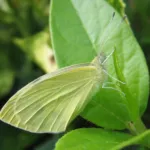 PestImported cabbagewormPieris rapae
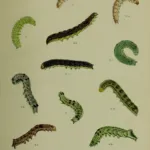 PestCabbage mothMamestra brassicae (Linnaeus, 1758)
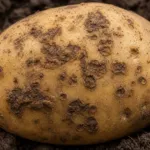 DiseasePotato common scabStreptomyces scabiei (synonym: Streptomyces scabies)
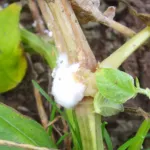 DiseaseWhite mold (Sclerotinia stem rot)Sclerotinia sclerotiorum
 DiseaseRhizopus soft rotRhizopus stolonifer
Toxicity and pollen
The leaves are cultivated as food, but mustard contains glucosinolates and can cause adverse reactions in sensitive people. The main practical concern is food allergy, not ordinary garden contact. Eat only correctly identified, clean plant material and seek medical advice for symptoms such as mouth itching, hives, swelling or breathing difficulty after consumption.
- Typical season
- Typically spring to early summer in the United States, depending on sowing date and region
- Pollination / pollen
- Light, dry pollen released from open anthers
Brassica juncea pollen can act as an aeroallergen in susceptible people, although the level of exposure from a home planting is usually much lower than from large flowering crops. Avoid placing flowering plants beside frequently used outdoor seating if pollen sensitivity is known. Insect pollination does not mean airborne allergy risk is zero.
Native habitat
This cultivated mustard group performs best in cool, sunny temperate conditions with fertile, moist but freely draining soil. It is associated with managed vegetable fields and gardens rather than a narrowly defined wild habitat. Brassica juncea crop types are linked to South and East Asian agricultural diversity and are now grown widely in temperate regions.
Interesting fact
The Rugosa name refers to the wrinkled or roughened leaf character often associated with these mustards. Older taxonomic treatments commonly placed related material under Brassica juncea var. rugosa. Modern databases may instead use broad-leaf or headed mustard Group terminology. The species is an allotetraploid with A and B genomes and chromosome number 2n = 36.
Frequently asked questions (FAQ)
The most relevant questions about this plant, with short and direct answers.
🌱Quick care
What is Brassica juncea Rugosa Group?⌄
Brassica juncea Rugosa Group is a cultivated broad-leaved or headed mustard grown primarily as a cool-season leafy vegetable. It is an annual in typical U.S. gardens, although the species can behave as a biennial in some climates.
How long does Brassica juncea Rugosa Group take to mature?⌄
Baby leaves can often be harvested in roughly 25–40 days, while larger leaves or mature plants may take about 45–90 days. Actual timing varies with temperature, spacing, cultivar selection, and whether the crop is harvested young.
Can I eat broad-leaved mustard raw?⌄
Yes, young leaves can be eaten raw in salads, sandwiches, or mixed greens. Mature leaves are often better cooked, blanched, fermented, or pickled because they can be tougher and more pungent.
🌤️Environment and placement
How much sunlight does broad-leaved mustard need?⌄
Grow Brassica juncea Rugosa Group in full sun, providing at least 6 hours of direct light daily. Light partial shade is useful in warm weather because it can slow bolting and reduce leaf bitterness.
What temperatures are best for Brassica juncea Rugosa Group?⌄
Brassica juncea Rugosa Group grows best during cool spring and fall weather, roughly 45–75°F. It tolerates light frost, but hot conditions encourage bolting and can produce tougher, sharper-tasting leaves.
Can broad-leaved mustard survive frost?⌄
Yes, it can tolerate light frost as a cool-season crop. Protection with a row cover is advisable during a hard freeze, especially for young seedlings or plants exposed to repeated freezing temperatures.
💧Care and problems
How often should I water broad-leaved mustard?⌄
Water regularly whenever the soil surface begins to dry, aiming for consistent moisture rather than alternating drought and saturation. Watering at the soil line in the morning helps keep foliage drier and may reduce disease pressure.
How often should I fertilize Brassica juncea Rugosa Group?⌄
Work compost or a balanced vegetable fertilizer into fertile soil before planting, then feed lightly if growth is pale or slow. Avoid excessive nitrogen because lush growth can be more pest-prone and may develop a stronger flavor.
How do I harvest broad-leaved mustard?⌄
Harvest outer leaves when they are young and tender, usually when they are a few inches long, or cut the whole plant above the crown for a single harvest. Leaving the center growing point intact allows repeated picking.
What pests commonly attack broad-leaved mustard?⌄
Common pests include flea beetles, aphids, caterpillars, slugs, and snails. Row covers, removal of damaged leaves, hand-picking, and good garden sanitation can reduce damage, especially while plants are young.
What diseases affect Brassica juncea Rugosa Group?⌄
Mustards may develop fungal or bacterial leaf diseases, downy mildew, clubroot, or viral symptoms, particularly in wet, crowded, or poorly rotated beds. Improve airflow, water at the base, remove infected debris, and avoid planting brassicas repeatedly in the same soil.
Why are my mustard leaves bitter or too spicy?⌄
Heat, drought, delayed harvest, and excessive nutrient stress can make the leaves more bitter or pungent. Harvest younger leaves, maintain even moisture, and grow the crop during cool spring or fall weather.
🪴Planting and repotting
What soil is best for Brassica juncea Rugosa Group?⌄
Use fertile, well-drained loam that remains evenly moist without becoming waterlogged. A slightly acidic to neutral soil, approximately pH 6.0–7.0, is generally suitable for mustard greens.
When should I plant Brassica juncea Rugosa Group in the United States?⌄
Plant it in early spring or late summer for a fall crop, timing sowing so most growth occurs in cool weather. In many regions, fall planting gives better flavor, while exact dates should follow local frost and heat patterns.
Can I grow broad-leaved mustard in a container?⌄
Yes, Brassica juncea Rugosa Group grows well in containers that are at least 8–12 inches deep and have drainage holes. Use fertile potting mix, keep the soil evenly moist, and place the container in full sun or light afternoon shade.
How far apart should I plant Brassica juncea Rugosa Group?⌄
Space plants about 4–6 inches apart for baby greens and 10–12 inches apart for larger leaves or headed growth. If you sow densely, thin seedlings early and use the thinnings as edible greens.
How deep should broad-leaved mustard seeds be planted?⌄
Sow Brassica juncea Rugosa Group seeds about ¼ inch deep in finely prepared, moist soil. Seeds germinate quickly in cool soil, commonly within several days to about two weeks depending on temperature and moisture.
Can I grow broad-leaved mustard after cabbage or broccoli?⌄
It is better not to plant Brassica juncea Rugosa Group immediately after cabbage, broccoli, kale, turnips, or other brassicas. Rotate the bed for several years when possible because related crops share pests and soil-borne diseases.
✂️Propagation and pruning
Can Brassica juncea Rugosa Group be grown from cuttings?⌄
No, it is normally propagated from seed rather than stem cuttings. Direct-sow seeds or start them indoors about 3–4 weeks before transplanting, taking care not to disturb the roots during planting.
Does broad-leaved mustard need pruning?⌄
Routine pruning is unnecessary, but harvesting outer leaves functions as light pruning and encourages continued production. Remove yellow, damaged, or diseased leaves promptly to improve airflow and reduce pest or disease problems.
Can I save seeds from Brassica juncea Rugosa Group?⌄
Yes, allow healthy plants to flower and let the elongated seed pods dry on the plant before collecting them. Because Brassica juncea can cross with related mustard types, isolate flowering plants if maintaining a specific strain is important.
⚠️Toxicity and safety
Is Brassica juncea Rugosa Group edible?⌄
Yes, its leaves, young shoots, flowers, and seeds are generally edible when properly identified and prepared. The leaves have a mustard-like, peppery flavor that is usually milder when harvested young.
Are Brassica juncea Rugosa Group seeds safe to eat?⌄
The seeds are generally used as a culinary mustard ingredient when correctly identified and consumed in normal food quantities. Concentrated seed preparations or large amounts may irritate the digestive system, and people with mustard allergies should avoid them.
Can people with mustard allergies eat broad-leaved mustard?⌄
No, people with a known mustard allergy should avoid the leaves, flowers, seeds, and products made from this plant. Cross-contact is possible during harvesting and food preparation, so use appropriate precautions.
Is Brassica juncea Rugosa Group toxic to pets?⌄
The plant is generally considered an edible vegetable, but large amounts of raw brassica foliage or seeds may cause digestive upset in pets. Keep pets from eating substantial quantities and contact a veterinarian if symptoms develop.
Is broad-leaved mustard invasive in the United States?⌄
Brassica juncea is cultivated widely in the United States but is considered weedy or noxious in some regions. Prevent unwanted spread by harvesting seed pods before they open and checking local regulations if growing it near natural areas.
🌸Flowering and special interest
Why is my Brassica juncea Rugosa Group flowering too early?⌄
Early flowering, or bolting, is usually caused by rising temperatures, increasing day length, drought stress, or transplant shock. Harvest promptly, provide consistent moisture and some afternoon shade, and replant for a cool-season crop when bolting begins.
Does Brassica juncea Rugosa Group produce yellow flowers?⌄
Yes, mature plants typically produce small yellow four-petaled flowers on upright stalks after bolting. Flowering marks the transition toward seed production, and leaf quality commonly declines afterward.
Similar plants
 Azure Monkshood (Aconitum carmichaelii) care guideAconitum carmichaelii
 Monkshood (Aconitum ‘Stainless Steel’)Aconitum 'Stainless Steel'
 Monkshood (Aconitum ‘Bressingham Spire’)Aconitum 'Bressingham Spire'
 Golden full moon maple (Acer shirasawanum ‘Aureum’)Acer shirasawanum 'Aureum'
 Globosum (Acer platanoides ‘Globosum’)Acer platanoides 'Globosum'
 Striped maple (Acer pensylvanicum) care guideAcer pensylvanicum