
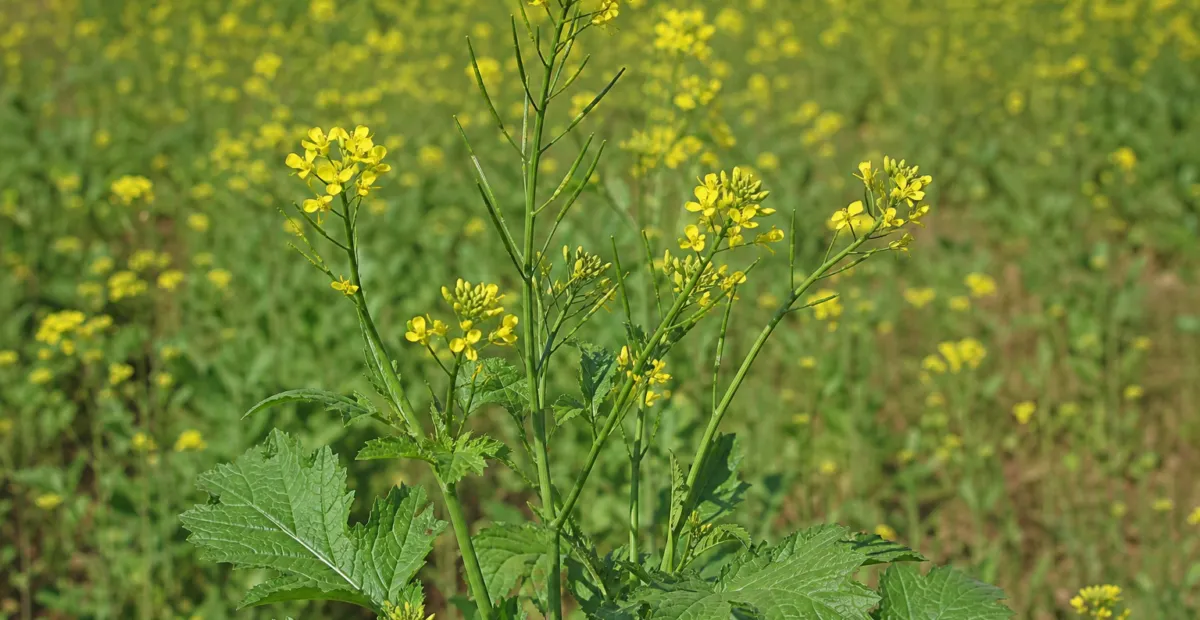
 AI-generated illustration
Black Mustard (Brassica nigra) short overview
Black mustard (Brassica nigra) is a fast-growing, cool-season annual in the cabbage and mustard family. Its upright, branching stems bear coarse lower leaves, smaller upper leaves, yellow flowers, and narrow pods filled with pungent black seeds. In the United States it is grown for culinary greens, spice production, cover cropping, and pollinator value. It prefers full sun and well-drained soil, but can self-seed readily if pods are allowed to mature.
Taxonomic classification
Black Mustard (Brassica nigra) care guide
Light and placement
Give full sun, ideally six or more hours of direct light with open exposure and good air movement. A south- or west-facing bed is suitable in the United States. Weak, stretched stems and sparse flowering indicate insufficient light; excessive heat and drought can accelerate bolting, scorch foliage, and shorten the useful leafy stage.
Watering and humidity
Water deeply enough to moisten the active root zone, then water again when the surface begins to dry. Keep seedlings consistently moist; established plants tolerate brief dry periods but produce better greens with even moisture. Reduce watering in cool, rainy weather and avoid saturated soil, which encourages root and seedling problems.
Soil and growing medium
Use fertile, well-drained loam or sandy loam that holds moderate moisture without remaining soggy. A slightly acidic to slightly alkaline reaction is tolerated, with approximately pH 5.5–7.5 commonly suitable. Avoid compacted soil, especially where a strong taproot is desired.
Feeding
In reasonably fertile soil, incorporate finished compost before sowing. If growth is pale or weak, apply a balanced vegetable fertilizer at the label rate during early vegetative growth, avoiding heavy late feeding. Do not fertilize drought-stressed or waterlogged plants, and avoid excess nitrogen when seed production or sturdy stems is the goal.
Growth and habit
This annual develops rapidly from seed into an upright, branching plant and can produce substantial biomass in a short cool-season window. The taproot helps it exploit deeper soil layers. Cut or mow before mature pods open if volunteer seedlings are not wanted.
Planting and repotting
Sow directly in prepared soil in late summer or fall for a cool-season crop, or in early spring where winters are severe. Cover seed about 1/4–1/2 inch deep, firm the soil gently, and keep the seedbed evenly moist until emergence.
Usually grown directly in the ground rather than permanently containerized. If started in containers, transplant while young because the taproot dislikes prolonged root restriction.
Propagation and pruning
Propagation
Propagate by seed. Direct sowing is preferred; collect mature dry pods before they split if seed saving is desired. Germination is normally straightforward in cool soil.
Pruning
No ornamental pruning is required. Harvest young leaves regularly to delay bolting, or cut plants at ground level before pods mature when used as a cover crop or when seed spread must be limited.
Overwintering
In mild-winter regions it can grow through much of the cool season. In colder areas, plants may be damaged or killed by temperatures near 25°F, so use fall sowing mainly for seasonal cover or harvest and do not rely on survival through severe freezes.
Uses
Young leaves can be cooked as pungent mustard greens, and mature seeds are used as a strong mustard spice. It is also used as a rapidly growing cover crop for biomass, nutrient capture, soil improvement, and suppression of some weeds and soilborne organisms. Manage it before seed set where volunteer spread is a concern.
Appearance
The plant forms an upright, branched annual with a strong taproot. Lower leaves are relatively large, coarse, and often lobed or irregularly toothed; upper leaves become smaller and clasping or narrow. Yellow racemes rise above the foliage, followed by slender pods containing dark seeds.
Flowering
Small yellow, four-petaled flowers are borne in elongated racemes on branching stems. In favorable cool-season conditions, flowering may begin roughly six weeks after emergence and continue for several weeks before narrow seed pods develop.
Pollination and visitors
The yellow flowers provide nectar and pollen visited by honeybees and hoverflies, with visitation generally concentrated during the spring flowering period. The plant can also support herbivorous brassica insects, so pollinator value should be balanced with pest-management needs.
Brassica nigra photos
Click any photo for a larger view. Source, author and license are shown separately.
Diseases and pests
Diseases
Reduce risk with crop rotation, clean seed, good airflow, and well-drained soil. Watch for damping-off in wet seedbeds, downy mildew, white rust, and Sclerotinia; remove badly affected plants and avoid repeated brassica planting in the same bed.
Pests
Flea beetles, aphids, caterpillars including diamondback moth larvae, and other brassica-feeding insects may attack foliage. Use row cover on young plants, remove heavily damaged leaves, encourage natural enemies, and rotate brassica crops. Control volunteers before seed dispersal.
Related diseases and pests
Only Plant Doctor profiles whose host data indicate this plant may be affected are shown here.
 PestCabbage Stem Flea BeetlePsylliodes chrysocephala
 DiseaseWhite Rust of CrucifersAlbugo candida (Pers.) Kunze
 PestDiamondback MothPlutella xylostella
 DiseaseWhite mold (Sclerotinia stem rot)Sclerotinia sclerotiorum
 PestTurnip flea beetlePhyllotreta nemorum (Linnaeus, 1758)
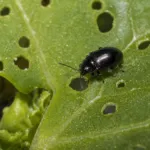 PestTurnip Flea BeetlePhyllotreta atra (Fabricius, 1775)
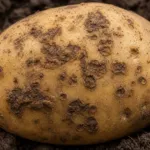 DiseasePotato common scabStreptomyces scabiei (synonym: Streptomyces scabies)
 DiseaseRhizopus soft rotRhizopus stolonifer
Toxicity and pollen
Black mustard is a culinary plant, but mustard tissues and especially seeds contain pungent glucosinolates and related compounds that can irritate the mouth, skin, eyes, or digestive tract in concentrated amounts. Use only correctly identified, properly prepared material; avoid medicinally concentrated applications and seek professional advice after significant ingestion or irritation.
- Typical season
- Typically spring to early summer in much of the United States; fall flowering is possible in mild regions.
- Pollination / pollen
- Insect-associated floral pollen; some airborne dispersal
Mustard flowers release pollen during bloom. Although the flowers are commonly insect-visited, pollen exposure is not necessarily zero; sensitive people may encounter airborne pollen near dense flowering stands. Exposure is usually most relevant during the local flowering period.
Native habitat
Native to broad areas of Europe, North Africa, and temperate parts of Asia, black mustard occurs in disturbed ground, field margins, roadsides, wasteland, and other open habitats. It favors seasonal moisture, fertile or moderately fertile soils, and open sun, and it is naturalized in parts of North America.
Interesting fact
Black mustard is one of the traditional species associated with pungent mustard seed. Its seeds are dark brown to nearly black and are held in slender siliques. As a cover crop, decomposing tissues release glucosinolate-derived compounds that may suppress some soilborne pests and weeds. It can volunteer freely when seed is allowed to mature.
Frequently asked questions (FAQ)
The most relevant questions about this plant, with short and direct answers.
🌱Quick care
What is Black Mustard (Brassica nigra)?⌄
Black Mustard is a fast-growing annual or winter annual herb in the Brassicaceae family, grown for its pungent leaves and dark seeds. It typically reaches about 2–6 feet tall and produces small yellow flowers.
Is Black Mustard easy to grow?⌄
Yes, Black Mustard is generally easy to grow from seed when given full sun, moderate water, and fertile, well-drained soil. It grows best during cool weather and may decline quickly in summer heat.
🌤️Environment and placement
How much sun does Black Mustard need?⌄
Black Mustard grows best in full sun, with at least 6 hours of direct sunlight daily. In hot climates, light afternoon shade can help reduce heat stress.
What type of soil is best for Black Mustard?⌄
Use fertile, well-drained loam with a soil pH of about 5.5–7.5. Incorporating compost can improve growth in poor or compacted soil.
How often should I water Black Mustard?⌄
Water Black Mustard moderately, keeping the soil evenly moist but not soggy. Allow the surface to dry slightly between waterings, especially in containers.
Can Black Mustard tolerate frost?⌄
Black Mustard tolerates light frost but is often winter-killed when temperatures fall below about 25°F. In much of the United States, it is best treated as a cool-season annual.
When should I grow Black Mustard in the United States?⌄
Grow Black Mustard in fall, winter, or early spring when temperatures are cool. In warm regions, fall planting usually produces better growth than summer planting.
💧Care and problems
Why is my Black Mustard turning yellow?⌄
Yellow leaves commonly result from overwatering, poor drainage, nutrient deficiency, or aging foliage. Check that the soil drains well and that the plant receives adequate sunlight.
Why is my Black Mustard wilting?⌄
Wilting is usually caused by dry soil, root damage, excessive heat, or waterlogged roots. Check soil moisture and drainage before watering again.
Does Black Mustard have common pests or diseases?⌄
Black Mustard can be affected by common brassica pests such as flea beetles, aphids, caterpillars, and cabbage worms. Good airflow, crop rotation, row covers, and prompt removal of damaged foliage can help.
Can Black Mustard grow in a container?⌄
Yes, Black Mustard grows well in a container with drainage holes and fertile potting mix. Choose a container at least 8–12 inches deep and provide full sun.
🪴Planting and repotting
How do I plant Black Mustard seeds?⌄
Sow Black Mustard seeds directly on prepared soil and cover them lightly, about ¼ inch deep. Keep the seedbed evenly moist until germination, which commonly occurs within several days.
How far apart should Black Mustard plants be?⌄
Space Black Mustard plants about 8–18 inches apart, depending on whether you want baby greens or mature plants. Wider spacing improves airflow and allows larger plants to develop.
Can Black Mustard be transplanted?⌄
Black Mustard can be transplanted while young, but direct sowing is usually easier and causes less stress. If transplanting, move seedlings before they become root-bound.
How long does Black Mustard take to mature?⌄
Black Mustard can provide young leaves within a few weeks and usually flowers during the following cool-to-mild season. Timing varies with temperature, day length, and growing conditions.
✂️Propagation and pruning
How is Black Mustard propagated?⌄
Black Mustard is propagated by seed. Allow mature pods to dry on the plant, then collect the dark seeds before the pods split widely and scatter them.
Can Black Mustard reseed itself?⌄
Yes, Black Mustard readily reseeds when mature pods release their seeds. Remove plants before seed production if you do not want volunteer seedlings or local spread.
Should I prune Black Mustard?⌄
Pruning is not required, but harvesting outer leaves and cutting flower stalks can keep the plant productive temporarily. Remove the entire plant before seeds mature if preventing reseeding is important.
⚠️Toxicity and safety
Is Black Mustard edible?⌄
Yes, the young leaves, stems, flowers, and seeds of correctly identified Black Mustard are edible and have a strong, pungent flavor. Use young foliage for greens and mature seeds as a spice.
Can Black Mustard irritate the skin?⌄
Yes, Black Mustard can cause skin irritation or contact dermatitis in sensitive people, particularly when plant material or concentrated seed preparations are handled. Wear gloves if irritation occurs.
Is Black Mustard toxic to pets or livestock?⌄
Black Mustard has a relatively low general toxicity concern, but large amounts of brassica material or concentrated seeds can irritate the digestive system and may create risks for livestock. Do not use it medicinally or as animal feed without professional guidance.
Can I eat Black Mustard growing beside a road?⌄
It is safer not to eat Black Mustard gathered from roadsides, treated lawns, construction areas, or polluted sites. Only consume plants that are correctly identified and grown or collected in clean, chemical-free locations.
Is Black Mustard invasive in the United States?⌄
Black Mustard is invasive or weedy in parts of the western United States and some other regions. Prevent spread by harvesting or removing plants before seed pods mature, and check local invasive-plant guidance before cultivating it.
🌸Flowering and special interest
When does Black Mustard flower?⌄
Black Mustard usually flowers in spring after cool-season growth, producing upright clusters of small yellow, four-petaled flowers. In suitable climates, flowering may occur during other mild seasons.
How can I tell Black Mustard from similar mustard plants?⌄
Black Mustard commonly has rough, sparsely hairy leaves and stems, bright yellow flowers, and short upright seed pods pressed close to the flowering stem. Because several mustards look similar, confirm identification with a regional field guide before eating it.
What do Black Mustard seed pods look like?⌄
The seed pods are short, narrow, and usually held upright and close to the flower stalk. They mature from green to tan or brown and split open to release dark brown or black seeds.
Do Black Mustard flowers attract pollinators?⌄
Yes, the yellow flowers can attract bees, flies, hoverflies, and other insects. They provide a useful nectar and pollen source during the flowering period.
Similar plants
 Azure Monkshood (Aconitum carmichaelii) care guideAconitum carmichaelii
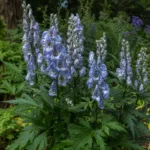 Monkshood (Aconitum ‘Stainless Steel’)Aconitum 'Stainless Steel'
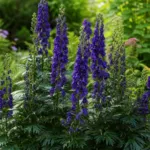 Monkshood (Aconitum ‘Bressingham Spire’)Aconitum 'Bressingham Spire'
 Golden full moon maple (Acer shirasawanum ‘Aureum’)Acer shirasawanum 'Aureum'
 Globosum (Acer platanoides ‘Globosum’)Acer platanoides 'Globosum'
 Striped maple (Acer pensylvanicum) care guideAcer pensylvanicum