
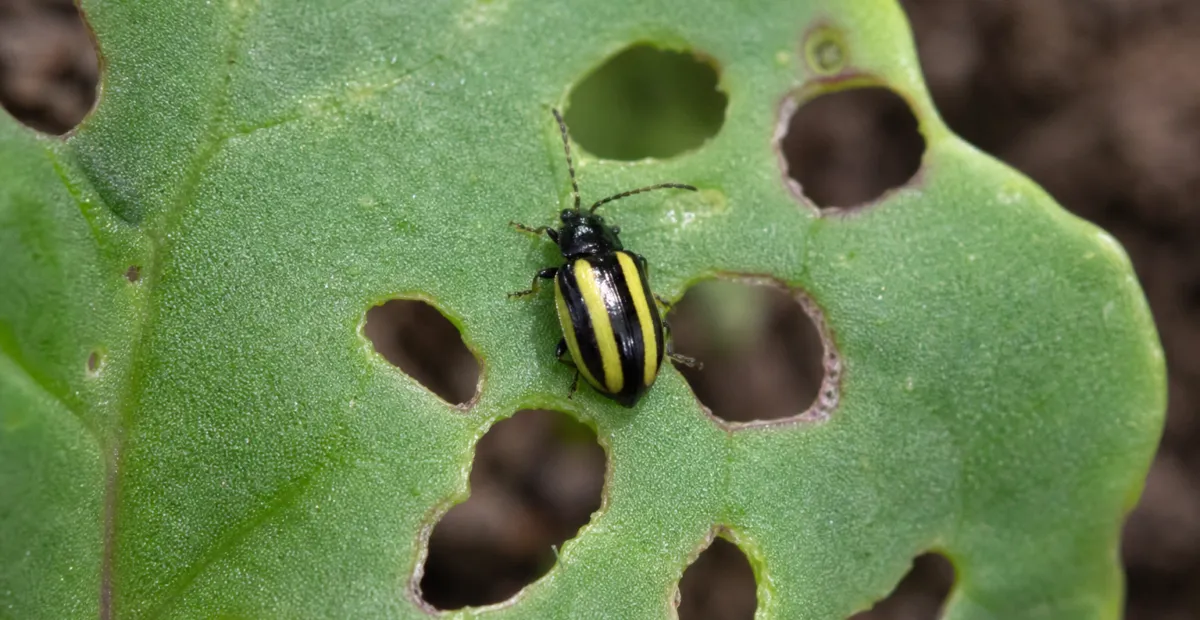
Turnip flea beetle
Phyllotreta nemorum (Linnaeus, 1758)Turnip flea beetle overview
The turnip flea beetle, Phyllotreta nemorum, is a small, jumping leaf beetle that feeds mainly on Brassicaceae. Adults make numerous pinholes and shot-hole lesions in young turnip, radish, mustard and related foliage, while larvae typically mine inside leaves. The species is primarily Palearctic and is not one of the common flea beetles routinely reported in U.S. vegetable production, so unusual U.S. detections should be confirmed by an extension diagnostician or state plant-health authority.
Typical conditions
Overview
Phyllotreta nemorum is a flea beetle in the leaf-beetle family Chrysomelidae. Adults are usually about 0.1–0.14 inch long, dark, and marked with broad pale-yellow stripes along the wing covers. Their enlarged hind legs allow them to jump rapidly when disturbed.
The species is primarily associated with the Palearctic region. In the United States, gardeners more commonly encounter other flea beetle species, including Phyllotreta cruciferae, P. striolata and regional Epitrix species. A suspected P. nemorum record should therefore be confirmed with a clear specimen or image and, where appropriate, an extension or state plant-health diagnostician.
Symptoms and identification
Adults chew many small, round to irregular holes through cotyledons and young leaves, producing a distinctive shot-hole appearance. Heavily injured seedlings may have skeletonized leaves, reduced growth, wilting or stand loss. Older plants usually tolerate light feeding better.
Larvae of this species are reported chiefly as internal leaf miners. Look for narrow, winding or blotchy mines within leaves rather than root tunneling, although flea-beetle biology can vary among closely related species. Tiny jumping beetles on the foliage strongly support a flea-beetle diagnosis but do not by themselves confirm P. nemorum.
Causes and spread
Adults overwinter in plant debris, field margins, hedgerows or other sheltered vegetation and move into newly emerging brassica crops in spring. They are attracted to tender, actively growing foliage, especially in warm, sunny conditions. Weedy mustard-family plants can provide food and breeding sites between crops.
Spread occurs mainly through adult flight and jumping, movement of infested plant material, and survival of beetles in nearby unmanaged host plants. Dense stands of small seedlings are most vulnerable because a relatively small number of feeding adults can remove a large proportion of leaf area.
Life cycle and persistence
Adults overwinter and become active in spring. Females lay eggs on or near suitable Brassicaceae foliage; published accounts describe larval development within leaves, especially on wild crucifer hosts. Larvae feed in the leaf, then leave the mine to pupate in the soil or nearby sheltered substrate, depending on local conditions and population.
New adults generally appear later in the growing season and feed before seeking overwintering shelter. Timing and number of generations vary with latitude, temperature and host availability; do not apply a fixed calendar schedule to an unconfirmed U.S. population.
Treatment and control
For light injury, remove or tolerate damaged leaves and focus on protecting the growing point. Hand-vacuuming or gently tapping adults onto a sheet can reduce small garden populations when repeated frequently. Irrigation that prevents drought stress may help plants outgrow limited feeding, but overhead watering is not a dependable control method.
For valuable young plants, combine row covers, weed management and early monitoring. If damage is increasing rapidly or seedlings are losing most of their leaf area, obtain a species-confirmed diagnosis before selecting a treatment, because several flea beetle species look similar and their control recommendations may differ by crop and state.
Low-impact and biological control
- Prioritize floating row covers, sanitation, crop rotation and removal of volunteer and weedy Brassicaceae.
- Use vigorous transplants or slightly larger seedlings where practical; established plants are less vulnerable than newly emerged seedlings.
- In small plantings, use physical removal, a handheld vacuum, or carefully managed trap plants only when the trap crop can be monitored and removed before beetles disperse.
- Beneficial ground beetles, predatory bugs, spiders and parasitoids may contribute to suppression, so avoid broad-spectrum sprays that disrupt them.
- Products based on pyrethrins, neem or spinosad are not automatically appropriate for every crop, formulation or state. Use an organic-labeled product only when it is registered and permitted for the specific crop and pest, and follow its label exactly.
Prevention
- Use insect-exclusion fabric or floating row cover immediately after sowing or transplanting, securing edges tightly and removing it only when pollination or crop inspection requires access.
- Control volunteer brassicas and mustard-family weeds around beds, while avoiding unnecessary disturbance of flowering plants that support beneficial insects.
- Use healthy transplants and maintain even moisture and fertility so seedlings establish quickly; avoid excessive nitrogen that produces soft, lush growth.
- Rotate brassica plantings and avoid placing successive young crops beside heavily infested beds or overwintering crop residues.
- Inspect seedlings several times per week, especially during warm spring weather, and record the number of beetles and the percentage of damaged leaves before deciding on treatment.
Interesting facts
The yellow stripes and jumping behavior can make this beetle conspicuous, but several North American flea beetles have similar size and feeding damage. Accurate species identification may require examination of a preserved specimen or specialist confirmation.
Phyllotreta nemorum has been important in research on host-plant defense and insect adaptation. Some populations can overcome chemical defenses in particular Barbarea vulgaris plant types, illustrating why host suitability may differ among beetle populations and plant genotypes.
Use chemical control only after confirming the pest and assessing economic or plant-health risk. In the United States, apply only a product legally registered for the specific crop and flea-beetle problem in your state; follow the current label for rate, timing, protective equipment, preharvest interval and pollinator precautions. Do not infer authorization from a product being labeled for another flea beetle species, crop or use site.
Affected plants
The plants below are linked to this problem by structured host-plant data. The list updates automatically as new plant profiles are added.
 Ethiopian Rape (Brassica carinata) care guideBrassica carinata
 Brown Mustard (Brassica juncea) care guideBrassica juncea
 Rapeseed (Brassica napus) care guideBrassica napus
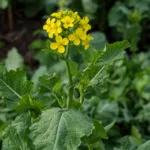 Urnip rape (Brassica rapa) care guideBrassica rapa
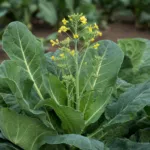 Collard greens (Brassica oleracea) care guideBrassica oleracea
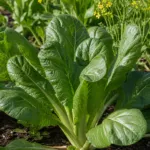 Integrifolia Group (Brassica juncea Integrifolia Group)Brassica juncea Integrifolia Group
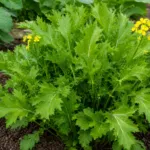 Multiceps Group (Brassica juncea Multiceps Group)Brassica juncea Multiceps Group
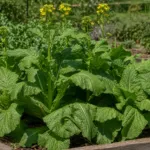 Broad-leaved mustard (Brassica juncea Rugosa Group)Brassica juncea Rugosa Group
 Black Mustard (Brassica nigra) care guideBrassica nigra
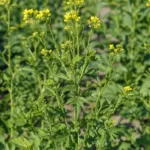 White Mustard (Sinapis alba) care guideSinapis alba
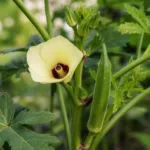 Okra (Abelmoschus esculentus) care guideAbelmoschus esculentus
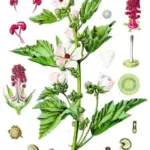 Marsh mallow (Althaea officinalis) care guideAlthaea officinalis