
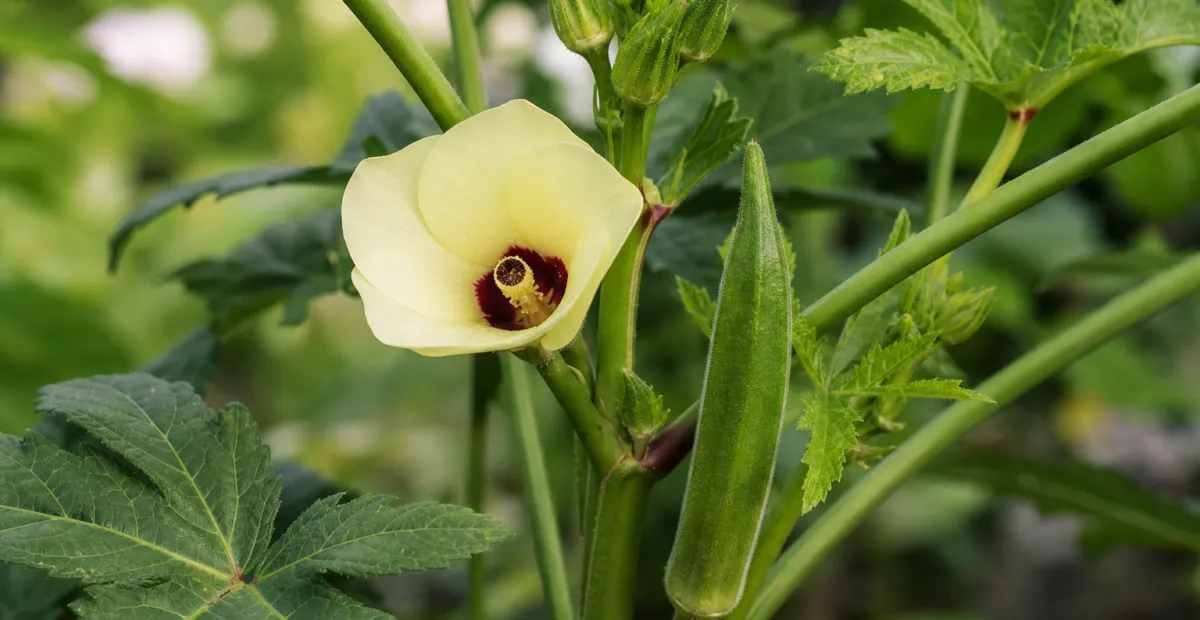
 AI-generated illustration
Okra (Abelmoschus esculentus) short overview
Okra is a heat-loving annual vegetable in the mallow family, grown in the United States for its tender, ridged seed pods. Plants produce large yellow, hibiscus-like flowers with dark centers, followed by pods that become fibrous if left too long. Give okra full sun, fertile well-drained soil, consistent moisture and a long frost-free season. Harvest pods frequently while they are still young and tender.
Taxonomic classification
Okra (Abelmoschus esculentus) care guide
Light and placement
Place okra where it receives at least 6–8 hours of direct sun, ideally in an open south- or southwest-facing bed with good air movement. Strong light supports sturdy stems, flowering and pod production. Pale, stretched growth and sparse flowers suggest insufficient light; scorched leaves in a container usually indicate heat or root-zone drying rather than excessive sunlight alone.
Watering and humidity
Water deeply when the upper inch of soil begins to dry, keeping moisture reasonably even during flowering and pod development. Mulch helps reduce rapid fluctuations, but keep it away from the stem. Increase watering during hot, dry weather and reduce it after cool weather slows growth. Avoid chronically wet soil, which favors root problems. Extra humidity is not normally required.
Soil and growing medium
Use fertile soil that drains freely yet retains enough moisture for rapid summer growth. Loam amended with compost is ideal; heavy clay should be improved with organic matter and careful drainage rather than left saturated. A slightly acidic to slightly alkaline reaction is tolerated, with pH near neutral generally suitable. Raised beds are useful where spring soil stays wet.
Feeding
Incorporate finished compost before planting. If growth is weak or leaves pale, apply a balanced vegetable fertilizer according to the product label after establishment, then repeat only as needed during active growth. Avoid excessive nitrogen, which can produce lush foliage with fewer pods. Do not fertilize drought-stressed, waterlogged or frost-damaged plants until they recover.
Growth and habit
Okra grows rapidly in warm weather as an erect, branching annual. Regular harvesting encourages continued flowering and pod production, while mature pods left on the plant become fibrous and can reduce subsequent production. Tall cultivars may benefit from a discreet stake or support in windy sites. The plant performs best when roots remain warm and undisturbed.
Planting and repotting
Sow directly after the soil has warmed, or transplant carefully because okra dislikes root disturbance. Soaking seed for several hours can help speed germination, although it is optional. Plant in full sun after the last expected frost and protect young plants with row cover if nights remain cool. Keep the seedbed evenly moist until emergence, then thin to the final spacing.
Container-grown okra should be moved only when necessary because root disturbance slows establishment. Use a container at least 12 inches wide and deep with drainage holes and a fertile, well-drained potting mix. Transplant seedlings while small, keeping the root ball intact. Repotting later in the season is generally less useful than starting a new plant.
Propagation and pruning
Propagation
Propagate from seed. Direct sow after frost when soil is warm, or start indoors about 3–4 weeks before transplanting. Seed germination is improved by warm conditions; optional soaking can soften the seed coat. For seed saving, allow pods to mature and dry fully on the plant, then collect before they split and release seed.
Pruning
Pruning is usually unnecessary for productive garden plants. Remove damaged leaves and spent, diseased growth with clean tools. Continue harvesting pods frequently rather than cutting back healthy stems. If a plant becomes unmanageably tall late in the season, selective removal of weak or crowded branches is preferable to severe topping, which can reduce flowering.
Overwintering
Okra is frost tender and normally discarded after the first killing frost. In the United States it is most practical to grow it as an annual. Container plants can sometimes be moved indoors before cold weather, but they require intense light, warmth and careful pest monitoring and may not remain productive.
Uses
The immature pods are a well-supported culinary use and can be boiled, fried, grilled, pickled or added to soups, stews and gumbo; their mucilage thickens liquids. Young leaves and flowers are also eaten in some cuisines, and mature seeds may be roasted or ground. Dried stems can provide coarse fiber. Harvest edible parts from correctly identified, cleanly grown plants; do not treat traditional uses as proven medical treatment.
Appearance
The plant has an upright, coarse-textured form with green, sometimes reddish, hairy stems. Leaves are alternate, long-stalked, green and palmately lobed, often with five to seven lobes and toothed margins. Large hibiscus-like flowers appear in leaf axils. The distinctive capsule is usually ribbed or angular and contains numerous rounded seeds.
Flowering
Flowers are perfect, with male and female reproductive structures in the same bloom. Each flower generally opens for only one day, often in the morning, then withers as the developing capsule enlarges below it. Yellow petals contrast with a dark center and a prominent staminal column. Flowering and pod set continue through warm summer weather until cold or frost stops growth.
Pollination and visitors
Okra is self-fertile but its large, pollen-rich flowers are visited by honey bees, bumblebees, solitary bees and other insects. Insect visits can increase cross-pollination and may improve seed and fruit production, even though pods can set without a pollinator. Avoid broad-spectrum insecticides during bloom and provide nearby nesting and flowering resources where practical.
Abelmoschus esculentus photos
Click any photo for a larger view. Source, author and license are shown separately.
Diseases and pests
Diseases
Root rot is encouraged by poorly drained soil and chronic overwatering. Powdery mildew may develop on foliage, especially with crowded plants and limited airflow. Use healthy seed, rotate crops, water at the soil surface, avoid working among wet plants and remove severely affected debris. Improve drainage and consult local extension guidance before applying a labeled fungicide.
Pests
Common problems include aphids, whiteflies, spider mites, slugs, corn earworms, flea or cucumber beetles and root-knot nematodes. Inspect leaf undersides and developing pods regularly. Use hand removal, water sprays, barriers and beneficial-insect conservation where practical. Rotate crops and avoid planting in known nematode-infested soil; use pesticides only when identification and label directions support treatment.
Related diseases and pests
Only Plant Doctor profiles whose host data indicate this plant may be affected are shown here.
 PestJavanese Root-Knot NematodeMeloidogyne javanica
 PestSouthern root-knot nematodeMeloidogyne incognita
 PestMelon thripsThrips palmi Karny
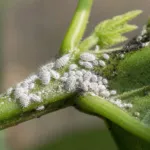 PestCotton mealybugPhenacoccus solenopsis Tinsley
 DiseaseAster yellows‘Candidatus Phytoplasma asteris’
 Environmental stressOverwatering
 DiseaseMaple powdery mildewSawadaea bicornis
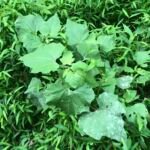 DiseaseCucurbit Powdery MildewPodosphaera xanthii (Castagne) U. Braun & Shishkoff
Toxicity and pollen
Okra is a commonly eaten food crop, and the immature pods are edible. Fine hairs on stems, leaves and pods can irritate skin, so gloves are sensible when harvesting or handling rough pods. Eating large amounts of unfamiliar plant material may still cause ordinary gastrointestinal upset. Do not use unverified medicinal preparations, and seek professional advice after significant exposure or concerning symptoms.
- Typical season
- Typically June–September in much of the United States, varying by climate and planting date.
- Pollination / pollen
- Heavy, sticky pollen mainly transferred within or between flowers by insects; self-pollination is common.
Okra pollen is produced during summer flowering but is primarily presented in large flowers and transferred by insects rather than dispersed as a major windborne pollen cloud. Sensitive people may still react to contact with flowers or plant material, and individual allergy responses vary. Avoid handling during symptoms and consult an allergist for persistent or severe reactions.
Native habitat
The crop is adapted to hot, seasonally dry tropical and subtropical conditions and performs best in open, sunny sites with warm soils. It tolerates a range of fertile mineral soils but declines in prolonged waterlogging. In the United States it is principally cultivated as a warm-season vegetable, especially in the South and other regions with long, hot summers.
Interesting fact
The edible pod is a capsule, not a botanical bean. Its mucilage is made of acidic polysaccharides that thicken cooking liquids. Okra flowers are short-lived and typically last one day. The species is accepted under Abelmoschus esculentus; Hibiscus esculentus is a synonym. Mature pods split open to release many seeds.
Frequently asked questions (FAQ)
The most relevant questions about this plant, with short and direct answers.
🌱Quick care
How much sun does okra need?⌄
Okra needs full sun, ideally at least 6 to 8 hours of direct sunlight daily. More light and heat generally support stronger growth and better pod production.
Is okra an annual or perennial plant?⌄
Okra is usually grown as a warm-season annual in the United States. It may persist longer in frost-free tropical climates, but freezing temperatures normally end the plant.
How often should I water okra?⌄
Water okra when the soil begins to dry, keeping moisture reasonably consistent without leaving the roots waterlogged. During prolonged dry weather, a deep watering about every 7 to 10 days may be sufficient, with sandy soil needing more frequent irrigation.
🌤️Environment and placement
What type of soil is best for okra?⌄
Okra grows best in fertile, well-drained loam enriched with organic matter, but it can also grow in improved clay soil. Avoid poorly drained locations because saturated soil can reduce vigor and encourage root or seedling problems.
What soil pH does okra prefer?⌄
Okra generally performs well in slightly acidic to neutral soil, approximately pH 5.8 to 6.8. A soil test is the most reliable way to determine whether amendments are needed.
Can okra survive frost?⌄
Okra is frost tender and generally cannot survive freezing temperatures. Protect plants from brief cold snaps when practical, but expect the growing season to end after a damaging frost.
Can okra grow in clay soil?⌄
Okra can grow in clay soil if it is improved with organic matter and drains adequately. Raised beds or broad planting mounds can help where heavy clay remains wet after rain.
💧Care and problems
How often should I harvest okra?⌄
Harvest okra every 1 to 2 days during peak production because pods become tough and fibrous quickly. Use a knife or pruners and wear gloves or long sleeves if the plant irritates your skin.
How big should okra pods be when harvested?⌄
Pick most okra pods when they are about 2 to 4 inches long and still tender. The ideal size varies by cultivar, but oversized pods are more likely to become tough and stringy.
Why are my okra pods tough and fibrous?⌄
Okra pods become tough and fibrous when they are left on the plant too long. Harvest young pods frequently, generally within a few days of flowering, to maintain tenderness.
Does okra need fertilizer?⌄
Okra benefits from fertile soil and a soil-test-based fertilizer program, but excessive nitrogen can produce lush leaves while delaying flowering and pod set. Apply fertilizer according to the product label and soil-test recommendations rather than using heavy, routine applications.
What pests commonly attack okra?⌄
Common okra pests include aphids, mites, thrips, leaf beetles, stink bugs, and leaf-footed bugs. Inspect plants often, remove weeds that shelter pests, and use only controls labeled for edible crops and the specific pest.
Why are my okra leaves turning yellow or wilting?⌄
Yellowing or wilting may result from drought, waterlogged soil, nutrient imbalance, insects, or disease. Check soil moisture and drainage first, then inspect the roots, stems, leaf undersides, and nearby plants for additional symptoms.
Can I prune or top okra plants?⌄
Okra usually does not require routine pruning, and removing healthy leaves can reduce plant vigor. Remove damaged or diseased growth, and only consider topping very tall plants when necessary for harvest access, recognizing that the response varies by cultivar.
Why are my okra seedlings not growing?⌄
Slow or failed seedling growth is commonly associated with cool soil, excessive moisture, poor drainage, shallow roots, or seedling disease. Replant in warm, well-drained soil and avoid watering so heavily that the soil stays saturated.
🪴Planting and repotting
Can okra grow in containers?⌄
Okra can grow in a large container if it receives full sun, has drainage holes, and provides enough root space for the selected variety. Compact or dwarf cultivars are usually easier to manage in containers than tall standard types.
When should I plant okra outdoors?⌄
Plant okra outdoors after the danger of frost has passed and the soil has warmed to at least about 65 to 70°F. Cold soil can delay germination and contribute to poor seedling establishment.
How deep should okra seeds be planted?⌄
Sow okra seeds about ½ to 1 inch deep. Planting them in warm, consistently moist soil improves the chance of even emergence.
How far apart should okra plants be spaced?⌄
Thin okra seedlings to about 9 to 12 inches apart for many home-garden plantings, allowing more room for large or branching varieties. Leave roughly 3 feet between rows when space permits for access and harvesting.
✂️Propagation and pruning
Should I soak okra seeds before planting?⌄
Soaking okra seeds for several hours before planting may help soften their hard seed coats and encourage faster germination. It is optional, and warm soil with consistent moisture remains the more important requirement.
Can I start okra seeds indoors?⌄
You can start okra indoors several weeks before outdoor planting, especially where the growing season is short. Transplant carefully because okra can dislike root disturbance, and move seedlings outside only after frost danger has passed.
How long does okra take to germinate?⌄
Okra commonly germinates in roughly 5 to 14 days when the soil is warm and evenly moist. Germination may be slower or uneven in cool soil.
Can I save seeds from okra?⌄
You can save seeds from open-pollinated or heirloom okra by leaving several pods on a healthy plant until they become large and dry. Hybrid plants may not produce offspring that reliably match the parent plant.
⚠️Toxicity and safety
Is okra safe to grow around pets?⌄
Okra is generally regarded as low risk, but pets should not be encouraged to chew garden plants or consume large amounts of raw plant material. The pods are edible, while contact with the plant’s fine hairs or spines may irritate sensitive skin.
Can people be allergic to okra plants?⌄
Some people may develop skin irritation from handling okra plants because of their fine hairs or small spines. Wear gloves and long sleeves when harvesting if you have sensitive skin, and avoid contact with the eyes.
🌸Flowering and special interest
How long does okra take to produce pods?⌄
Okra often begins producing harvestable pods about 60 to 70 days after planting, although timing varies by cultivar, temperature, and growing conditions. Flowers usually appear before the first pods develop.
Why is my okra plant flowering but not producing pods?⌄
Flowering without pod production can result from excessive heat or cold, poor pollination, plant stress, or cultivar-specific conditions. Keep the soil evenly moist, avoid excessive nitrogen, and inspect flowers and young pods for insects or disease.
Are okra flowers edible?⌄
Okra flowers are edible, although most gardeners allow them to develop into pods. The large yellow flowers with dark centers are also ornamental and attract pollinating insects.
Does okra need pollination to produce pods?⌄
Okra flowers are generally self-compatible and can produce pods without a second plant, although insects may assist with pollen transfer. Poor pod set is more often related to temperature, plant stress, pollination conditions, or damage to flowers and young pods.
Similar plants
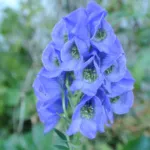 Azure Monkshood (Aconitum carmichaelii) care guideAconitum carmichaelii
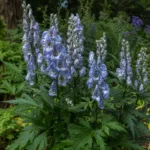 Monkshood (Aconitum ‘Stainless Steel’)Aconitum 'Stainless Steel'
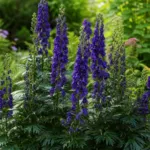 Monkshood (Aconitum ‘Bressingham Spire’)Aconitum 'Bressingham Spire'
 Golden full moon maple (Acer shirasawanum ‘Aureum’)Acer shirasawanum 'Aureum'
 Globosum (Acer platanoides ‘Globosum’)Acer platanoides 'Globosum'
 Striped maple (Acer pensylvanicum) care guideAcer pensylvanicum