Source:
Variegata (Iris laevigata ‘Variegata’) short overview
Iris laevigata 'Variegata' is a hardy Japanese water iris cultivar valued for its striking green-and-white striped leaves and delicate pale blue flowers. This rhizomatous perennial performs best in full sun to light shade with consistently moist soil, a boggy margin, or shallow water. It flowers in late spring and early summer, forms upright clumps, and suits pond edges, rain gardens, and moisture-retentive borders in USDA Zones 4–9.
Taxonomic classification
Variegata (Iris laevigata ‘Variegata’) care guide
Light and placement
Grow in full sun for strongest flowering and best foliage contrast, with light afternoon shade acceptable in hot climates. An east- or south-facing pond edge is suitable when the soil stays wet. Deep shade can produce weak stems and fewer flowers, while intense reflected heat combined with dry soil may scorch leaf tips and reduce vigor.
Watering and humidity
Keep the root zone evenly moist from spring through fall. Water deeply whenever the surface begins to dry, and increase frequency during hot weather or when grown in containers. Pond-edge plants may stand in shallow water, but the crown should not be buried deeply. Reduce watering only after foliage has naturally declined.
Soil and growing medium
Use fertile, moisture-retentive soil that remains consistently damp but is not stagnant around the crown unless the plant is deliberately grown at a shallow pond margin. Loam enriched with compost is suitable. Slightly acidic through slightly alkaline conditions are tolerated; avoid allowing the rhizomes to dry out.
Feeding
Top-dress with compost in spring or apply a balanced, low-nitrogen perennial fertilizer as growth begins. Water after feeding. Avoid heavy nitrogen applications, which can produce lush foliage at the expense of flowering and may encourage soft growth. Do not fertilize dry, heat-stressed, or newly divided plants until they are established.
Growth and habit
This cultivar forms upright clumps from short, branching rhizomes. It spreads gradually as rhizomes multiply and can become crowded in favorable wet soil. Divide when flowering declines or the center becomes congested, taking care not to bury the rhizomes deeply.
Planting and repotting
Plant in spring or early fall. Set rhizomes horizontally with the upper surface at or just below the soil surface; do not bury them deeply. Space established divisions about 18–24 inches apart. Water thoroughly after planting and keep the bed evenly moist while roots establish.
Repot container-grown plants when the clump becomes crowded, preferably after flowering or in early fall. Use a wide, heavy container with rich moisture-retentive soil and keep the rhizome near the soil surface. Containers dry faster than pond margins and need regular monitoring.
Propagation and pruning
Propagation
Division is the practical method for preserving this cultivar and is best done after flowering or in early fall. Separate healthy rhizome sections with roots and growing points, then replant promptly. Seed may be used for species breeding but will not reliably reproduce the named cultivar.
Pruning
Cut flower stems to the base after flowering if seed production is not desired. Remove yellowing or diseased leaves as needed, but leave healthy foliage until it naturally declines. Cut back old foliage in late fall or early spring before new growth emerges.
Overwintering
Leave healthy foliage in place until it yellows, then cut back old leaves in late fall or early spring. Plants in USDA Zones 4–9 generally overwinter outdoors. Container specimens are more exposed to freezing and should be sunk into the ground, moved to a sheltered site, or insulated around the pot.
Uses
Use as a pond-edge, bog-garden, rain-garden, or moisture-retentive border perennial. Its striped foliage provides interest before and after flowering, while the blue flowers work well in water-garden compositions. It is ornamental only; do not use it as a culinary or medicinal plant.
Appearance
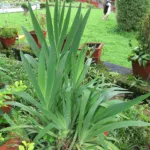
The plant has flat, upright, sword-shaped leaves marked by contrasting green and white longitudinal stripes. Flower stems rise above the foliage and carry iris-shaped blooms in pale blue tones with deeper markings. The rhizomatous clump has a clean, architectural outline and remains visually distinctive even outside the flowering period.
Flowering
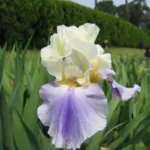
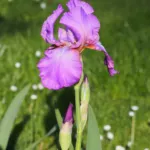
Flowers are produced on upright stems in late spring to early summer, typically around May and June in much of the United States. The cultivar is noted for pale blue flowers and strongly variegated foliage. Flowering may be reduced if the plant is grown too dry or in deep shade.
Pollination and visitors
The flowers are insect-pollinated, but reliable cultivar-specific documentation identifying the principal visitor group was not found. The attraction rating is therefore left unknown rather than assigning visitors by assumption.
Iris laevigata 'Variegata' photos
Click any photo for a larger view. Source, author and license are shown separately.
Diseases and pests
Diseases
Good air circulation and avoiding damaged, waterlogged crowns help reduce rhizome rot and leaf-spot problems. Remove declining leaves and affected debris, improve drainage around the crown where possible, and divide overcrowded clumps. Chemical treatment is usually unnecessary unless disease is persistent and correctly identified.
Pests
Watch for iris borers, aphids, thrips, and slug or snail feeding. Inspect new leaves and rhizomes regularly, remove heavily damaged material, keep beds free of dead foliage, and divide congested clumps. Use targeted controls only when a pest is positively identified and damage is significant.
Related diseases and pests
Only Plant Doctor profiles whose host data indicate this plant may be affected are shown here.
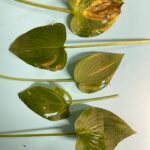 PestStrawberry foliar nematodeAphelenchoides fragariae
 DiseaseRhizopus soft rotRhizopus stolonifer
 DiseaseAlternaria leaf spot and fruit rotAlternaria alternata
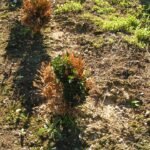 DiseasePhytophthora root and crown rotPhytophthora nicotianae
 DiseaseRhizoctonia DiseasesRhizoctonia solani Kühn
 Environmental stressWaterlogging
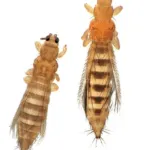 PestOnion thripsThrips tabaci Lindeman
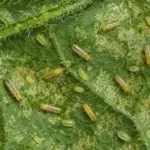 PestMelon thripsThrips palmi Karny
Toxicity and pollen
Iris species are recognized as toxic to dogs and cats, with the rhizomes generally containing the highest concentration of irritant compounds. Ingestion can cause drooling, vomiting, diarrhea, or lethargy. Keep pets from chewing the plant, especially freshly divided rhizomes, and seek veterinary advice after ingestion.
- Typical season
- Late spring to early summer
- Pollination / pollen
- Insect-dispersed pollen; not typically abundant in air
As an insect-pollinated iris, its pollen is generally not released in the same abundant airborne manner as wind-pollinated plants. Direct allergy evidence for this exact cultivar is lacking, so a low airborne-pollen concern is a cautious horticultural assessment rather than a guarantee of no sensitivity.
Native habitat
The species is native to wetland, marsh, shallow-water, and pond-margin habitats across parts of Japan, Korea, northeastern China, and eastern Russia. It favors cool to temperate climates, saturated or seasonally wet soils, and still or slow-moving water rather than dry upland conditions.
Interesting fact
The cultivar combines ornamental variegated foliage with pale blue flowers.
It received the Royal Horticultural Society Award of Garden Merit in 1994.
The species is associated with wetland and shallow-water habitats in East Asia.
Unlike many garden irises, it is especially dependent on consistent moisture.
The foliage lacks the prominent central midrib seen in some related irises.
Frequently asked questions (FAQ)
The most relevant questions about this plant, with short and direct answers.
🌱Quick care
What is Iris laevigata 'Variegata'?⌄
Iris laevigata 'Variegata' is a rhizomatous water iris grown for its cream-and-green striped leaves and light blue to violet-blue flowers. It is a hardy perennial suited to consistently wet soil, bog gardens, and shallow pond margins.
Is Iris laevigata 'Variegata' a true water iris?⌄
Yes, Iris laevigata 'Variegata' is a water-loving iris that performs best in saturated soil or shallow standing water. It should not be treated like a drought-tolerant garden iris.
How big does Iris laevigata 'Variegata' get?⌄
Iris laevigata 'Variegata' typically grows about 25–30 inches tall and spreads into a clump roughly 12–20 inches wide. Mature size varies with moisture, fertility, and growing conditions.
🌤️Environment and placement
Does Iris laevigata 'Variegata' need full sun?⌄
Iris laevigata 'Variegata' grows best in full sun, although it tolerates partial shade. More light generally supports stronger flowering and helps maintain a well-defined foliage pattern.
Can Iris laevigata 'Variegata' grow in a pond?⌄
Yes, Iris laevigata 'Variegata' can grow at the shallow edge of a pond or in a container placed in shallow water. Keep the rhizome in heavy, moisture-retentive soil rather than loose floating aquatic media.
How deep can Iris laevigata 'Variegata' be planted in water?⌄
Plant Iris laevigata 'Variegata' in saturated soil or shallow water, generally with the crown and foliage base near the surface. Avoid burying the rhizome deeply underwater, especially in containers or newly divided plants.
What soil is best for Iris laevigata 'Variegata'?⌄
Use rich, moisture-retentive loam, clay-loam, or aquatic-margin soil that stays wet. A humus-rich, slightly acidic to neutral medium is suitable, provided it does not dry out.
Can Iris laevigata 'Variegata' grow in a regular garden bed?⌄
It can grow in a regular garden bed only if the soil remains consistently moist or wet. In average or drought-prone beds, it is likely to suffer unless irrigation is dependable.
What USDA hardiness zones are suitable for Iris laevigata 'Variegata'?⌄
Iris laevigata 'Variegata' is generally considered suitable for USDA Zones 4–9. Winter performance can still vary with exposure, water depth, container culture, and the severity of local freezes.
💧Care and problems
How often should I water Iris laevigata 'Variegata'?⌄
Keep Iris laevigata 'Variegata' consistently wet throughout active growth, allowing no prolonged drying. Plants at pond margins may remain saturated, while container plants may need frequent checks during hot weather.
Why are the leaves of my Iris laevigata 'Variegata' turning brown?⌄
Brown leaves usually indicate drying, scorching, wind exposure, or a foliage disease rather than normal variegation. Restore even moisture, improve site conditions, and remove badly damaged leaves if the problem spreads.
Why is my Iris laevigata 'Variegata' not flowering?⌄
Limited sunlight, recent division, drought, excessive nitrogen, or a plant that has not yet established can reduce flowering. Give it bright light, steady moisture, and time to form a mature clump.
Does Iris laevigata 'Variegata' need fertilizer?⌄
Iris laevigata 'Variegata' usually needs only modest feeding in fertile, organic soil. If growth is weak, apply a balanced, slow-release fertilizer in spring and avoid heavy nitrogen, which can favor leaves over flowers.
What pests affect Iris laevigata 'Variegata'?⌄
Slugs, snails, and iris sawfly larvae may damage Iris laevigata 'Variegata'. Inspect foliage regularly and use locally appropriate controls if chewing or skeletonized leaves become significant.
What diseases can affect Iris laevigata 'Variegata'?⌄
Possible problems include bacterial soft rot, gray mold, and virus-related leaf symptoms. Good air circulation, clean division practices, removal of diseased tissue, and avoidance of stagnant damaged rhizomes can reduce risk.
🪴Planting and repotting
When should I plant Iris laevigata 'Variegata'?⌄
Plant Iris laevigata 'Variegata' in spring or early fall, with early fall often preferred for division and establishment. Keep the soil or planting medium consistently wet after planting.
How do I plant Iris laevigata 'Variegata' in a container?⌄
Use a wide, heavy container without drainage holes, fill it with rich clay-loam soil, and position the rhizome just below or near the soil surface. Set the container in shallow water or keep the soil saturated.
Can Iris laevigata 'Variegata' be grown in a pot?⌄
Yes, it grows well in a broad, water-holding pot or aquatic basket placed in a shallow pond margin. Choose a stable container because the mature clump can become top-heavy and crowded.
✂️Propagation and pruning
How do you propagate Iris laevigata 'Variegata'?⌄
Propagate Iris laevigata 'Variegata' mainly by dividing its rhizomatous clumps. Separate healthy rhizome sections with roots and shoots, then replant them immediately in wet soil.
When should I divide Iris laevigata 'Variegata'?⌄
Divide Iris laevigata 'Variegata' from midsummer to early fall, generally after flowering. Dividing too late or allowing the rhizomes to dry can slow establishment and reduce the following season's performance.
Can Iris laevigata 'Variegata' be grown from seed?⌄
It can be grown from seed, but seed propagation is slow and may not reproduce the cultivar's distinctive variegated foliage. Division is the more reliable method for maintaining the named cultivar.
Should I cut back Iris laevigata 'Variegata' after flowering?⌄
Remove spent flower stalks after blooming and cut back declining foliage in late fall or early winter. Leave healthy leaves in place while they remain green so the rhizome can store energy.
⚠️Toxicity and safety
Is Iris laevigata 'Variegata' poisonous to people?⌄
Yes, Iris laevigata 'Variegata' is harmful if eaten, with the rhizomes considered especially concerning. Keep plant material away from children and pets, and wear gloves when handling damaged or divided rhizomes.
🌸Flowering and special interest
When does Iris laevigata 'Variegata' bloom?⌄
Iris laevigata 'Variegata' generally blooms in late spring to early summer, often around May or June in temperate parts of the United States. The exact timing depends on climate and site conditions.
What color are the flowers of Iris laevigata 'Variegata'?⌄
The flowers are usually light blue, blue-violet, or violet-blue and can approach 4 inches across. They contrast with the plant's strongly striped cream-and-green foliage.
Is the variegation on Iris laevigata 'Variegata' present all season?⌄
The cream-and-green striping is generally visible through the growing season and is one of the cultivar's main ornamental features. Its intensity can vary with light, vigor, and seasonal leaf aging.