Source:
 Water Iris (Iris laevigata) short overview
Water Iris (Iris laevigata) is a hardy, rhizomatous perennial from wet habitats in eastern Asia. In U.S. gardens it is especially effective beside ponds, streams, rain gardens, and in consistently moist beds. Upright, mid-green leaves form dense clumps, while broad blue-purple flowers appear mainly in late spring and early summer. Give it sun or light shade, rich moisture-retentive soil, and reliable water during active growth.
Taxonomic classification
Water Iris (Iris laevigata) care guide
Light and placement
Grow in full sun for strongest flowering, or bright partial shade in hot climates. Pond edges with morning sun and afternoon protection are suitable. Too little light produces weak, floppy growth and fewer flowers; intense reflected heat combined with drying soil can scorch leaves and stress the rhizomes.
Watering and humidity
Keep the soil consistently moist to wet from spring through late summer. Water deeply whenever the surface begins to dry, and do not allow container plants to dry out. Plants in shallow pond margins may remain continuously wet, but the crown should not be buried deeply in stagnant water. Reduce watering only after foliage naturally declines.
Soil and growing medium
Use fertile, moisture-retentive soil containing loam, clay, or generous organic matter. The rhizomes tolerate saturated margins and shallow water better than most garden irises, but stagnant, oxygen-poor conditions can encourage rot. Slightly acidic to neutral soil is suitable; avoid letting containers dry out.
Feeding
Top-dress with compost in spring or apply a balanced, slow-release fertilizer at label rate as growth begins. Avoid heavy nitrogen, which can produce lush foliage and weaker flowering. Do not fertilize severely waterlogged plants or freshly divided rhizomes until new growth resumes.
Growth and habit
This rhizomatous perennial gradually forms dense clumps from short, vigorous underground stems. Growth is strongest when the root zone stays consistently wet during spring and summer. Divide crowded clumps after flowering to maintain vigor and prevent uneven flowering.
Planting and repotting
Plant in spring or early fall while soil is workable. Set the rhizome horizontally with its upper surface at or just below the soil line; in a pond margin, position it in consistently wet mud or shallow water rather than deeply submerging the crown. Allow room for a spreading clump.
Repot or divide container-grown plants in late summer or early fall after flowering. Use a wide, heavy container with rich, moisture-retentive medium and keep the rhizome near the surface rather than deeply buried.
Propagation and pruning
Propagation
Divide established rhizomes in late summer or early fall, cutting healthy sections with visible buds and roots. Seed propagation is possible but slower and may not reproduce selected garden forms. Keep divisions evenly moist while new roots establish.
Pruning
Cut back yellowing or frost-damaged foliage in late fall or early spring. Remove spent flower stems after blooming if seed production is not wanted, but leave healthy leaves in place until they naturally decline.
Overwintering
Leave established rhizomes outdoors in USDA Zones 4–9. A thin mulch layer can protect shallow plantings in colder areas, but keep mulch off the crown to reduce rot. Container plants are more exposed to freezing; sink pots into the ground or move them to an unheated sheltered location while keeping the medium slightly moist.
Uses
Use as a marginal pond plant, in bog or rain gardens, beside streams, or in rich moist perennial borders. Flowers can be cut for display. Keep rhizomes away from pets and children because iris tissues, especially underground parts, can cause gastrointestinal irritation if eaten.
Appearance
Leaves are upright, narrow, strap-shaped, and smooth-edged, forming a fan-like clump. Unlike many irises, the foliage lacks a strong raised midrib. Flower stems rise above the leaves and carry large, conspicuous iris flowers. Rhizomes spread horizontally beneath the soil or wet mud.
Flowering
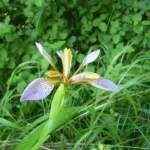
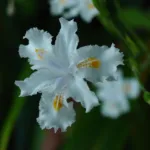
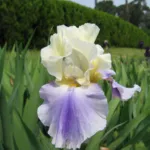
Broad, showy iris flowers are produced mainly from late spring into early summer, commonly May and June in much of the United States. Individual flowers are typically blue-purple and may be held above the foliage. Occasional fall rebloom is reported, but it is not dependable.
Pollination and visitors
University extension material records hummingbird visits to Iris laevigata plantings, while broader horticultural observations also report bee visitation for some cultivars. Species-level visitor data are limited, so attraction is rated low rather than high.
Iris laevigata photos
Click any photo for a larger view. Source, author and license are shown separately.
Diseases and pests
Diseases
Rhizome rot is the main concern in poorly drained or damaged crowns. Remove rotted tissue, improve water movement where possible, avoid burying the rhizome deeply, and divide congested clumps with clean tools. Leaf spot can occur in persistently wet, crowded plantings; remove affected foliage and improve airflow.
Pests
Iris borers may damage rhizomes and cause wilted or collapsing leaves where present. Remove and destroy infested tissue, clean up old foliage, and inspect rhizomes during division. Slugs and snails may damage young leaves in damp gardens; reduce hiding places and use proportionate controls.
Related diseases and pests
Only Plant Doctor profiles whose host data indicate this plant may be affected are shown here.
 PestStrawberry foliar nematodeAphelenchoides fragariae
 DiseaseRhizopus soft rotRhizopus stolonifer
 DiseaseAlternaria leaf spot and fruit rotAlternaria alternata
 DiseasePhytophthora root and crown rotPhytophthora nicotianae
 DiseaseRhizoctonia DiseasesRhizoctonia solani Kühn
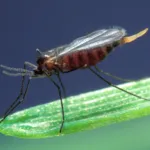 PestHessian FlyMayetiola destructor
Toxicity and pollen
Iris species contain irritating compounds concentrated especially in rhizomes and roots. Ingestion can cause drooling, vomiting, diarrhea, and lethargy; the available evidence supports greater concern for pets than for ordinary garden contact in people. Wear gloves when handling damaged rhizomes and seek medical or veterinary advice after ingestion.
- Typical season
- Late spring to early summer
- Pollination / pollen
- Heavy, insect-carried pollen
As an insect-pollinated iris, its pollen is not typically dispersed in large airborne clouds. Flower contact or handling may still expose sensitive people to pollen, and low airborne exposure should not be interpreted as zero allergy risk.
Native habitat
Native populations occur in wet meadows, marshes, pond margins, stream edges, and other freshwater habitats across parts of eastern Asia, including Japan, Korea, China, and the Russian Far East. It is adapted to rich, seasonally or persistently wet soils and mild to cold temperate climates.
Interesting fact
The species is notably more water-dependent than many familiar garden irises. Its leaves lack the strong raised midrib seen in many other irises. It is one of the traditional Japanese iris species known as kakitsubata. The rhizomatous plant can grow in shallow water or saturated pond margins.
Frequently asked questions (FAQ)
The most relevant questions about this plant, with short and direct answers.
🌱Quick care
What is Iris laevigata?⌄
Iris laevigata, commonly called Water Iris, is a hardy rhizomatous perennial in the Iridaceae family. It is especially suited to pond margins, bog gardens, rain gardens, and consistently wet soil.
Is Water Iris easy to grow?⌄
Yes, Water Iris is generally easy to grow when it receives abundant moisture and rich soil. It is less forgiving of dry conditions than many other garden irises.
How much sun does Iris laevigata need?⌄
Iris laevigata grows best in full sun, although it tolerates partial shade. More sun usually produces stronger growth and better flowering when the soil stays consistently wet.
How much water does Water Iris need?⌄
Water Iris needs consistently moist to wet soil and should not be allowed to dry out. Established plants can grow in shallow standing water, but the rhizomes should not remain deeply submerged.
Is Iris laevigata hardy in the United States?⌄
Iris laevigata is a frost-hardy perennial suited to many temperate parts of the United States. Exact performance depends on the cultivar, local winter conditions, and whether the rhizomes are protected from prolonged deep freezing.
🌤️Environment and placement
Where should I plant Iris laevigata?⌄
Plant Iris laevigata at the edge of a pond or stream, in a bog garden, rain garden, or another site with reliable moisture. A rich, moisture-retentive loam or clay soil is preferable.
Can Water Iris grow in a pond?⌄
Yes, Water Iris can grow in shallow pond water or at the pond edge. Keep the growing point near the surface and avoid placing the plant where the entire crown will be permanently submerged.
How deep can Iris laevigata be planted in water?⌄
Iris laevigata is commonly grown in about 2 to 8 inches of shallow standing water, depending on the plant and site. Young plants should be introduced gradually and kept with foliage above the waterline.
Can Iris laevigata grow in regular garden soil?⌄
Yes, Iris laevigata can grow in ordinary garden soil if it remains consistently damp. Improve dry or sandy sites with organic matter and provide supplemental irrigation during hot weather.
What soil does Water Iris prefer?⌄
Water Iris prefers rich, humus-rich, moisture-retentive soil that is often slightly acidic. It tolerates some alkalinity, but fertile loam or clay generally supports better growth than poor, fast-draining soil.
Can I grow Iris laevigata in a rain garden?⌄
Yes, Iris laevigata is well suited to the wetter portions of a rain garden. Place it where water collects or drains slowly, rather than on a dry upper berm.
💧Care and problems
How often should I water Water Iris?⌄
Water Water Iris whenever the soil surface begins to lose moisture, keeping the root zone consistently damp. Plants in containers or ordinary borders may need frequent irrigation during summer heat.
Why is my Iris laevigata not blooming?⌄
The most common causes are insufficient sunlight, dry soil, immature divisions, or overcrowded rhizomes. Move or divide the plant only if needed, and maintain steady moisture during the growing season.
What pests affect Water Iris?⌄
Slugs and snails may damage Water Iris foliage, while iris sawfly can occasionally affect plants. Good air circulation, removal of heavily damaged leaves, and appropriate local pest controls can help.
Does Iris laevigata need fertilizer?⌄
Iris laevigata usually needs only moderate fertility when planted in rich soil. If growth is weak, use a balanced, slow-release fertilizer according to the product label and avoid excessive nitrogen.
Should I cut back Water Iris in fall?⌄
Remove spent flower stems and damaged foliage as needed, but extensive pruning is not required. Leave healthy leaves until they naturally decline so the rhizomes can store energy for the following season.
🪴Planting and repotting
When is the best time to plant Iris laevigata?⌄
Plant Iris laevigata in spring or late summer through early fall, avoiding periods when the ground is frozen or excessively hot. Keep newly planted rhizomes evenly moist while they establish.
How deep should I plant Water Iris rhizomes?⌄
Plant Water Iris rhizomes shallowly, generally about 2 to 3 inches deep with the crown near the soil surface. In shallow water, use aquatic soil or a container and keep the growing point above the substrate.
How far apart should Iris laevigata plants be spaced?⌄
Space Iris laevigata about 18 to 24 inches apart to allow clumps to expand. Wider spacing may be useful in a naturalized planting, while closer spacing creates quicker visual coverage.
Can Water Iris be grown in a container?⌄
Yes, Water Iris can be grown in a large container or aquatic planting basket with rich, moisture-retentive soil. Choose a container that will not dry quickly and keep it supplied with water during active growth.
✂️Propagation and pruning
How do I propagate Iris laevigata?⌄
Propagate Iris laevigata mainly by dividing its rhizomatous clumps. Lift the plant, separate healthy sections with roots and growing points, and replant the divisions immediately in moist soil.
When should I divide Water Iris?⌄
Divide Water Iris from mid-summer to early fall, after flowering and while the plant has time to establish before winter. Spring division is also possible, but it may reduce flowering that season.
Can Iris laevigata be grown from seed?⌄
Yes, Iris laevigata can be grown from seed, but germination may be slow and irregular. Division is the more reliable method when you want flowering-size plants sooner.
How often should I divide Iris laevigata?⌄
Divide Iris laevigata about every three to four years or when the clump becomes crowded and flowering declines. Healthy divisions should be replanted promptly and kept evenly moist.
⚠️Toxicity and safety
Is Iris laevigata toxic to dogs and cats?⌄
Yes, Water Iris should be treated as toxic if eaten by dogs, cats, horses, or people. The rhizomes contain the highest concentration of irritating compounds and may cause drooling, vomiting, diarrhea, or lethargy.
What should I do if my pet eats Water Iris?⌄
Contact your veterinarian or a pet poison-control service promptly if a pet eats Water Iris, especially the rhizome. Do not induce vomiting unless a veterinary professional specifically instructs you to do so.
Is Water Iris safe around children?⌄
Water Iris is not considered safe to eat and should be kept away from children who may handle or ingest plant parts. Wear gloves when dividing rhizomes and wash hands afterward.
🌸Flowering and special interest
When does Iris laevigata bloom?⌄
Iris laevigata typically blooms from late spring into early summer. Flowering may vary with climate, cultivar, plant age, sunlight, and the consistency of soil moisture.
What colors do Water Iris flowers come in?⌄
Water Iris flowers are commonly blue, violet, or purple, with some cultivars producing white flowers marked with blue or darker tones. Flower color varies by cultivar rather than by basic care conditions.
How tall does Iris laevigata get?⌄
Iris laevigata commonly reaches about 2 to 3 feet tall and forms spreading clumps of upright, strap-like foliage. Size varies with cultivar, fertility, moisture, and available sunlight.
Does Iris laevigata rebloom?⌄
Some cultivars may flower again under favorable conditions, but a dependable second bloom should not be expected from every Water Iris. Consistent moisture, adequate sunlight, and healthy divided clumps encourage the best flowering.